
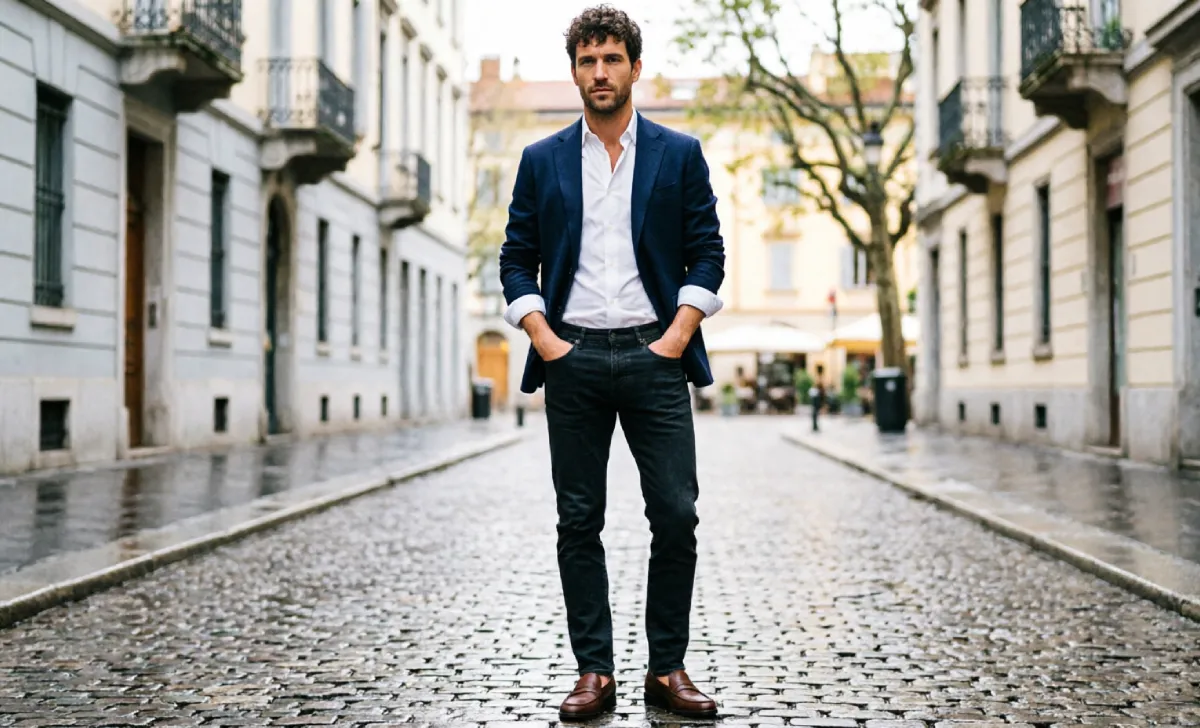
You’ve seen him. The man who walks into a café looking like he threw something on, yet every detail feels considered. His jacket doesn’t shout, his shoes are clean but not flashy, and he moves with an ease that makes you wonder what he knows that you don’t. That question sits at the heart of European men’s fashion style. It isn’t about expensive labels or chasing trends — it’s a way of thinking anyone can learn.
Authentic European style has never been about dressing up. It’s rooted in respect for fit, fabric, and deliberate simplicity, which makes it far more accessible than it first appears, regardless of budget or location. This guide gives you the tools to look more polished, not a costume to copy.
You’ll learn the differences between Italian, French, British, Spanish, German, and Scandinavian style, the few items that actually matter, how to dress the same wardrobe for work versus a weekend, and the mistakes that break the illusion. By the end, you’ll have a system you can start using tomorrow.
The Foundational Mindset Behind European Men’s Fashion
European men’s fashion rests on a simple philosophy: quality over quantity, confidence over noise. You invest in fewer pieces and wear them often, which isn’t boring — it’s a habit of self-respect.
Fit is non-negotiable. A modest jacket altered to sit right on your shoulders beats a designer piece that droops. Tailoring isn’t a luxury; it’s routine maintenance. Prioritise how fabric drapes on your body, and most cheap, shapeless clothing eliminates itself automatically.
Fabric is the second pillar. Cotton, linen, merino wool, and cashmere dominate European wardrobes because they breathe, age well, and catch light differently than synthetics. A navy merino sweater does more for your presence than any logo-covered hoodie.
This is also a capsule wardrobe approach, whether or not you ever use that phrase. You’re not buying twenty things a season — you’re buying eight to twelve pieces that all work with each other, so getting dressed stops being a daily decision. It costs less over a year than constantly replacing fast fashion, even though each piece costs more upfront.
What Exactly Defines the Look of European Men’s Fashion?
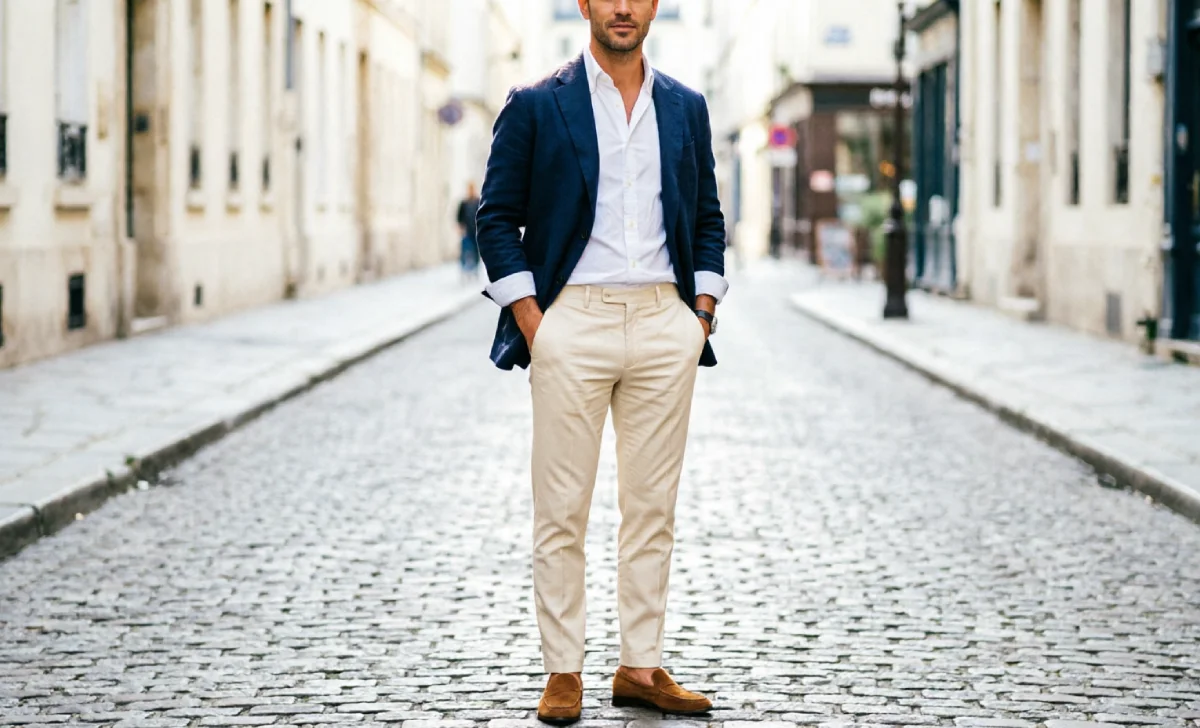
The look has a distinct visual language, starting with a neutral colour palette — navy, charcoal, beige, olive, cream. Because these tones already coordinate, you can grab pieces at random and still match.
The silhouette stays clean: soft natural shoulders instead of padding, trousers that taper without going skinny, shirts that sit close without pulling. Even relaxed outfits keep structure, which is why an untucked white shirt with dark jeans reads so differently from a baggy version.
Large logos rarely appear. Cut and fabric do the talking instead of a name across your chest, giving the whole outfit a calm, self-assured quality that feels mature rather than try-hard. When you do want a personal touch, go for texture and pattern instead of branding — a subtle check, a ribbed knit, a woven belt.
A simple trick for keeping any outfit coordinated without overthinking it: the three-color rule works alongside three accessories and three focal points (say, your jacket, your shoes, your watch), and you’ll rarely go wrong. Anything past that starts to look cluttered instead of considered.
How Does European Style Differ from American Fashion?
If you’ve ever felt overdressed abroad, the contrast is obvious. American casual culture leans on comfort and athletic influence — hoodies, cargo shorts, gym sneakers. European style, even relaxed, keeps one foot in tailoring.
A weekend outfit in Rome or Paris might pair an unstructured blazer with a merino knit, slim dark jeans, and leather loafers. Swap the blazer for a hoodie and the loafers for trainers, and you get the American equivalent — not worse, just less intentional.
Fit is where the gap widens most. European cuts sit closer to the body, not out of vanity but to remove excess fabric that creates sloppiness. Once a shirt skims your torso without billowing, going back feels wrong.
Bags are a small but telling difference too. Where an American man might reach for a backpack or a fanny pack for the day, a European man is more likely to carry a slim leather or canvas crossbody bag — enough room for a wallet, phone, and keys without looking like a tourist.
| Aspect | American Style | European Style |
|---|---|---|
| Fit | Relaxed, often loose | Slim, tailored |
| Colour palette | Bold, varied | Neutral, monochromatic |
| Footwear | Sneakers, boots, comfort-first | Loafers, minimal sneakers, leather |
| Bags | Backpacks, fanny packs | Slim crossbody or messenger bags |
| Branding | Logos often visible | Logos minimal or absent |
| Layering | Functional | Considered, part of the silhouette |
What Are the Key Differences Between Italian, French, British, Spanish, German and Scandinavian Men’s Style?
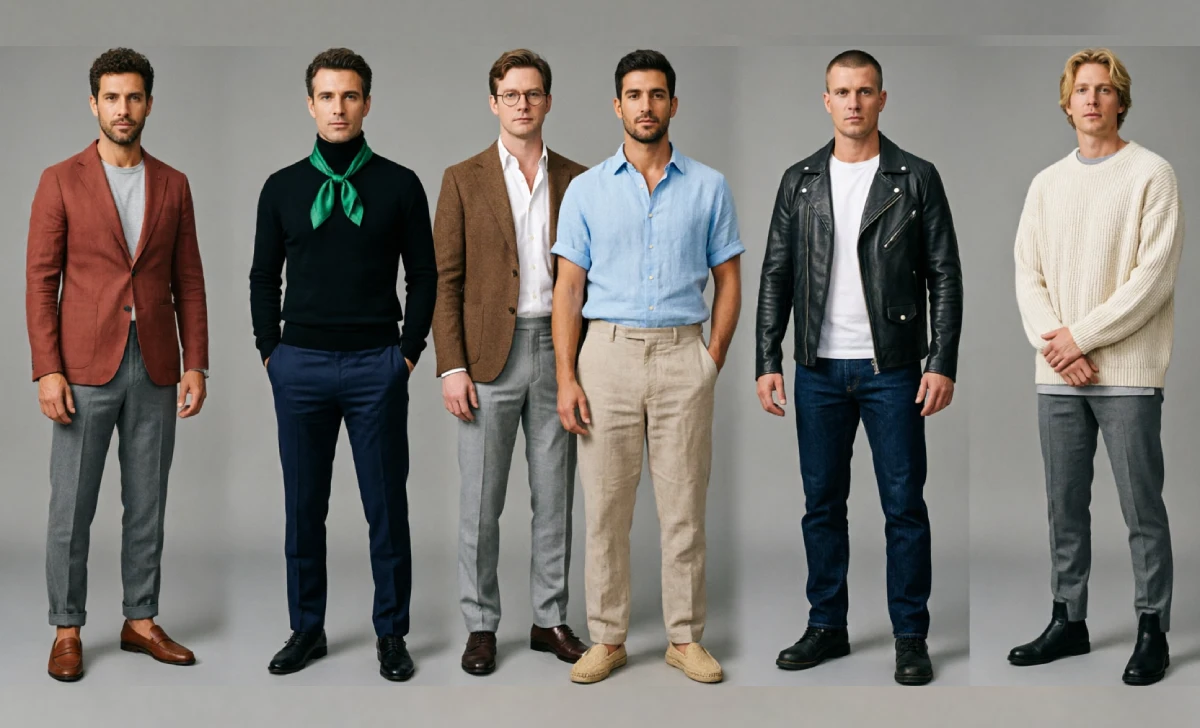
Comparison of Italian, French and Scandinavian European men’s fashion styles side by side. Three regions, three philosophies — pick the European men’s fashion style that fits you.
You can’t master European men’s fashion by treating the continent as one style. Italian style is expressive, French style is restrained, and Scandinavian style is functional — and that’s before you even get to Spain, Germany, or Britain.
Italians, especially in Milan and Florence, favour sprezzatura — studied nonchalance. An unstructured linen blazer, a sleeve rolled just so, a tie worn slightly askew. Earthy tones and soft tailoring keep it relaxed rather than stiff, and colour shows up more here than almost anywhere else in Europe.
Paris leans darker and more minimal — navy, black, charcoal, an occasional crisp white shirt. Fewer pieces, cut impeccably, with the scarf doing more heavy lifting than any other single accessory.
British style sits between formal heritage and modern edge. Tweed, trench coats, brogues and Chelsea boots carry a sense of tradition, but younger British dressing mixes that with streetwear influence in a way you don’t see as much in Paris or Milan.
Spanish style runs warmer and more relaxed — linen shirts, tailored shorts, espadrilles or leather sandals, and a willingness to use pattern and warm tone that would feel out of place in a Parisian wardrobe. It’s smart-casual built for heat and long evenings outdoors.
German style is the most stripped-down of the group: dark jeans, a plain tee, a well-made leather jacket, sturdy boots. Nothing decorative, everything functional, but still deliberate rather than lazy.
Scandinavian style strips things back even further — clean lines, functional layers, a muted, architectural feel. Copenhagen and Stockholm favour oversized cashmere, tonal layering, and sneakers built for looks over sport.
What Are the Must-Have Wardrobe Items for a European-Inspired Look?
Flat lay of essential European men’s fashion wardrobe items including blazer and loafers. Build your European men’s fashion capsule wardrobe around these pieces.
You don’t need a long shopping list — just a handful of versatile pieces that combine easily.
The unstructured blazer does the most work. In navy or soft grey, with minimal lining and natural shoulders, it turns dark jeans and a T-shirt into an outfit rather than a costume. Pair it with a couple of knitwear pieces in merino or lightweight cashmere.
Dark wash denim without distressing covers your lower half; tailored cotton chinos in beige or olive give you a smarter option. A well-fitted Oxford shirt in white or light blue outperforms five patterns you’ll never actually reach for.
Don’t skip the polo shirt. It sits between a T-shirt and a button-down and works for more occasions than either — dressed up with chinos and loafers, or dressed down with jeans and sneakers. One or two in navy or white cover a surprising number of situations.
If you’re starting from nothing, eight pieces are enough: one blazer, two knitwear pieces, one oxford shirt, one polo, dark jeans, chinos, and one pair of loafers. That’s a working wardrobe you can mix into a couple dozen different outfits before you need to add anything else.
How Do You Dress the Same Wardrobe for Work, Weekends and Evenings?
The pieces above don’t need to change much between contexts — how you combine them does.
For the office, lean into structure: the blazer stays buttoned, the oxford shirt gets tucked, chinos or tailored trousers replace jeans, and loafers or brogues finish it off. This is the version that reads as competent without feeling stiff.
For weekends, loosen everything by one notch. Swap the oxford for the polo or a merino knit, leave the blazer unbuttoned or skip it entirely, and let dark jeans do the work instead of trousers. Sneakers replace loafers here.
For evenings, add back a little formality without going full suit — a knit under the blazer instead of a shirt, dark trousers instead of jeans, and a leather loafer rather than a sneaker. The goal is one wardrobe that flexes, not three separate closets.
How Do European Men Dress in Summer Without Looking Sloppy?
Warm weather is where most men give up and default to oversized shorts. European style solves heat through fabric and cut rather than surrendering the silhouette entirely.
Linen carries the season — worn open over a T-shirt, or tailored into trousers, it lets air move while holding shape. Swap denim for lightweight chinos or a cotton-linen short that ends above the knee. Rolling the sleeves up on a linen shirt is a small habit that instantly reads more relaxed and less stiff.
Clean white leather sneakers finish the look, or espadrilles if you’re leaning into a more Spanish-inspired outfit. They work with linen trousers or shorts and separate a beach outfit from an urban one. Keep colours light, layers minimal, and the heat becomes manageable rather than an excuse to dress down completely.
What Shoes Do European Men Wear Most Often and Why?
Loafers, white sneakers, and Chelsea boots representing european mens fashion footwear choices. Loafers, clean sneakers, and Chelsea boots — the European men’s fashion shoe rotation.
Shoes get noticed first. Across Milan, Paris, and London, the constants are loafers, minimal sneakers, and Chelsea boots.
A leather loafer — penny or suede tassel — bridges casual and smart in a way lace-ups can’t, worn with chinos, jeans, or tailored shorts. A brown suede pair softens a navy blazer without trying too hard.
White sneakers handle the casual end, but the European version stays minimal — no chunky soles, no extra branding. When temperatures drop, a dark Chelsea boot slides under slim trousers for one unbroken line from waist to toe.
| Shoe | Best for | Skip it when |
|---|---|---|
| Leather loafer | Smart-casual, office, dinners | Heavy rain or rough terrain |
| Minimal white sneaker | Weekends, travel, daytime | Formal or evening events |
| Chelsea boot | Cold weather, evenings | Hot, humid climates |
| Espadrille | Beach, summer, warm climates | Office or formal settings |
The Art of European Accessories and Grooming
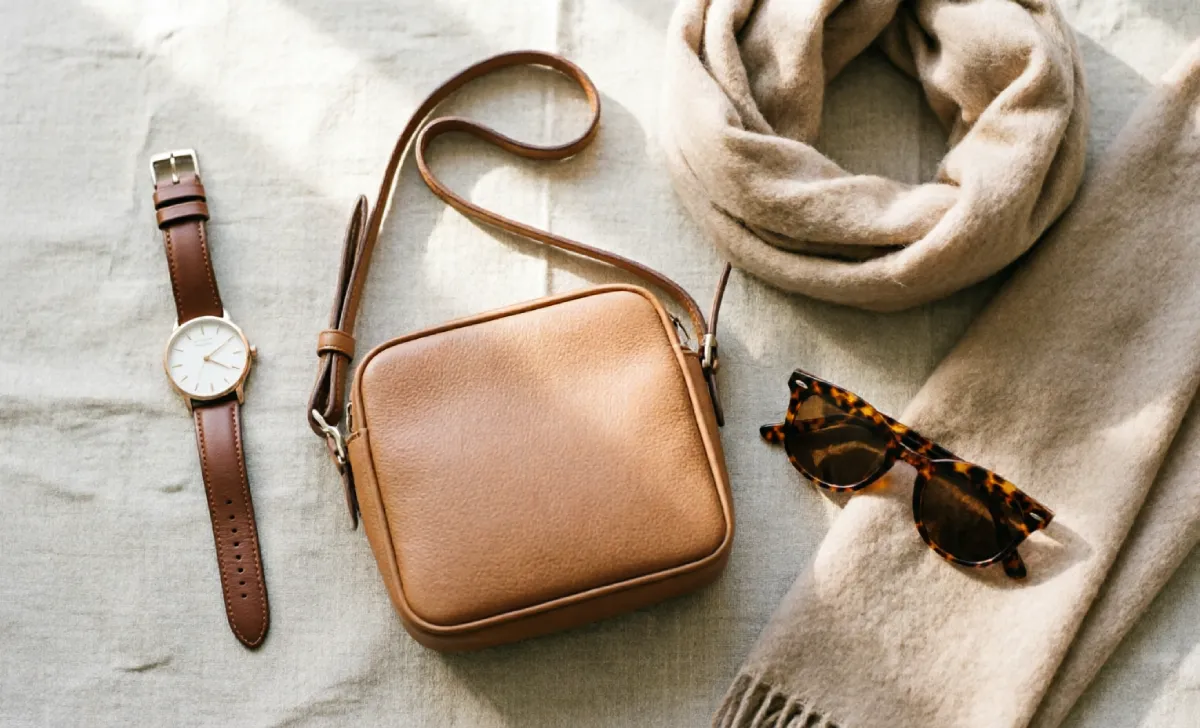
The finishing touches rarely involve big spending. A simple leather-strap watch signals maturity without needing a luxury price tag.
A wool or cashmere scarf, casually looped, adds texture in cooler months. Match your belt to your shoes, and small alignments like this create a coherence people register before they can name it.
Bags matter more than most men think. A slim leather or canvas crossbody or messenger bag carries what you need without the bulk of a backpack, and it looks intentional rather than purely practical. Sunglasses in a simple frame — tortoiseshell or matte black — round out the daytime look without drawing attention away from the outfit itself.
Grooming closes the loop: clean hair, shaped or clean-shaven facial hair, scent applied lightly. Sharp grooming turns even a plain t-shirt and jeans into something deliberate.
What Are the Biggest Mistakes That Ruin a European Look?
Too much volume is the most common error. A billowing shirt or trousers pooling at the shoe erases the crisp line the whole style depends on — and tailoring fixes it cheaper than you’d expect.
Loud logos are next. A brand name across your chest reads as advertising, not wealth. Wearing gym clothes as daily wear does similar damage; keep performance gear for performance.
Stacking too many signals at once — a flat cap, a bold pocket square, an influencer-style scarf knot — tips the look into costume territory. Pick one or two touches and let everything else stay calm; the 3-3-3 rule from earlier is a useful check here.
Skipping maintenance is the quiet mistake nobody warns you about. Scuffed shoes, a linen shirt that’s never been ironed, or a jacket that’s never been to a tailor will undercut even a genuinely good outfit. Quality pieces still need upkeep to look the part.
How Can You Adapt European Style to Your Own Climate and Lifestyle?
The principles travel better than they first seem to. In hot, humid climates, shift fabrics: tropical wool trousers, linen-blend shirts, and unlined blazers hold their shape without trapping heat.
Cold climates already suit this approach. If you’re dressing for cooler autumn weather, a merino base layer, a textured knit, and a streamlined wool coat keep you warm without bulk — swap loafers for sleek boots and add a cashmere scarf.
In wet or rainy climates, the fix is a well-cut trench or a technical overcoat that still reads as tailored rather than sporty, paired with a Chelsea boot that shrugs off puddles better than suede ever will.
For a fully casual lifestyle, adjust attitude rather than the item list. Trade the blazer for a merino zip-neck or suede overshirt, keep the clean sneakers and dark jeans, and the same quiet confidence carries over regardless of setting.
Packing for a European-Style Trip
If you’re travelling and want the same look without a suitcase full of clothes, pack around the capsule: one blazer, two shirts, one knit, chinos, dark jeans, and one pair of loafers plus one pair of sneakers. Everything mixes with everything else, so five days of outfits come from seven or eight items. If the weather sits somewhere in between, this jacket versus hoodie breakdown is worth checking before you pack your outer layer.
Skip the backpack in favour of a slim crossbody bag, and leave the athletic gear at home unless you’re actually exercising. It’s the single fastest way to stop looking like a tourist and start looking like you live there.
Frequently Asked Questions About European Men’s Style
What is the easiest way to start dressing more European if I’m on a tight budget?
Get one well-fitted pair of dark jeans and a plain white oxford shirt, then have a tailor adjust the fit. The money goes into alteration, not the price tag.
Do I have to be slim to pull off European menswear?
No. The principle is fit, not size. Tailoring creates clean lines on any body type by cutting fabric to your actual shape instead of hiding it.
How do I avoid looking like a tourist when I travel to Europe?
Skip the oversized backpack and branded sportswear. Neutral layers, clean sneakers or loafers, and a structured jacket instead of a fleece will blend you into the city rather than the tour group.
Can I wear shorts and still look European in summer?
Yes — tailored shorts ending above the knee in navy, stone, or olive, worn with a fitted polo and clean white sneakers. Skip the cargo styles and flip-flops.
Do people actually wear hoodies in Europe?
Yes, but usually a fitted, quality version in a neutral colour rather than an oversized logo hoodie. Save it for genuinely casual days, not the office or dinner — this hoodie season outfit guide has more ideas for making it look intentional rather than lazy.
Conclusion
European men’s fashion is a mindset, not a uniform: fit, quality, and quiet confidence over borrowed identity. You don’t need to overhaul your closet tonight. Start with one intentional piece, notice how it changes the way you carry yourself, and build from there.