

Taking the clippers to your head for the first time can feel like a bold move. But once you understand what’s available, the decision gets simple. This guide covers all 25 buzz cut types matched to your face shape, so you walk away with a style that actually works for you.
What Exactly Is a Buzz Cut, and Where Did It Come From?
You might think a buzz cut is one uniform look. It’s actually a family of clipper-only styles, each with its own length, shape, and personality. The name comes from the sound electric clippers make as they move through hair.
Armies adopted the style for hygiene and uniformity. Over time, it moved beyond military use and became the standard for athletes, artists, and anyone who wants a clean, low-maintenance appearance. That history helps you see the buzz cut as a deliberate choice, not a fallback.
Which Clipper Guard Numbers Define Every Buzz Cut Style?
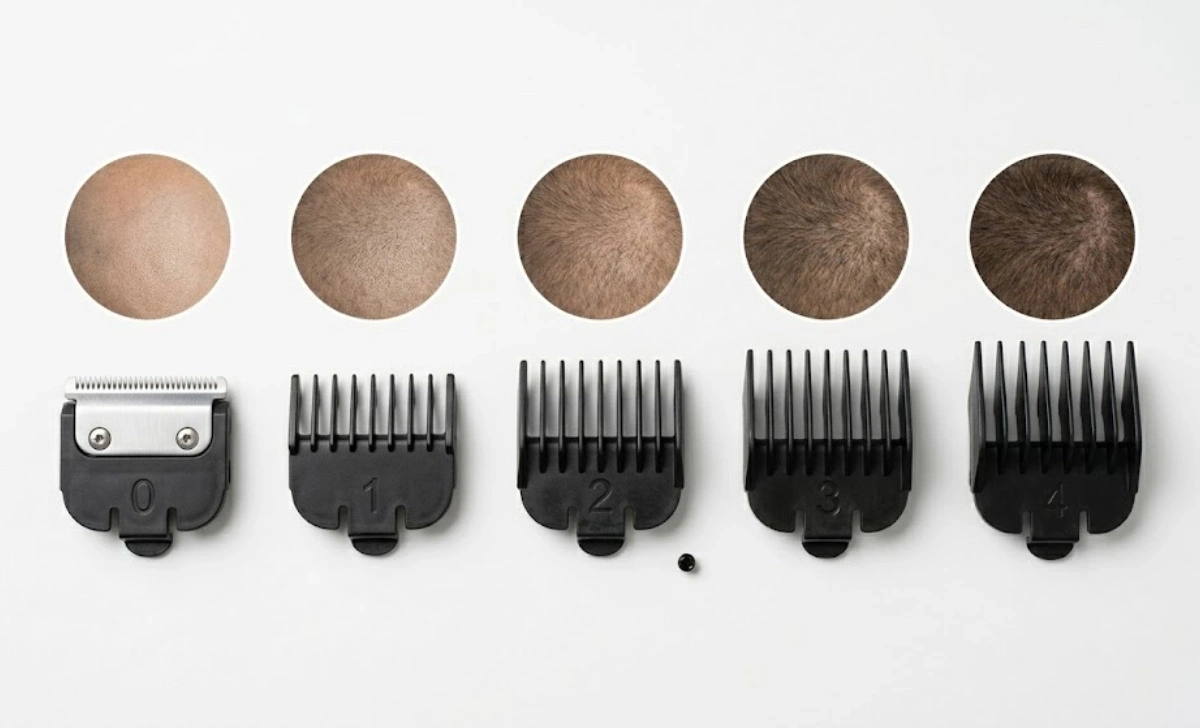
Guard numbers are the language of the barbershop. Each number equals one-eighth of an inch of hair left on the scalp. A number 1 leaves fine stubble. A number 2 gives a soft quarter-inch. A number 4 leaves half an inch with visible texture. No guard at all, called a zero, leaves bare stubble just above the skin.
Before your next appointment, review this full breakdown of clipper guard numbers so you know exactly what to ask for. Knowing the system puts you in control of the result before you sit in the chair.
25 Types of Buzz Cuts for Every Face Shape and Hair Texture
1. Induction Cut — Number 2 or 3 all over, no fade. Best for oval and square faces. Ask: “Number 2 all over, natural hairline.”
2. Burr Cut — Number 1 or 1.5, fine stubble everywhere. Highlights a strong jawline. Round faces should add length on top.
3. Butch Cut — Number 4 on top, number 2 on sides. Gentle structure. Suits diamond and heart-shaped faces.
4. High and Tight — Skin on sides, number 3 or 4 on top. Elongates round or oblong faces. Ask: “High skin fade, leave a 3 on top.”
5. Flat Top — Level horizontal length on top, short sides. Works on narrow or oval faces. Needs thick, straight hair to hold shape.
6. Crew Cut — Longer on top, tapering into shorter sides. Softens features. Ideal for diamond and oval faces. Ask: “Crew cut, number 5 on top, tapered to a 2.”
7. Ivy League — Crew cut with enough length to part to the side. Breaks vertical length on oblong faces.
8. Skin Fade Buzz — Top at number 2 to 4, sides faded to skin. High fade elongates; low fade adds width at the temples.
9. Zero Fade Buzz — Fade starts at zero and blends upward sharply. Dramatic contrast. Great for heart-shaped faces with thick hair.
10. Razor Buzz — Clippers on zero plus a foil shaver for a smooth finish. Works best on an even head shape.
11. Textured Buzz — Number 3 or 4, preserving natural curl or wave. No product needed. Suits oval and square faces.
12. Temple Fade Buzz — Tight fade around the temples, slightly longer top. Makes a round face appear more defined.
13. Low Fade Buzz — Fade starts just above the ear. Adds width at the temples for diamond faces.
14. Mid Fade Buzz — Fade at the temple level. Versatile and balanced for almost all face shapes.
15. High Fade Buzz — Fade near the top of the sides. Elongates broader or squarer faces.
16. Bald Fade with Line-Up — Zero fade with a razor-sharp edge along the hairline. Precise framing for any face shape.
17. Hard Part Buzz — A razor line etched into one side. Adds personality to any induction or burr cut.
18. Drop Fade Buzz — Fade curves downward behind the ear. Softer look, suits oval and heart-shaped faces.
19. Taper Fade Buzz — Hair shortens gradually toward the neck and ears. For the full difference, see this guide on taper vs fade before your appointment.
20. Caesar Buzz — Short horizontal fringe at the front, even length behind it. Reduces visual length on oblong faces.
21. Military Regulation Cut — Number 1 on sides, number 3 on top, clean taper at the neckline. Sharp and structured for square and oval faces.
22. Buzz with Design — Any base length with a pattern trimmed in. Works on all face shapes. Pure personal expression.
23. Buzz with Beard — Short crop, often a number 2 or 3, with the beard as the statement. A full beard creates sharp angular contrast against a tight buzz on round faces.
24. Women’s Buzz Cut — All styles above apply equally. Women often personalize with sharper lineups, temple fades, or color. Oval faces suit any style; heart faces do best with a low fade.
25. Buzz with Skin Part — A razor line shaved into the side of a standard buzz cut. Makes any basic cut look intentional and polished.
How Do You Match a Buzz Cut to Your Face Shape?
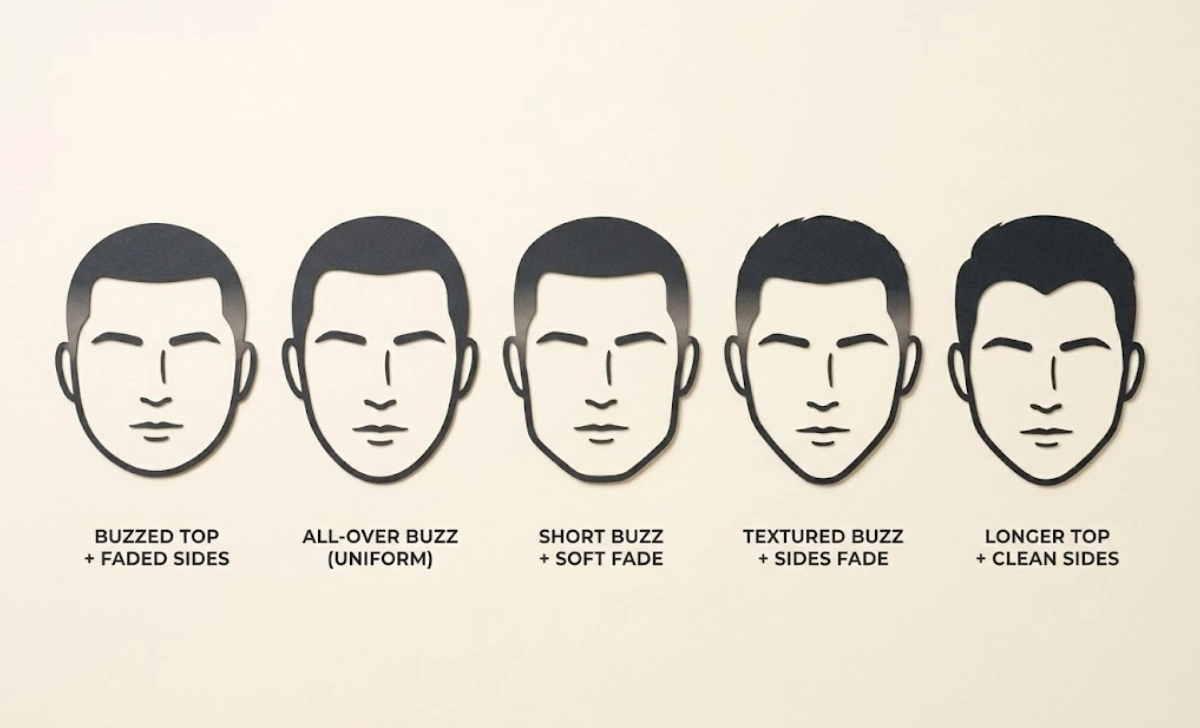
Pull your hair back and look at your forehead, cheekbones, and jawline. If all three are roughly equal with a soft, rounded jaw, you have a round face. You need height and vertical lines, so the flat top, high and tight, or mid fade buzz work best.
An oval face can carry almost any style on this list. Square faces have angular jaws, and shorter uniform cuts like the burr or induction show that bone structure well. Diamond faces benefit from volume at the temples using a low fade or crew cut. Heart-shaped faces need weight pulled downward, so a temple fade or longer sideburns help. Oblong faces should avoid too much height; the Caesar or Ivy League breaks the vertical line.
How Can You Talk to Your Barber So You Get Exactly the Buzz Cut You Want?
Combine three things in one sentence: the guard number on top, the finish on the sides, and where the fade begins. For simple cuts, “Number 2 all over, no fade, natural hairline” covers everything. For a fade, say “Number 4 on top, mid fade down to a zero, clean line-up at the front.”
If you have a cowlick or thinning area, point it out before the clippers start. Showing a photo helps, but always follow it with a guard number so there’s no guesswork about actual length.
Buzz Cuts for Receding Hairlines and Thinning Hair
A shorter guard removes the contrast between thick and thin areas. A number 1 or 2 turns what feels like a problem into a clean, purposeful look. The receded hairline becomes a defined edge rather than something you’re managing around.
If your temples are thinning but you have density on top, a high fade starting where the hair thins looks completely intentional. You’re reframing your features, not hiding them. Most men who make this switch say it’s the best grooming decision they’ve made.
How Can You Give Yourself a Buzz Cut at Home Without Ruining It?
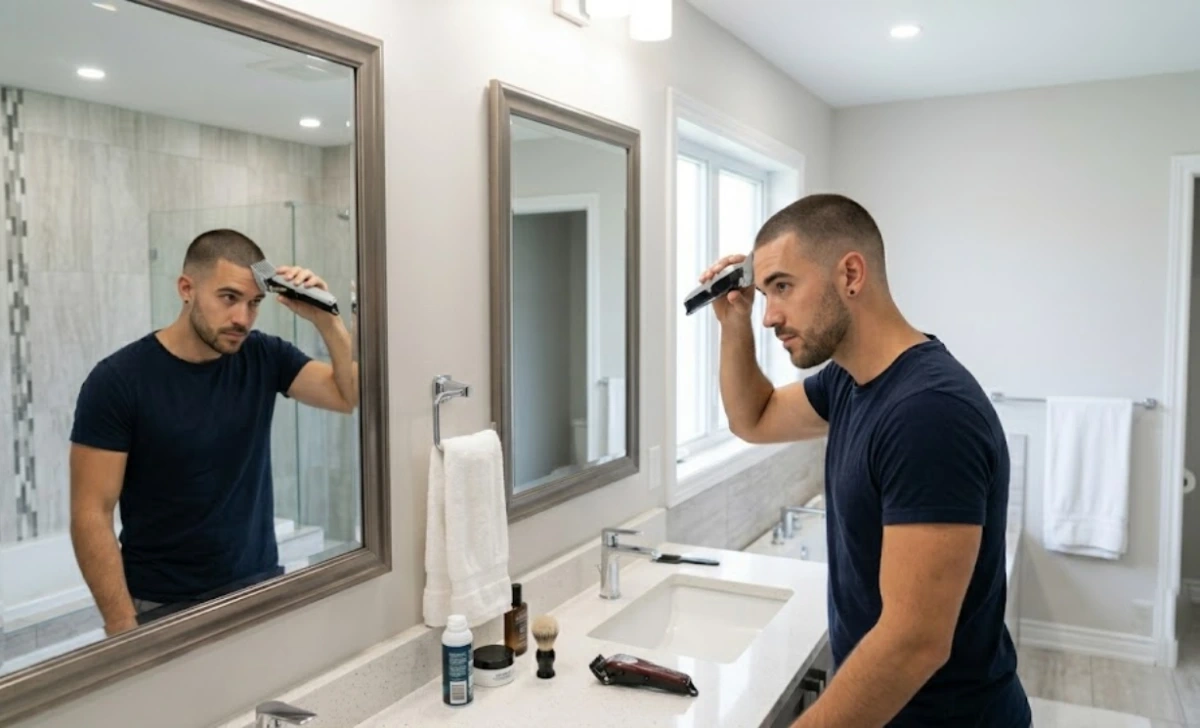
Start with clean, dry hair and a quality cordless clipper. Wahl and Andis are the reliable choices used in most professional barbershops. Set up two mirrors so you can see the back of your head before you touch anything.
Attach the longest guard you think you want, like a number 5, and work front to back against the direction of growth. You can always go shorter; you can’t go longer. Use shorter guards on the sides and blend upward with steady, overlapping strokes. Finish the neckline last with no guard on the trimmer edge, and check both mirrors before putting the clippers down.
How Often Should You Shave Your Buzz Cut to Keep It Fresh?
Hair grows roughly half an inch per month. A number 2 cut loses its sharpness within ten days. A number 4 gives you around three weeks before it starts to look undefined. Once you know the process, a trim takes less than fifteen minutes.
Set a recurring reminder on your phone to stay ahead of the growth. Consistency is what separates a sharp, maintained buzz cut from one that just looks overgrown.
Essential Scalp Care After a Buzz Cut
Your scalp hasn’t seen direct sun in years, and that changes the moment the clippers finish. Use a lightweight SPF spray every morning to protect newly exposed skin from burning. This is a health matter, not just a comfort tip.
A gentle daily moisturizer prevents the dry flaking a freshly buzzed scalp develops in the first few weeks. Exfoliate once a week to keep the surface smooth. Treat your scalp the same way you treat the skin on your face.
Will a Buzz Cut Actually Suit My Head Shape, or Will I Regret It?
The details you notice in the mirror are invisible to the people around you. Almost every head shape works with a buzz cut because you’re simply revealing how a human head is built. If you’re nervous, start with a number 4 or 5 to test the waters without full commitment.
Most people stop noticing their head shape within a day or two and start appreciating how fast the morning routine has become. A buzz cut is also one of the haircuts that make you look younger when it’s matched correctly to your features.
Your Next Step: Choosing the Perfect Buzz Cut Type
You now have every major buzz cut type in front of you, with guard numbers, face shape logic, and barber language to make it work. Walk into the barbershop knowing your number and your style name. The only thing left is one pass of the clippers.
FAQs
What is the difference between a buzz cut and a crew cut?
A buzz cut keeps a consistent short length across the head. A crew cut has longer hair on top tapering into shorter sides. The crew cut offers more styling flexibility; the buzz cut needs no styling at all.
Can I get a buzz cut if I have curly hair?
Yes. Use a number 3 or 4 guard to keep the curl pattern visible and prevent the hair from sticking outward. The natural texture adds interest without any product.
How long does a buzz cut take to grow into a different style?
Expect three to six months to reach enough length to reshape completely. Regular neckline trims keep things tidy during the awkward in-between stages.
Is a razor shave the same as a zero buzz cut?
No. A zero uses clippers with no guard, leaving fine stubble. A razor shave removes all stubble for a smooth finish. The razor version needs more frequent upkeep to stay smooth.
Conclusion
You’ve seen every buzz cut type that matters, with the guard numbers, face shape match, and barber script ready to use. The right cut is not about having a perfect skull. It’s about making this informed choice and acting on it. Walk in knowing your style, say your number, and let the clippers handle the rest.