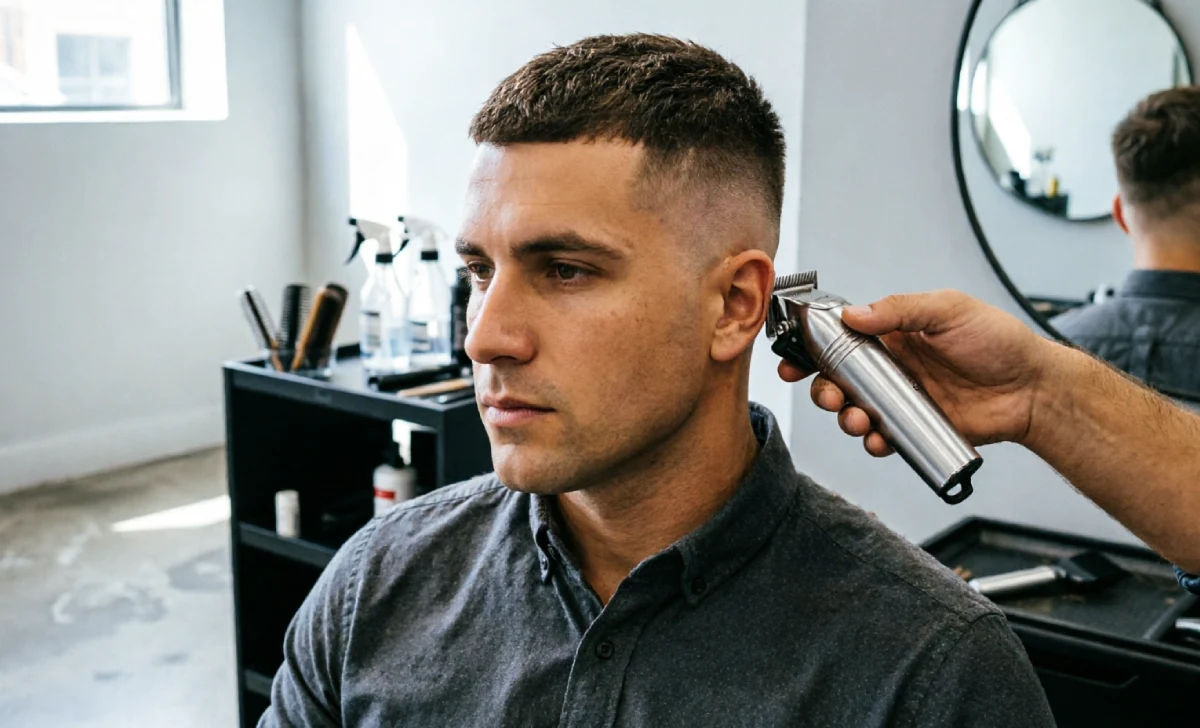
You want a haircut that looks sharp, feels disciplined, and skips the 20-minute morning routine — no matter which types of fades catch your eye. Military-inspired cuts deliver exactly that, but walking into a barbershop without the right words can leave you with a look you never pictured.
So here are the 35 best military haircuts for men, grouped by family, each with the exact barber script, guard size, and face shape it flatters most.
What Is a Military Haircut and What Makes It Different?
A military haircut means extreme neatness, short sides, and a deliberate shape with no stray hairs. It started as a hygiene and uniformity requirement in the armed forces, then became shorthand for discipline and no-nonsense style.
These cuts nearly always pair a fade or taper on the sides with a short, controlled top. What separates them from an ordinary short haircut is intention — every line is sculpted, not just trimmed. The five groups below cover every major variation.
The Buzz Cut & Induction Family (Styles 1–7)
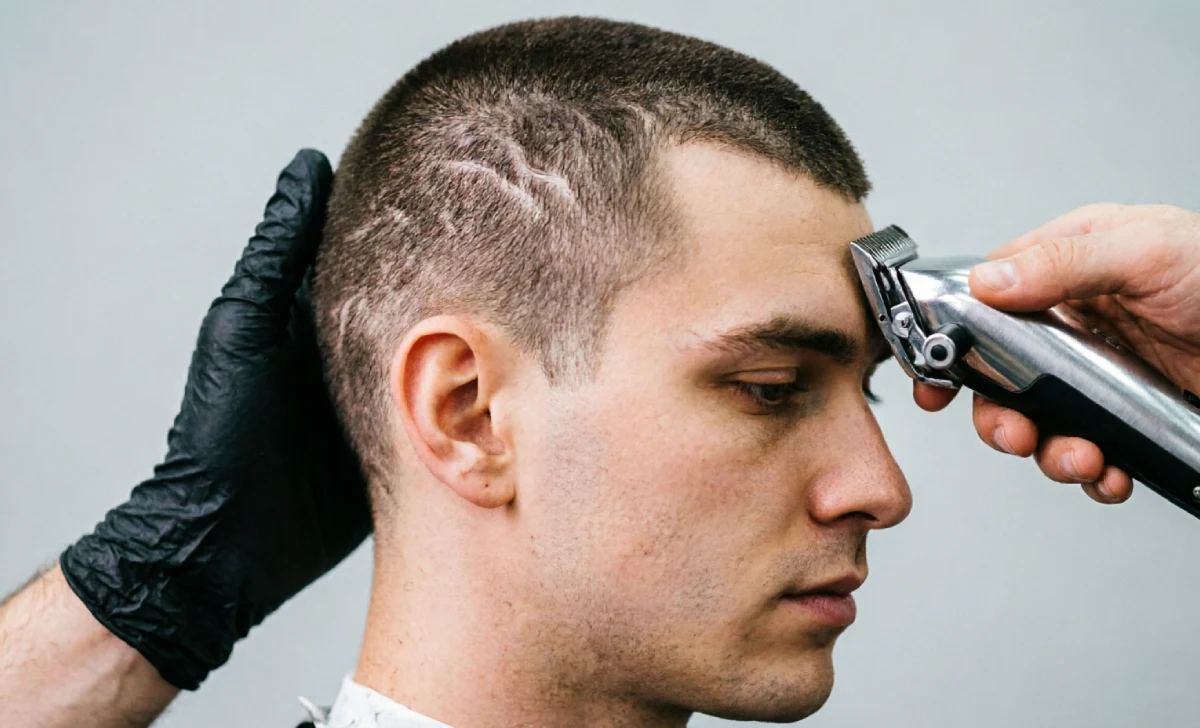
These are the purest military cuts — one uniform clipper length, no styling, five minutes and done.
1. Induction Cut — A single zero or one guard, buzzed evenly all over. Say: “All-over buzz, no guard.” Suits any face shape after maximum simplicity.
2. Butch Cut — A two- or three-guard that keeps the round shape but softens the edge. Say: “Butch cut, number three all over.” Works best on rounder heads.
3. Burr Cut — Sits between induction and butch, showing scalp with a hint of coverage. Say: “Burr cut, one and a half guard.” Balances a sharp jawline.
4. Regulation Cut — A service-standard buzz with a tapered neckline. Say: “Regulation buzz, tapered at the neck.” Ideal for strict, professional looks.
5. Tactical Buzz — Close all over with a subtle skin taper at the hairline. Say: “Buzz cut, skin taper on the sides only.” Flatters square or oval faces.
6. Extreme Skin Buzz — Nearly bald with a zero-zero guard. Say: “Zero-zero, as close as it gets.” For men fully committed to low maintenance.
7. Textured Buzz — A three- or four-guard, left slightly messy on top. Say: “Textured buzz, leave it rough on top.” Suits thicker hair.
The High and Tight Family (Styles 8–13)
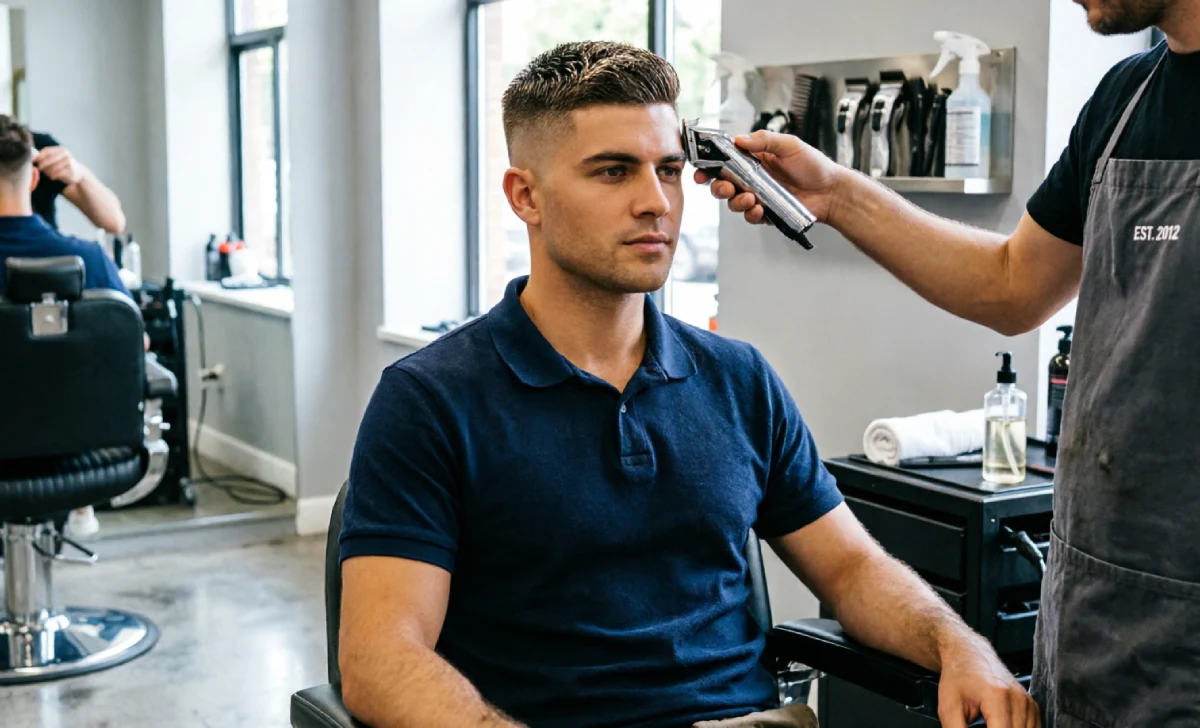
Few cuts get lost in translation as often as the high and tight, so precise wording matters here.
8. Classic High and Tight — A skin fade taken high, with a half-inch strip on top. Say: “Skin fade high up, half-inch on top, blended at the corners.” Suits strong jawlines.
9. High and Tight with Fringe — Same shaved sides, but a touch of length kept at the front. Say: “High and tight, leave a small fringe up front.” Adds height to rounder faces.
10. Disconnected High and Tight — A hard visible line instead of a gradual blend. Say: “High and tight, disconnected top, no blending.” Delivers bold contrast.
11. Low and Tight — The fade starts lower, near the ear. Say: “Low and tight, fade starting above the ear.” Balances longer face shapes.
12. Tapered High and Tight — A softer taper replaces the full skin fade. Say: “High and tight, taper instead of skin fade.” Reads better in office settings.
13. G.I. Buzz — Minimal top length, tight sides, classic boot-camp styling. Say: “G.I. buzz, quarter inch on top, tight sides.” Built for zero upkeep.
Crew Cut & Ivy League Styles (Styles 14–19)
Knowing these differences saves you from mumbling “just short on the sides” and hoping for the best.
14. Classic Crew Cut — Short, tapered sides with a slightly longer top angled back. Say: “Crew cut, four guard on top, tapered sides.” Suits athletic, low-fuss guys.
15. Ivy League — A crew cut with enough length on top for a side part. Say: “Ivy League, enough length on top to part it.” Fits professional settings.
16. Harvard Clip — Nearly identical to the Ivy League, but side-swept with a matte finish. Say: “Harvard clip, side-swept, matte finish.” Pairs well with a suit.
17. Princeton Cut — A crew cut with extra volume left at the crown. Say: “Princeton cut, extra volume at the crown.” Helps thinner hair look fuller.
18. Fade Crew Cut — The classic crew cut paired with a skin or high fade instead of a taper. Say: “Crew cut on top, skin fade on the sides.” Adds a modern edge.
19. Textured Crew Cut — Choppy texture on top instead of a smooth finish. Say: “Crew cut with texture, not too smooth.” Suits thick or wavy hair.
Flat Top Variations (Styles 20–24)
The flat top has softened from its rigid military origins into something far more wearable, without losing its architectural edge.
20. Classic Flat Top — A level top over a high fade. Say: “Flat top, level on top, high fade on sides.” Suits square or oval faces.
21. Rounded Flat Top — Softer corners for a less severe finish. Say: “Flat top, but round the corners.” Eases first-timers into the style.
22. Textured Flat Top — Piece-y, slightly uneven top instead of a blunt finish. Say: “Flat top with texture, not fully blunt.” Gives it a modern twist.
23. High Flat Top — Extra height built into the shape for a bolder statement. Say: “Flat top, add extra height on top.” Flatters shorter face proportions.
24. Mini Flat Top — A lower-profile version, easier for daily wear. Say: “Flat top, keep it low and subtle.” Fits dress-code workplaces.
Modern Faded Military Styles (Styles 25–35)
This is where knowing the taper vs fade difference pays off, since these styles blend the two constantly.
25. Textured Military Crop with Drop Fade — A choppy top with a fade curving behind the ear. Say: “Textured crop, drop fade behind the ear.” Suits fashion-forward guys.
26. Skin Fade with Hard Part — A razor line dividing the top from faded sides. Say: “Skin fade with a hard part line.” Works with crew cuts, Ivy Leagues, or pomps.
27. Comb-Over Fade — A longer top swept to one side over a tight fade. Say: “Comb-over on top, fade underneath.” Reads professional yet stylish.
28. Military Pompadour — A raised, structured top over a tight fade. Say: “Pompadour on top, tight fade on sides.” Needs natural volume to hold shape.
29. Low Fade Military Cut — The fade stays close to the ear. Say: “Low fade, keep the taper subtle.” Suits conservative or formal settings.
30. Mid Fade Military Cut — A middle-height fade that works almost anywhere. Say: “Mid fade, blend starting at temple level.” Fits most faces and jobs.
31. Skin Fade Pomp — A slicked pompadour over a full skin fade. Say: “Skin fade with a pompadour on top.” Delivers a sharp, dressed-up finish.
32. Curly Top Military Fade — Natural curls kept on top over a tight faded base. Say: “Keep my curls on top, fade the sides.” Built for curly or coily hair.
33. Side Part Fade — A defined part combined with a modern fade underneath. Say: “Side part on top, fade blending in.” Suits business-casual settings.
34. Spiky Military Crop — Short, gelled spikes over a clean fade. Say: “Spiky crop on top, clean fade below.” Fits younger, active lifestyles.
35. Civilian Military Fade — A relaxed everyday version with a soft blend and extra length throughout. Say: “Civilian fade, soft blend, a little extra length.” Eases anyone into the military look.
What Face Shape Suits a Military Haircut Best?
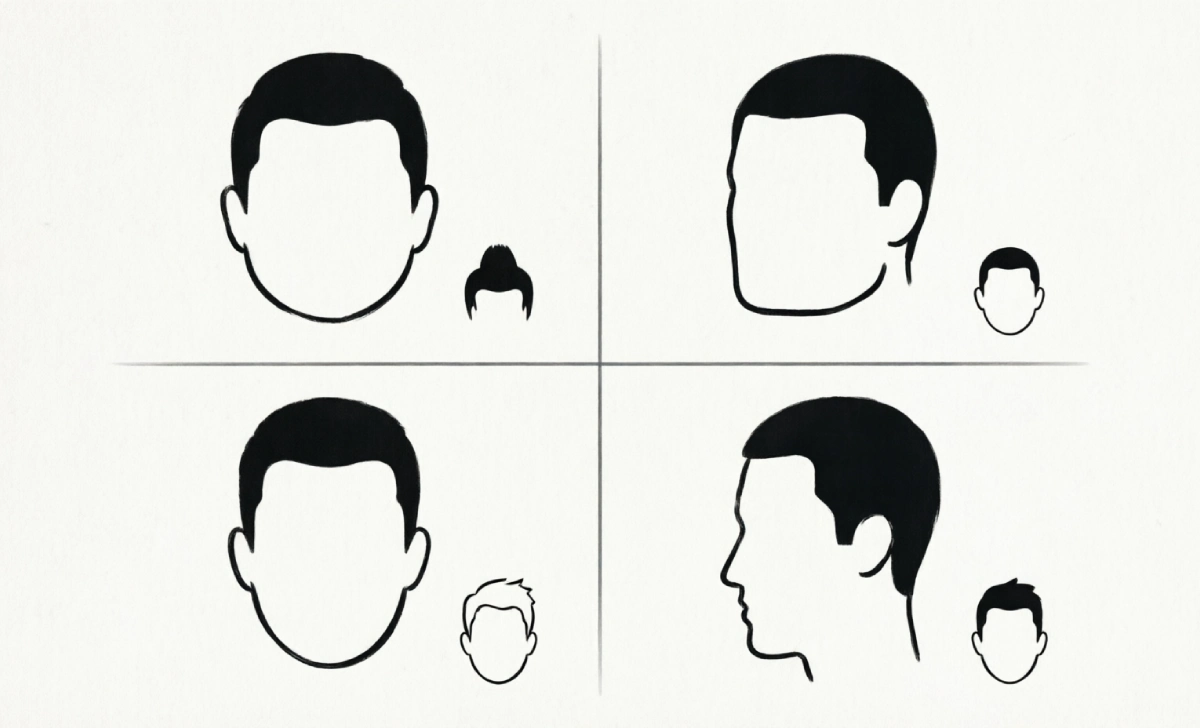
Nearly every face shape can carry some form of military haircut well. Round faces gain height and angularity from a high and tight or flat top, while square and oval faces have the most flexibility across the whole list. Oblong faces do better with a crew cut or Ivy League, since keeping width on the sides prevents the face from looking longer.
Which Products Should You Use to Keep a Military Cut Sharp?
Most of these styles need no product at all — short buzz cuts and skin fades hold their shape on their own. For an Ivy League or textured crop, matte clay adds grip without shine, while a water-based pomade gives a slightly more polished, controlled finish.
How Can You Maintain Your Military Haircut at Home Between Visits?
A decent pair of trimmers keeps your neckline and edges clean between barbershop trips. Timing your visits around something like the 2.5 haircut rule stops the fade from growing out unevenly. For most men, mastering that quick neckline clean-up alone doubles how long a professional cut stays sharp.
Frequently Asked Questions About Military Haircuts for Men
What guard length is a standard military buzz cut?
Typically a zero to a two guard. Zero leaves near-bald stubble; a two gives soft, even coverage.
Can men with curly hair get a military haircut?
Yes — a textured crop or slightly longer crew cut works well. Ask your barber to follow your natural curl pattern instead of fighting it.
How often should you get a military haircut to keep it sharp?
Every two to three weeks for most styles. A well-timed cut can also make you look younger instantly by keeping your hairline and features defined.
Do military haircuts look good on older men?
Yes, often exceptionally so. A clean, short cut shifts attention away from thinning areas and toward your facial features for a confident, dignified look.
Conclusion
A military haircut is more than short hair — it’s a daily signal that you value clarity and discipline. Whether you choose a bare-blade induction cut or a modern skin fade with a hard part, you now have the script, the guard number, and the confidence to walk into any barbershop and own the chair.