
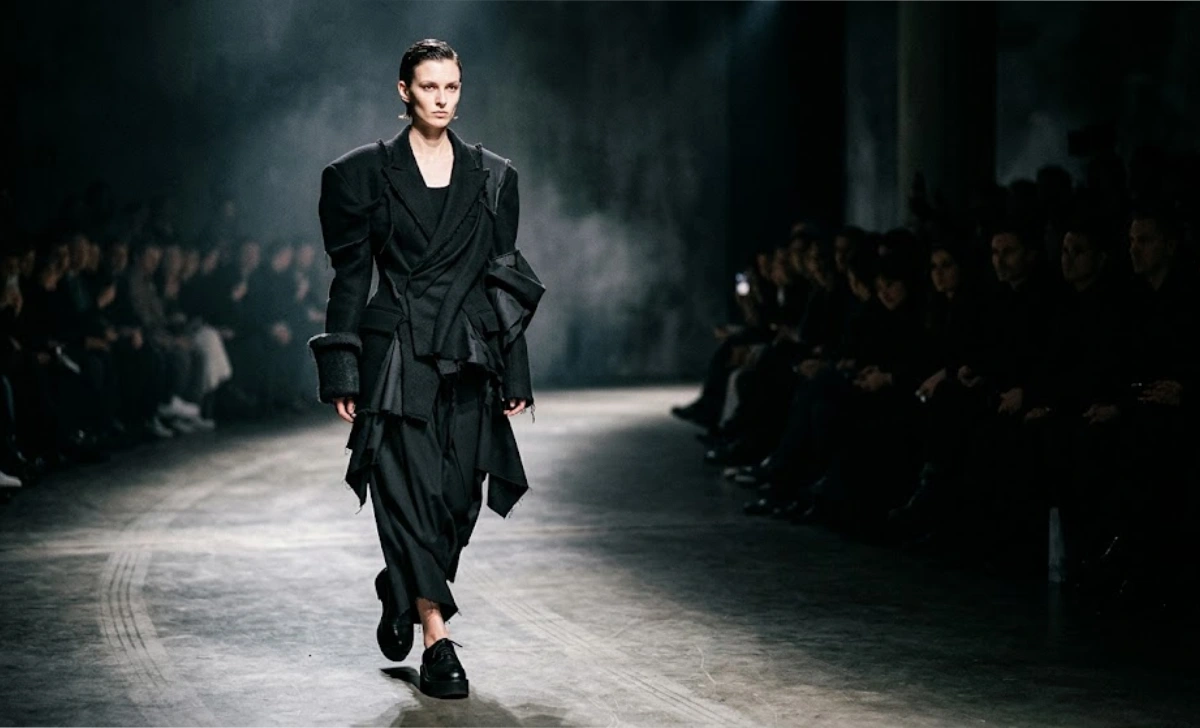
You’ve seen unusual silhouettes on runways and wondered what avant-garde fashion actually means. Maybe it was a coat with no visible arms, or a dress built more like a sculpture than a garment. Avant-garde fashion turns clothing into a statement, not just a covering, and once you understand the logic behind it, you start noticing its fingerprints everywhere — even in the different types of dresses sold on the high street today. In this guide, you’ll learn what defines the style, meet the designers who built it, and get a practical roadmap for wearing it yourself.
What Is Avant Garde Fashion?
Strip away the intimidating label, and avant-garde fashion is simply clothing that pushes boundaries on purpose. The term comes from a French military phrase meaning “advance guard,” the small unit that scouts ahead of the main army before anyone else moves. In fashion, that scouted territory is the future of how we dress, think, and express identity through fabric and form.
You can spot the avant-garde approach in garments that refuse the usual rules of symmetry, fit, or function. A sleeve might twist around the arm instead of hanging straight. A blazer might lose its lapels entirely in favor of an exaggerated, boxy shape. The goal is never to look conventionally pretty. It’s to provoke a reaction and make you pause and actually look.
What separates true avant-garde work from a costume is intention. The designer deliberately challenges your expectation of what a shirt, a pair of trousers, or a coat should be, which is why the movement stays so closely tied to conceptual art. A costume is weird for entertainment. Avant-garde fashion uses strangeness to explore real ideas about identity, gender, beauty, and politics — the clothing is the argument, not the punchline.
The History of Avant-Garde in Fashion
The roots stretch back to the early twentieth century, when artists decided that life itself should be a canvas. Surrealists like Salvador Dalí and the logic-mocking Dadaists gave fashion its first real permission to rebel against good taste. Elsa Schiaparelli fused fine art with wearable clothing in the 1930s; her famous lobster dress, created with Dalí, declared that a garment could double as high art rather than sit quietly as decoration.
The real earthquake arrived in the 1980s, when Japanese designers Rei Kawakubo and Yohji Yamamoto showed their work in Paris. Their collections were quiet, deconstructed studies in black and white that tore apart Western ideas of glamour and fit. Models walked in garments with raw edges, intentional holes, and shapes that hid the body rather than revealing it. Critics initially used an offensive nickname for the work, now rightly retired, but Kawakubo and Yamamoto proved avant-garde fashion could be emotional and spiritual. Tokyo became a new center of gravity for the entire conversation almost overnight.
From there, the revolution spread to Antwerp, London, and beyond. The Antwerp Six, including Ann Demulemeester and Dries Van Noten, carried the deconstructionist torch into the 1990s, and Alexander McQueen later pushed fashion into visceral, theatrical territory that felt closer to performance art than a clothing show.
Key Characteristics of Avant-Garde Fashion
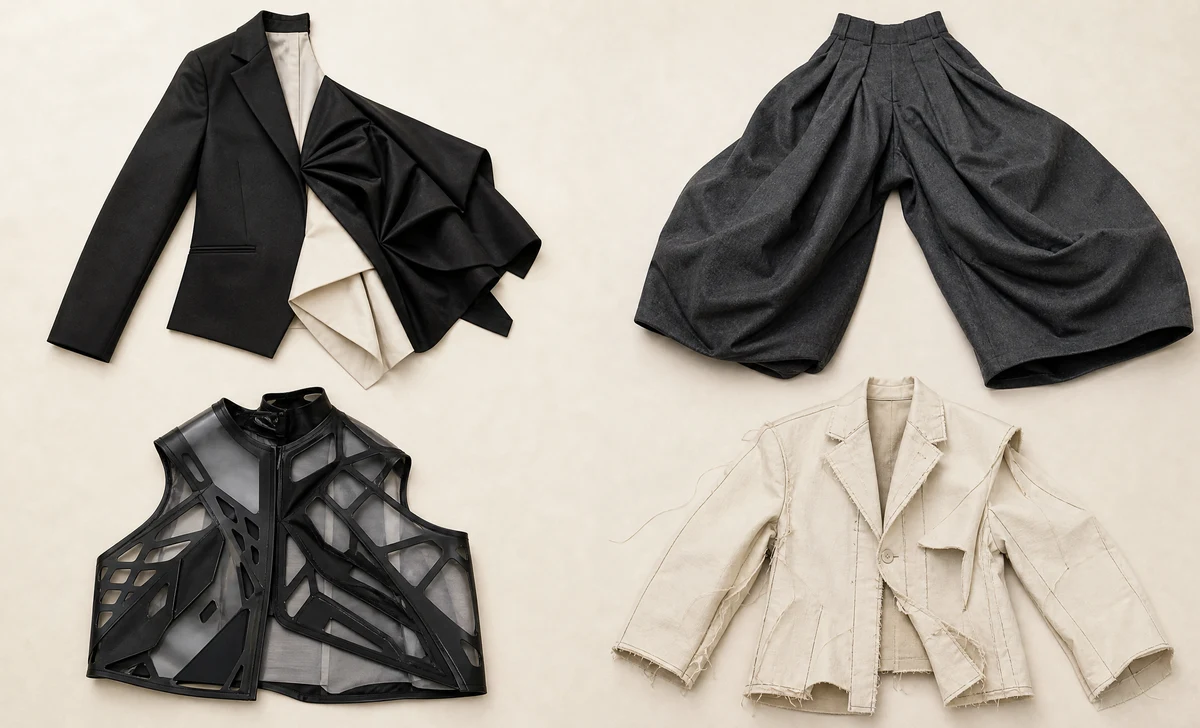
A handful of visual signatures make avant-garde fashion recognizable once you know what to look for.
Asymmetry is the first. A traditional jacket has two equal lapels, but an avant-garde piece might pair one massive, sculptural shoulder with a bare opposite arm, forcing your brain to recalibrate what counts as normal.
Proportion is the second playground. Coats with sleeves that pool on the floor, trousers that balloon like wearable architecture, or skirts that jut out at impossible angles treat the human form as a pedestal for a sculptural idea rather than something to flatter conventionally. Even something as familiar as denim gets reimagined this way — if you’ve ever wondered how to style flare jeans with real drama, the same volume-first thinking that drives avant-garde design applies at a much smaller, wearable scale.
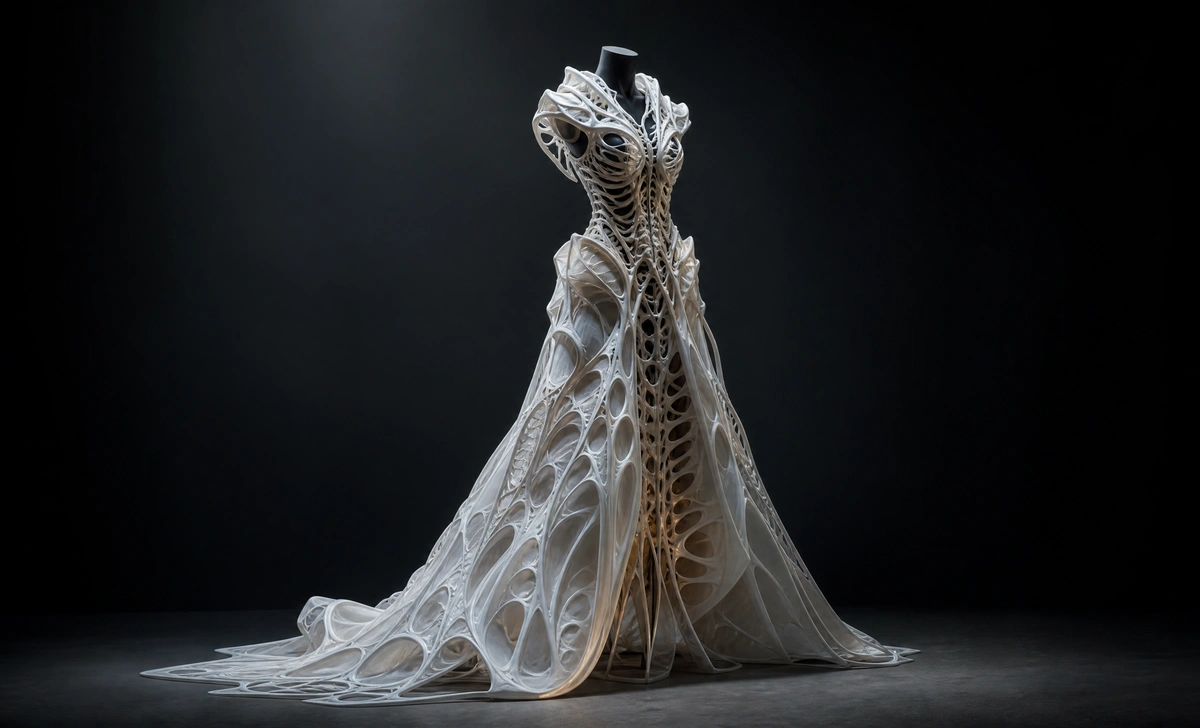
Unconventional materials show up everywhere. Designers like Iris van Herpen use 3D printing, silicone, and laser-cut synthetics in place of wool and cotton, so the material itself becomes part of the story rather than just a means to an end.
Deconstruction, popularized by Rei Kawakubo and Martin Margiela, rounds out the list. Raw hems, exposed seams, and unfinished layers aren’t sloppiness. They’re an invitation to find beauty in the incomplete, and to ask why we assume clothing needs to look “finished” at all.
Who Are the Most Famous Avant Garde Designers?
Rei Kawakubo is arguably the most important living designer in this space. Through Comme des Garçons, she has spent decades redefining the relationship between clothing and the body, treating volume and absence as poetry rather than a technical problem to solve.
Yohji Yamamoto, her peer, is a master of dark, flowing silhouettes that feel almost protective, challenging convention through drape rather than structure. His work rarely shouts; it moves.
Alexander McQueen brought high drama and raw emotional storytelling to the runway before his untimely death, with shows that dealt in grief, nature, and history in ways few designers had attempted before or since.
Iris van Herpen is a contemporary force blending tradition with futuristic technology. Her 3D-printed creations look woven from water, bone, and light, and they’ve pushed haute couture ateliers to rethink what “handmade” even means.
Other essential names include Martin Margiela, the reclusive Belgian who turned deconstruction into philosophy, and Rick Owens, whose brutalist aesthetic built a devoted cult following that spans streetwear and high fashion alike.
How Avant Garde Fashion Shapes Mainstream Trends
This extreme fashion doesn’t live in a bubble. Its influence drips steadily into everyday clothes, usually stripped of its original intensity but keeping the core idea. The oversized blazer found in every high-street store owes a debt to avant-garde proportions pioneered by Kawakubo and Yamamoto, later softened and absorbed by mass fashion until it became a wardrobe basic.
Deconstructed details migrated the same way. Raw hems, exposed seams, and asymmetrical cuts now appear in everyday brands because the avant-garde made them feel intelligent rather than accidental. Even a simple styling decision, like pairing an unexpected shirt with green pants, owes something to the avant-garde habit of questioning “matching” as a rule rather than treating it as law. And the modern idea of a runway show as an art installation, rather than a parade of merchandise, traces directly back to boundary-pushers like McQueen. Engaging with avant-garde fashion connects you to the source code of modern style, whether you notice it or not.
Is Avant Garde Fashion Wearable? Debunking the Myths
If you’ve stared at a runway image thinking “I could never pull that off,” you’re not alone. The truth is that avant-garde wearability exists on a spectrum. You don’t need a head-to-toe sculptural masterpiece. One thoughtfully chosen piece, like a softly deconstructed jacket, shifts an outfit into the conversation without making you feel costumed.
Another stubborn myth is that the style demands a big budget. While some pieces are investment-level, the spirit of the movement isn’t about price tags. Thrifted oversized silhouettes, vintage Japanese workwear, and independent designers all carry the torch just as legitimately as a runway label does.
Perhaps the most important myth to shatter is that you need a specific body type. Avant-garde design celebrates the body as an abstract form, not a commercial ideal. The clothes are meant to hold space for you, not the other way around, and that’s actually one of the more liberating parts of the movement once it clicks.
How to Wear Avant Garde Fashion Every Day
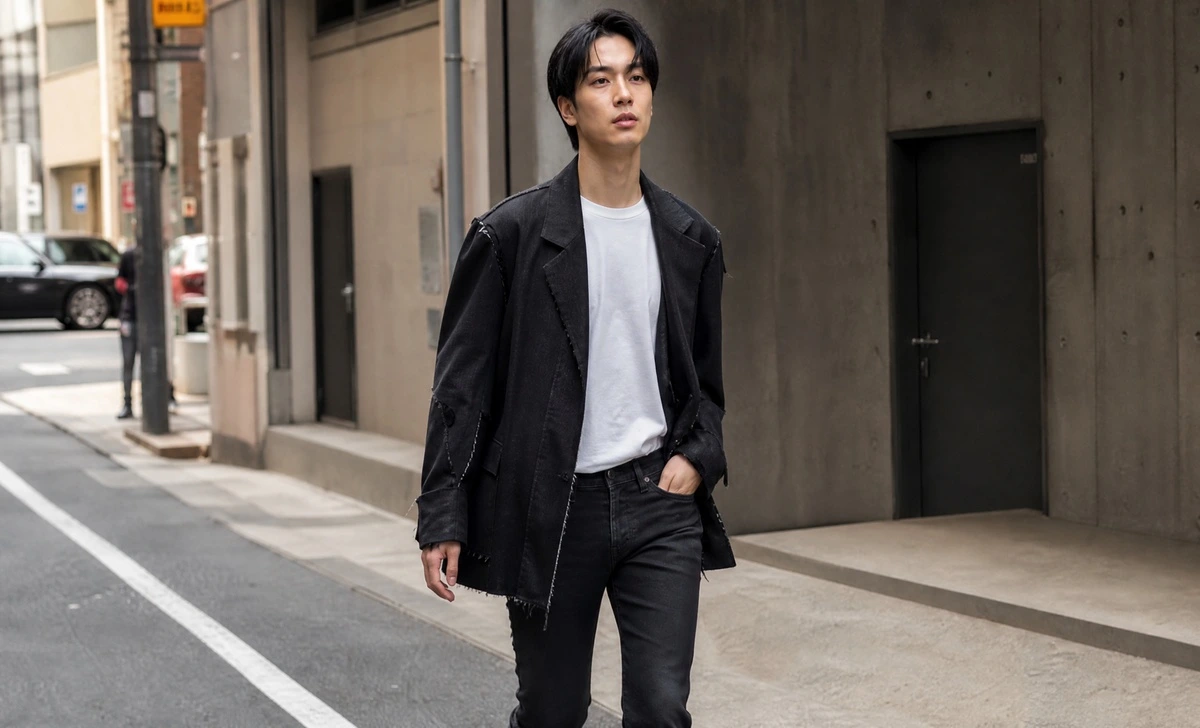
Start with one focal piece and let it anchor an otherwise simple outfit. A deconstructed blazer with raw seams over a plain white T-shirt and jeans creates immediate, wearable impact through contrast, without asking you to rethink your entire closet.
Volume is another easy entry point. A pair of wide, exaggerated trousers in a dark color paired with a fitted top feels intentional and modern without trying too hard. Texture offers a subtler path: a shirt in a crinkled, sheer, or sculptural fabric can transform a look without changing your silhouette at all.
If you want to go further, embrace monochrome looks in black, charcoal, or cream. The avant-garde masters favor this palette because it removes distraction and lets shape do the talking. Even at events with a specific dress code, a sculptural jacket or asymmetrical shirt layered under a classic suit offers a subtle, powerful rebellion. The same restraint-first thinking works for lower-stakes occasions too; the same instinct that helps you plan a solid first date outfit — pick one strong element and keep the rest calm — is exactly how experienced avant-garde dressers avoid looking overdone.
What Accessories Complete an Avant Garde Look?
Accessories let you dabble without committing to a full runway piece. Tabi boots, with their distinctive split-toe design, add architectural edge to basic jeans and a shirt. Jewelry that plays with scale — a single oversized, sculptural earring — elevates a look in seconds, while a bag with an unconventional, geometric shape becomes its own conversation starter. Angular, futuristic eyewear adds a final note without needing anything else to change.
Restraint is your friend here. When the accessory is the protagonist, let the rest of the outfit play a supporting role and resist the urge to add a second statement piece on top of it.
How to Shop on Any Budget
Secondhand platforms and vintage stores are treasure chests for oversized blazers, deconstructed knits, and unusual silhouettes from Japanese brands, Belgian designers, or unknown labels that experimented with shape decades before it was trendy. If you’re ready to invest, a signature item from Comme des Garçons, Yohji Yamamoto, or Rick Owens holds its visual power for years and rarely feels dated.
Independent and emerging designers are another goldmine. Many young creators on platforms like Etsy produce avant-garde-inspired work at accessible prices using upcycled materials and unusual techniques. Shop with intention, not impulse: ask whether a piece says something you actually want to say, not just whether it looks interesting on a hanger.
Common Mistakes to Avoid
Wearing too many statement pieces at once creates visual noise instead of elegance. Let one extraordinary element breathe while the rest of the look stays calm and out of the way. Confusing avant-garde with costume is another misstep — these pieces come from intellectual and emotional inquiry, not a desire to dress up as a character for the night.
Ignoring fit entirely is also a mistake. Avant-garde plays with volume, but the garment should still relate to your body deliberately; a massive coat works because the designer decided exactly how it should fall, not because bigger is automatically bolder. Finally, don’t talk yourself out of trying. Avant-garde fashion is for anyone willing to see clothing as personal poetry rather than a uniform.
Frequently Asked Questions
What is the difference between avant-garde fashion and haute couture?
Haute couture is custom, regulated Parisian luxury; avant-garde fashion is conceptual. You can have avant-garde couture, but the terms describe different things — one is about ideas, the other about a legal classification tied to how a garment is made.
Can men wear avant-garde fashion?
Absolutely. Designers like Yohji Yamamoto and Rick Owens built careers on menswear that challenges masculinity, and the principles of volume, asymmetry, and material experimentation apply across genders equally.
How do I explain an avant-garde outfit to someone who doesn’t get it?
Describe it as clothing that treats the body as a canvas for ideas, not decoration. A short explanation like that often turns confusion into curiosity instead of dismissal.
Is avant-garde fashion uncomfortable?
Not necessarily. Some pieces prioritize concept over ease, but many feel protective and freeing — Yamamoto’s loose silhouettes are famously comfortable once you let go of expecting a tight fit.
Do I need training or a fashion background to wear it well?
No. Understanding the ideas behind the movement helps, but the only real requirement is a willingness to let one piece speak louder than the rest of your outfit.
Conclusion
Avant-garde fashion is not a secret club. It’s a language you can learn, one piece at a time. You now know what defines the style, who shaped it, and how to bring its poetry into your closet. Start with a single shape that moves you, and let it become your quiet act of creative rebellion.