
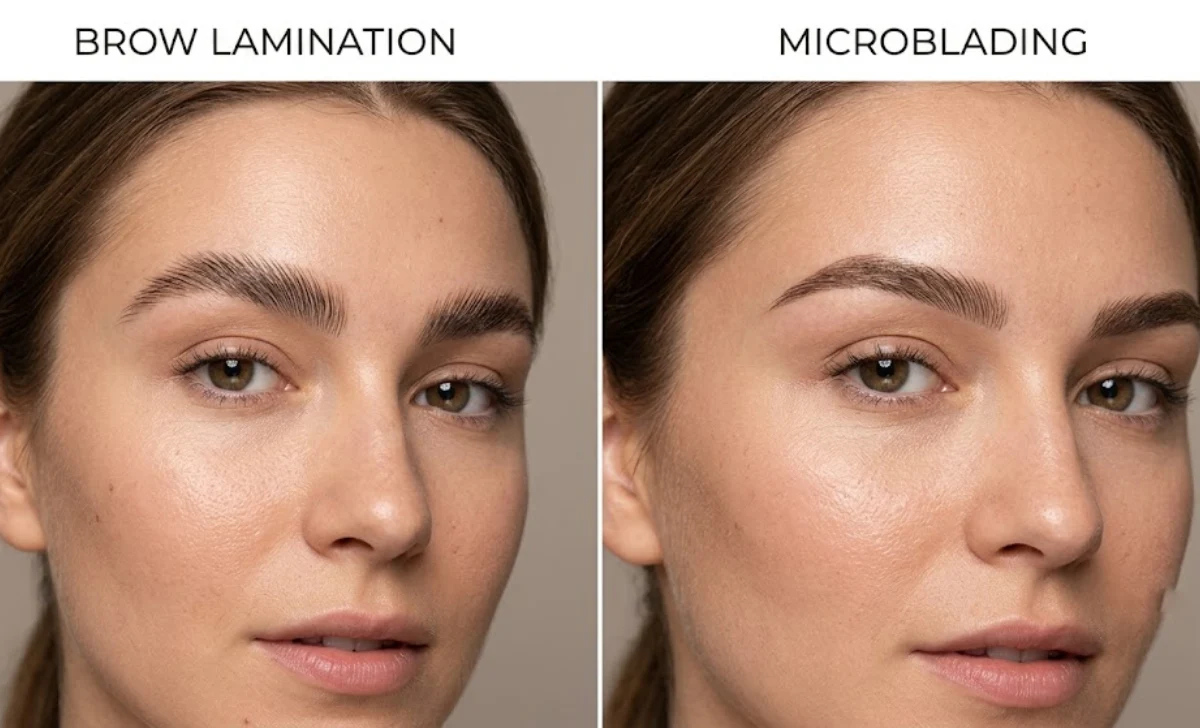
Standing at the salon counter with two brow treatments on the menu and no idea which one to pick? You’re not alone. Both promise gorgeous, full brows, but they work in completely different ways — and picking the wrong one means wasted money and a few awkward weeks waiting for it to grow out or fade. Before you book anything, it also helps to know that a simple brow tint is often a much lower-commitment starting point than either of these two treatments.
When it comes to Brow Lamination vs Microblading, the difference comes down to this: lamination brushes up the hairs you already have for a fluffy, lifted look that lasts a few weeks. Microblading adds fine, hair-like strokes of pigment that stick around for over a year. By the time you finish reading, you’ll know exactly how each one works, what it actually costs, and which fits your life better.
What Is Brow Lamination, and How Does It Work?
Picture a gentle perm, but for your eyebrows. A keratin-based solution loosens the internal bonds in each hair, making it soft and pliable enough for your artist to brush it into a new, lifted position. A neutralizer then locks that shape in place.
No new hairs get added here — you’re just making the most of what you’ve already got. There’s no pain involved, and you can walk out the door right after your appointment.
What Is Microblading, and How Is It Different?
Microblading is a manual technique where a trained artist uses a tiny blade to deposit ultra-fine pigment just under the skin’s surface, mimicking the look of real hairs. Unlike a traditional tattoo, the pigment sits in the upper layers of skin, which is why it fades over time instead of staying forever.
Most of your appointment time actually goes toward brow mapping and color matching, not the blading itself. A numbing cream keeps the sensation down to a light scratch.
What Happens During a Brow Lamination Appointment?
Your artist starts by cleaning the brow area and combing your hairs upward, giving you a preview of how much lift is possible. Next comes a relaxing cream, followed by the lamination lotion that softens the hair bonds over several minutes.
Once your brows are flexible enough, the artist brushes each hair into position and seals it with a fixing solution. A keratin serum wraps things up. The whole process takes under an hour, and you leave with instant, camera-ready brows.
What Happens During a Microblading Session, Start to Finish?
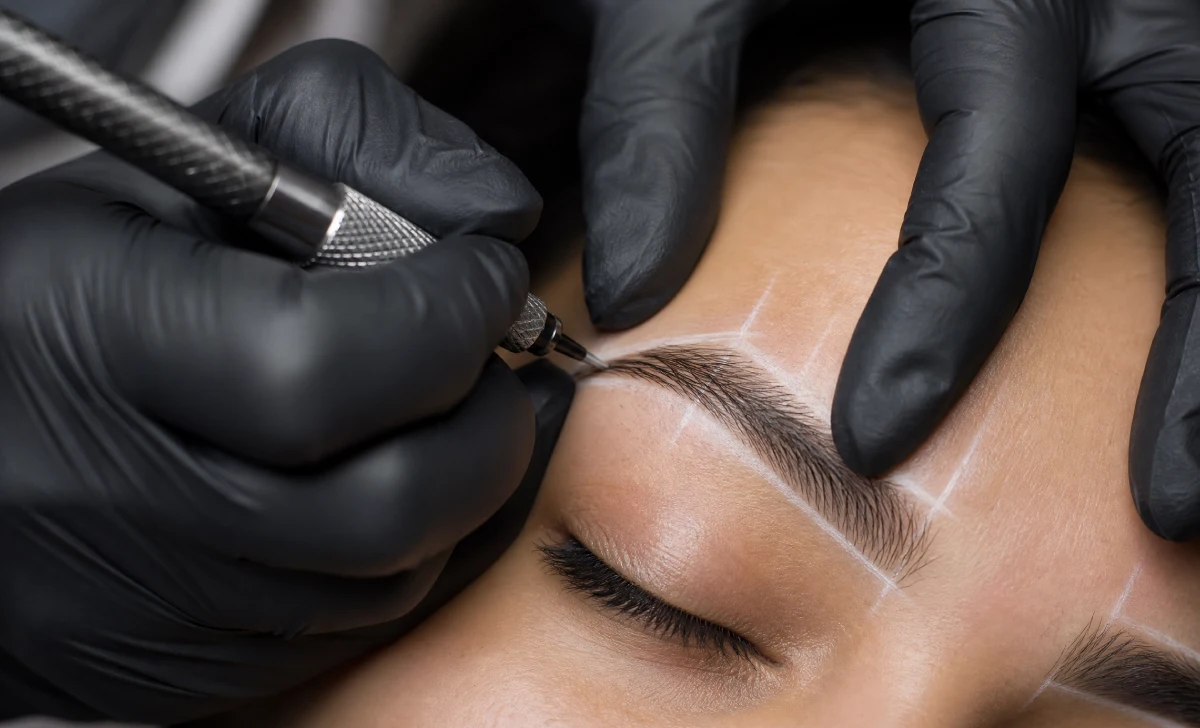
Mapping always comes first. Your artist sketches your new brow shape directly onto your skin — this step alone can take twenty minutes, since getting the symmetry right matters more than the blading itself. This is also your chance to ask for a bolder arch or a softer tail before anything permanent happens.
Numbing cream needs about thirty minutes to fully kick in. Once it does, pigment gets deposited stroke by stroke, following your natural hair direction. Expect the full session to run close to two hours. And don’t panic if your fresh brows look darker than expected — they always do at first, and the color softens as healing progresses.
What’s the Real Difference Between These Two Treatments?
Lamination works with what you already have. Microblading fills in what’s missing. One reshapes your existing hair; the other implants pigment to simulate it.
Because lamination doesn’t involve any pigment, the results stay purely textural — your brows still feel completely natural to the touch. Microblading, on the other hand, actually changes your brow’s outline, so they look defined even with a bare face. If you’re also weighing microblading against a permanent brow tattoo, our eyebrow tattoo vs microblading breakdown covers that comparison in full.
If you’ve never had any brow work done before, lamination is the lower-commitment way to test whether you even like the “fuller brow” look before investing in something that lasts over a year.
Reversibility is where they really part ways. Lamination simply fades out on its own within weeks. Microblading pigment sticks around for well over a year and needs a professional removal session if you end up hating it.
How Long Does Each Treatment Actually Last?
Lamination gives you about four to six weeks of fluffy definition before your hairs settle back into their natural pattern. Oily skin and heavy workouts tend to shorten that window even further.
Microblading typically lasts twelve to eighteen months. The crisp strokes gradually soften into a faint wash as sun exposure and active skincare ingredients speed up the fading process.
Neither one is truly “set it and forget it”:
- Lamination — touch-up roughly every two months
- Microblading — touch-up about once a year
Pain, Healing, and Downtime: Which Is Easier on You?
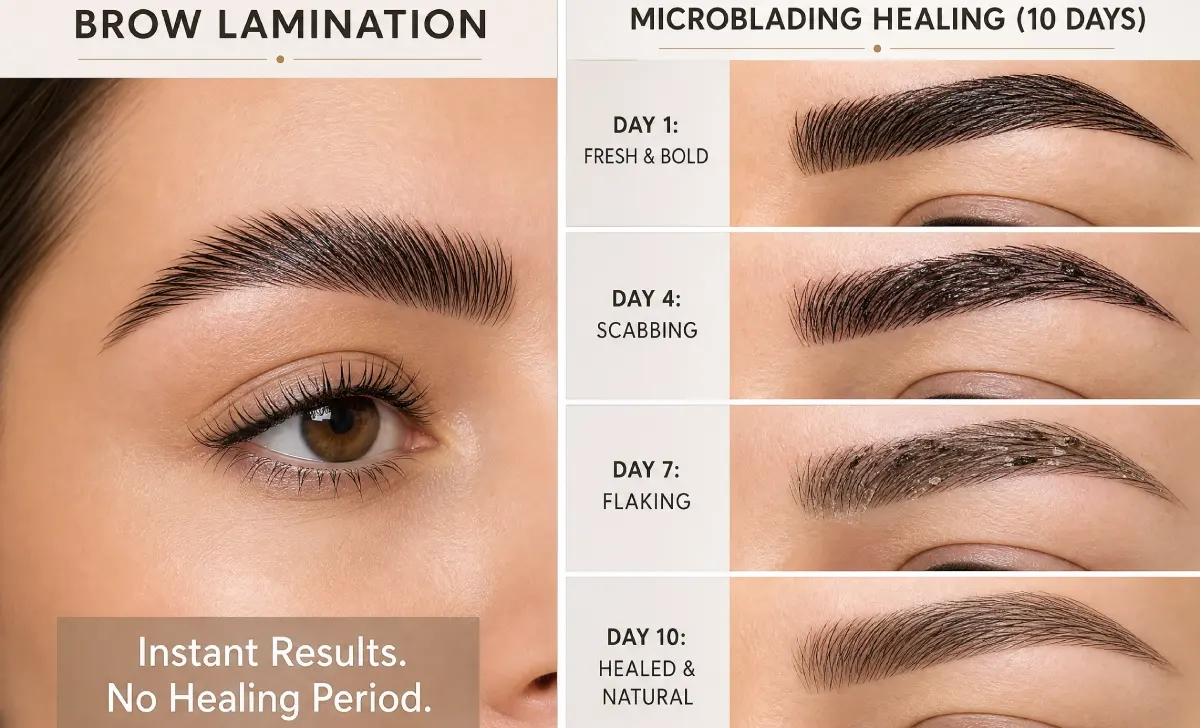
Lamination involves no needles at all — just mild warmth during the process. You’re back to your routine within twenty-four hours, no scabbing, no awkward in-between stage.
Microblading takes a bit more nerve. The first few strokes can feel like sharp little scratches before the numbing cream fully takes over. After that comes about a week of light scabbing, with your color looking noticeably darker than the final result. Day three or four tends to bring the most flaking, and by day ten, the true, softer shade finally settles in.
Which Treatment Fits Your Skin Type and Lifestyle?
Oily skin pushes pigment out faster during microblading healing, which can sometimes blur those crisp strokes into a softer, hazier shape. Lamination also fades quicker on oily skin, but it never looks “botched” — it just loses its lift a little sooner than average.
If you swim often or hit the gym hard, expect both treatments to wear down faster than they would otherwise. And if you’re using retinol, acne medication, or blood thinners, talk to a professional before booking either one — these can all affect pigment retention and bleeding risk. For many people in this situation, lamination ends up being the lower-risk pick.
Cost Comparison: What You’ll Actually Spend Over Time
A single lamination session typically runs sixty to one hundred twenty dollars. Microblading starts around four hundred dollars and can climb past eight hundred depending on your artist. At first glance, lamination looks like the clear budget winner.
But here’s the catch: booking lamination every six weeks adds up to over six hundred dollars a year, and past twelve hundred across two years. Compare that to one microblading session plus an annual touch-up, which often lands closer to a thousand dollars over that same span. Long term, microblading can actually work out to be the better value for a lot of people.
Can You Combine Lamination and Microblading?
Not at the same time. Applying lamination solution over fresh microblading can fade the pigment unpredictably, so most artists recommend waiting at least eight weeks after your microblading has fully healed before considering lamination.
Pairing lamination with a brow tint, though, works great — the tint darkens the finer hairs that lamination exposes, giving you a bolder, needle-free result. Whatever route you’re considering, always tell your artist about any past brow treatments before booking something new.
Side Effects and Who Should Avoid Each Treatment
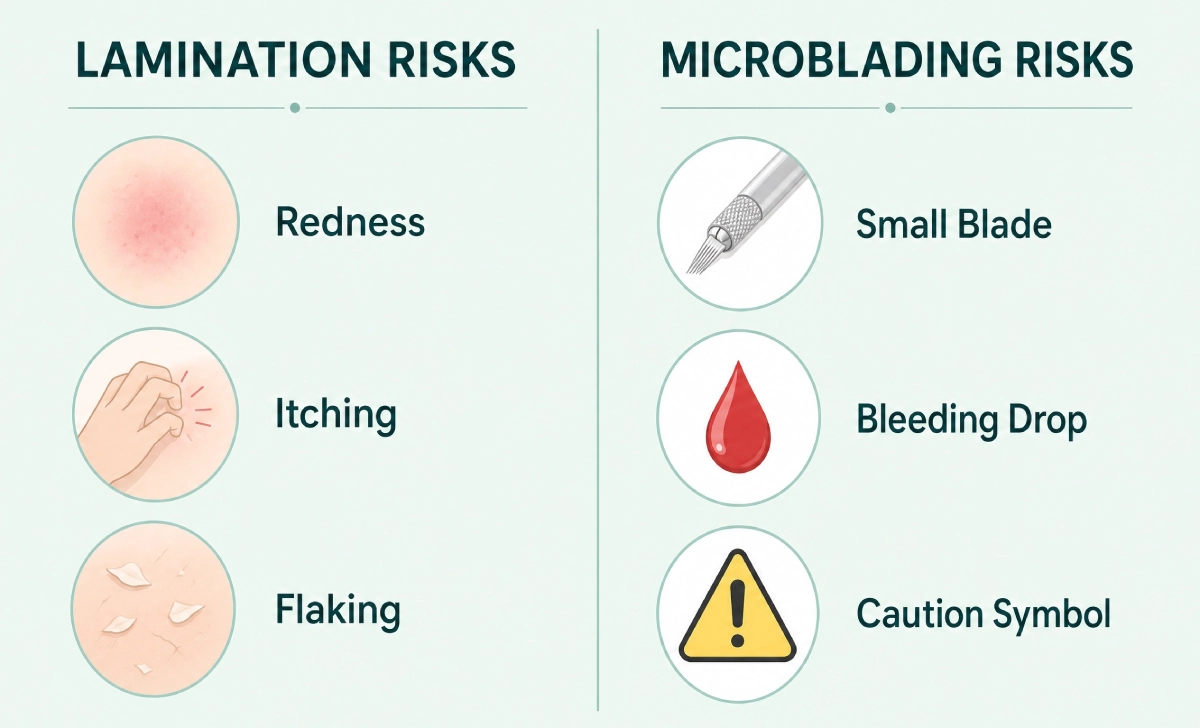
Lamination’s risks are pretty minor — occasional redness, itching, or a bit of dry flaking. A patch test forty-eight hours before your appointment catches most allergic reactions early.
Microblading carries a bit more risk since it breaks the skin. Only book with a licensed artist who opens fresh, sterile needles right in front of you. Ethical artists will typically turn away pregnant or nursing clients, along with anyone prone to keloid scarring.
If you’re already managing other skin concerns, it’s worth checking with a dermatologist before adding any new brow treatment into the mix, just to be safe.
So, Which One Should You Actually Choose?
Want a low-commitment refresh before a wedding or a big trip? Lamination gives you instant, reversible drama with zero downtime. Tired of filling in your brows every single morning and dealing with visible gaps? Microblading offers a longer-term fix that’s worth the week of healing.
A lot of people actually use both at different points in life — lamination in their twenties when they’re still figuring out their preferred shape, microblading later on when they’re ready for something more permanent. Trust your own mirror and a licensed artist’s honest opinion over whatever’s trending on your feed this week.
Pro tip: Don’t skip the aftercare instructions your artist gives you, even if they seem overly cautious. Even everyday products like a basic protective ointment aren’t always safe to use near freshly treated skin — your artist’s specific guidance matters more than generic tips you’ll find online.
Frequently Asked Questions
Can I wear makeup right after brow lamination or microblading?
Makeup elsewhere on your face is fine immediately after lamination, but skip brow products for the first twenty-four hours. After microblading, keep the entire brow area completely bare for about ten days to avoid infection.
How do I soften my brow lamination if I don’t like the look?
Massage a gentle facial oil into your brows twice a day and brush the hairs into your preferred direction. The stiffness usually fades within a week on its own — no chemical reversal needed.
What should I look for in a microblading artist?
Ask to see fully healed results, not just fresh, right-after-the-appointment photos. Confirm they’re licensed and that they open sterile, single-use blades in front of you before starting.
Does microblading ever look fake or too harsh?
Usually only during the first week. Once the scabbing clears, the pigment softens noticeably and settles into a natural, powdery finish that matches your skin tone.
The Bottom Line
Neither treatment is universally “better” — your budget, pain tolerance, and patience for upkeep are what really decide the winner here. If you want a quick, fluffy refresh with zero commitment, go with lamination. If you’re after strokes that need zero morning effort for over a year, microblading is your answer. And if a permanent brow tattoo is still on your radar too, our tattoo vs microblading comparison lays out that decision in more detail.
Whichever way you’re leaning, book a consultation with a licensed artist who can assess your actual brows in person. You’ll walk out far more confident in your decision than any article — this one included — could make you on its own.