
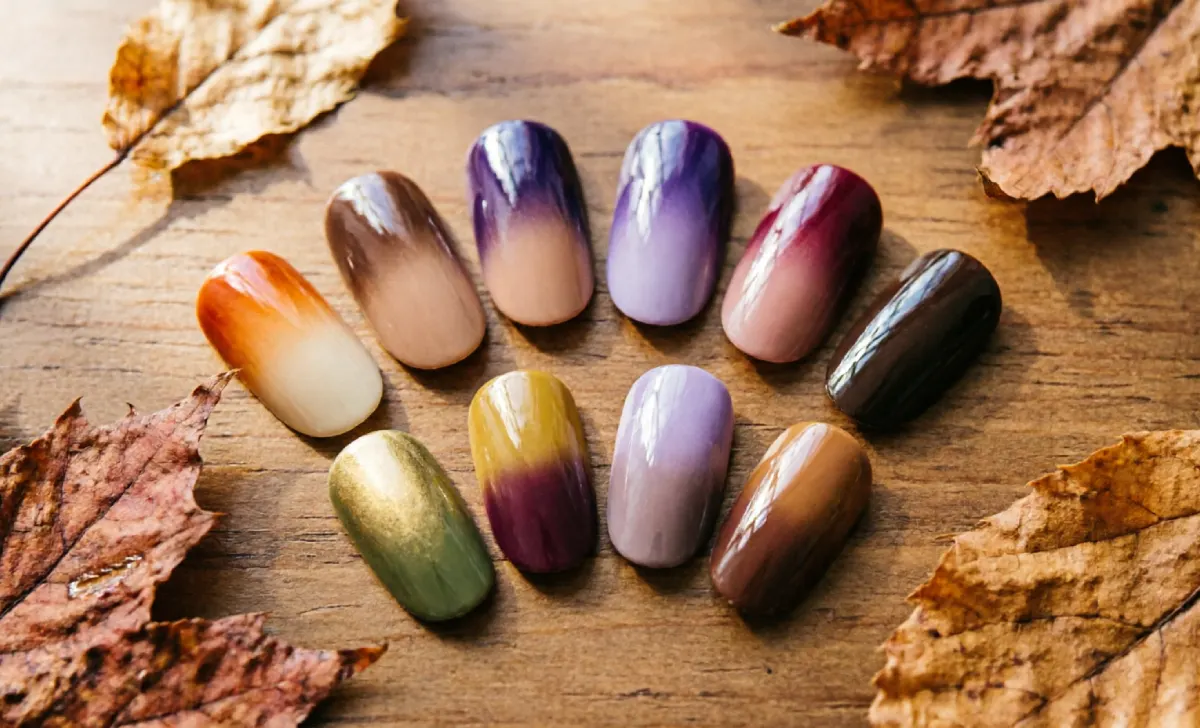
Picking just one fall nail shade feels impossible when burnt orange, deep plum, and chocolate brown all look perfect at once. That’s exactly why fall ombre nail colors work so well — you blend two shades into one seamless gradient instead of choosing just one. Here are eight combinations worth trying this season, with guidance on skin tone, nail shape, and how to pull each one off at home or in a salon.
Ombre nails fade one color softly into another on the same nail. Fall makes this technique feel especially natural because the season is already about transitions — warm to cool, golden to deep. When your nails mirror that shift, the result feels seasonal and intentional without looking overdone.
What Makes a Nail Color Combo Perfect for Fall?
Some color pairings feel like autumn the moment you see them. That feeling comes from warmth, depth, and earthiness. The best fall ombre combos borrow from the same palette as the season — burned leaves, spiced drinks, the last golden light of an October afternoon.
What separates a fall-ready pairing from a generic one is how the shades interact. When both tones share the same warmth or muted quality, the blend looks intentional. A burnt orange fading into soft cream works because both sit in the same tonal family.
Finish also matters. A glossy top coat makes any ombre look liquid and polished. A matte coat turns the same two colors into something velvety and soft. The same combination can feel entirely different with a change in finish, which doubles your options.
How Do You Choose Ombre Shades That Flatter Your Skin Tone?
Skin tone changes how a color reads on your hand. A shade that looks stunning in a photo can wash you out in a way that’s hard to explain. Ombre gives you more room than a solid color because the two-tone blend creates its own balance.
Your undertone is the starting point. If your veins look blue or purple, you lean cool — mauve, berry, and plum will feel elegant. If they appear greenish, you lean warm — pumpkin, caramel, olive, and gold are your territory. Neutral undertones move between both families.
When you build an ombre around your undertone, the gradient sits harmoniously against your skin. Each combination below includes a quick skin tone note so you can skip the guesswork.
The 8 Best Fall Ombre Nail Color Combinations
Burnt orange to cream is the most autumnal pairing here. The orange captures fall foliage energy, and the cream softens it into something wearable daily. Warm and neutral skin tones will find this most flattering.
Chocolate brown to nude is the reliable classic of fall ombre nail colors. The deep brown fades into a sheer skin-matching nude that reads polished and professional on any skin tone.
Deep plum to mauve is where fall gets sophisticated. The plum anchors the nail with drama while the mauve softens it into something wearable beyond a special occasion. Cool undertones love this combination most. Before booking a detailed blend at a salon, it helps to check the ombre nails cost ahead of time.
Burgundy to blush gives you wine-dark richness softened by a petal-pink base. It works on cool and neutral skin tones, and a matte top coat gives it a fresh, modern edge.
Olive green to gold is for anyone who wants something unique without going loud. The dusty olive fades into a soft champagne gold that catches light quietly. Warm undertones get the most from this pairing.
Mustard to merlot is the boldest pairing here. A spicy yellow-gold deepens into a rich almost-black merlot for a gradient that makes a real statement. Warm and deep skin tones carry this one best.
Mauve to dusty rose is the most versatile option here. The cool-leaning mauve transitions into a soft, warm, dusty rose. It works across all undertones, making it a smart first choice for anyone new to fall ombre nail colors.
Espresso to caramel is the coffee-shop gradient; warm and neutral skin tones will return again and again. The deep espresso fades into creamy caramel that looks rich without feeling heavy. A glossy top coat makes it almost three-dimensional.
Quick Reference: Which Combo Fits Your Look
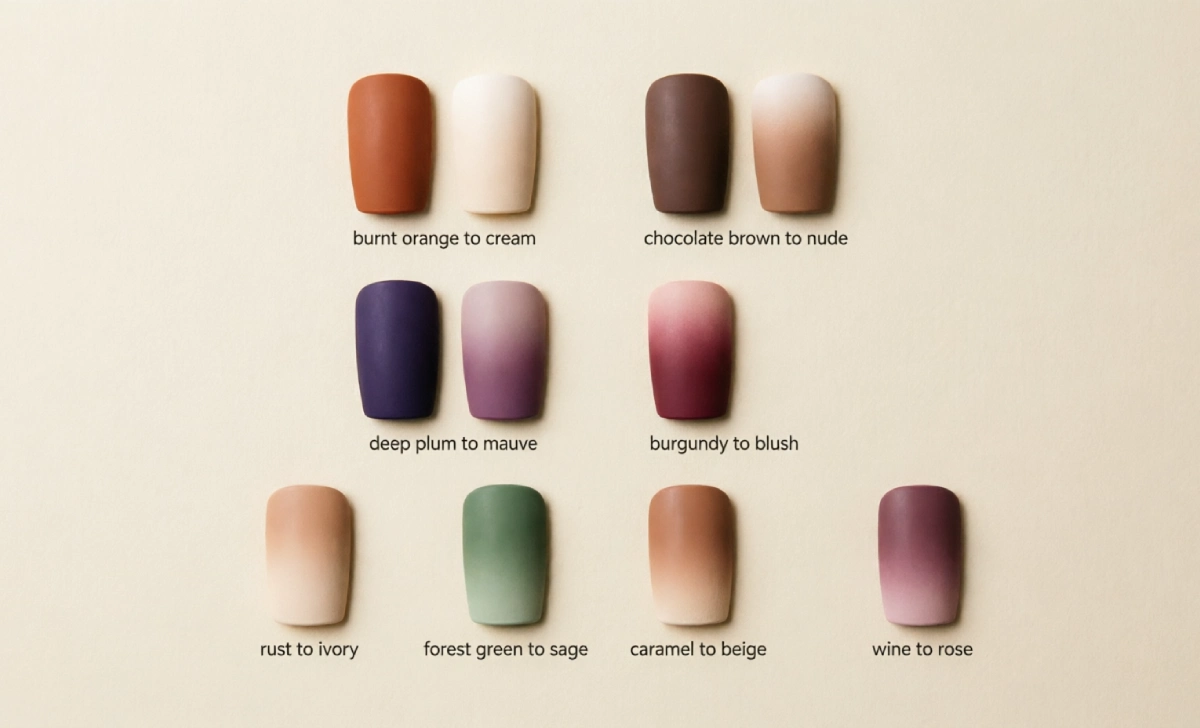
| Combination | Best Skin Tone | Vibe | Best Finish |
|---|---|---|---|
| Burnt orange to cream | Warm, neutral | Everyday autumn | Glossy |
| Chocolate brown to nude | All tones | Office-friendly | Matte or glossy |
| Deep plum to mauve | Cool | Evening, sophisticated | Glossy |
| Burgundy to blush | Cool, neutral | Festive | Matte |
| Olive green to gold | Warm | Understated, unique | Glossy |
| Mustard to merlot | Warm, deep | Bold statement | Glossy |
| Mauve to dusty rose | All tones | Beginner-friendly | Either |
| Espresso to caramel | Warm, neutral | Rich, cozy | Glossy |
Can You Do Fall Ombre Nails at Home?
Yes, and it is far more approachable than the finished result suggests. The main tool is a small makeup sponge with tight pores. Paint both colors onto the sponge where they slightly overlap, then dab it onto your nail in light repeated presses. This sponge ombre technique is what builds the gradient with each pass. For a longer-lasting gel version, a detailed walkthrough on gel nail home application covers every curing step.
Before you start, wrap the skin around each nail with liquid latex or tape to catch excess polish. When the fade looks right, seal everything with a top coat to smooth the sponge texture and blend the colors into one fluid wash.
Work in thin layers and build gradually. Imperfect blending often looks intentional once the top coat goes on.
Common Mistakes to Avoid With Fall Ombre Nails
A few small habits are behind most messy ombre attempts, and they’re easy to fix once you know what to look for.
Loading too much polish onto the sponge is the most common one. A thick, wet sponge drags color onto your skin and leaves the gradient looking muddy instead of soft. Dip lightly and dab in thin passes instead — you can always build up more color, but you can’t easily remove a heavy first layer.
Skipping the overlap zone is another issue. If your two colors don’t touch and blend a little on the sponge before they hit your nail, you get a hard line instead of a fade. Press the sponge down so both shades meet and mix slightly before the first dab.
Rushing the drying time between coats causes smudging and pulls color unevenly across the nail. Let each layer set for a minute before adding the next one, especially with regular polish.
What Nail Shapes Work Best With Fall Ombre Designs?
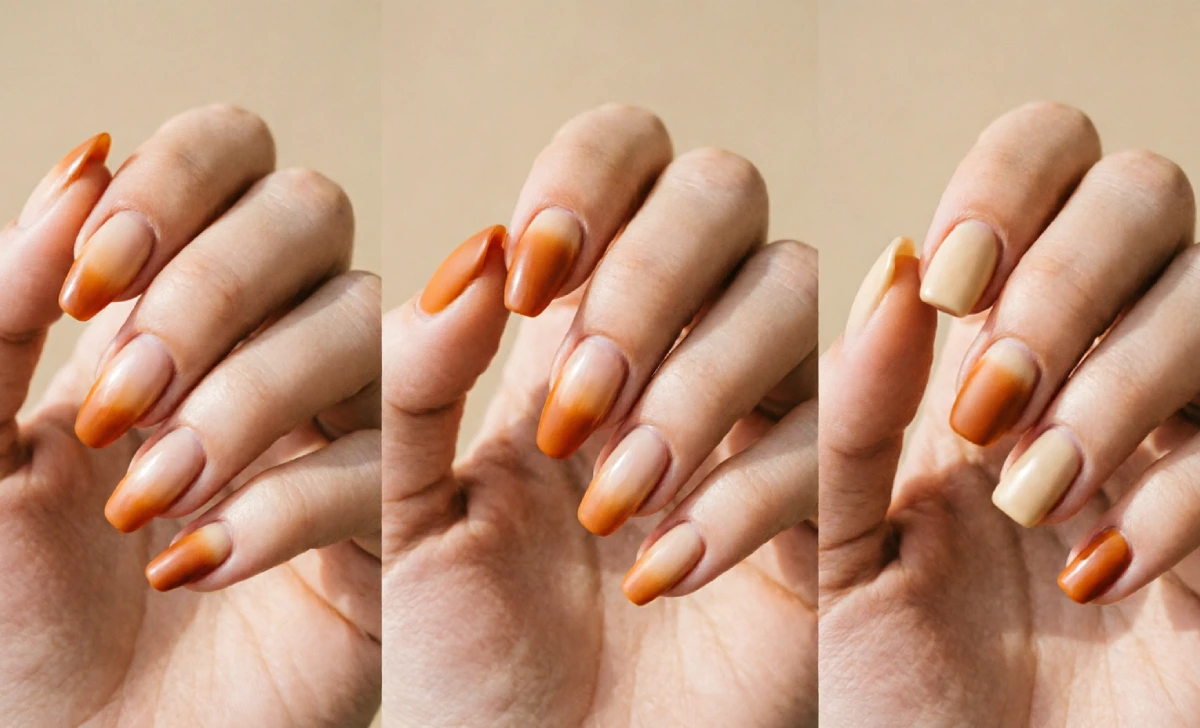
Your nail shape changes how the gradient reads on your hand. A long coffin nail gives the color transition a dramatic canvas, while a short round nail calls for a tighter blend. Neither is wrong — they just require different approaches to where the colors start and stop. A full nail shape guide can help you decide which shape suits your hands before you choose a gradient style.
Short nails work best with shades that are close in tone. Two soft neutrals or muted earth tones blend cleanly, even in a small space. Coffin nails handle high-contrast combos better because the extra length gives each color room to exist before they meet.
Gel or Regular Polish: Which Works Better for Ombre?
Both work, but they behave differently once the gradient is on your nail. Regular polish is easier to blend because it stays workable for a few extra seconds, which gives the sponge more time to soften the line between colors. It’s also simpler to fix on the spot with a little remover on a brush.
Gel polish needs to be cured under a lamp between layers, which means each pass of color sets almost immediately. That makes blending trickier for beginners, but the payoff is a manicure that holds its shape and shine for two to three weeks instead of days.
If this is your first time attempting an ombre, practice the technique with regular polish first. Once you’re comfortable with the sponge method, moving to gel is mostly a matter of adding cure time between steps.
How to Make Your Fall Ombre Nails Last Longer
The top coat is your most important tool for longevity. Sealing the free edge — the thin front rim of your nail — stops polish from lifting at the tip, which is where chips almost always start. This single step can add three to four extra days to any manicure.
For gel ombre, a no-wipe gel top coat gives weeks of wear. For regular polish, refresh your top coat on day three or four to re-seal small cracks before they grow. Cuticle oil each night keeps the polish flexible so it bends instead of snapping off.
What’s the Difference Between Ombre and Gradient Nails?
Most people use these two terms interchangeably, and nail technicians understand either one. If you want the full breakdown, this comparison of gradient vs ombre nails covers it in detail. Technically, a gradient can describe a color shift across multiple nails — each nail a slightly lighter version of the same hue. An ombre specifically refers to the fade within a single nail, where two colors melt together on one surface.
For everyday purposes, this distinction matters very little. Bring a reference photo, name your two colors, say you want a soft blended fade, and any nail artist will know exactly what you’re after.
Fall Ombre Nail Inspiration for Every Occasion
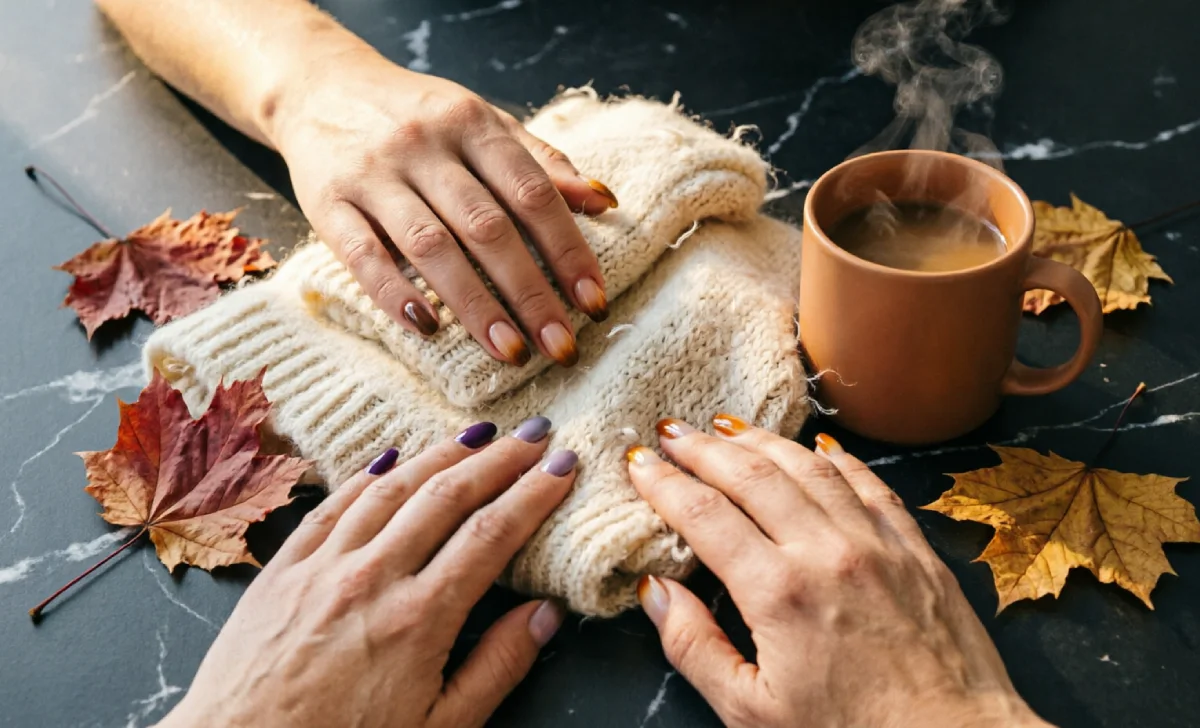
For workdays, chocolate brown to nude and mauve to dusty rose are the cleanest choices. They communicate style without drawing attention away from anything important. Both are easy to do on a Sunday evening and polished enough to wear through Friday.
For holiday gatherings, deep plum to mauve or burgundy to blush bring festive richness that pairs well with warm lighting and seasonal outfits. For casual weekends, burnt orange to cream or olive green to gold pair naturally with chunky sweaters and crisp afternoon walks. Once the colder months settle in, these winter nail ideas are a natural next step for your manicure.
FAQs
Can I mix regular nail polishes to create a custom fall ombre shade?
Yes. Drop a small amount of each shade onto a piece of foil and blend a transition color between them with a toothpick. Dab this mixed shade onto the sponge between your two base colors for a smoother fade.
Do ombre nails work on very short nails?
They do. Choose shades close in tone — two soft neutrals or muted earths — so the gradient reads clearly even on a small canvas. The fade looks polished at any length.
What is the easiest fall ombre combination for a first-timer?
Chocolate brown to nude. The shades are naturally harmonious, and any small blending imperfections read as intentional shadowing rather than mistakes.
How do I describe an ombre look to my nail technician?
Name your two colors and specify whether you want the darker shade at the cuticle or the tip. The phrase “soft blended fade” communicates the look clearly to any nail artist.
Does an ombre manicure damage your natural nails?
No more than any other polish or gel manicure. The sponge technique itself doesn’t affect nail health — what matters is proper gel removal (soaking, not peeling) and giving your nails a short break between manicures if you notice thinning or peeling.
How long does a salon fall ombre manicure usually take?
Plan for 45 minutes to an hour, longer than a single-color manicure. The sponge blending and extra drying time between layers add to the appointment length, especially for high-contrast combinations like mustard to merlot.
Conclusion
You now have eight fall ombre nail color combinations, a clear way to match them to your skin tone, and a simple method for doing them at home or with a nail artist. A gradient gives you the full warmth of the season in one look without settling for a single shade. Pick the combination that feels most like you, grab your tools or inspiration photo, and give yourself the autumn manicure this season deserves.