
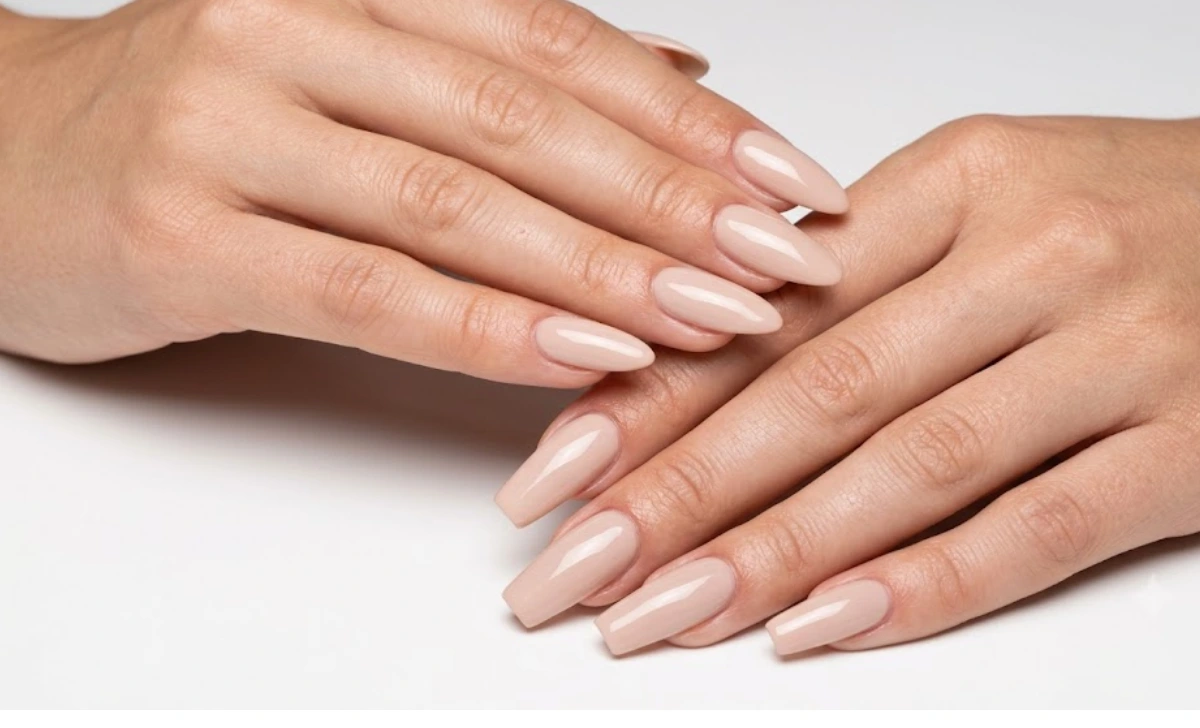
You’ve been scrolling through nail photos, torn between coffin and almond. Both shapes are trending hard right now, whether you’re picking gel or acrylic for your next set. When you search Coffin vs Almond Nails, most guides just say “one is round, one is square” and stop there. This one breaks down the real differences, shows which shape actually flatters your fingers, and gives you the exact words to use with your nail tech.
Quick Answer: Coffin vs Almond at a Glance
| Almond | Coffin | |
|---|---|---|
| Tip shape | Soft, rounded point | Flat, squared-off tip |
| Best for | Short or wide nail beds, everyday wear | Longer nails, statement looks |
| Length needed | More length reads as almond, not oval | Works even at shorter extensions |
| Upkeep | Grows out gracefully, softens into oval | Needs reshaping sooner as corners lengthen |
| Breakage risk | Lower — pressure spreads along the curve | Slightly higher at the two corners |
| Vibe | Soft, polished, quietly elegant | Bold, architectural, statement-making |
What Is the Real Difference Between Coffin and Almond Nails?
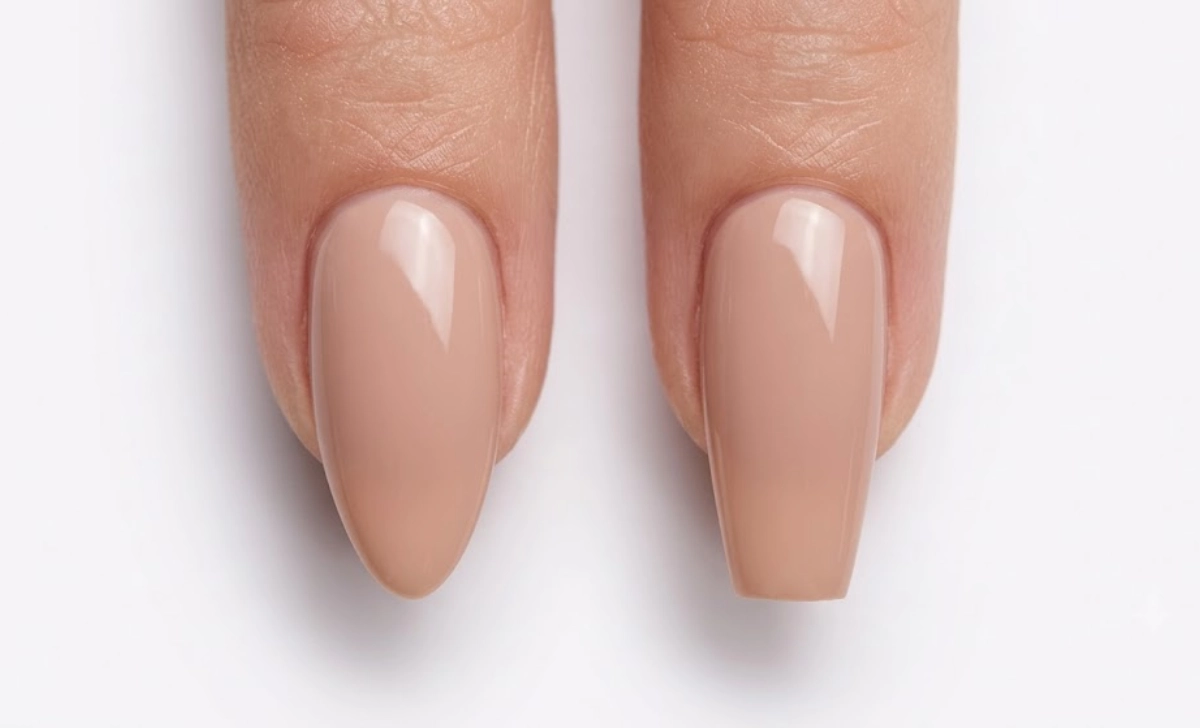
The difference comes down to the tip and the taper. Almond nails curve into a soft, rounded point, like an actual almond. Coffin nails taper the same way along the sides but end in a flat, squared-off tip — picture a ballet slipper viewed from above, which is exactly why techs also call it “ballerina nails.”
Almond feels soft and fluid, with no sharp angles anywhere. Coffin brings structure: straight tapered sides meeting a blunt tip create a bold, modern frame. The filing process reflects that difference too. Almond is filed in smooth, continuous curves from the sidewall to the tip. Coffin is filed in two straight, angled strokes on either side that meet at a flat edge — more like shaping two short lines than one long curve.
Length plays a role as well. Almond needs a bit of extra length to actually read as almond; too short, and it blurs into an oval. Coffin, on the other hand, still looks sharp on shorter extensions as long as the taper is defined.
What If Your Natural Nails Are Very Short?
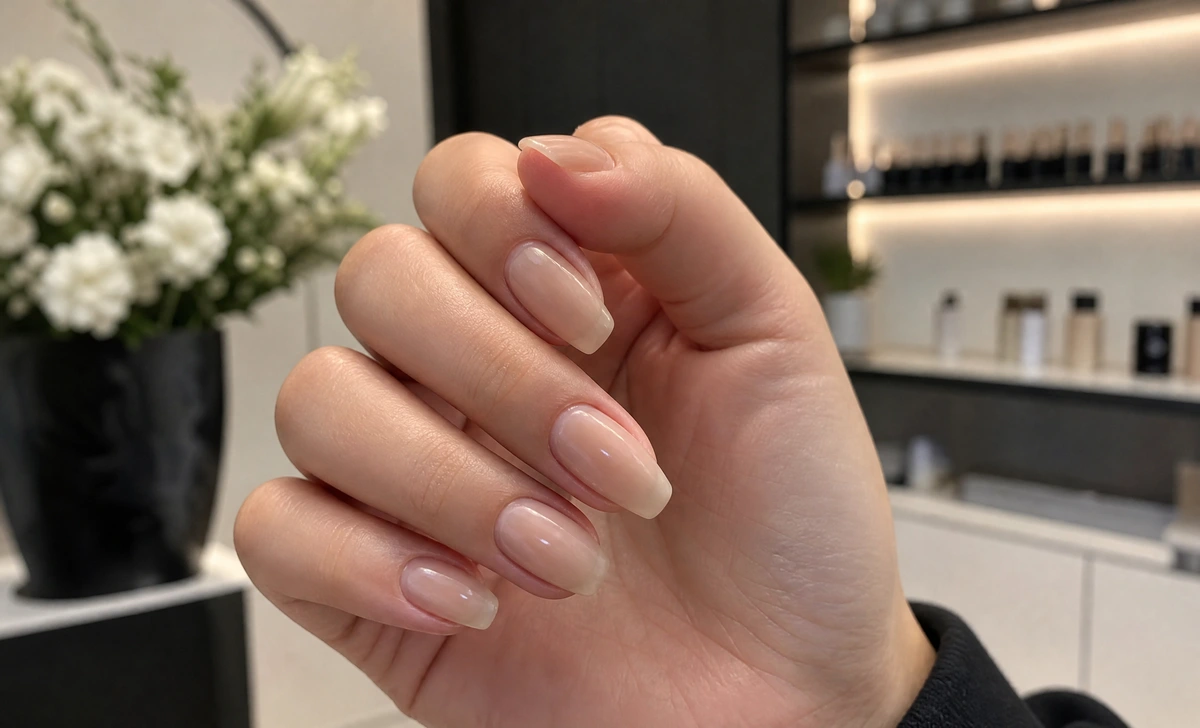
If your natural nail bed is short or you’re growing out from nail-biting, almond is usually the easier starting point. The rounded point doesn’t need much length to look intentional, and it’s forgiving while your nails grow.
Coffin is possible on short natural nails, but it needs help. Without added length, from a tip or a gel extension, the flat tip can end up looking more like a plain square than a true coffin. If you want the shape short-term, ask your tech about a modest extension just long enough to let the taper show before it hits the flat edge.
How Do You Ask Your Nail Tech for Coffin or Almond Nails?
Getting the shape you actually want usually comes down to a few clear phrases, a hand gesture, and mentioning your length and material preference up front.
For almond, try: “Soft almond shape, tapered sides with a rounded point, nothing sharp like a stiletto,” while tracing the curve from cuticle to tip with your other hand. For coffin, try: “Coffin shape, tapered sides with a flat, squared tip,” showing the flat stop with your fingers. Mention whether you want gel, acrylic, or dip, and roughly how much length you’re comfortable with — a tech shaping a natural nail will make different calls than one building an extension.
If your tech says “ballerina nails” instead, that’s just their term for coffin. A good tech welcomes the extra detail rather than getting confused by it.
Which Nail Shape Looks Better on Short, Wide, or Long Fingers?
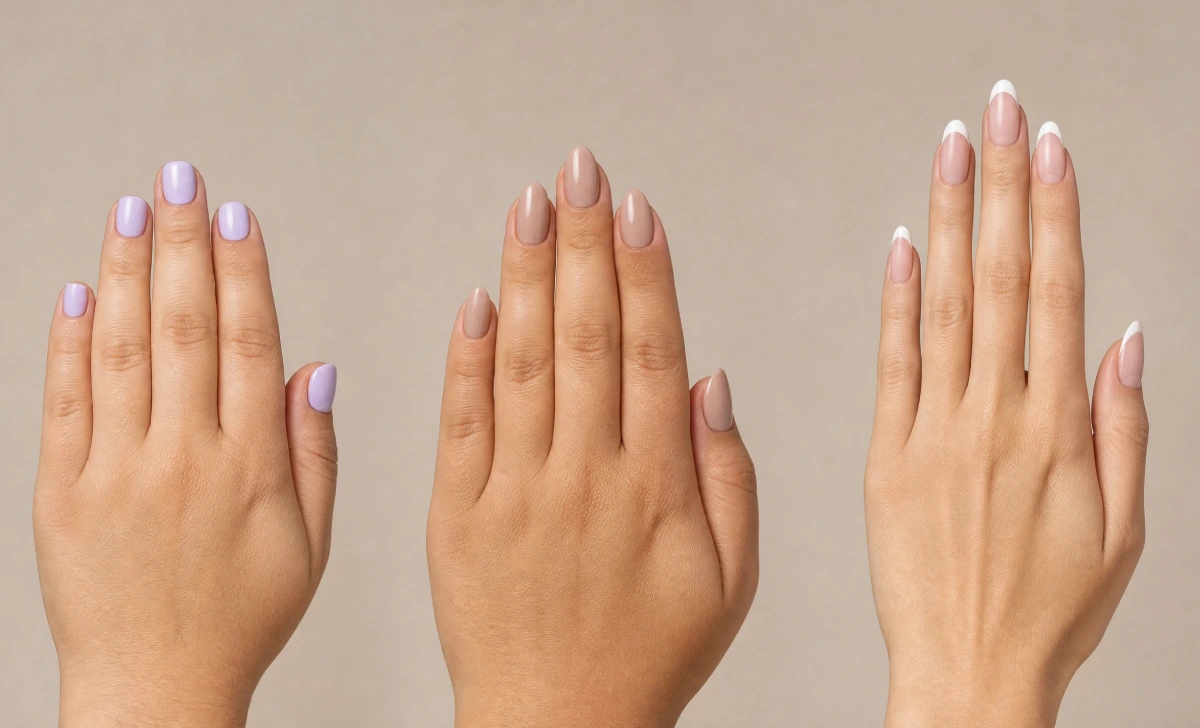
Both shapes work on any hand, but proportion changes how they read. Almond is famously elongating: the taper draws the eye toward the tip, which makes shorter fingers look longer, and wider nail beds appear slimmer.
If your fingers run short, almond is close to foolproof, since the rounded point adds visual length without introducing distracting angles. Coffin elongates too, but looks most balanced with some natural length or a longer extension to offset the squared tip. On wider nail beds, almond tends to feel more harmonious, while coffin reads noticeably bolder.
With long, slim fingers, either shape works well. Coffin leans dramatic and editorial; almond leans soft and romantic. At that point, it’s really about the look you want rather than what your hand “needs.” If neither shape feels quite right once you see it on your own hand, it’s worth browsing a full nail shape guide before booking, since options like oval and square split the difference in different ways.
Is Coffin Less Durable Than Almond?
Durability comes down to structure rather than the material itself. Almond spreads pressure evenly along its curve, so no single point takes the full impact of a bump. Coffin has two defined corners, and that’s exactly where a chip is most likely to start, since a flat edge meeting a straight side creates a natural stress point.
That doesn’t make coffin fragile, just less forgiving of habits like opening cans or typing with force on the tips. A strong apex (the highest point of the gel or acrylic arch) adds real strength to either shape, and asking your tech to reinforce the corners specifically is a small request that can meaningfully extend how long a coffin set holds up. In practice, plenty of people wear long coffin nails daily without issues once they’re a little more mindful around the corners.
Because those same corners are the vulnerable spot, coffin sets also tend to need reshaping sooner. As the nail grows out, the flat tip can start to look wider or less crisp, and most people find their coffin shape looks sharpest in the first two weeks after a fill. Almond, by contrast, ages more gracefully — the rounded tip just softens gradually into an oval as it grows.
French Tips, Ombré, and Nail Art: Does Shape Change the Look?
Shape changes how color and design sit on the nail, not just how the tip looks. On almond, a French line or color fade curves naturally, which is part of why soft ombré looks so blended on this shape. On coffin, that same French line runs flat across the squared tip, which reads crisper and more graphic — closer to a deliberate line than a soft curve.
The flat tip on coffin also gives nail artists more usable surface for fine line work and negative-space designs, which is why detailed art shows up so often on this shape specifically. If you’d rather skip the salon for a simple color fade, a DIY gel manicure can still work with that same flat-tip approach at home.
Almond Nails: The Timeless, Practical Choice
There’s a reason almond hasn’t gone out of style. It looks polished without effort, moving easily from an office day to a wedding without feeling like it’s trying too hard.
Typing also tends to feel more natural with almond, since the rounded tip glides across keys instead of striking flat. I’ve noticed clients who type a lot for work often gravitate here for exactly that reason. It’s a shape that supports your day instead of competing with it.
Coffin Nails: Edgy, Trendy, and Surprisingly Versatile
Coffin nails are for the days your hands are meant to make a statement. The shape is crisp and architectural, a favorite across Instagram and red carpets alike, and it works especially well if you like design-heavy sets rather than a single solid color.
The tradeoff is mostly about care: squared corners catch on delicate fabric more easily than a rounded tip, so it’s worth a little extra attention around scarves, tights, or fine knits.
What’s the Best Shape for Your Lifestyle?
Your hands go through your whole day with you, so it’s worth picturing an ordinary one before deciding. If your routine is heavy on typing, gym sessions, or fast hands-on tasks, almond is usually the more comfortable partner day to day.
If you treat your nails as part of your outfit and don’t mind a touch more upkeep, coffin tends to feel more rewarding. There’s no universal rule here — plenty of parents wear short coffin sets just fine, and plenty of people with desk jobs love a long dramatic almond. The right call is simply whichever shape leaves your hands feeling like your hands.
Frequently Asked Questions
Can you get coffin nails on short natural nails?
Coffin usually needs some length to show off the flat tip properly. On very short nails, it can end up looking more square than tapered, so most techs will suggest a small tip or extension for the full effect.
Are almond nails out of style this year?
No — almond remains one of the most consistently requested shapes in salons. Its elongating, low-maintenance look fits both simple and elaborate designs, which keeps it from feeling dated season to season.
What’s the difference between stiletto and almond nails?
Stiletto tapers to a sharp, pointed tip. Almond ends in a softer, rounded point — a similar elongating effect without the dramatic sharpness.
Do coffin or almond shapes cost more at a salon?
Most salons price by length and nail art, not by shape. Coffin can sometimes take a little longer at the chair because of the precise angled filing, which occasionally shows up as a small service-time difference rather than a listed price difference.
Which One Should You Book?
If you want softness and a shape that forgives a busy schedule, almond will serve you well. If you want sharp definition and a manicure that doubles as a style statement, coffin delivers that easily, in exchange for a little more upkeep around the corners. Either way, if a soft color fade is part of the plan, it’s worth checking the ombré nail cost before your appointment so there are no surprises at the chair.