If you have thick hair, you already know the morning struggle — it puffs, pushes back, and ignores every product you try. Most generic advice simply does not hold up against real density. In this guide to the best hairstyles for thick hair, you will find 25 barber-approved styles, a routine that actually works on dense hair, the exact words to use with your barber, and the mistakes that quietly ruin most thick-hair cuts.
What Are the Best Low-Maintenance Hairstyles for Men with Thick Hair?
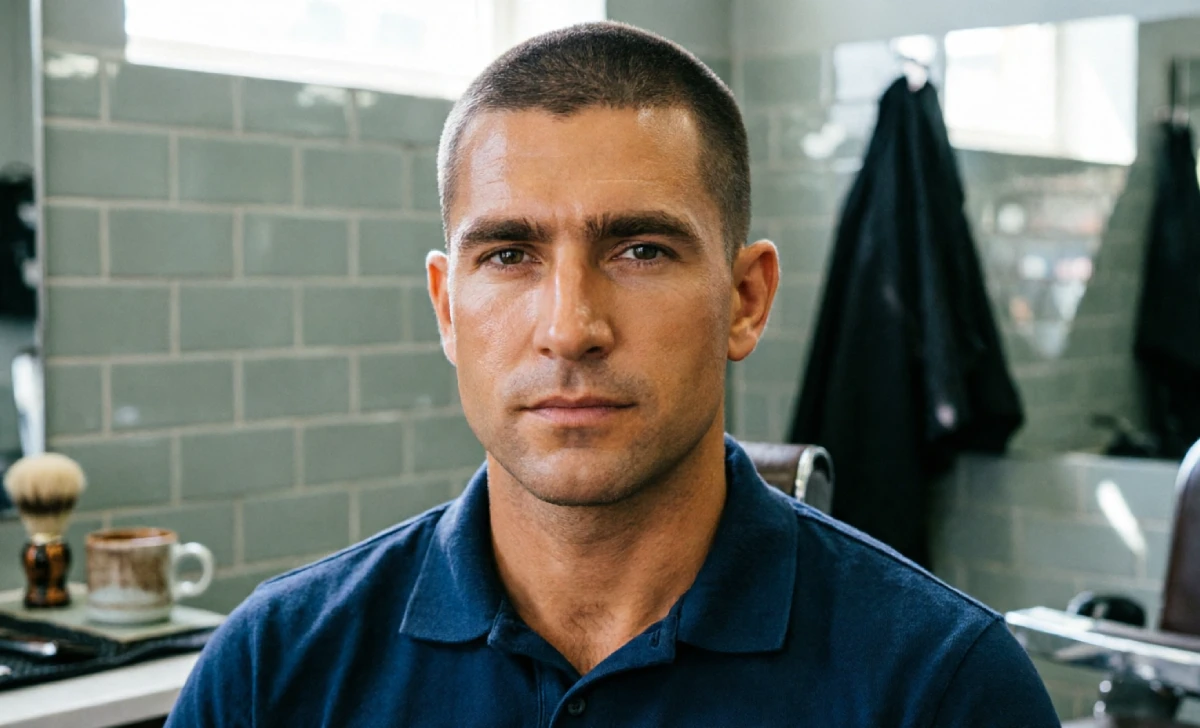
Low-maintenance French crop hairstyle for men with thick hair, blunt fringe, tapered sides, matte finish. The French crop removes the triangle effect instantly — one of the easiest low-maintenance hairstyles for men with thick hair.
You might think low-maintenance means boring. With thick hair, that idea flips completely. When a barber removes the right amount of weight, your natural texture does the work for you. Before you lock in a style, it helps to understand the difference between a taper vs fade so you can ask your barber for the right finish on the sides.
- Buzz Cut — Zero product, zero effort. Dense hair creates a rich, even surface that looks intentional and masculine with no styling at all. Best for guys who want to wash and go; skip it if you like having length to play with.
- Short Crop — A barber uses thinning shears to remove hidden weight underneath so the top lies flat naturally. Quick finger-comb and you are done. Works on straight and wavy thick hair; curlier thick hair may still need a light cream to control frizz.
- French Crop — Blunt textured fringe with tapered sides kills the triangle effect instantly. A pea-sized matte clay raked forward finishes the look.
- Crew Cut — Gradual length from hairline to crown builds structure without puffiness. The structure is built into the chair, so your morning job is minimal. If you like an even tighter, uniform look, these military haircut styles offer a stricter, lower-maintenance variation on the same idea.
- Textured Fringe — A longer fringe swept loosely forward sits flat on thick hair without product. Works best on straight or slightly wavy density; on curlier hair, the fringe tends to lift instead of lying flat.
Which Modern Haircuts Maximize Volume Without the Puff?
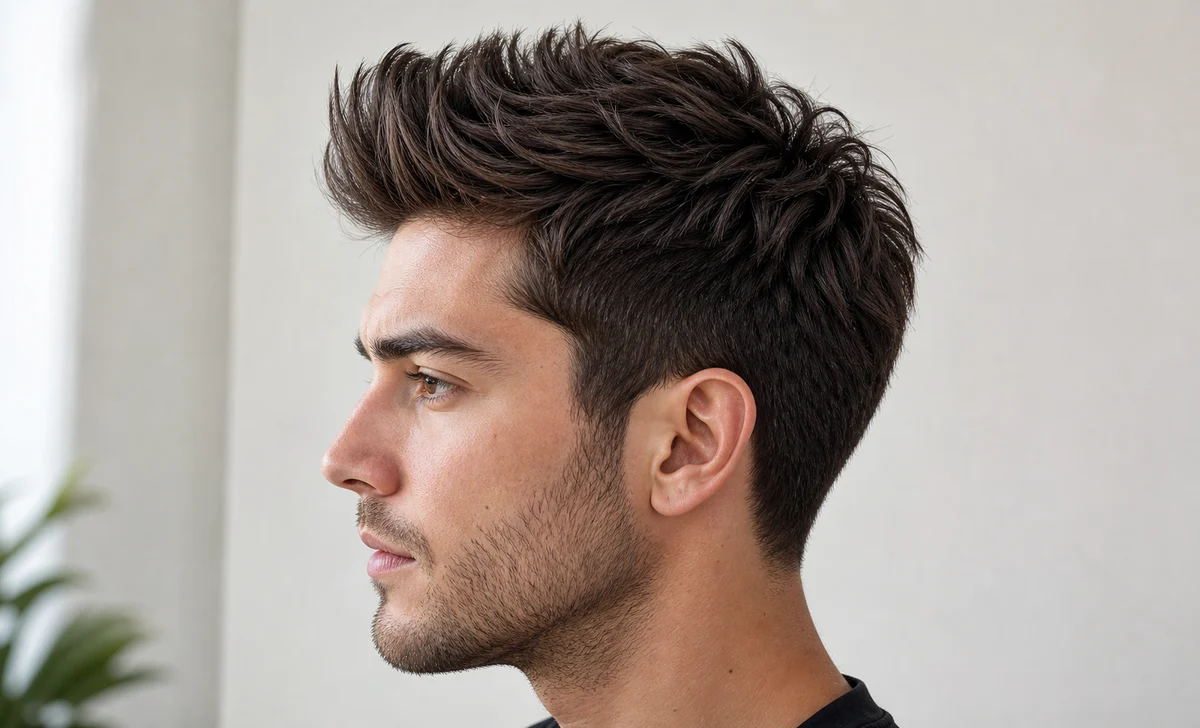
Controlled volume is a skill, and modern cuts have figured it out. Layering builds height without letting the sides expand outward, so you get lift without the mushroom shape you are trying to avoid. If big, structured volume is the goal, this blowout hairstyle guide breaks down the blow-drying technique in more depth.
- Textured Quiff — Your barber point-cuts the top so strands separate instead of clumping. Apply sea salt spray to damp hair, blow-dry upward with a round brush, then finish with matte paste.
- Modern Pompadour — A lightweight mousse pre-styler and a medium-hold pomade are all you need. Your density holds the shape all day, so you rarely need to touch it up mid-afternoon the way finer hair does.
- Brush-Up — Push everything straight up from the forehead for a relaxed, casual look. More casual than a pompadour and still delivers real height.
Timeless Classic Cuts That Always Work for Thick Hair
Trends come and go, but some cuts keep working decade after decade. Classic styles look even better on thick hair because your natural density gives them weight and presence that thinner hair cannot replicate.
- Side Part — A water-based pomade gives clean hold, and thick hair means the comb-over carries real authority and never collapses by lunchtime.
- Slick Back — Blow-dry straight back, work pomade through in sections to avoid clumping. The result is a sleek profile that looks deliberate rather than accidental.
- Ivy League Cut — A longer crew cut with a soft side part. Preppy, structured, and almost zero maintenance once you have the comb-over pattern down.
- Comb Over — Thick hair gives a comb over the fullness and weight to look commanding. A fine-tooth comb and medium-hold pomade lock it in place.
How Can You Use Fades to Tame Thick Hair?
Low fade vs high fade hairstyles for men with thick hair side-by-side comparison in barbershop. Not sure which fade suits you? A low fade keeps it soft while a high fade delivers maximum weight removal for thick hair.
A fade is not just a style detail. For thick hair, it is a structural tool that removes bulk from the sides and slims the overall head shape. Understanding the types of fades for men helps you pick the right level before you sit in the chair, and knowing your clipper guard numbers helps you describe the exact gradient, so you leave with a consistent result every time.
- Low Fade — Starts above the ear, keeps the look soft. Pairs with almost any top style and grows out cleanly between visits.
- Mid Fade — Starts at the temple for sharper contrast. Acts like a visual frame that lets the top stay full without the whole head feeling heavy.
- High Fade / Skin Fade — The ultimate weight-removal option. You will feel the lightness the moment you leave the chair, though it also needs a touch-up every 2–3 weeks to stay sharp, sooner than a low fade.
- Textured Crop with Fade — Pairing a textured crop on top with a mid fade underneath is one of the most popular combinations for thick hair right now. A light dusting of texture powder finishes the look cleanly.
Fade Comparison at a Glance
| Fade Type | Starts | Weight Removed | Touch-Up Frequency | Best For |
|---|---|---|---|---|
| Low Fade | Above the ear | Light | 3–4 weeks | First-time fade wearers, office settings |
| Mid Fade | Temple | Moderate | 2–3 weeks | Balanced, everyday sharpness |
| High/Skin Fade | Near the crown | Heaviest | 2 weeks | Maximum bulk reduction, bold contrast |
What Long Hairstyles Actually Suit Men with Thick Hair?
The fear that long thick hair always turns into a triangle is understandable. The truth is that layering changes everything. A skilled barber removes internal weight so hair falls in defined pieces instead of one heavy block. For a rugged, textured take on length, these viking braid hairstyles show how to combine length with braided detail.
- Modern Shag — Razor or texturizing scissors create movement throughout. Air-dry with a leave-in conditioner, and it practically styles itself.
- Shoulder-Length Layers — Internal layers remove bulk and encourage any natural wave to form relaxed, defined bends. Versatile enough to wear loose or tied back.
- Man Bun — Thick hair fills a man bun into a full, rounded shape that looks rugged and intentional. Keep it slightly loose and run argan oil through the ends to calm frizz.
- Curtain Hair — Parts in the middle and falls naturally to each side. A little sea salt spray brings out any wave beautifully.
How to Style Thick Hair: A Complete Product and Tool Routine
Styling products and tools for thick hair men, including sea salt spray, matte clay, blow dryer, and round brush. The right tools make every hairstyle for men with thick hair achievable at home in under ten minutes.
The cut sets the foundation, but your morning routine decides what the day actually looks like. Most thick-haired men skip the one step that changes everything: the blow-dry.
- Pre-Styler — Apply a sea salt spray or lightweight mousse to towel-dried damp hair from root to tip. This gives your hair grip and sets the direction for everything that follows.
- Blow-Dry — Use a nozzle attachment and a round or vented brush to guide hair in the direction you want it to sit. This removes random puffiness and locks shape as hair cools. Do not skip it.
- Matte Clay Finish — Warm a blueberry-sized amount of matte clay between your palms and rake through mid-lengths and ends first. Avoid roots initially to prevent flatness. A shot of dry texture spray at the crown adds lift without stiffness.
Choosing Products by Hair Type
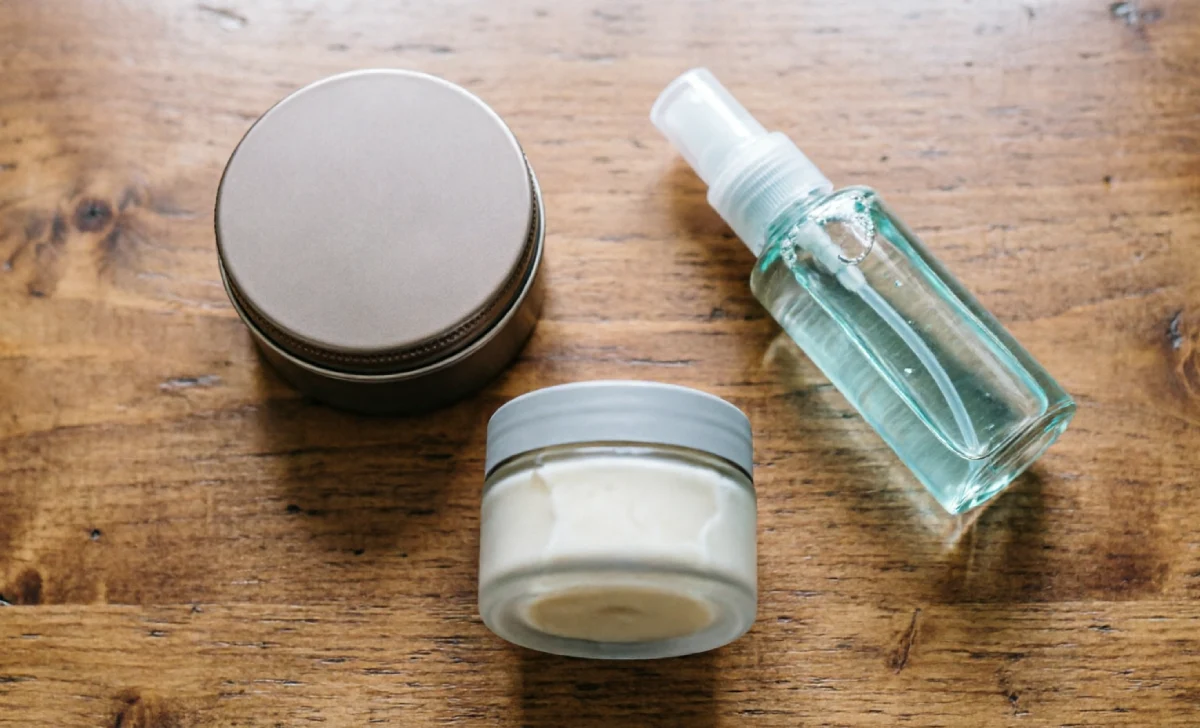
Thick hair is not one thing — straight, wavy, and curly thick hair each behave differently under product, and this is where most men pick the wrong one.
- Straight thick hair tends to be the heaviest and flattest under weight. A matte clay or paste with medium-to-strong hold gives the best control without looking greasy.
- Wavy thick hair usually just needs a sea salt spray to bring out the natural bend, plus a light cream on the ends to stop frizz. Heavy pomades tend to weigh waves out completely.
- Curly thick hair does best with a leave-in conditioner and curl cream rather than clay, since clay can clump curls together and look unnatural. Diffusing on low heat instead of a full blow-dry protects the curl pattern.
Common Mistakes Men with Thick Hair Make
- Washing every day. This strips the natural oils that keep thick hair calm, which makes it puff up more, not less.
- Skipping the blow-dry. Air-drying thick hair almost always leaves it wider and less shaped than it would be with five minutes of directed heat.
- Asking for a cut without mentioning thinning. If you do not ask your barber to remove internal weight, you will get the same bulk in a new shape.
- Using too much product at once. Thick hair absorbs product differently than fine hair. Start with a small amount and add more if needed rather than working in a large dollop from the start.
- Letting it grow too long between trims. Thick hair holds its shape only as long as the layering underneath is fresh. Most cuts on this list need a trim every 3–5 weeks to keep their form.
Two Myths About Thick Hair, Cleared Up
“Cutting it shorter makes it grow back thicker.” Hair thickness is determined by the follicle, not the length. A short cut only looks denser because the ends are blunt and close together.
“Thick hair cannot be styled without heavy product.” The opposite is usually true. Over-applying product on thick hair often creates the greasy, weighed-down look men are trying to avoid. A good cut plus a light touch of product does more than a heavy-handed routine.
Which Face Shape Are You? Pairing Cuts with Your Features
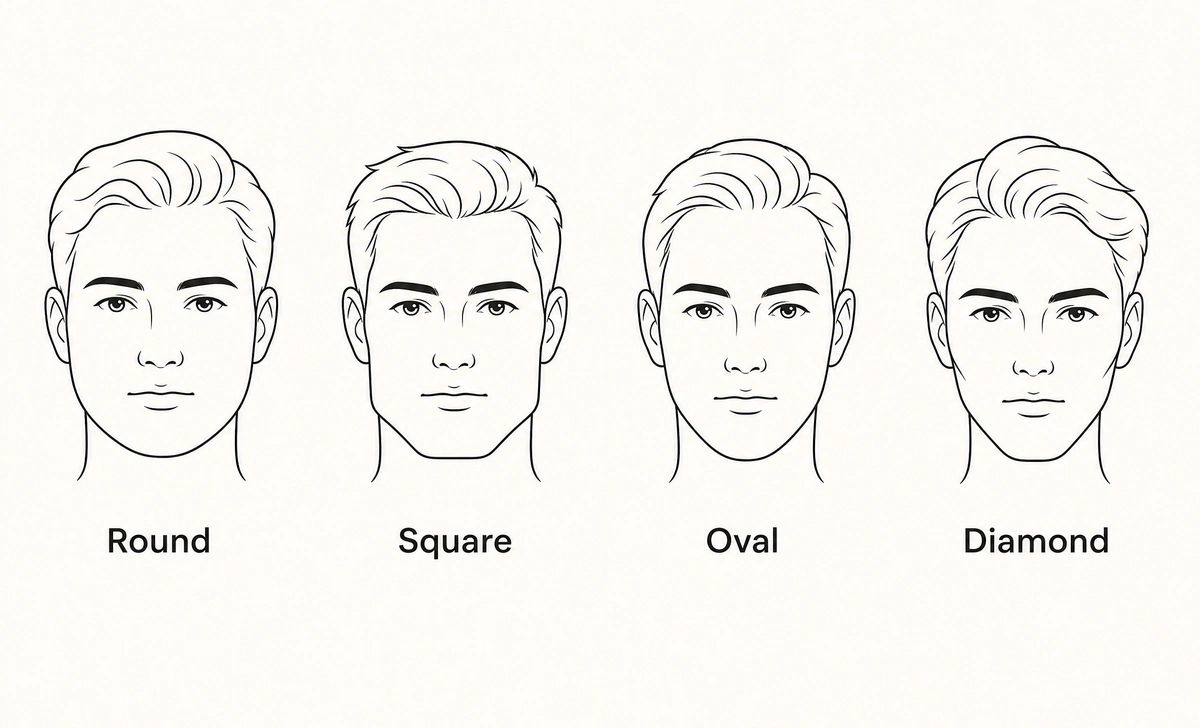
Pull your hair back and look straight into the mirror. Knowing your face shape tells you instantly which styles from this list will genuinely suit you.
- Round and Square Faces — Round faces need height on top and tight sides, so the pompadour, quiff, and high fade are strong picks. Square faces suit classic cuts like the side part, slick back, and textured crop that highlight strong jaw angles.
- Oval and Diamond Faces — Oval faces can wear almost anything on this list without worrying about balance. Diamond faces need fullness at the top, so a textured crop or loose quiff fills out the narrower forehead and chin area. Matching face shape to the right cut removes the guesswork from every barber visit.
Face Shape Quick Reference
| Face Shape | Best Styles | Approach With Caution |
|---|---|---|
| Round | Pompadour, Quiff, High Fade | Buzz cut alone (adds width) |
| Square | Side Part, Slick Back, Textured Crop | Very blunt fringes (adds bulk to the jaw) |
| Oval | Almost any style on this list | — |
| Diamond | Textured Crop, Loose Quiff | Slick Back (narrows the top too much) |
Your Barber Consultation Script: What to Say and Show
Walking in with the right words makes your barber’s job easy and your result predictable. A clear description closes the gap between the style you see online and the cut you actually get.
Say something like: “I want to keep the length on top but remove a lot of the weight so it does not puff out. Can you texturize it with thinning shears or point cutting?” For fades, be specific: “A mid fade starting at the temple, soft blend, no hard line.” Show a photo, name the parts you want, and mention what went wrong before. “Last time it got too boxy on the sides” helps your barber avoid repeating the same mistake. A good cut can also make you look younger when the shape and face balance are right. If your face leans oval, these oval face haircuts offer more shorter-length options built specifically around that shape.
FAQs
How often should a man with thick hair wash it?
Every other day works best. Daily washing strips natural oils that keep thick hair manageable and frizz-free. A sulfate-free shampoo helps maintain moisture between washes.
Do I need a special shampoo for thick, coarse hair?
Not necessarily, but a moisturizing or smoothing formula makes a real difference. Avoid harsh sulfates and consider a co-wash occasionally if your hair feels dry or wiry.
Is it possible to manage thick hair without a lot of product?
Yes. The right cut does most of the work. A well-executed crop or fade with thinning shear texture reduces bulk so naturally that a small amount of sea salt spray is often enough.
Can a barber thin out my hair without making it look unnatural?
Absolutely. Thinning shears remove weight from inner layers without touching the outer shape. Done correctly, your hair looks identical on the outside but sits flatter and feels lighter.
How often does thick hair actually need a trim?
Roughly every 3–5 weeks for shorter, structured cuts like fades and crops, since the shape depends on fresh layering underneath. Longer styles like shag or curtain hair can stretch to 6–8 weeks because the layers matter less than the overall length.
Does thick hair get thinner as you get older?
Density can gradually decrease with age like any hair type, but it happens slowly and varies a lot person to person. If you notice sudden thinning rather than a slow change, that is worth mentioning to a doctor rather than treating it as normal thick-hair behavior.
Conclusion
Your thick hair is not the enemy — it never was. The right cut, a simple ten-minute routine matched to your hair type, and one clear conversation with your barber are what actually change your mornings. Pick the style that fits your face shape and lifestyle, save the photo to your phone, and book the appointment.