
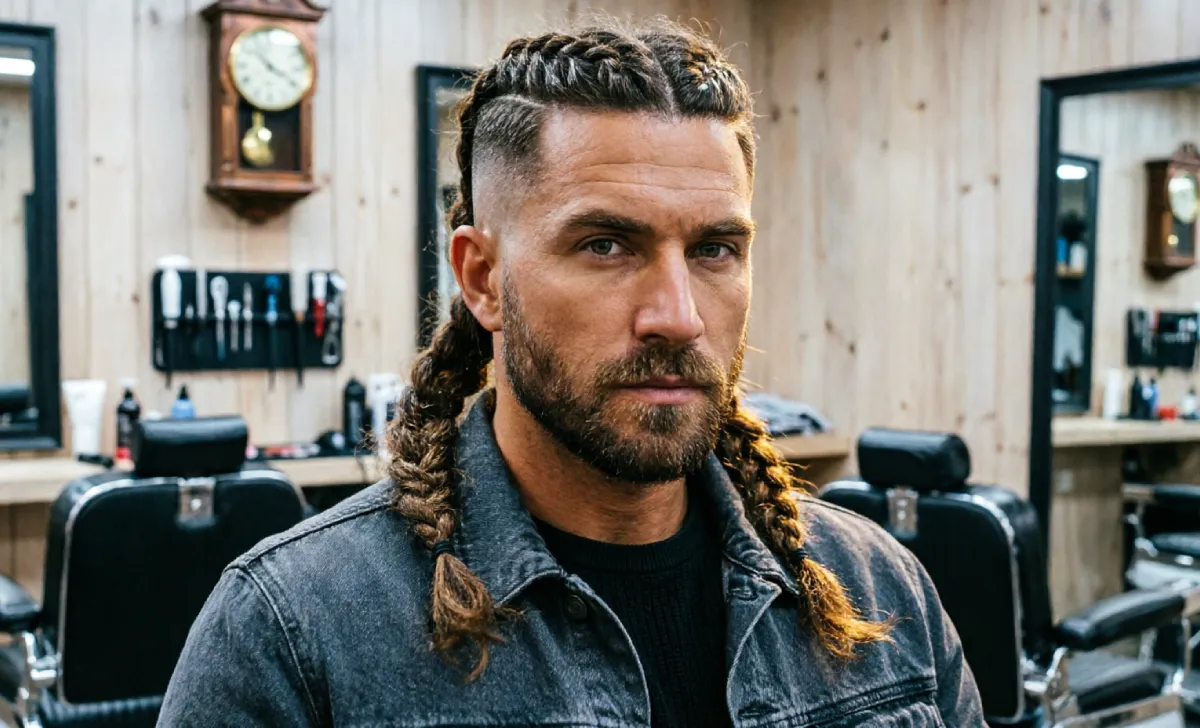
You’ve seen the look before — a sharp undercut flowing into long, textured hair pulled back in warrior-like braids. It commands attention without trying too hard. Maybe you’ve wondered if you could pull it off yourself.
Most guys assume Viking haircuts are reserved for actors with a full-time stylist. The truth is simpler. These styles are built on classic barbering techniques available at any good shop. You just need to know what to ask for.
By the end of this guide, you’ll know the exact style for your face, the words to tell your barber, and a simple braiding routine you can do at home.
What Is a Viking Haircut?
A modern Viking haircut combines dramatically short or shaved sides with a long, textured top. The contrast is what gives it that unmistakable edge. Braids, ponytails, or flowing layers, then add the warrior personality.
Historical Vikings likely wore much simpler styles than what you see on screen. The modern version blends Norse inspiration with techniques like the skin fade and disconnected undercut. You’re borrowing the spirit of boldness and making it part of your daily life.
Which Face Shapes Suit Viking Hairstyles Best?
Nearly every face shape has a compatible Viking look — it’s just about choosing the right variation. Square-faced people with broad foreheads can wear almost any Viking style with confidence. Guys with oval faces have similar flexibility and can experiment freely.
Rounder faces benefit from styles that keep more volume on top and tighter sides. This adds visual length and prevents the cut from widening your appearance. A good barber will always adapt the cut to your natural structure.
How Long Does Your Hair Need to Be for a Viking Haircut?
You can start wearing elements of the Viking look much earlier than you think. For a textured crop, you only need about two to three inches on top. You can explore types of fades to decide which works best with your hair texture and face shape.
Medium length, around four to six inches, opens up options like small top knots and single braids. Full braided looks require at least eight inches on top. Stick with the growth phase, and you’ll get there sooner than you expect.
How Do You Ask a Barber for a Viking Haircut?
The best results come when you describe what you want in words, not just show a photo. Start by asking for a high skin fade or disconnected undercut on the sides. Then tell your barber to leave the top heavy and point-cut for texture, not blunt or bowl-shaped.
Understanding clipper guard numbers helps you communicate exactly how short you want the sides. A simple script like “high skin fade, five inches on top, point cut for texture, leave enough to pull into a single braid” removes all guesswork. Your barber will appreciate the clarity.
The 10 Best Viking Haircuts and Braid Styles for Men
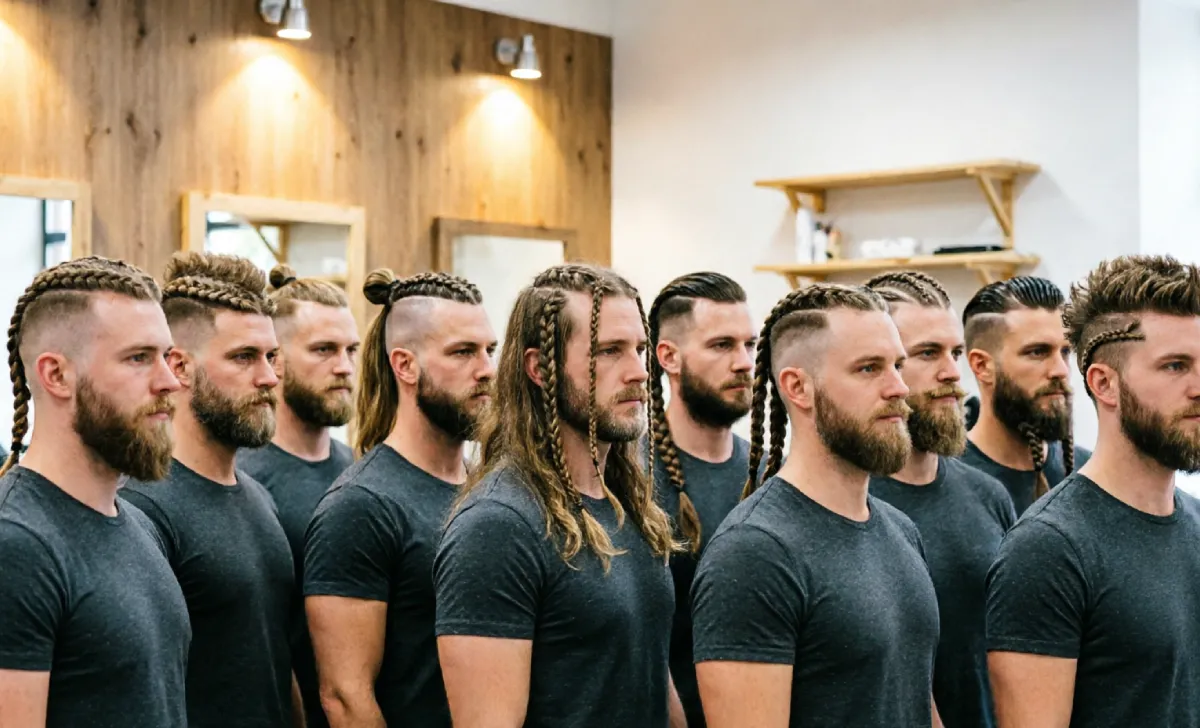
You’ve done the groundwork. Now it’s time to find the style that feels right for you.
1- The Classic Undercut with Double Braids
Sides shaved high, long top sectioned into two parallel braids toward the back. Needs six inches on top. Part your hair down the middle while damp and secure braids with clear elastics.
2- The Ragnar Razor Fade
High skin fade on the sides, full messy top with one tight braid pulled from the crown. Scrunch sea salt spray into damp hair for that piecey, lived-in texture.
3- The Warrior Ponytail
Faded sides with the top swept straight back into a ponytail at the crown. Work matte paste through dry hair before pulling back to add grip and control flyaways.
4- The Braided Top Knot
Tight sides, top gathered high into a knot with a single braid woven into the base. Best for oval and angular faces. A light hairspray keeps it together without stiffness.
5- The Temple Braid Fade
Mid or high fade on the sides with a single tight braid running horizontally from the temple toward the ear. Section a thin strip near your temple, braid it tightly, and pin it back.
6- The Long Flow with Side Braids
Two small braids frame your face while the rest flows past your shoulders. Use leave-in conditioner after washing and braid the side sections when hair is dry.
7- The Shield Wall Crop
Three inches on top, heavily textured, high fade with a hard part shaved in. Matte clay through dry hair keeps the style sharp all day. Works for square and round faces.
8- The Norse Ponytail with Beads
Classic ponytail elevated with metal or wooden hair beads threaded onto small sections. Slide two or three beads onto thin strands and secure each with a small elastic.
9- The Faux Hawk Braid
Sides faded completely, center strip braided from forehead to crown. Apply strong-hold gel to damp hair and pin the braid end at the crown. Needs at least five inches on top.
10- The Modern Sweep with Hidden Braid
Neatly faded sides with the top swept to one side. A single small braid hides underneath the top layer, visible only when the hair moves. The most office-friendly option on this list.
How Can You Braid Your Own Viking Hair?
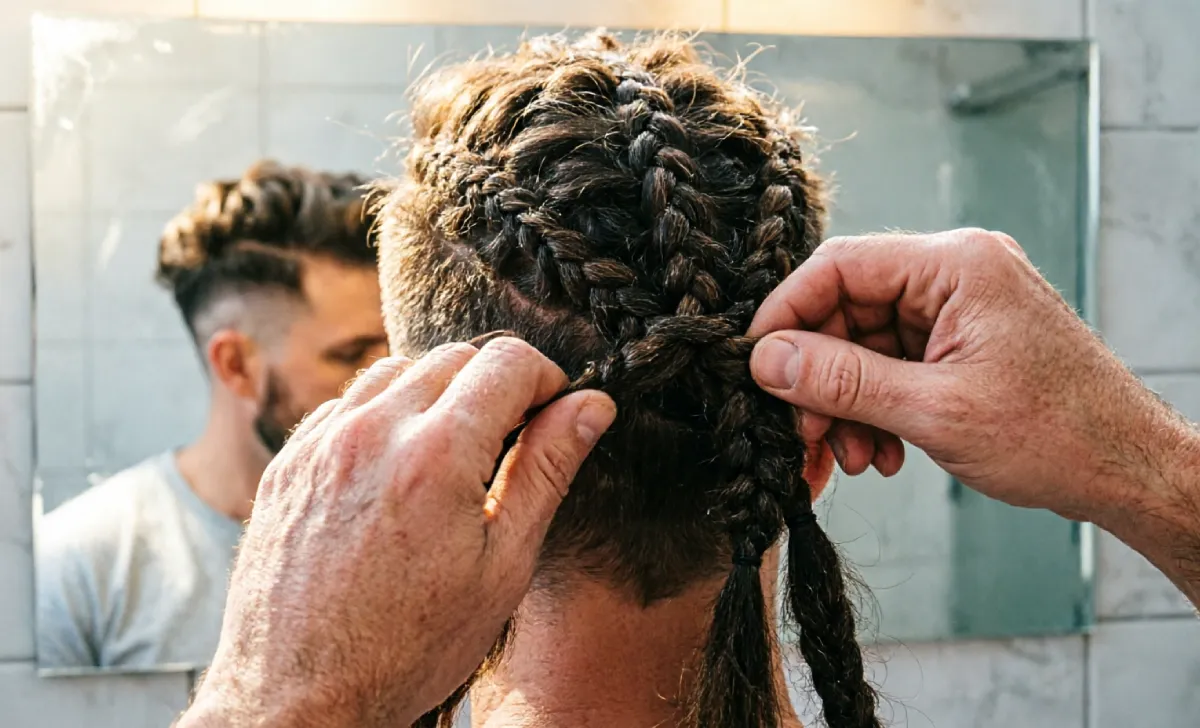
Braiding the back of your own head sounds harder than it actually is. Start with a simple three-strand braid from the crown down toward the nape. Hold three sections in separate fingers, cross the right over the middle, then the left over the new middle, and repeat.
Keep even tension so the braid lies flat without pulling your scalp. Practice on a weekend when there’s no pressure. Within a few tries, you’ll produce a braid you’d be proud to wear out.
What Products Do You Need for the Viking Look?
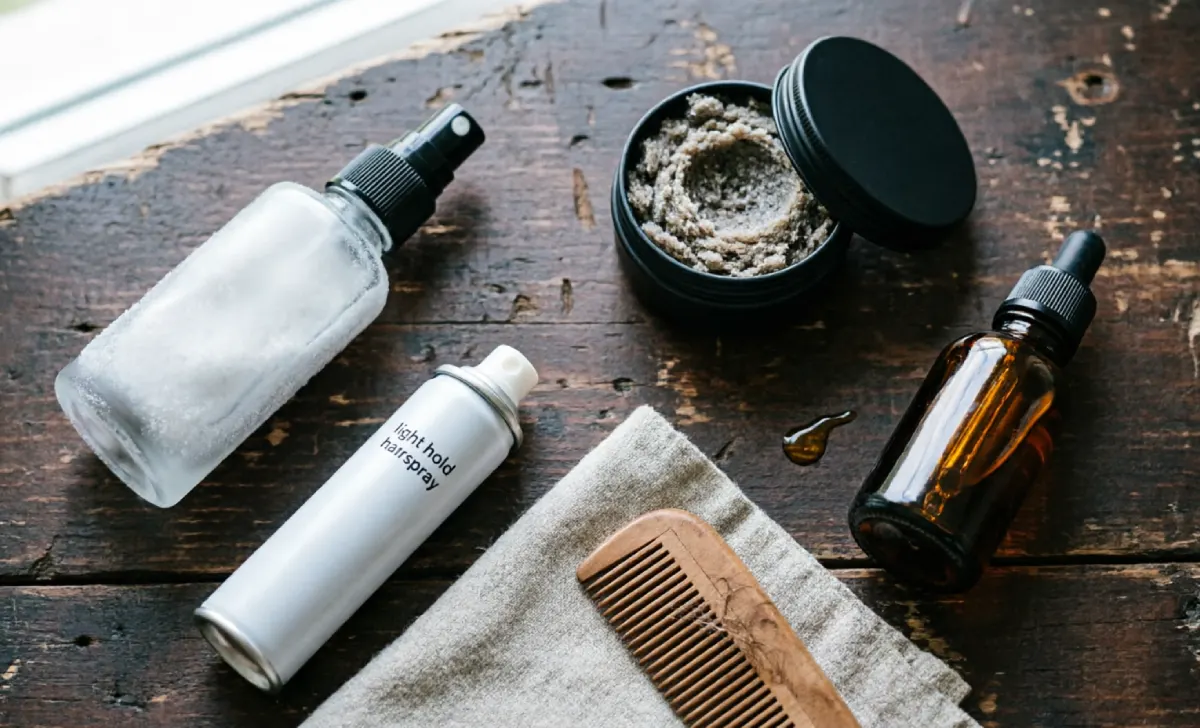
Sea salt spray is your foundation for texture. Mist it onto damp hair and scrunch with your fingers to build that gritty, lived-in feel. A matte clay or paste then adds hold without shine, keeping your style looking natural rather than slick.
Pomade is generally too glossy for these styles and can make hair look greasy by midday. If you wear a beard, beard oil keeps facial hair soft and your skin underneath healthy. A light hairspray finishes off braids without creating a stiff result.
How Do You Maintain Viking Haircuts and Braids?
Sleeping with braids in causes frizz, so wrap your hair in a bandana or use a silk pillowcase to reduce friction. Dry shampoo between washes keeps your scalp fresh without stripping natural oils. You don’t need to wash daily — every two to three days works well.
Re-braid sections every couple of days to keep them sharp. Edge touch-ups around the hairline keep the fade looking fresh between barber visits. A consistent routine makes the whole style feel easy rather than high-maintenance.
Can You Wear a Viking Haircut Without a Beard?
You absolutely can, and plenty of men do. A clean-shaven face paired with a strong Viking cut shifts all the focus to your hair and bone structure. This works especially well with styles that have sharp fades and defined lines.
Light stubble bridges the gap without committing to a full beard. Confidence is the real anchor of the look. The cut works when you wear it with intention, with or without facial hair.
What Common Viking Haircut Mistakes Should You Avoid?
Over-tightening braids is the most common mistake. Pulling too hard can cause headaches and, over time, damage your hairline through traction alopecia. Braids should feel secure but never painful.
Using a heavy pomade that makes hair look wet and greasy is another easy error. If you’re unsure whether to go with a taper or a fade, learning the difference between a taper and a fade will help you make a smarter choice before you sit down. Work with your natural texture rather than fighting it.
Frequently Asked Questions About Viking Haircuts
Are Viking haircuts professional enough for the office?
Yes, if you choose the right variation. A clean fade with a swept top keeps things polished. The hidden braid style works especially well in professional settings because the detail stays personal until you choose to reveal it.
What hair type works best for Viking braids?
Thick, straight, or wavy hair holds braids most easily because the texture grips itself. Fine hair benefits from texturizing products before braiding to add staying power. Every hair type can find a version that works with the right technique.
How often should you re-braid your hair?
Every two to three days is typical for most guys. Leaving braids in too long causes matting and buildup at the roots. Taking them out regularly lets your scalp breathe and keeps the style looking intentional.
Can I pull off a Viking cut if I have thinning hair?
Yes, and the style can actually work in your favor. A high fade removes volume from the sides where thinning is less noticeable, and texturizing the top creates the illusion of fullness. Choose a barber experienced with thinning hair for the most flattering result.
Conclusion
You came here looking for a haircut that feels bold, personal, and a little bit fearless. What you’re leaving with is a complete plan — the style names, face shape advice, barber scripts, and a maintenance routine all in one place.
The Viking look isn’t locked behind a screen or reserved for actors. Whether you go full braids and beads or keep things sharp and subtle, the style bends to fit your life. Walk into your barbershop ready, describe exactly what you want, and leave with a cut that tells your story.