
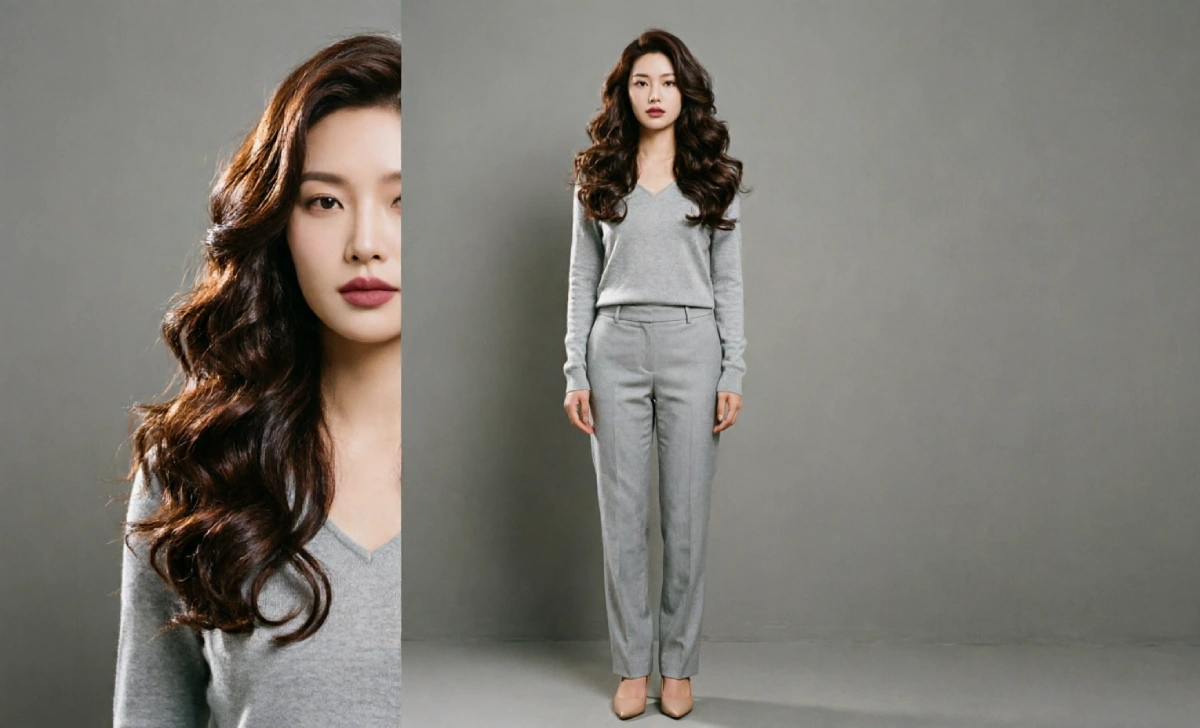
You scroll through photo after photo of bouncy blowout hairstyles and feel that familiar mix of envy and confusion. The hair looks effortless in the picture, but the moment you try to recreate it at home, something falls flat. By the end of this guide, you will know 13 distinct blowout styles, how to match one to your face shape and hair type, and the exact words to use in the salon chair so you actually get what you’re picturing. If your bigger goal is to simply look more youthful overall, a well-chosen blowout can do a lot of that work on its own.
What Is a Blowout Hairstyle, and How Is It Different From a Regular Blow-Dry?
It’s easy to assume a blowout is just a fancier word for drying your hair. That assumption is exactly why so many people feel let down when they try it themselves at home. A regular blow-dry is quick — you point the dryer at your head until the moisture is gone, then move on with your day.
A true blowout is a different process altogether. Every section of hair is wrapped around a round brush, pulled under tension, and finished with a blast of cool air to lock the shape in place. That cool shot matters more than most people realize — it’s what closes the hair cuticle and turns a temporary shape into one that survives a full day (or several). A blow-dry removes water. A blowout sculpts your hair into a finished style with real movement, body, and shine.
Once you start thinking of a blowout as a deliberate styling technique rather than “just drying,” you can ask for exactly what you want, whether that’s at a salon or in your own bathroom. Knowing your ideal length also helps here — the 2.25 rule is a simple at-home measurement that tells you whether shorter or longer styles will naturally suit your proportions before you even sit in the chair.
Which Blowout Hairstyle Matches Your Face Shape?
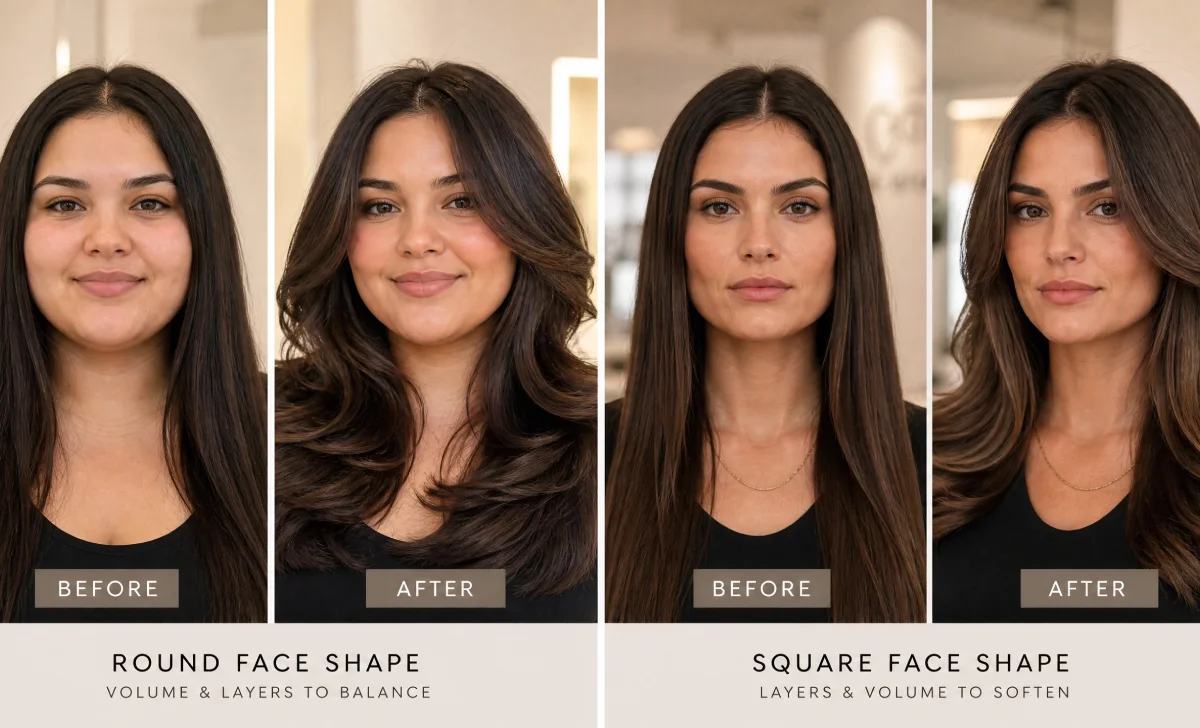
If a blowout has ever looked incredible on someone else but fallen flat on you, face shape is almost always the missing variable. It tells you where to build volume and which silhouettes actually flatter your features, rather than fighting against them.
| Face Shape | What to Ask For | Why It Works |
|---|---|---|
| Round | Crown lift with curtain-bang layers | Adds visual length and breaks up width |
| Square | Soft, tousled waves | Softens a strong, angular jawline |
| Oval | Almost any style | Balanced proportions carry structure and softness equally well |
| Heart | Flipped-ends blowout with volume near the chin | Balances a narrower chin against a wider forehead |
A stylist can confirm your face shape in seconds, so don’t be shy about asking during your consultation — it’s a normal part of the conversation, and it changes the whole plan for your appointment.
The 13 Best Blowout Hairstyles for Every Hair Type and Occasion
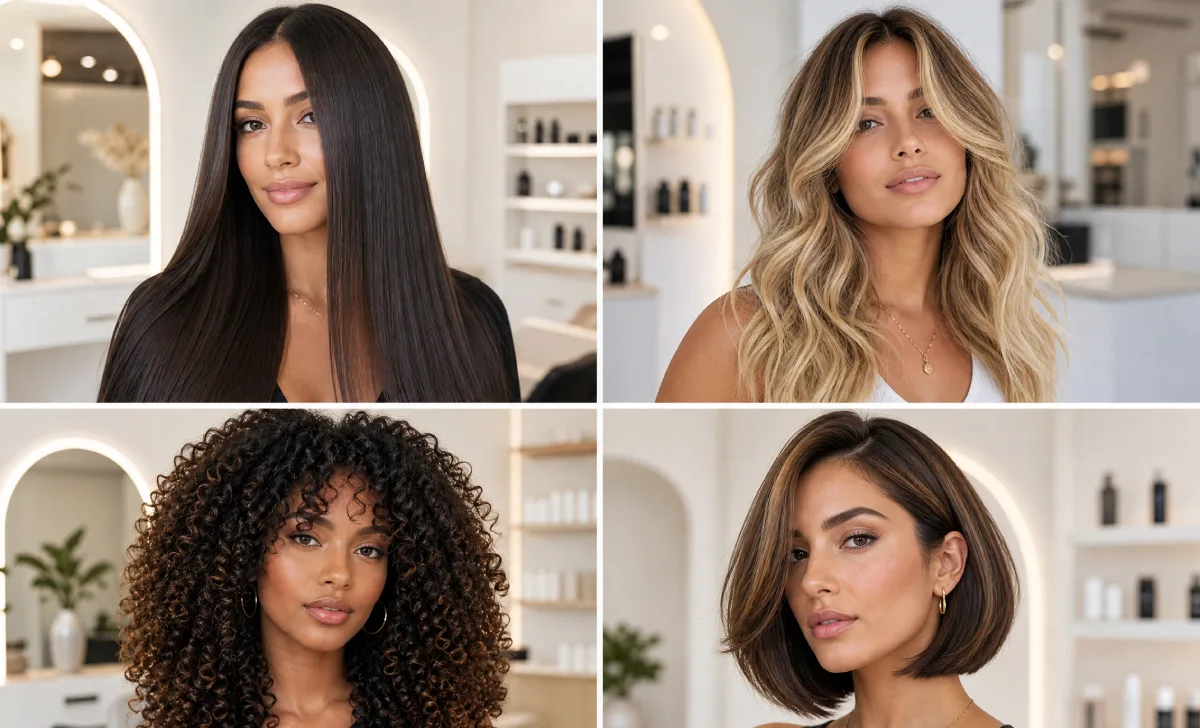
- Classic Round-Brush Blowout — Smooth and full-bodied with a gentle curve at the ends. The reliable everyday option that never looks overdone.
- Supermodel Volume Blowout — Sky-high roots and cascading layers that move when you walk, channeling the 90s runway energy of models like Cindy Crawford.
- Sleek Glass Blowout — Mirror-smooth, pin-straight hair that catches light. Best saved for evenings when you want a flawless, polished finish.
- Bouncy 90s Blowout — Flirty and nostalgic, with curled-under ends and face-framing layers that flip at the cheekbones.
- Flipped-Ends Blowout — A retro look where the tips turn outward for playful upward movement; especially flattering on medium-length hair.
- Beachy Blowout Wave — Tousled and bendy without frizz, as if you air-dried by the ocean. Very forgiving on second-day hair.
- Curly Blowout on Natural Texture — Elongates and defines your curl pattern into a softer wave without permanently altering your natural texture.
- Short Hair Blowout — Proves pixie cuts and bobs can hold serious volume, with lifted roots and windswept pieces around the face.
- Blowout with Curtain Bangs — Blends the most-requested fringe seamlessly into the rest of the style for a romantic, face-framing finish.
- Silent Blowout — Uses lower heat and a gentler brushing technique for a smooth, natural look that’s easier on hair health over time.
- Flat Iron Curl Blowout — Creates soft, undone bends rather than tight ringlets, giving an effortless, laid-back kind of glamour.
- Velcro Roller Blowout — Rough-dry your hair, roll sections at the roots, and let them sit a few minutes for crown lift with almost no extra heat.
- Half-Up Blowout — Combines polished length with a simple twist at the back, showing off shine while keeping hair out of your face.
What Should You Actually Say to Your Stylist?
The gap between the photo you saved and the result you get almost always comes down to communication. Stylists work from specifics, not vibes, so having the right phrases ready changes your appointment outcome.
- Classic round-brush blowout: “Smooth, bouncy finish, ends curving under, with natural lift at the root.”
- Supermodel volume blowout: “Sky-high roots and cascading layers that really move — 90s runway energy.”
- Sleek glass blowout: “Ultra-straight and shiny, like liquid glass, no bend at the ends at all.”
- Beachy wave: “Tousled, bendy waves as I air-dried at the beach — undone, not tight curls.”
Bringing a reference photo helps too, but pairing it with these specific descriptions gives your stylist a much clearer brief than the photo alone.
Blowout Hairstyles for Fine, Thick, and Curly Hair
Your natural hair texture matters just as much as your face shape, and the same style name can behave completely differently depending on what you’re working with.
Fine hair: Lean into styles built around root lift. A lightweight mousse applied before blow-drying adds grip without weighing hair down or collapsing the volume you just created.
Thick hair: Carries dramatic, high-volume styles beautifully, but working in smaller, controlled sections is essential. Skip the sections and even the most carefully planned blowout can turn poofy or uneven by the time you reach the last panel of hair.
Curly hair: Your blowout can range from a soft, elongated wave to a fully sleek finish, depending on the day. Start with a proper thermal protectant every time — curl patterns are more vulnerable to heat damage than straight hair, and skipping this step is the single most common mistake people make when blowing out curly hair. Sticking to a solid curly hair routine between blowouts also matters, since well-hydrated, buildup-free curls hold heat styling better and bounce back to their natural pattern more easily afterward.
A Note on Frequency and Hair Health
Heat styling is cumulative. Blowing out your hair once or twice a week with proper protectant is generally considered low-risk for most hair types, but daily high-heat blowouts without protection can lead to dryness, split ends, and reduced elasticity over time. If you notice more breakage or frizz than usual, it’s worth spacing out your blowouts and adding a weekly deep-conditioning treatment, regardless of your texture.
The Essential Tools and Products for a Salon-Quality Blowout at Home
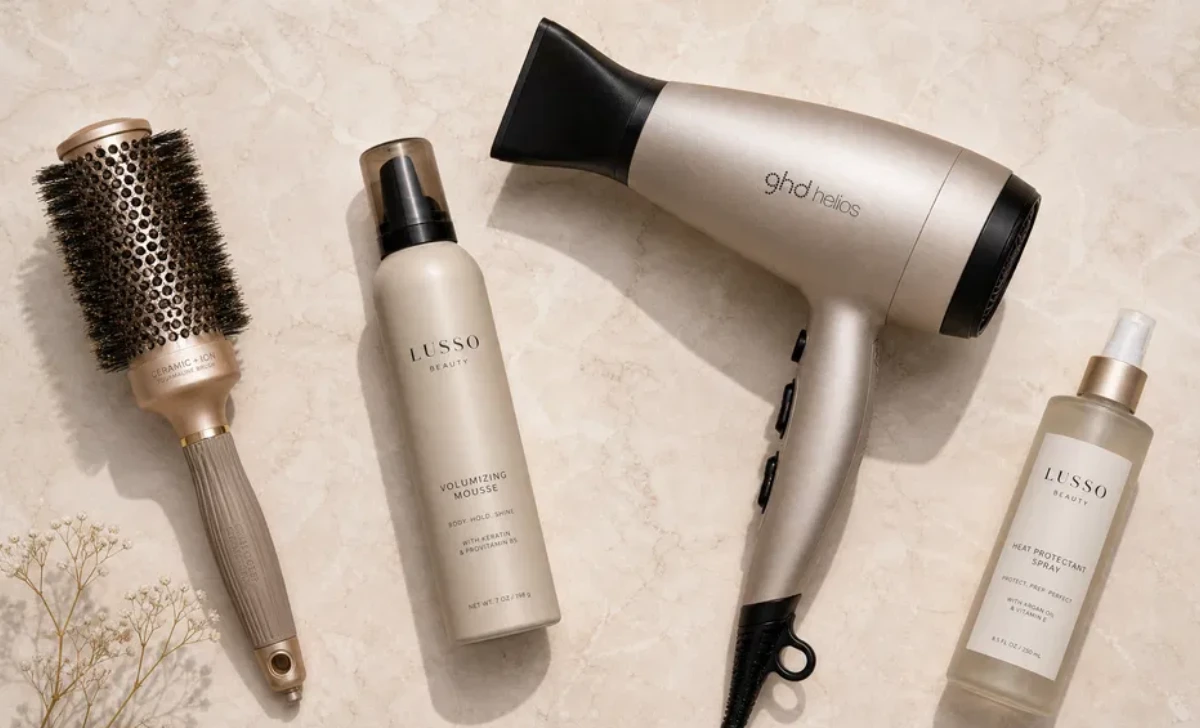
Recreating a blowout at home comes down to the right tools and a bit of practice. Your most important piece of equipment is a blow dryer with a concentrator nozzle and a cool shot button — directed airflow and that final blast of cool air are what actually lock the shape in place.
You also need three products, in this order:
- A thermal protectant applied to damp hair before any heat touches it.
- A lightweight mousse or a smoothing cream, chosen based on your texture and how much volume versus control you need.
- A flexible-hold hairspray at the very end, applied from about 12 inches away so it doesn’t create stiffness or a crunchy feel.
A round brush sized to match your desired curl — smaller barrels for tighter bends, larger barrels for loose, soft waves — rounds out the basic kit.
How Can You Maintain Your Blowout Overnight and in Humidity?
A few simple habits can stretch a blowout by two or three extra days with very little effort.
At night: Gather your hair into a loose, high ponytail on top of your head using a silk or satin scrunchie, then wrap the length into a soft bun and secure it with a small pin. Sleeping on a silk or satin pillowcase also reduces friction, so your style glides through the night instead of getting crushed or frizzed against cotton.
In the morning: Take the bun down, flip your head forward, and shake your fingers through the roots to revive the lift. A small spritz of dry shampoo at the roots can add grip back if things feel a little flat.
In humidity: Apply an anti-humidity spray or a very lightweight sealing oil to your ends before you step outside. Keep a travel-size hairspray in your bag so you can fix any midday drooping in a couple of minutes without a full redo.
Common Blowout Mistakes to Avoid
- Skipping heat protectant — even “healthy-looking” hair can develop damage over repeated unprotected blowouts.
- Using too high a heat setting on fine or damaged hair — a medium setting with more passes is gentler than one aggressive high-heat pass.
- Not sectioning hair properly — trying to blow-dry large chunks at once is the main reason home blowouts end up frizzy or uneven.
- Skipping the cool shot — this is the step most people forget, and it’s the one that actually sets the style.
- Brushing out the blowout right after finishing — let it cool completely for a few minutes before touching it, or you’ll lose some of the shape immediately.
Frequently Asked Questions
How long does a blowout typically last?
With the right products and overnight care, a professional blowout usually lasts three to five days, depending on hair texture and climate. Fine hair may need a dry shampoo refresh by day three, while thicker hair often holds its shape a bit longer.
Can I get a blowout on naturally curly hair without causing damage?
Yes, as long as you use a proper heat protectant and a moderate heat setting. A blowout temporarily stretches the curl pattern without permanently altering your texture, and a weekly deep-conditioning treatment helps curls bounce back cleanly when you wear them natural again.
What’s the difference between a blowout and a keratin treatment?
A blowout is a temporary styling method that shapes your hair for a few days. A keratin treatment is a chemical process that reduces frizz and loosens curl pattern for weeks or months, and a blowout is often the finishing step stylists use right after a keratin service.
How much does a professional blowout usually cost?
Pricing varies widely by salon, city, and hair length, but blowouts are generally priced separately from haircuts and color services. It’s reasonable to ask for pricing when you book, since longer or thicker hair can sometimes carry a higher service fee.
Can I do a salon-quality blowout by myself at home?
Yes, with practice. The main differences between a home result and a salon result usually come down to sectioning technique, brush size, and remembering the cool shot — not the equipment itself.
Conclusion
You now have what you need to walk into a salon, or stand in front of your own mirror, with real clarity. A great blowout isn’t reserved for red carpets. It’s a style you can claim once you match it to your face shape, your hair texture, and the way you actually live your week.
When you’re in the stylist’s chair, you’ll have the right words ready. When you’re doing it yourself, you’ll know exactly which tools and steps matter most. Whether you’re after a sleek, glass-straight finish or a bouncy 90s wave, the blowout that suits you is well within reach.