
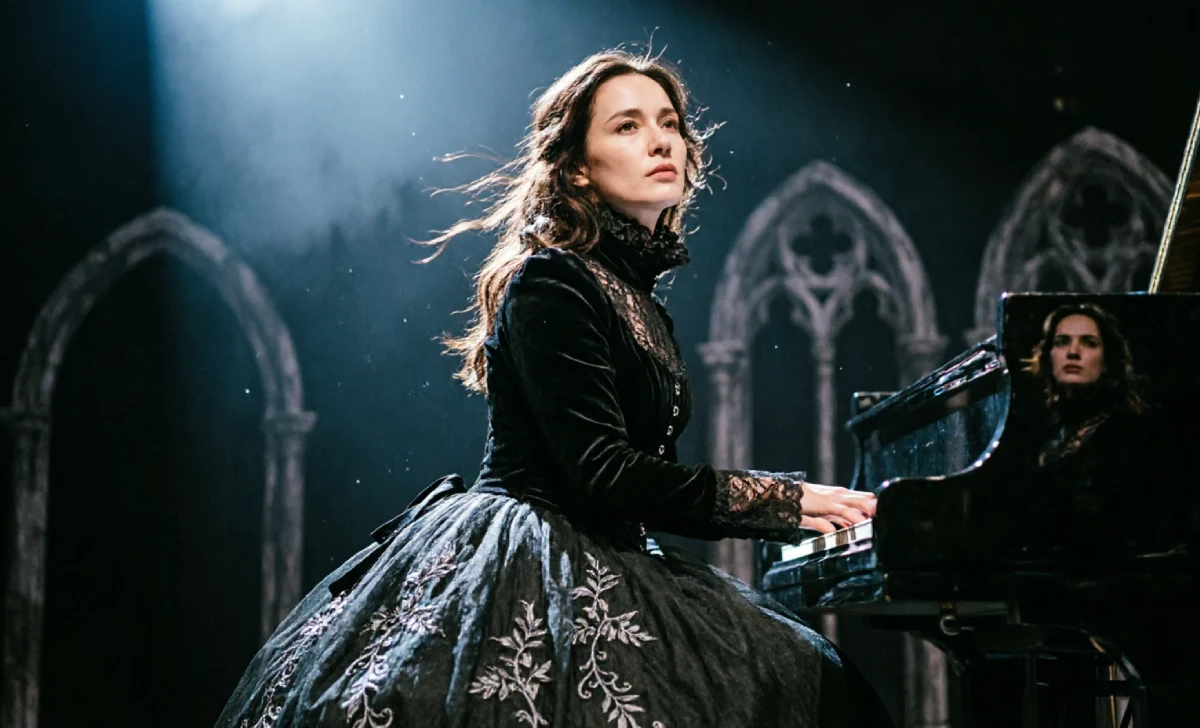
You have probably heard someone call Evanescence an emo band. Maybe a friend insisted they are pure goth. The question “Is Evanescence goth or emo?” has sparked debates for over two decades, and you are not alone in wondering which label actually fits.
The confusion is not your fault. Evanescence arrived at a strange moment in music history when dark clothing and emotional lyrics got lumped together in ways that did not always make sense. If you have ever tried to map out the types of pop music and where rock subgenres fit inside that picture, you already know how messy genre lines can get.
By the time you finish reading, you will understand exactly why the confusion exists, what goth and emo actually mean as musical terms, and where Amy Lee’s band truly belongs.
What’s the Real Difference Between Goth and Emo Music?
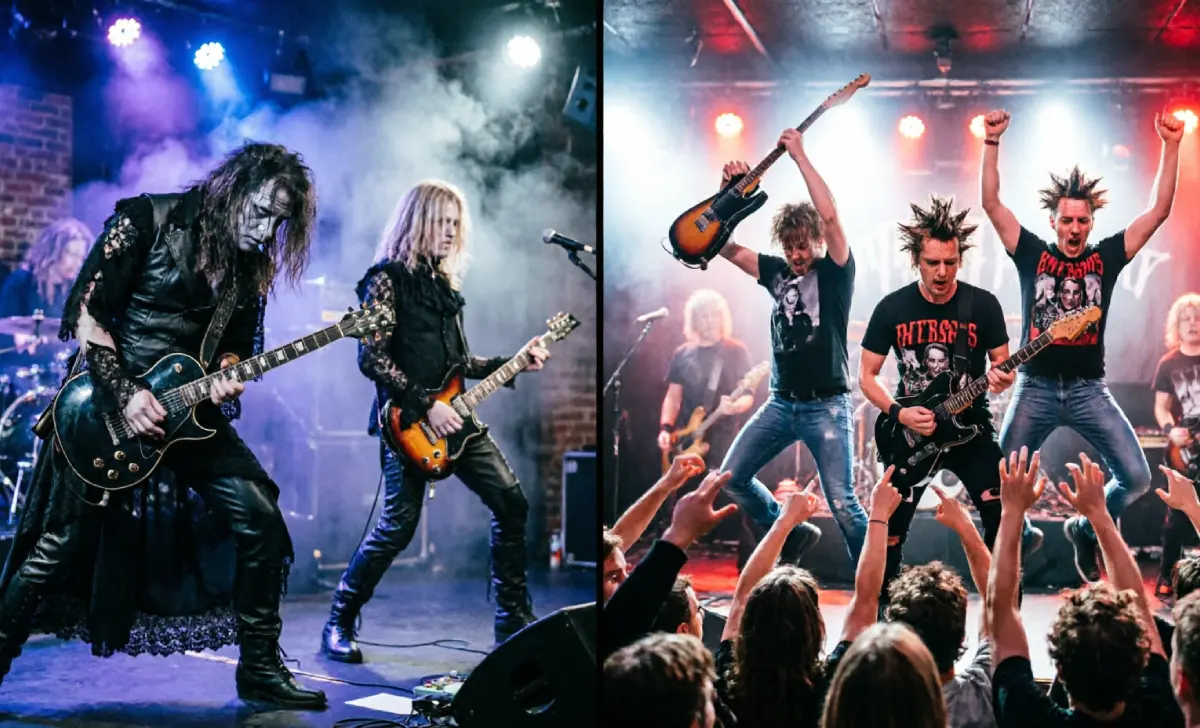
If you want to settle the Evanescence debate, you first have to understand what goth and emo mean as musical genres. Most people use these words to describe fashion or moods, but they started as specific sounds with specific histories.
Goth music emerged from the post-punk movement in the late 1970s. Bands like Bauhaus, Siouxsie and the Banshees, and The Sisters of Mercy built songs around atmospheric guitar work, deep basslines, and baritone vocals that sounded haunting rather than aggressive. The music prized atmosphere and texture above raw emotion, creating a sound you sink into rather than one that grabs you.
Emo music took a completely different path. It started in the mid-1980s hardcore punk scene in Washington, D.C., with bands like Rites of Spring pushing punk toward personal confession and vulnerability. By the early 2000s, it had evolved into emo-pop, mixing punk energy with pop melodies and lyrics that read like diary entries set to distortion pedals.
Goth and emo have almost opposite musical DNA. Goth builds a world you live inside. Emo spills a feeling you cannot hold back. Knowing that difference is the key to understanding why Evanescence fits neither box.
Why Do People Call Evanescence an Emo Band?
The emo label did not stick to Evanescence because of their sound. It stuck because of timing, and once a label attaches to a band, it becomes very hard to shake.
In 2003, emo was everywhere. MTV ran pop-punk and emo-pop videos on heavy rotation while magazines featured eyeliner-wearing frontmen on every cover. Into this world dropped Evanescence with Fallen, wearing dark clothes and singing about pain, isolation, and longing. On the surface, they looked and felt like part of the same emotional wave.
Then there was “Bring Me to Life,” which featured an intense rap-rock male vocal alongside Amy Lee’s soaring soprano. Radio stations and music channels grouped anything with emotional weight and dark clothing under a single marketable label. Wind-up Records leaned into this because it helped sell albums, and Evanescence quickly became one of the best-selling music artists of that era.
But being marketed alongside emo does not make a band musically emo. The songwriting on Fallen has little in common with hardcore-influenced emo structures or the pop-punk melodies that defined emo-pop. Emotion alone does not define a genre.
Is Evanescence Actually a Gothic Rock Band?
The goth argument feels stronger at first glance. When you look at the album art, stage design, and Amy Lee’s visual style, the gothic influence is impossible to miss. But you have to separate atmosphere from musical architecture.
Classic goth rock uses chorus-heavy guitars that shimmer and ring out, melodic basslines, and vocals that sit in a lower detached register. Bands like The Cure during their goth period created songs that felt like cold fog rolling in, beautiful and slightly distant.
Evanescence does not sound like that. Their guitar work comes from alternative metal traditions, using heavily downtuned riffs that chug and crunch rather than shimmer. The rhythm section hits hard with double-kick drum patterns and thunderous bass that aim for the gut, not the hips.
Listen to “Going Under” next to a Sisters of Mercy track. Both are dark, and both deal with heavy emotions, but the sonic blueprint is completely different. Evanescence creates a gothic atmosphere through lyrics and orchestration, not through the musical language of goth rock itself.
How Evanescence’s Sound Blends Genres
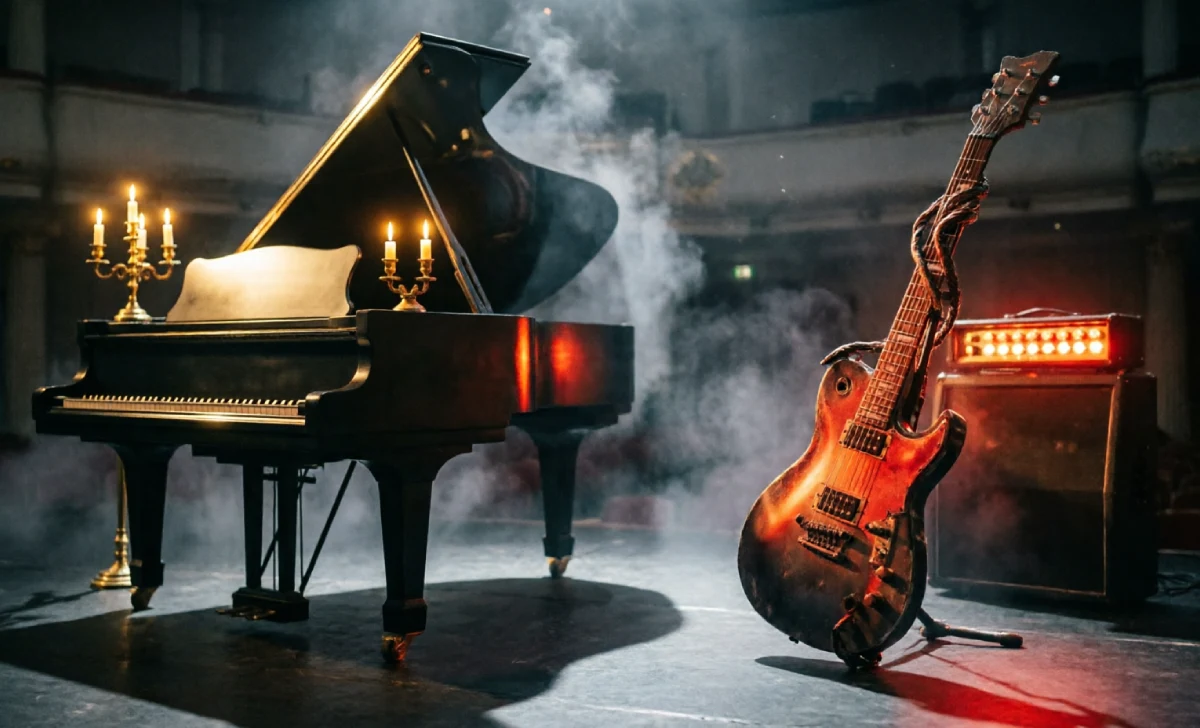
Evanescence built their sound by pulling pieces from several different worlds and fusing them into something that had not quite existed before.
Start with the piano. Amy Lee grew up playing classical music, and that training shapes almost every Evanescence song. The piano often drives the melody and sets the emotional tone, especially in ballads like “My Immortal.” Layer in the orchestral strings and choir arrangements used on Fallen and expanded on The Open Door, and you get a cinematic symphonic quality that belongs more to film scores than to rock clubs.
Now add the guitars. Evanescence tunes their instruments low and plays riffs drawn from alternative metal. The combination of heavy distorted guitars with classical piano and orchestration created a sound critics eventually called symphonic metal or symphonic rock. Songs shift between quiet piano-led verses and explosive guitar-driven choruses in a way that feels dramatic.
What you end up with is a band that can sound like a classical recital one moment and a metal festival the next. The emotional vulnerability reads as emo to some listeners, and the dark atmosphere reads as goth to others, but the actual musical ingredients point toward something else entirely.
How Amy Lee’s Image Influences the Goth vs. Emo Debate
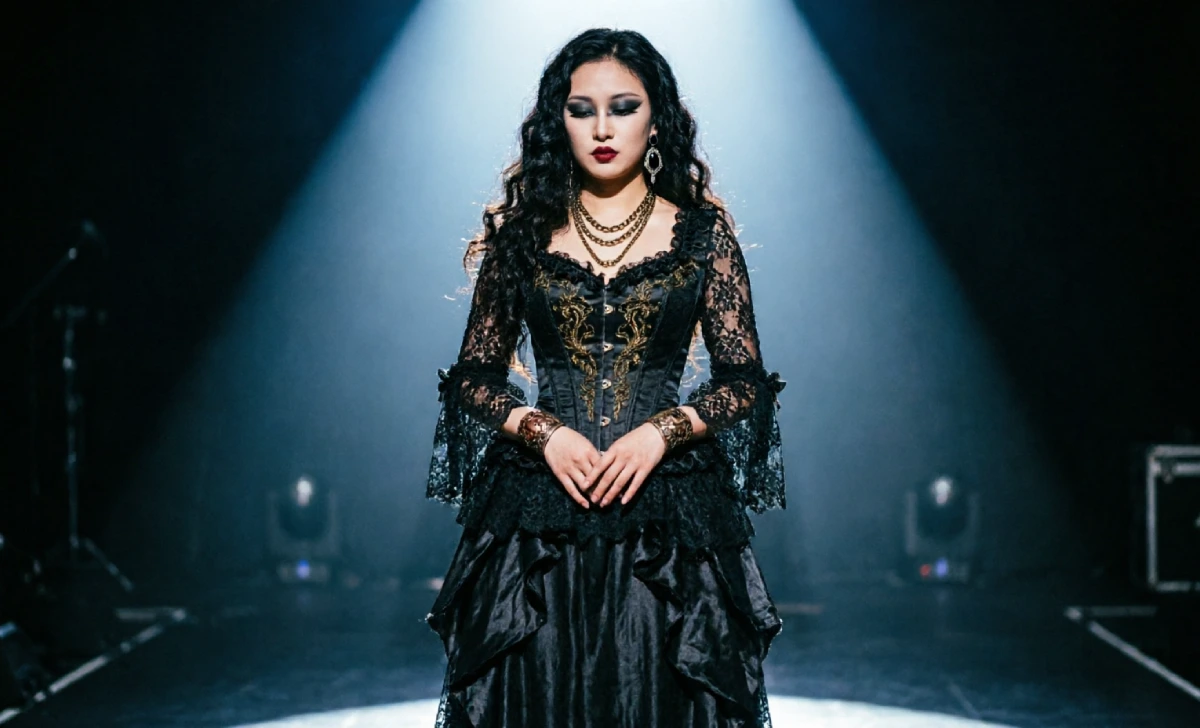
You cannot separate music from image. People hear with their eyes too, and Amy Lee’s visual identity has played a huge role in shaping how the band gets perceived.
Since the beginning, Lee has worn Victorian-inspired corsets, flowing skirts, dark eyeliner, and elaborate jewelry. She performs with a dramatic intensity that fully inhabits the emotional world of each song, and her live shows have earned a place among discussions of the best concerts of all time for their sheer emotional power. To many observers, that reads as goth, since the goth subculture has a long tradition of romantic vintage-inspired fashion.
But she has never claimed membership in any subculture. Her emotional rawness and accessibility also pulled her into the emo conversation, since emo culture valued vulnerability and authenticity above everything else. What makes this complicated is that Lee’s image genuinely contains elements of both aesthetics blended in a way that feels natural rather than calculated, which is exactly why the debate never dies.
So, Is Evanescence Goth or Emo? The Final Verdict
After all this, you are ready for a clear answer. Here it is.
Evanescence is not goth, and they are not emo. Their music is best described as symphonic alternative metal with strong gothic romantic overtones and a historical association with the emo era that has more to do with timing than with sound. The goth label comes closer because of the dark atmosphere and visual aesthetic, but the music does not follow goth rock conventions.
The emo label makes sense only if you define emo by feelings and fashion rather than by musical structure. What actually sets Evanescence apart is Amy Lee’s ability to combine classical piano, orchestral arrangements, and heavy guitar into a sound no single genre can fully contain.
Great artists rarely fit into tidy boxes. Evanescence borrowed from genres without being owned by any of them, and even when you look at the best male singers who have appeared on their tracks, their collaborations crossed genre lines too. The next time someone asks you this question, you can explain not just what Evanescence is not, but what they actually are.
FAQs
Is Amy Lee personally goth or emo?
Amy Lee has never publicly identified as goth or emo. Her style draws from Victorian and romantic influences, and she has always described it as personal artistic expression rather than subcultural membership.
What genre is Evanescence’s album Fallen considered?
Fallen is primarily considered an alternative metal and symphonic rock album with nu-metal elements. Its dark atmosphere caused the goth and emo associations, but those labels do not match its musical structure.
Did Evanescence influence the emo scene of the 2000s?
Evanescence shared an audience with the early 2000s emo scene but their musical influence moved in a different direction. They inspired symphonic metal and female-fronted rock acts more directly than they shaped emo music itself.
Can a band be both goth and emo at the same time?
It is extremely rare because both genres come from different musical traditions. A band might borrow visual elements from both, but the core music almost always leans toward one tradition or neither.
Conclusion
Now you have the full picture. The goth or emo question has followed Evanescence for over two decades, and you now understand exactly why. Their music blended symphonic grandeur with alternative metal power, wrapped in a gothic romantic atmosphere that arrived at the peak of the emo explosion.
The labels never fit because the band was never trying to fit them. You can appreciate Evanescence now for what they truly are: a singular creative force that made genre boundaries feel beside the point.