
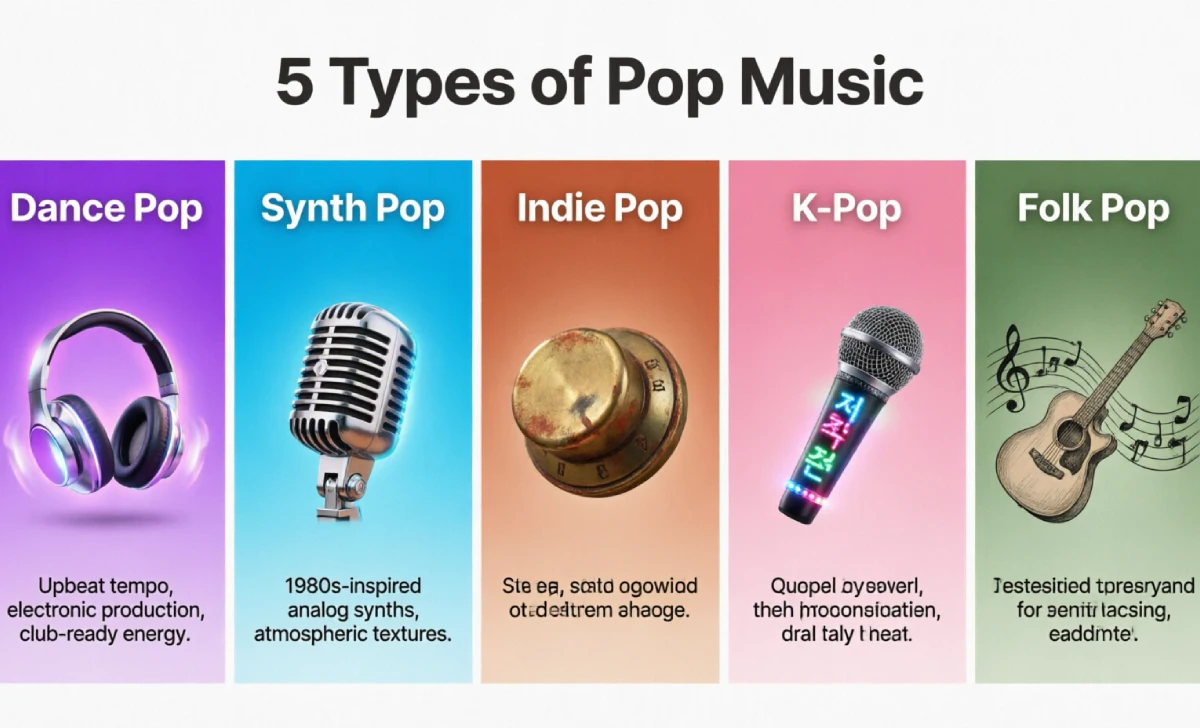
Have you ever wondered why some songs make you want to dance while others tell a powerful story? The answer lies in the many different types of pop music that exist today. This guide will help you understand the most popular subgenres, their history, and the artists who helped shape them.
What Makes a Song Considered Pop Music?
When people talk about pop music, they often mean music that appeals to a large audience. Pop songs usually feature catchy melodies, memorable choruses, and simple song structures that are easy to follow.
You will also notice that pop music adapts quickly to trends. Whether it borrows from rock, electronic music, country, or hip-hop, pop continues to evolve while maintaining its mainstream appeal.
Many successful songs on Billboard charts share these characteristics. Producers and songwriters carefully craft tracks to connect with listeners across different age groups and cultures.
If you enjoy discovering new artists, you may also like this guide on discovering music without language, which explores how music can connect people beyond words.
How Did Pop Music Evolve Over the Decades?
Pop music began taking shape during the 1950s when rock and roll gained popularity. Early artists created songs that appealed to a broad audience and laid the foundation for future pop stars.
The 1960s brought major changes through bands like The Beatles. Their innovative songwriting helped transform popular music and inspired generations of musicians.
During the 1980s, MTV changed the industry by making music videos a crucial part of an artist’s success. Stars such as Michael Jackson and Madonna became global icons through both music and visual storytelling.
Today, streaming platforms allow listeners to discover music from around the world instantly. This global access has expanded the reach of pop music more than ever before.
Which 12 Types of Pop Music Should You Know?
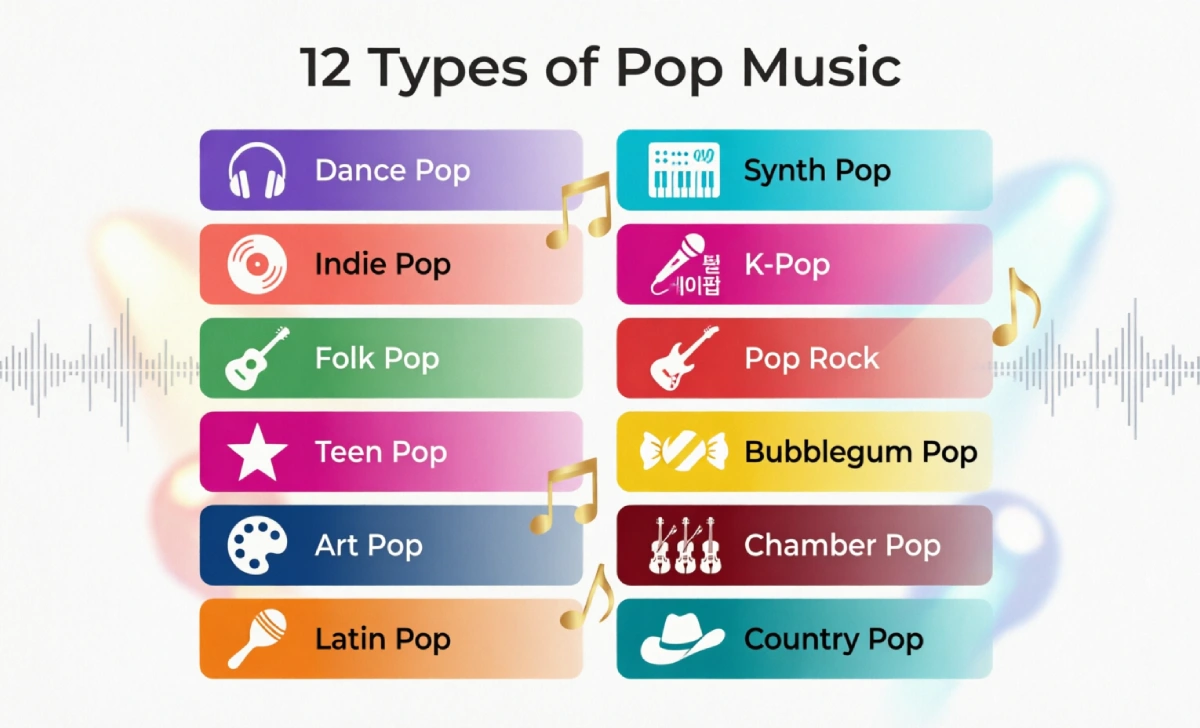
The world of pop music contains many unique styles. Understanding these subgenres helps you recognize the sounds and influences behind your favorite songs.
Dance Pop
Dance pop combines catchy pop melodies with energetic beats designed for clubs and parties. Artists like Madonna and Dua Lipa have popularized this style.
You will love dance pop if you enjoy upbeat songs that make you want to move.
Synth Pop
Synth pop relies heavily on synthesizers and electronic sounds. This genre became especially popular during the 1980s.
Artists such as Depeche Mode and A-ha helped define the classic synth pop sound.
Pop Rock
Pop rock blends the energy of rock music with accessible pop songwriting. The result is a style that feels both exciting and familiar.
Artists like Maroon 5 and Kelly Clarkson are strong examples of pop rock.
Indie Pop
Indie pop focuses on creativity and often originates from independent music scenes. The sound tends to be softer and more personal.
Groups like The 1975 and Vampire Weekend have brought indie pop to larger audiences.
Folk Pop
Folk pop combines acoustic instruments with catchy melodies. Storytelling remains one of its strongest features.
Artists such as Vance Joy and The Lumineers have helped popularize this genre.
Teen Pop
Teen pop targets younger audiences with polished production and relatable themes. It became especially popular during the late 1990s.
Britney Spears and Justin Bieber are among the most recognizable teen pop stars.
Bubblegum Pop
Bubblegum pop features simple lyrics, cheerful themes, and highly memorable hooks. It is designed to be fun and easy to enjoy.
Many classic radio hits from past decades fall into this category.
How Does Dance Pop Differ From Synth Pop?
Although these genres share electronic influences, they are not identical. Dance pop focuses on creating high-energy rhythms that encourage movement and dancing.
Synth pop places greater emphasis on synthesizer-driven melodies and atmospheric electronic textures. The production style often feels more futuristic and experimental.
You can hear elements of both genres in modern pop music, showing how subgenres often overlap and influence one another.
What Is the Difference Between Indie Pop and Folk Pop?
Many listeners confuse indie pop and folk pop because both can sound softer than mainstream pop. However, their roots are quite different.
Indie pop grew from independent music communities and often emphasizes creative freedom. Folk pop draws inspiration from traditional folk music and storytelling.
Understanding this distinction helps you identify the unique qualities of each style when exploring new playlists.
How Have K-Pop and Latin Pop Changed the Global Music Scene?
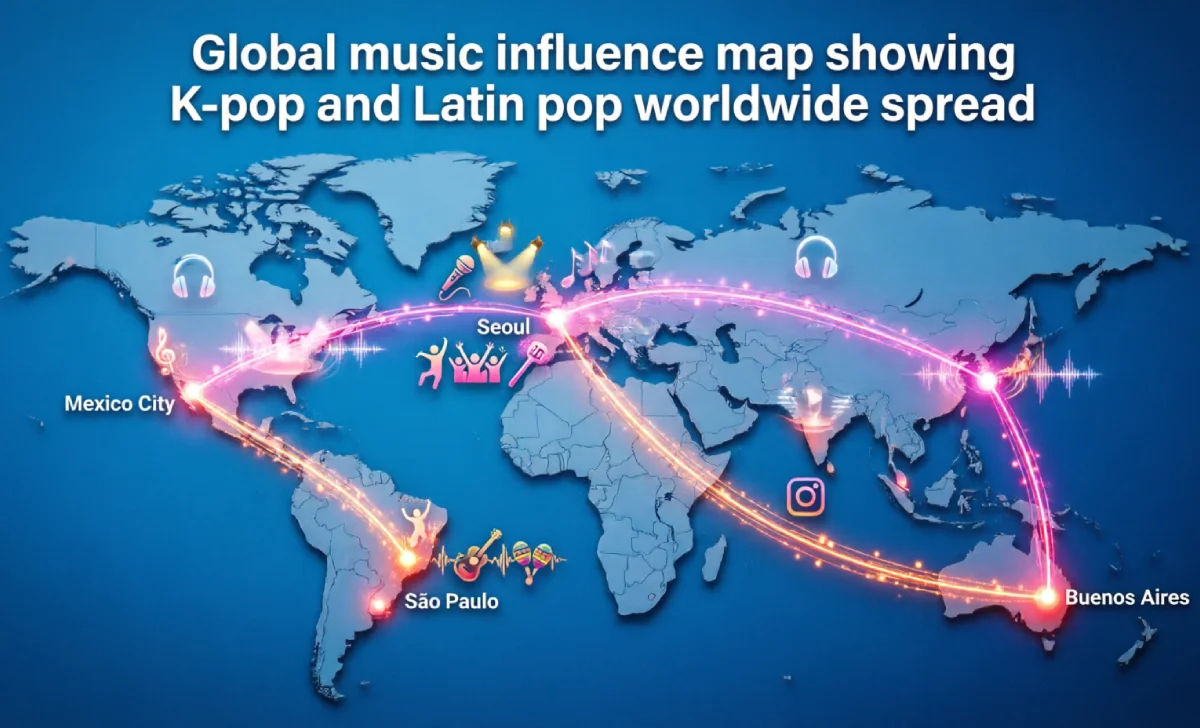
K-pop has become one of the most influential forms of pop music in the world. Artists from South Korea combine music, choreography, fashion, and visual storytelling to create complete entertainment experiences.
Groups like BTS have shown that language is not a barrier to global success. Their achievements have inspired fans across many countries.
Latin pop has also transformed international music. Artists such as Shakira and Enrique Iglesias introduced Latin rhythms and styles to mainstream audiences worldwide.
If you enjoy learning about influential performers, check out this article on the best male singers for more music inspiration.
Today, both K-pop and Latin pop continue to influence chart-topping songs and demonstrate the power of cultural exchange.
Why Do Pop Rock and Country Pop Remain So Popular?
Pop rock continues to attract listeners because it combines strong melodies with the excitement of rock instruments. This balance creates songs that feel energetic without becoming overwhelming.
Country pop achieves similar success by blending emotional storytelling with radio-friendly production. The genre appeals to both country fans and mainstream pop audiences.
Taylor Swift represents one of the most successful examples of this crossover. Her career demonstrates how genre blending can create massive commercial success.
Exploring Art Pop and Chamber Pop Styles
Art pop pushes creative boundaries by experimenting with unconventional sounds and artistic concepts. Artists in this genre often challenge traditional expectations.
Chamber pop combines pop songwriting with orchestral instruments such as strings and pianos. The result is a rich and sophisticated listening experience.
These styles may not dominate mainstream radio, but they showcase the incredible diversity within pop music.
How Can You Discover Your Favorite Type of Pop Music?
One of the easiest ways to explore pop subgenres is through streaming platforms like Spotify and Apple Music. Their recommendation systems help you find artists with similar sounds.
You can also search for genre-specific playlists to compare styles directly. This approach makes it easier to recognize the characteristics that define each subgenre.
Creating your own playlists is another great way to learn. Consider building a shared playlist road trip collection featuring songs from different pop styles.
Listening actively will help you identify patterns in melodies, production, and songwriting. Over time, you will naturally discover which subgenres match your personal taste.
FAQs
Is pop a specific music genre or just a general style of popular music?
It can be both. Pop refers to a specific genre with recognizable characteristics, but it is also used broadly to describe music that achieves widespread popularity.
What are the four main characteristics of a pop song?
Most pop songs feature catchy melodies, memorable hooks, relatable lyrics, and a clear verse-chorus structure.
How has pop music production changed since the 1980s?
Modern technology allows producers to create more polished and layered recordings using digital tools, while earlier decades relied more heavily on analog equipment.
Can a song belong to more than one type of pop music?
Yes. Many modern songs combine elements from multiple subgenres, which is one reason pop music continues to evolve.
Conclusion
The many types of pop music prove that pop is far more than a single sound. From dance pop and synth pop to K-pop and country pop, each style offers something unique for listeners.
The next time you open your favorite streaming app, try exploring a subgenre you have never heard before. You may even discover new artists through local live entertainment experiences while traveling or attending events.
The more you explore, the more you will appreciate the creativity, diversity, and global influence that make pop music one of the world’s most popular genres.