

You’re three chapters in, your coffee’s gone cold, and you promised yourself you’d stop at midnight. Then the protagonist turns the corner, finds the letter, and the page cuts to white. You’re furious, but your thumb is already sliding to the next section. That’s the whole point. If you’re drafting a novel or a longeReal-World Cliffhanger Ending Examples for Fiction Writers: What Actually Worksr short story, knowing how to pull this off without making readers want to throw the book across the room is a practical skill. These cliffhanger ending examples will show you what actually works, what falls flat, and how to build tension that earns the right to pause.
What Is a Cliffhanger Ending?
It isn’t just stopping mid-sentence or fading out because you ran out of ideas. It’s a deliberate narrative pause placed exactly at the peak of tension. The scene stops, but the central question hangs in the air.
Psychologists actually have a term for why this sticks: the Zeigarnik effect. Our brains dislike incomplete loops. When you leave a question open, the reader’s mind keeps working on it long after the screen goes dark or the book closes. That mental friction is what keeps them coming back—similar to how following a complex TV series trains viewers to track layered storytelling week after week.
The Cliffhanger vs Plot Twist Difference
Writers mix these up constantly. Here’s the quick split. A plot twist flips the script on what the reader already knows. It recontextualizes earlier scenes. A cliffhanger doesn’t rewrite the past. It freezes the present moment and dares the reader to find out what happens next. One changes the lens. The other holds the door open.
Why Writers Use Cliffhanger Endings So Often
It’s rarely just a cheap trick to sell sequels. When done right, these moments do heavy lifting for your pacing. They act like narrative pressure valves. A chapter can build, tighten, and release—but not completely. That partial release keeps momentum rolling into the next section.
Pacing, Series Hooks & Reader Retention
If you’re working on a series or a long manuscript, they become your retention anchors. Readers remember how a story made them feel right before they had to put it down. Leave them anxious but hopeful, and they’ll pick it up tomorrow. Leave them annoyed, and you’ve burned a chapter of goodwill. Understanding remake, reboot, and sequel differences helps you decide when a cliffhanger serves your series arc versus when it just delays resolution.
Ever finish a scene feeling cheated instead of curious? That’s usually the difference between earned tension and empty shock value.
What Makes a Good Cliffhanger Ending?
Most advice stops at “raise the stakes.” That’s only half the battle. I use a simple framework I call the Tension-Trust Matrix. On one side, you’ve got immediate danger or mystery. On the other hand, you’ve got the narrative trust you’ve built with the reader.
High tension without trust feels cheap. High trust with low tension feels flat. A strong ending sits exactly where those two lines cross. You’ve earned the right to withhold the answer because you spent the last fifty pages giving the reader enough pieces to feel invested. They don’t need all the answers. They just need to know you aren’t making it up as you go. Building that online theater emotional connection is what turns a cheap cut into a moment readers actually care about.
Real-World Cliffhanger Ending Examples for Fiction Writers: What Actually Works
Let’s look at how this plays out on the page. You don’t need a literal edge or a falling helicopter. Sometimes the quietest moments hit the hardest.
Example 1: The Unspoken Revelation Character A finally finds the locked journal. They flip to the last page. Their hands shake. They read a single line. The narrator stops there. We don’t see what it says. Why it works: The tension lives in Character A’s physical reaction. The reader pieces together earlier clues and realizes the implications before the next page even starts.
Example 2: The Interrupted Conversation “So you’re telling me the whole time, you actually—” The line cuts. A door slams off-screen. The next chapter picks up ten minutes later with a completely different conversation. Why it works: It mimics real life. Interruptions feel natural. The gap forces the reader to lean in and reconstruct the missing words.
How to Analyze Them Without Copying
When you study these moments, don’t just copy the cutoff. Map the emotional rhythm. Note how the author planted the setup earlier in the scene so the pause feels earned, not abrupt. Ask yourself: what question did they leave hanging, and why did I care enough to keep reading?
How to Write a Cliffhanger Without Frustrating Readers
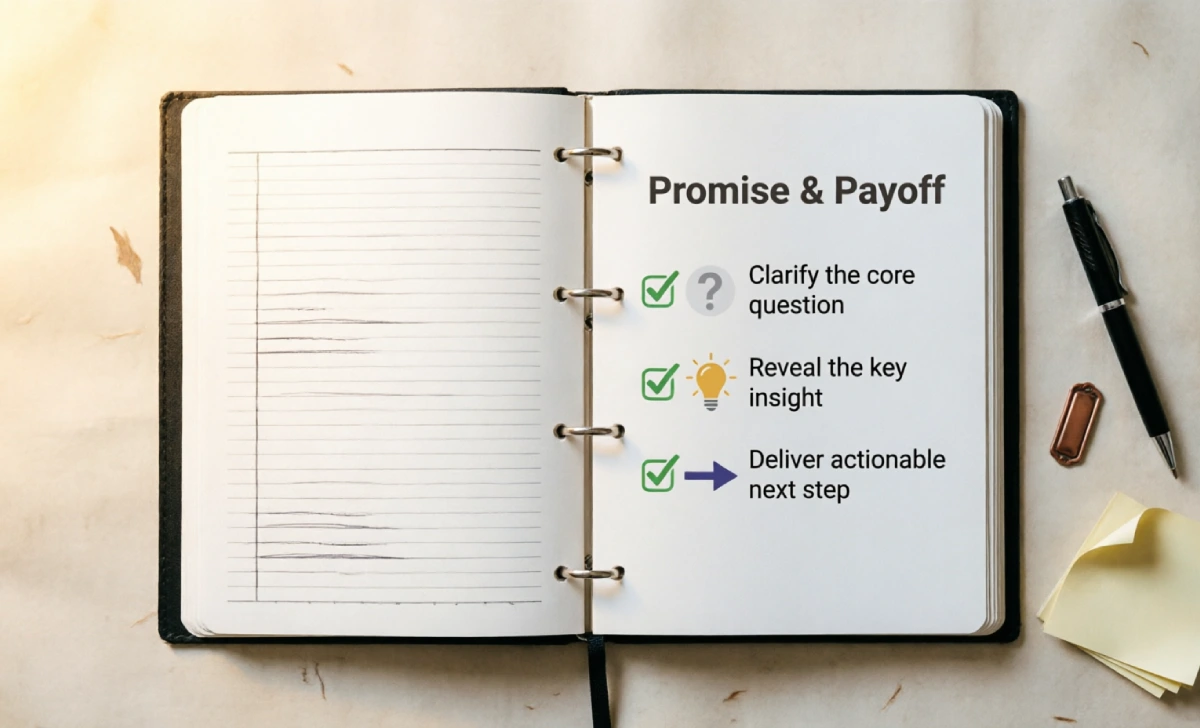
You’ve probably noticed how many readers complain about “fakeout” endings. They feel manipulated. The trick is shifting from a hard stop to a directional pivot. Here’s what that looks like in practice.
Before (The Frustrating Version), the door opens. A figure steps inside holding a knife. End chapter. Problem: Zero setup. Feels random. Reader thinks, “Great, another shock for shock’s sake.”
After (The Earned Version), she checks the peephole. Empty. Relaxed, she turns back to the counter, but her boot catches on the loose floorboard. She looks down. The wood isn’t warped. It’s been sawed through from underneath. Above her, the ceiling shifts. End chapter. Why it works: The threat isn’t announced. It’s discovered. The reader gets a specific question (Who’s under the floor? Will it collapse?) instead of vague panic.
I like to call this the Promise & Payoff Checklist. Run your draft through these three filters before calling a chapter done:
• Does the scene answer at least one minor question while opening a bigger one?
• Is the cutoff tied to a character’s choice or discovery, not just your convenience?
• Will the next section deliver on the tension within the first three pages?
If you’re nodding yes to all three, you’re set. Copy-paste this into your chapter template so it’s the first thing you check during your next edit pass.
When to Avoid Them (Common Pitfalls)
Not every story needs one. If you’re writing literary fiction focused on quiet introspection, a sudden hanging thread will feel tonally jarring. Standalone novels also suffer if the ending leaves too many threads dangling. Readers want closure, even in ambiguous endings.
The biggest trap? Using them as a crutch for weak pacing. If your middle drags, cutting a scene short won’t fix it. It’ll just highlight the lack of momentum. Tighten the scene first. Use the pause as the steering wheel, not the engine.
FAQs
Do they work in debut novels?
Yes, but you have to earn them faster. Without an established reader base, you’ve got about fifty to sixty pages to prove your story has direction. Drop a hanging moment too early, and it reads like a gimmick. Place it after a solid setup, and it acts as a hook.
How long should you stretch the tension?
Usually one to two chapters max. Anything longer and the curiosity cools into irritation. If you’re stretching it across a full book, break it into mini-payoffs so the reader feels steady progress.
Can I use one in a short story?
You can, but short stories demand a different kind of resolution. Instead of a traditional cut, aim for an emotional or thematic cliffhanger. Leave the internal conflict open while the external action settles.
Wrapping Up
Writing tension isn’t about tricking your reader. It’s about promising them something worthwhile and making them wait just long enough to feel it. Stick to the Tension-Trust framework, run your drafts through that promise checklist, and you’ll stop guessing where to cut and start crafting endings that actually stick.
Next time you’re drafting a chapter ending, pause and ask: “Am I earning this pause, or just forcing it?” That one question will save you from half the common mistakes. And if you’re curious about the psychology behind why we keep consuming stories that leave us hanging, research on binge-watching reward systems offers fascinating insight into the dopamine loops cliffhangers intentionally trigger.