
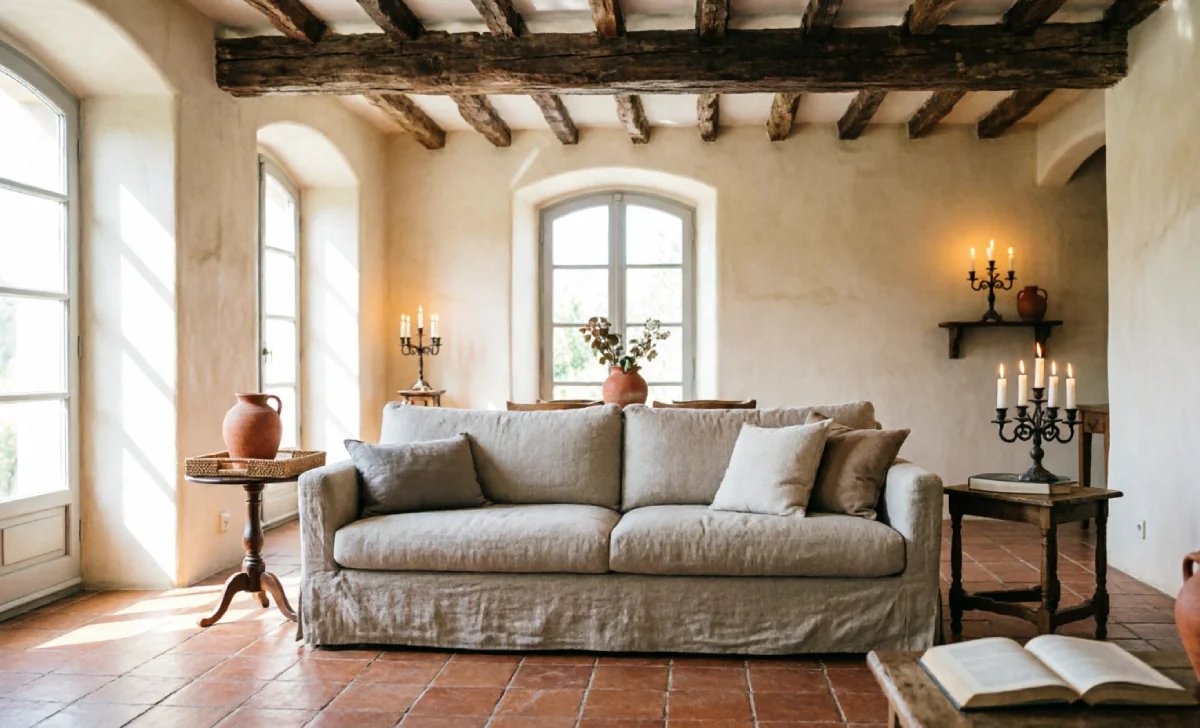
You’ve likely saved dozens of photos of sun-washed stone cottages, heavy linen curtains, and kitchens that feel loved for centuries. You want that same warmth in your own home, but maybe you think it requires a farmhouse in Provence. It doesn’t.
French country interior design blends rustic simplicity with refined comfort. It grew from the rural homes of Provence and Normandy, where natural materials and soft colors created rooms that feel both lived-in and gracefully beautiful. In this guide, you’ll discover 12 achievable ideas to bring that cozy spirit into every room.
1: Understand What French Country Design Really Is
French country design is about embracing imperfection, natural materials, and a welcoming atmosphere that never feels pretentious. It draws from the stone farmhouses of Provence and the timbered cottages of Normandy, where homes were built to be lived in deeply.
The look relies on sun-faded hues, weathered wood, plaster walls, and handcrafted pieces that show the gentle wear of time. Knowing this background helps you understand why the style feels so rooted and honest.
2: Know the Difference Between French Country and Farmhouse
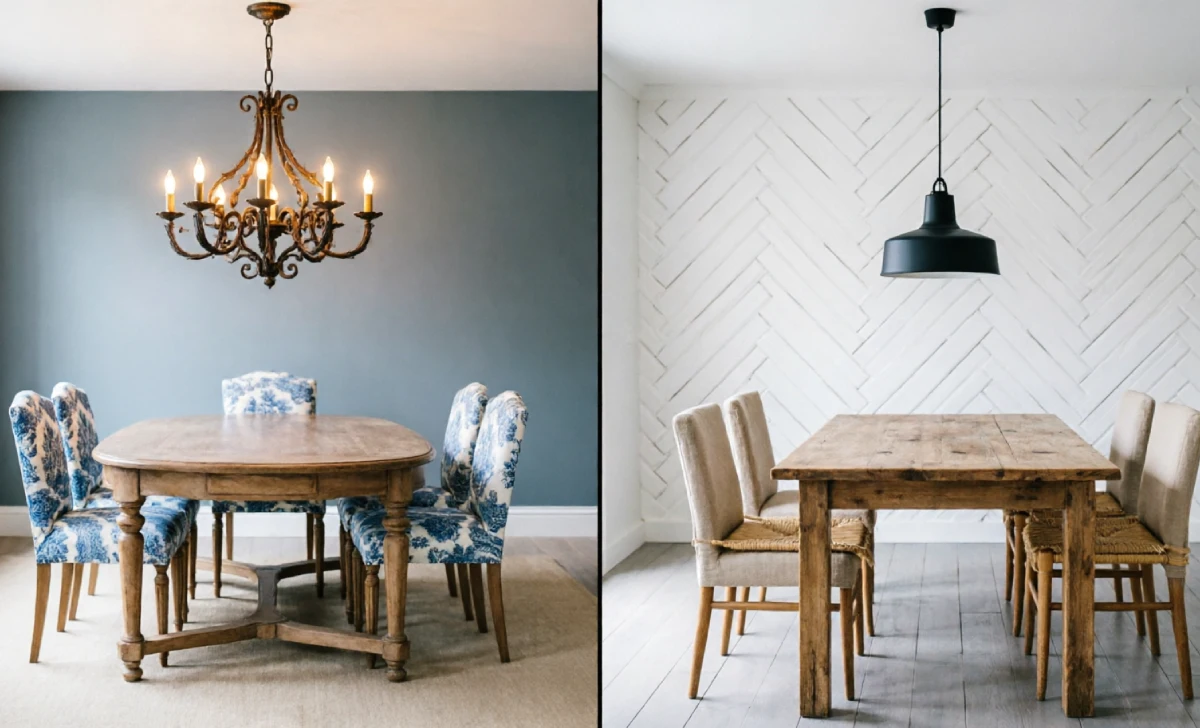
You might notice that French country and farmhouse interior design often get tossed into the same conversation, and it’s easy to see why. Both love natural materials and a relaxed feel, but the differences run deeper than you might think.
French country carries a distinctly European refinement — curving furniture legs, toile de Jouy fabrics, wrought iron accents, and a patina that speaks of centuries. American farmhouse leans into simpler, more utilitarian forms: shiplap walls and sturdy straightforwardness. Once you spot these nuances, you’ll never mistake the two again.
3: Build the Right Color Palette
The signature French country look relies on a soft, muted backdrop that lets natural textures take center stage. You’re aiming for colors that look like they’ve been faded by the Provençal sun over decades.
Start with warm creamy whites and soft limestone tones on your walls. Then layer in dusty blues, sage greens, lavender greys, and the palest ochre through upholstery and curtains. These hues draw directly from the fields of Provence — lavender, sunflower, and wheat.
4: Embrace Weathered Wood and Natural Materials
Step into any authentic French country home, and your fingers will want to touch the surfaces. That’s because texture in interior design does most of the storytelling — weathered wood beams, plaster walls, and terracotta tiles softened under countless footsteps.
You can bring this richness into your home even with drywall and modern floors. A reclaimed wood console table, a limestone pot, or a rough stone accent instantly adds warmth and visual history. Let the wood show its knots — the quiet patina makes your home feel slowly assembled over time, not bought in a single afternoon.
5: Choose the Right Furniture Pieces
The furniture in a French country room never shouts for attention — it invites you to sit down and stay. The pieces that anchor this look share a few traits: curves, visible craftsmanship, and finishes that celebrate age.
The armoire is the most iconic piece, a tall painted wardrobe with softly rounded doors and carved details. Add a farmhouse dining table with turned legs, a deeply worn surface, and slipcovered sofas in natural linen. Ladder-back chairs and a timeworn bench in the entryway complete the collected, unforced look.
6: Layer Linen, Toile, and Timeworn Textiles
Nothing softens a room faster than the right textiles. Heavy natural linen, soft cotton, and classic toile de Jouy bring instant personality and tactile comfort to any space.
Linen curtains filter sunlight into a warm glow, while a slipcovered armchair in oat-colored fabric invites you to sink in. Introduce toile de Jouy in small doses — a single cushion or a valance — so it feels charming, not overwhelming. Mix grain sack stripes on a table runner for a rustic note that ties back to the countryside.
7: Layer Your Lighting for a Candlelit Glow
You might not realize how much lighting shapes the emotional temperature of a room. French country design doesn’t rely on one bright overhead fixture; it layers multiple soft light sources that mimic candlelight.
A wrought-iron chandelier with crystal drops casts warm, dappled light over a dining table. Wall sconces at eye level create pockets of amber glow. Then add real candles — grouped on a mantel or inside a lantern — even on ordinary evenings. Dimmer switches are your best friend here.
8: Create an Authentic French Country Kitchen
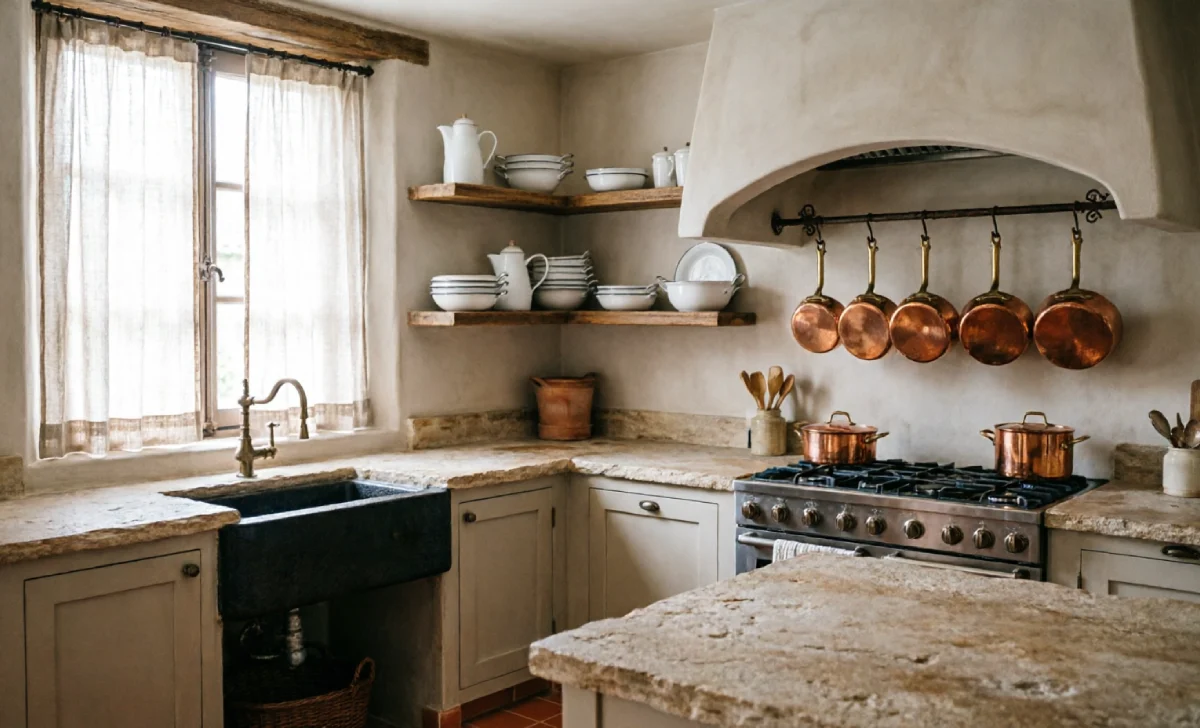
The kitchen is the soul of a French country home, a place where meals are made slowly and people gather without ceremony. You want a space that feels earthy, honest, and always ready for the next meal.
A farmhouse sink in fireclay or stone sets the tone immediately. Open shelving lets you display everyday dishware, copper pots, and glass jars filled with dry goods. Add a limestone countertop, a gently arched range hood, and terracotta tiles underfoot to deepen that connection to the French countryside.
9: Style a Living Room That Feels Like a Retreat
Your living room should be a place where conversations drift easily and hours pass without notice. Start with a generously sized slipcovered sofa in neutral linen, then pull in chairs with exposed wooden frames and worn upholstery.
Layer the room with softness: a faded wool rug underfoot, a stack of linen pillows, and a woven basket holding extra throws. A vintage coffee table — perhaps a painted trunk or an old door set on legs — gives you a surface for books, candles, and fresh blooms. Every object should feel chosen, not just placed.
10: Design a Peaceful French Country Bedroom
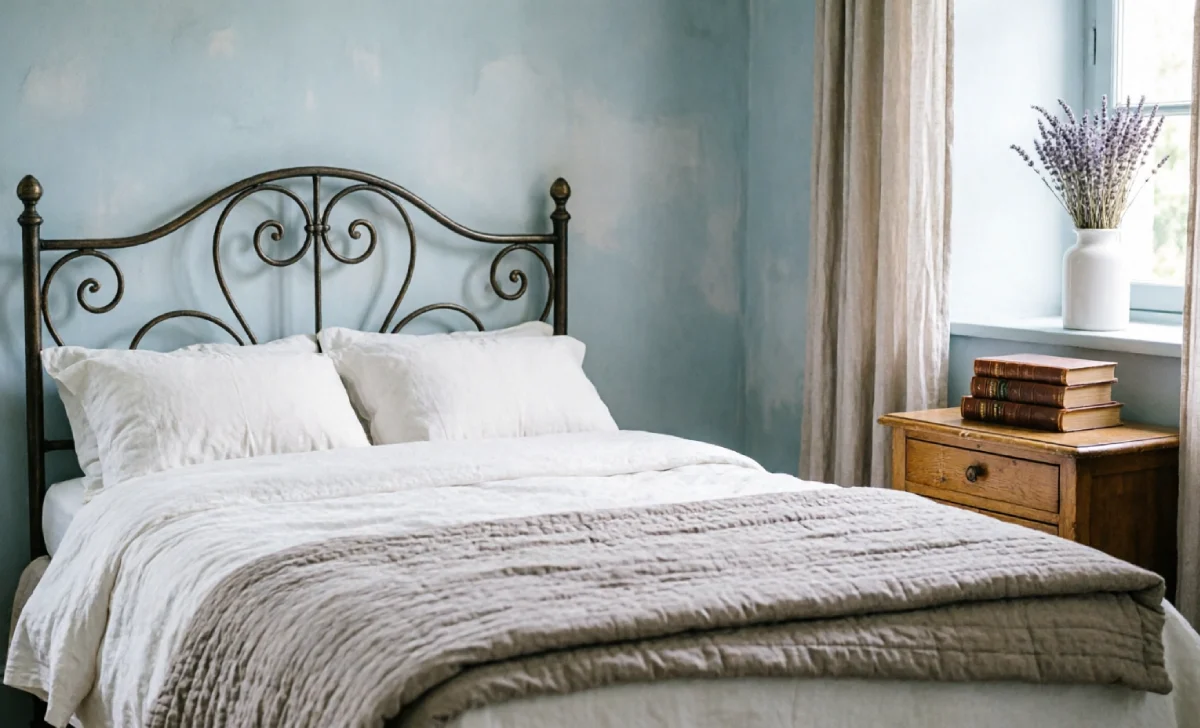
Your bedroom should be a sanctuary of quiet. An iron bedframe anchors the room with soft, scrolling lines. Pile it with white linen sheets, a natural-toned duvet, and a folded quilt at the foot for texture.
Keep walls in the softest creams or pale dusty blues. A weathered wooden nightstand, a vase of dried lavender on the windowsill, and an antique armoire complete the picture. When morning light filters through sheer linen curtains, the whole room glows with a hushed, protective beauty.
11: Add French Country Charm to Your Bathroom
Even the most functional room in your home can carry a whisper of the French countryside. You don’t need a costly remodel to shift the mood — textiles and small accessories do most of the work.
Swap a standard shower curtain for heavy linen or soft cotton. Replace chrome towel bars with wooden hooks and set out thick, rumpled white towels. A small terracotta pot holding a fern, a glass apothecary jar, and a wooden stool near the tub for a candle — suddenly the room feels less sterile and more like a retreat.
12: Finish With Curated Accessories and Avoid Common Mistakes
The final layer that makes French country design feel alive is thoughtful accessories. Think of it like cottagecore interior design sensibility — gathered, personal, and rooted in natural beauty. Start with dried lavender in an enamelware pitcher, woven baskets, and vintage books stacked on a side table.
Now, the most important part: avoid common mistakes. Don’t overload the space with rooster motifs — one is charming, ten is a costume. Avoid matching furniture sets; the style thrives on a collected, over-time look. When it comes to walls, knowing whether accent walls are out of style will help you make a smarter choice before committing. And always leave some breathing room — an empty corner says more than a filled one.
FAQs
What is the difference between French country and English country style?
French country uses warmer, sun-faded colors and curving furniture from Provence and Normandy. English country leans darker, with floral chintz fabrics and heavier woods from manor houses and cottages. The palette and lightness are the clearest giveaways.
Can you do French country design in a small apartment?
Yes. Use warm creams and soft blues to keep things airy, add linen curtains, a slipcovered chair, and a few vintage accessories. Even one armoire, a basket, and candlelight can shift the whole mood of a small space.
What are the best paint colors for a French country look?
Farrow & Ball’s “Pointing” or “Slipper Satin” work beautifully for warm whites. For that faded blue note, try “Parma Gray.” Sherwin-Williams’ “Alabaster” and Benjamin Moore’s “Balboa Mist” also deliver soft, plaster-like warmth. Always test samples in your actual light.
Conclusion
Your home can hold that quiet, sun-warmed spirit of the French countryside no matter where you live. By weaving together soft hues, honest materials, and pieces with a gentle history, you create a backdrop for a life lived slowly. Start with one small change — a linen curtain, a candle, a chair with chipped paint — and let the rest follow naturally.