

You know that feeling when you scroll past a photo of a sunlit cottage kitchen — wildflowers in a chipped pitcher, lace curtains drifting in the breeze — and your whole body sighs with longing. You want your home to feel exactly like that.
Cottagecore interior design is not about owning a perfect countryside cottage or spending thousands on decor. It is about creating a feeling — warmth, nostalgia, and the quiet comfort of a space that welcomes you every single time you walk through the door.
In this article, you will find ten easy, budget-conscious cottagecore interior decor ideas for your home. Whether you rent a small apartment or own a house that feels too modern, these tips will help you begin your transformation today.
What Exactly Is Cottagecore Interior Design?
If you have ever felt drawn to cozy kitchens with open shelving, faded floral fabrics, and handmade pottery, you have already felt the pull of cottagecore. It is an aesthetic rooted in simplicity, nature, and a romantic view of rural life.
You might notice that cottagecore spaces feel nostalgic, even if you did not grow up near the countryside. The style taps into a shared memory of a simpler time, prioritizing comfort over perfection and handmade charm over mass production.
The beauty of this approach is that you do not need an old house or a large budget to achieve it. The core elements — natural materials, soft colors, and vintage touches — can find a home anywhere you live.
1. Bring In Natural Materials
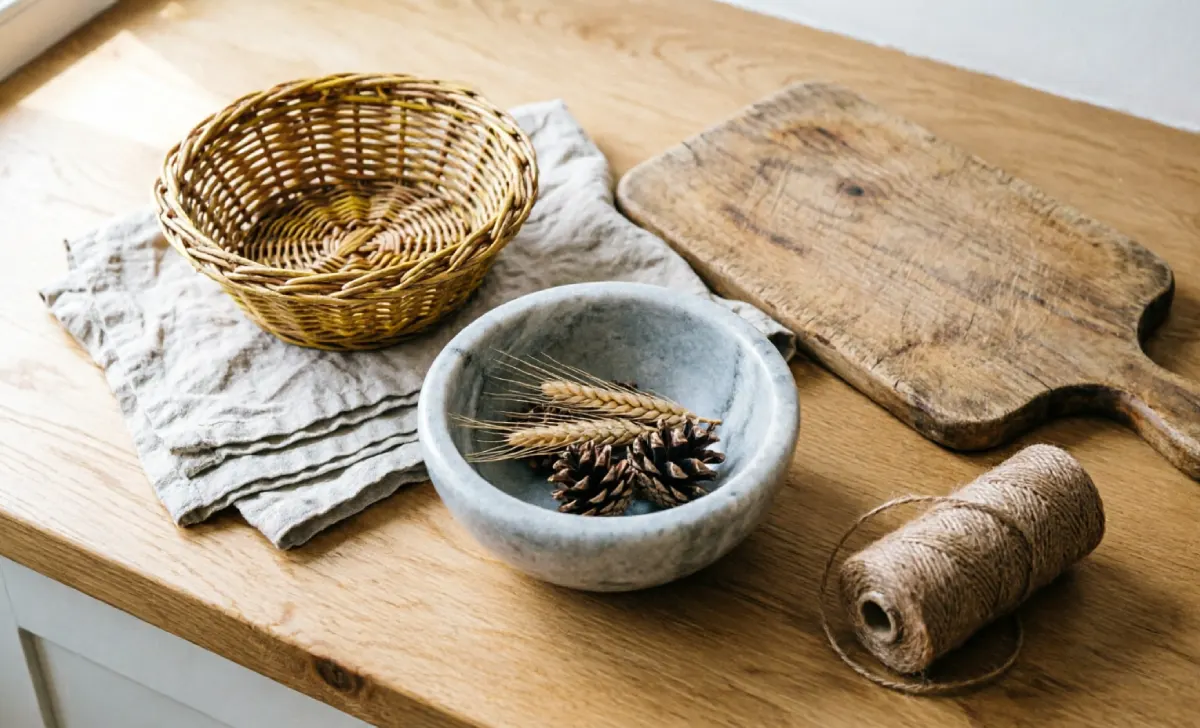
Walk into any room that truly captures cottagecore interior design, and you will notice the materials before anything else. Wood, stone, cotton, linen, and wicker form the tactile foundation of the style, bringing the outdoors in and grounding a space with an honest, unpolished presence.
You can start small. Swap plastic storage bins for wicker baskets, or replace synthetic pillow covers with cotton or linen ones that soften with every wash. The goal is to surround yourself with things that feel good to touch and that get better with age.
Understanding texture in interior design is key to getting this right. Mixing a wooden side table with a stoneware lamp and a linen runner tells a story that a single material never could — and that layered depth is exactly what cottagecore is after.
2. Choose a Soft Cottagecore Color Palette
Think of a wild English garden at dawn. Soft sage greens, dusty blush pinks, warm creams, and earthy browns form the backbone of the cottagecore color palette. These hues feel calming and timeless, never loud or demanding.
You do not need to repaint every wall to get there. You can weave these colors in through throw pillows, blankets, ceramic vases, or even the spines of old books arranged on a shelf.
A helpful reference is the palette used by heritage paint brands like Farrow & Ball, whose shades carry names like Mizzle or Setting Plaster. You do not need their price tag — just notice how their colors feel muted and lived-in, then find similar tones at any price point.
3. Hunt for Vintage and Thrifted Decor
There is a particular joy in walking into a thrift store and spotting a hand-painted floral teacup on a dusty shelf. Part of the magic of cottagecore interior design is that much of its character comes from pieces with a history behind them.
Begin with your local Goodwill, estate sales, or weekend antique fairs. You are looking for items with natural patina — tarnished brass candlesticks, wooden frames with worn edges, or embroidered linens that still carry careful stitches from someone else’s hands. These choices also reflect sustainable interior design principles, giving old objects a beautiful second life.
Online platforms like Etsy can also be goldmines for affordable vintage finds when local options fall short. Collect slowly and let your home evolve — a space filled with objects you genuinely love will always feel more authentic than one furnished in a single afternoon.
4. Layer Cozy Cottagecore Lighting
You might be surprised by how much lighting alone can shift the entire mood of a room. Cottagecore spaces never rely on harsh overhead fixtures — instead, they glow with warm, gentle light that invites you to sit down and stay awhile.
Start by switching cool-toned bulbs for warm white ones in your existing lamps. Then add small sources of soft light wherever you can: a lamp on a kitchen counter, a cluster of beeswax candles on a coffee table, or a simple string of fairy lights draped across a bookshelf.
The most charming cottagecore lighting often comes from thrifted lamps with brass or ceramic bases and fabric shades. You are creating an atmosphere, not lighting a stage. Every illuminated corner should feel like a quiet invitation.
5. Add Florals and Botanicals
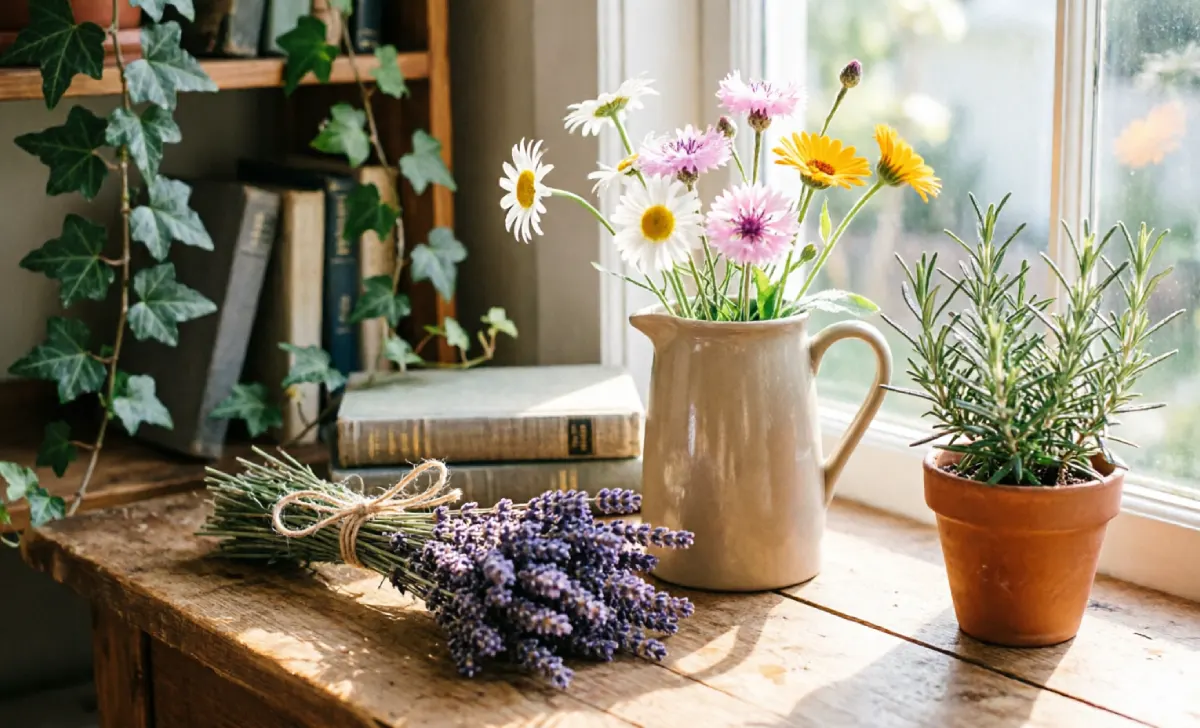
You cannot talk about cottagecore interior decor without talking about florals. They are the heartbeat of the aesthetic, bringing life, color, and a connection to the natural world into your home. But there is a difference between thoughtfully placed botanicals and a room that feels overrun.
Think of William Morris patterns, where flowers and vines wind across fabric in a way that feels organic and a little romantic. You can capture that spirit with a single floral throw pillow, a piece of botanical art, or a gathered bundle of dried lavender in a simple ceramic jug.
Real plants matter equally. A potted rosemary on a sunny windowsill, a trailing ivy on a bookshelf, or a vase of fresh wildflowers on the dining table brings movement and aliveness that no static object can replicate. You are welcoming nature in, not banishing it to the garden.
6. Transform Your Kitchen with Simple Cottagecore Touches
The kitchen is the soul of the cottagecore home, and you do not need a renovation to make it feel that way. It starts with one decision: display rather than hide.
Fill open shelves with things that are both useful and beautiful. Enamelware pitchers, mason jars filled with dried beans or flowers, ceramic mixing bowls in soft colors, and stacks of simple white plates all belong here. You are curating a space that celebrates the everyday rituals of cooking and gathering.
Vintage teacups hung from hooks, flour sack towels draped over the oven handle, and a wooden cutting board leaning against the backsplash complete the picture. None of these changes are permanent or expensive — they are simply small choices that add up to a kitchen that feels lived-in and loved.
7. Design a Dreamy Cottagecore Bedroom
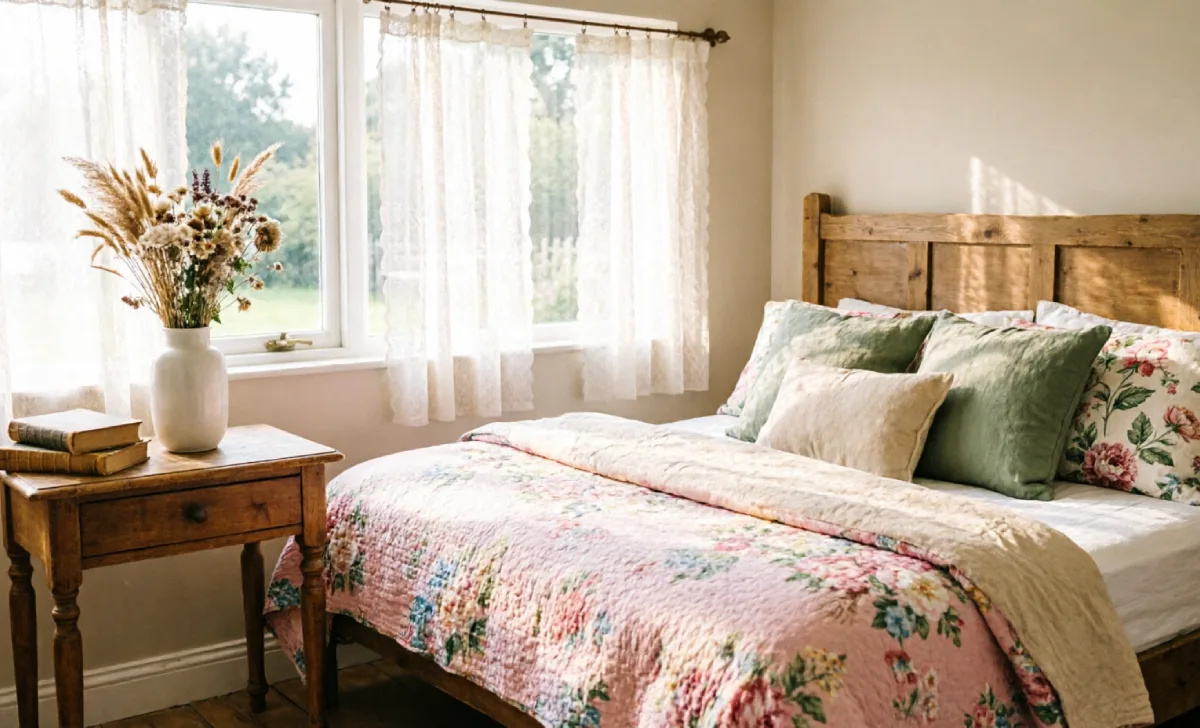
Your bedroom should feel like a soft landing at the end of the day, and cottagecore style offers the perfect recipe for that. The good news is that you can achieve the look without touching a paintbrush or replacing your furniture.
Start with the bed itself. Layering is the secret — a simple quilt, a folded blanket at the foot of the bed, and pillows in varied textures create a cocoon of comfort. For the windows, sheer lace curtains hung on a tension rod filter the light so beautifully that the whole room shifts into a dreamier version of itself.
A small vase of dried flowers on the nightstand and a stack of beloved books within reach add the finishing notes. You are not constructing a showroom — you are building a nest that feels safe, quiet, and entirely yours.
What Is the Difference Between Cottagecore and Farmhouse Style?
This is one of the most common questions people ask when starting their cottagecore journey. Farmhouse interior design leans into rustic, practical minimalism — white paint, clean lines, and structured simplicity. Cottagecore, by contrast, is softer, more romantic, and unafraid of floral abundance.
You can think of farmhouse as the sturdy workday and cottagecore as the dreamy afternoon that follows. One values function and order; the other values feeling and layered charm.
The good news is that you can blend the two. Use farmhouse structure as your base and layer cottagecore warmth on top — lace curtains against shiplap, or floral cushions on a plain wooden bench work beautifully together.
8. Make Cottagecore Work in a Rental or Small Apartment
You might be thinking that your rental agreement prohibits paint, nails, and major changes. What makes cottagecore interior design so adaptable is that it lives in the objects and the atmosphere, not in the walls. You can make it work in almost any space.
Removable wallpaper has become a real solution for renters. Peel-and-stick floral or soft-stripe patterns let you create an accent wall behind your bed or on a kitchen backsplash — and leave no trace when you move out. It is a small investment for a meaningful mood shift.
Beyond the walls, focus on portable decor that can move with you. Vintage rugs, draped textiles, potted plants, and thrifted lamps all carry the cottagecore feeling without any structural changes to your space.
9. Try Easy DIY Cottagecore Decor Projects
There is something deeply satisfying about making a decor piece with your own hands. It connects you to the slow, handmade traditions at the very heart of cottagecore interior design. The projects do not need to be complicated to be meaningful.
One of the simplest places to start is with dried flowers. Gather a few stems from a market or your own garden, tie them with twine, and hang them upside down to dry. Once ready, arrange them in a thrifted vase or a painted mason jar for a lasting, delicate arrangement.
Another gentle project is covering a plain journal or a damaged book with a floral fabric scrap, secured with simple craft glue. The slight crookedness, the visible brushstroke, the imperfect stitch — that is exactly where the beauty lives.
10. Complete the Atmosphere with Scent and Texture
A room can look perfect and still fall flat if it does not feel right or smell like a place you want to linger. Cottagecore interior design is a full-sensory experience, and the invisible details are often the most powerful ones.
A lavender bundle on a bedside table releases a calming fragrance when you brush past it. A beeswax candle burning in the evening adds a subtle honey warmth to the air. The texture of a chunky wool throw under your fingertips or the weight of a hand-thrown ceramic mug in your hands grounds you in the present moment.
These elements are not extras — they are the layers that make a house feel genuinely alive. You are crafting an environment that welcomes all the senses, and in doing so, you are creating a space that truly supports rest and connection.
How Do You Mix Modern Furniture with Cottagecore Style?
Many people assume they must discard every modern piece they own to achieve this look, but that could not be further from the truth. A sleek, neutral sofa can become the perfect anchor for a cottagecore living room — it just needs the right companions.
The bridge between modern and cottagecore is texture and layering. A crisp contemporary sofa transforms the moment you add vintage floral cushions, a knitted throw, and a lace-trimmed runner draped over the back. The contrast makes the room feel more collected and personal, not mismatched.
If you are wondering about accent wall ideas to tie the two styles together, a soft floral peel-and-stick panel or a single wall in sage green can serve as a gentle backdrop that brings warmth without overpowering your existing furniture.
FAQs
What is the difference between cottagecore and farmhouse style?
Farmhouse style leans into rustic, practical minimalism with white paint and clean lines, while cottagecore is softer, more romantic, and unafraid of floral abundance. You can think of farmhouse as the sturdy workday and cottagecore as the dreamy afternoon that follows.
Do I need to live in a countryside house to achieve cottagecore?
Not at all. The heart of cottagecore interior design is a feeling, not a location, and it translates beautifully to city apartments and modern suburban homes alike. With thrifted finds, natural textures, and soft lighting, you can create that countryside soul in any space.
How do I prevent my cottagecore decor from looking cluttered?
The key is curation rather than accumulation. Choose pieces that genuinely speak to you, leave a little breathing room on shelves, and let your space feel collected over time — not crammed in one weekend.
Where is the best place to buy affordable cottagecore decor online?
Etsy is a wonderful resource for handmade and vintage pieces, while thrift-focused marketplaces like eBay and local Facebook groups often hide real gems. Bigger retailers also carry affordable natural-material basics like cotton throws and woven baskets if you search with intention.
Conclusion
Your home does not need to be a centuries-old cottage tucked in the English hills to feel like a sanctuary. It just needs your attention, your small acts of care, and your willingness to surround yourself with things that feel gentle and true.
The beauty of cottagecore interior decor is that it meets you where you are — whether you are a renter on a tight budget or someone simply craving a softer daily life. Start with one idea that made your heart lift a little as you read. Let that small change settle, and then, when you are ready, choose another.