
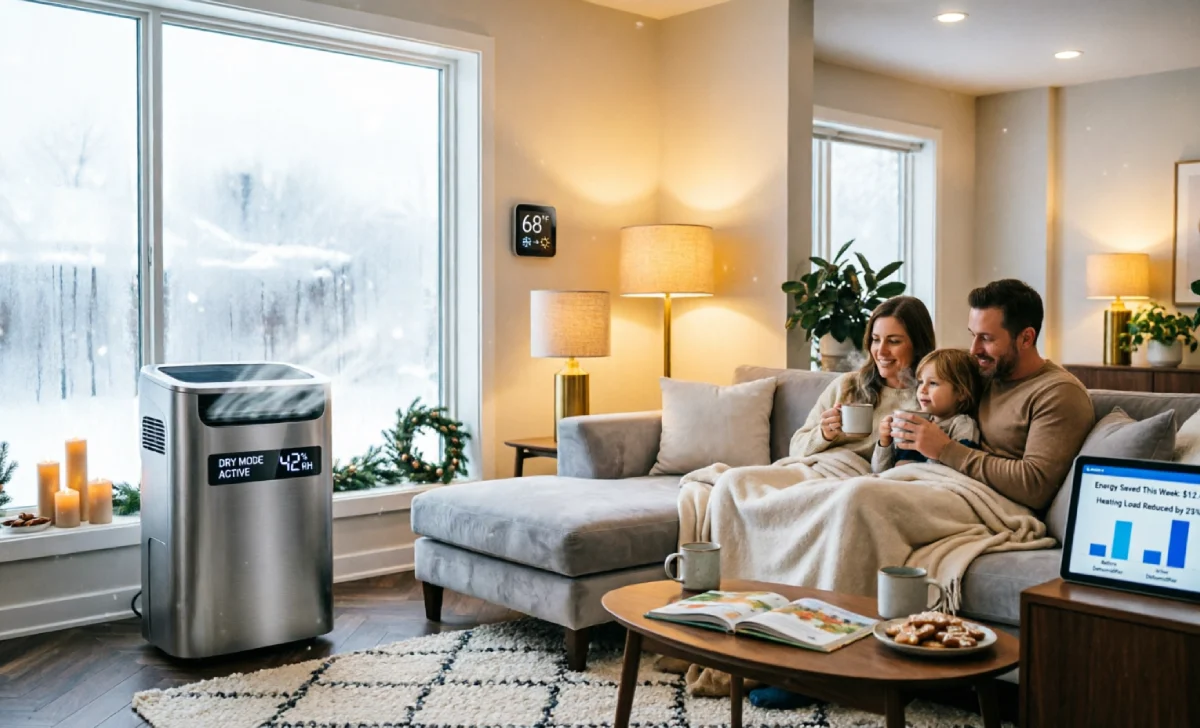
You’ve felt it: that damp chill that makes your thermostat feel like it’s lying. You crank the heat, the bill spikes, and you wonder—is there actually a smarter way? Homeowners are discovering that running a dehumidifier in winter can dehumidifier lower heating bills by 8–12% when used correctly. Sounds odd, I know. But stick with me. Let’s break down exactly how—and when—a dehumidifier can lower heating bills, without the hype or hollow promises.
The short answer: yes, but here’s the science
Dry air heats up faster than damp air. That’s not marketing fluff—it’s physics. When indoor humidity climbs above 50%, your heating system works harder to make you feel warm. Moisture soaks up heat energy (that’s “latent heat”), meaning your furnace burns more fuel just to hit the same comfort level.
A dehumidifier pulls that excess water out. The result? Air feels warmer at a lower temperature. You might comfortably drop your thermostat by 1–2 degrees without noticing a chill. Over a winter season, that small shift adds up.
But—and this matters—it only works if your home actually has high indoor humidity in winter. More on checking that in a minute.
Real results: what homeowners actually save
Let’s talk numbers, because “maybe” doesn’t help when you’re budgeting.
Take Sarah in Manchester. She noticed condensation pooling on her windows every morning. After running a desiccant dehumidifier in her living room for two months—set to 45% RH, timed for evenings—her energy bill dropped by about £41/month. The unit cost roughly £9/month to run. Net saving: ~£32. Not life-changing, but real.
In the U.S., tests by home energy researchers found that homes using dehumidifiers in damp, poorly ventilated spaces saw heating usage drop by 8–12% during cold snaps.
Here’s the quick math you can try tonight:
- Find your dehumidifier’s wattage (check the label—most small units are 200–400W).
- Multiply by the number of hours you’d run it daily, then by your electricity rate.
- Compare that to the cost of heating the same space 1–2 degrees warmer.
If your home is leaky, drafty, or you dry clothes indoors, the savings tilt in your favor. Check your indoor humidity levels first—if your air’s already bone-dry (<30% RH)? Skip it.
7 pro tips for maximum winter energy savings
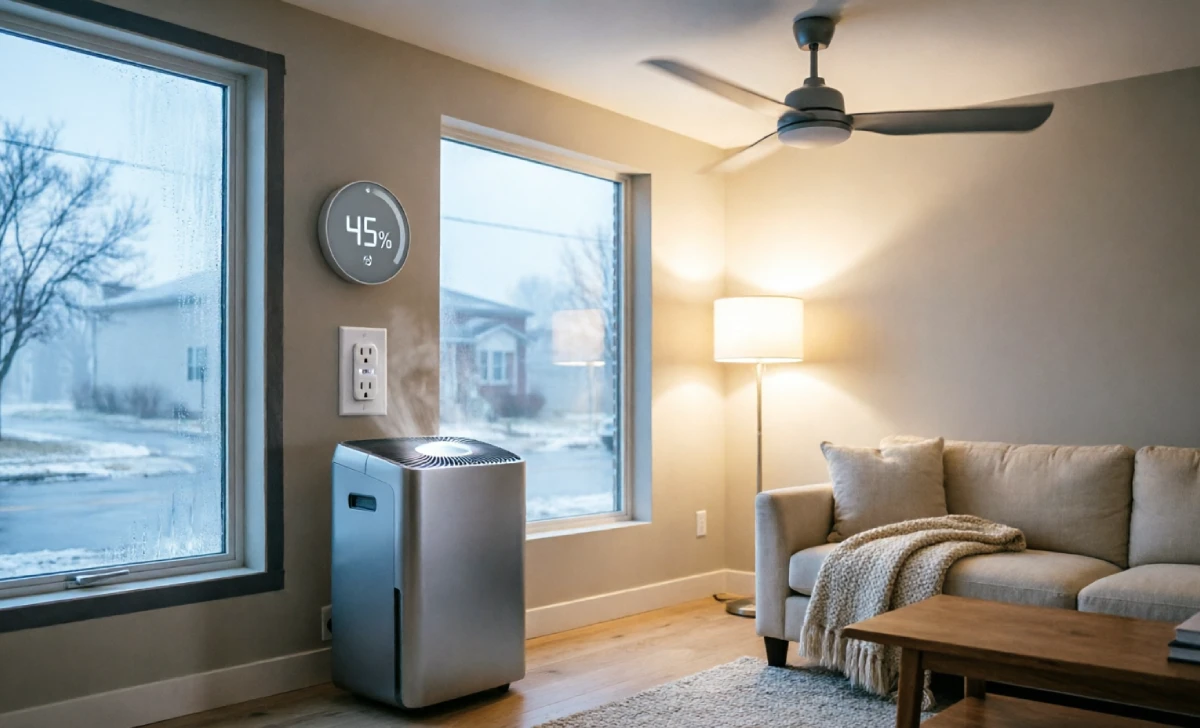
Truth is, just plugging in any dehumidifier won’t magically slash bills. Setup matters. Here’s what actually works:
- Pick the right type for cold rooms. Compressor dehumidifiers struggle below 15°C (59°F). If your basement or spare room stays chilly, go with a desiccant. They work efficiently in cold, damp conditions.
- Aim for 30–50% relative humidity. Below 30% and you’re inviting dry skin, static shocks, irritated sinuses. Above 50% and you’re back to wasted heat. A cheap hygrometer takes the guesswork out.
- Place it where moisture gathers. Near windows with condensation, the laundry area, or a basement corner. Don’t hide it in a closet—airflow is key.
- Use a timer or smart plug. Run it during peak humidity hours (evenings, after cooking/showering). No need to run 24/7.
- Seal drafts first. A dehumidifier can’t fix a gaping window seal. Spend an afternoon sealing window gaps before buying extra gear.
- Track your bill for two weeks. Note your thermostat setting, dehumidifier runtime, and total kWh used. That’s your baseline.
- Pair with ceiling fans on low. Gentle circulation helps distribute warm, dry air without cranking the heat.
You’ve probably noticed some rooms just feel colder, no matter the thermostat. That’s often humidity, not temperature. Fix the moisture, and the comfort follows.
Winter dehumidifier settings that actually lower bills
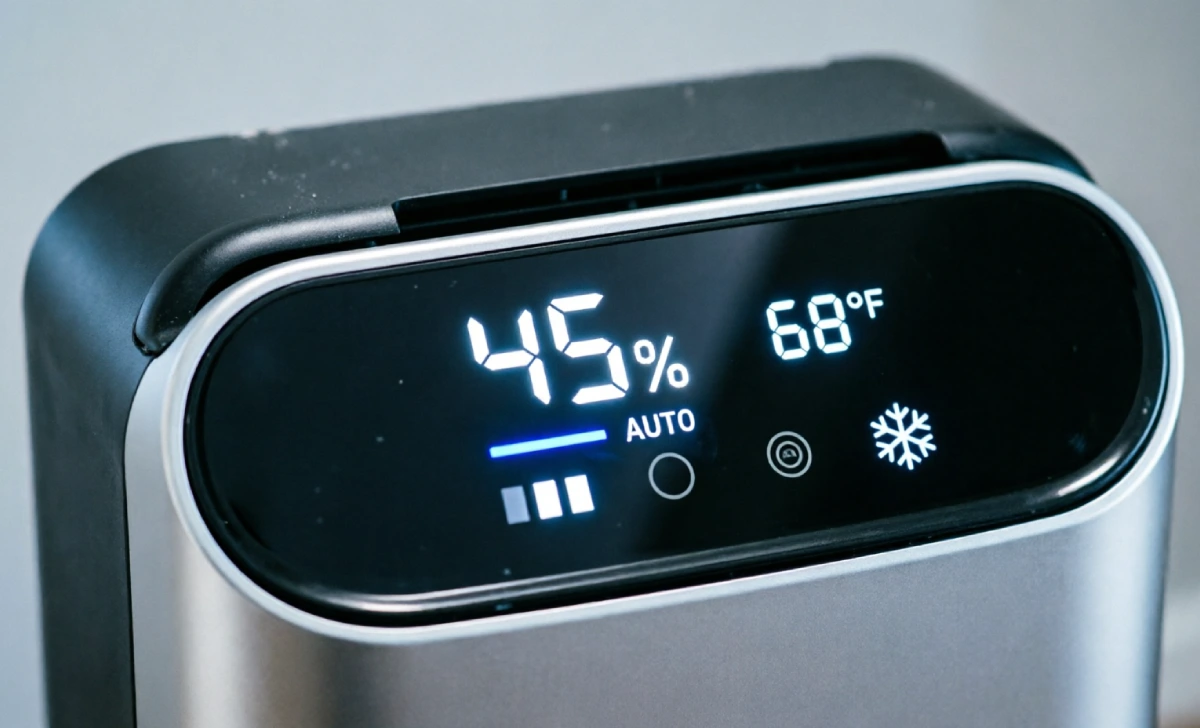
Settings make or break your savings. Here’s the sweet spot:
| Setting | Why It Works |
|---|---|
| Humidity target: 45% RH | Balances comfort, health, and efficiency. High enough to avoid dryness, low enough to help with heating. |
| Mode: Auto or Smart | Let the unit cycle on/off based on actual moisture—no wasted runtime. |
| Fan speed: Medium | Quiet enough for living spaces, strong enough to move air. |
| Temperature threshold | If your unit has a low-temp cutoff, set it to 10°C (50°F) to avoid frost buildup on coils. |
One thing most guides skip: regional adjustments. If you’re in a coastal town, humidity stays high year-round—run your dehumidifier longer. In a dry prairie winter? You might only need it after cooking or showering. Know your climate.
Common myths debunked
“Dehumidifiers use too much power to be worth it.”
A typical 300W unit running 6 hours/day costs about $0.29/day at average U.S. rates. If dropping your thermostat 1° saves you $0.50/day on heating? You’re ahead. Do the math for your rates—don’t guess.
“Winter air is already dry, so why bother?”
Outdoor air might be dry, but indoor air gets humid from cooking, breathing, showering, and drying clothes. Sealed-up homes trap that moisture. Check your windows: if they’re foggy in the morning, your indoor humidity’s too high.
“It’ll make my house warmer.”
Not exactly. It makes the existing heat work better. You’ll feel warmer at the same thermostat setting—which is the whole point.
Does running a dehumidifier save money in winter? For many homes, yes. But it’s not a universal hack. It’s a tool, used wisely.
When NOT to run a dehumidifier in winter
Let’s keep it honest. Skip the dehumidifier if:
- Your indoor humidity is already below 30% (use a hygrometer to check).
- You have respiratory issues that worsen in dry air.
- Your home is well-ventilated with mechanical HRV/ERV systems—they handle moisture already.
- You’re using a humidifier for health reasons (don’t fight your own gear).
Sometimes the best energy-saving move is not adding another appliance. If your air’s dry, focus on sealing leaks, adding insulation, or using heavy curtains. Different problem, different fix.
FAQs
How many hours a day should I run a dehumidifier in winter?
Start with 4–6 hours during peak moisture times (evenings, after showers). Use a hygrometer: if humidity stays above 50%, add an hour. If it drops below 35%, cut back.
Will a dehumidifier work in a cold basement?
Only if it’s a desiccant model. Compressor units can freeze up below 15°C (59°F). Desiccant types handle cold, damp spaces just fine.
Can I use my dehumidifier and humidifier together?
Not in the same room. They’ll fight each other. Use them in different zones if needed—dehumidifier in the basement, humidifier in the bedroom, for example.
What’s the cheapest dehumidifier to run?
Look for Energy Star-rated models with auto-humidity control. Small desiccant units (10–20 pint capacity) often use less power than oversized compressor units for targeted spaces.
Wrapping it up
So, can a dehumidifier lower heating bills? For homes with damp, stuffy winter air—absolutely. It’s not about blasting dry air everywhere. It’s about smart, targeted use: the right type, in the right place, set to the right level.
Start small. Borrow a friend’s unit, or rent one for a week. Track your humidity and your bill. If the numbers add up, you’ve found a quiet, low-effort way to stay cozy without overpaying.
One last thought: energy savings aren’t just about gadgets. Sometimes the biggest win is noticing why your home feels cold—and fixing the root cause, like preventing mold growth, not just the symptom. You’ve got this.