
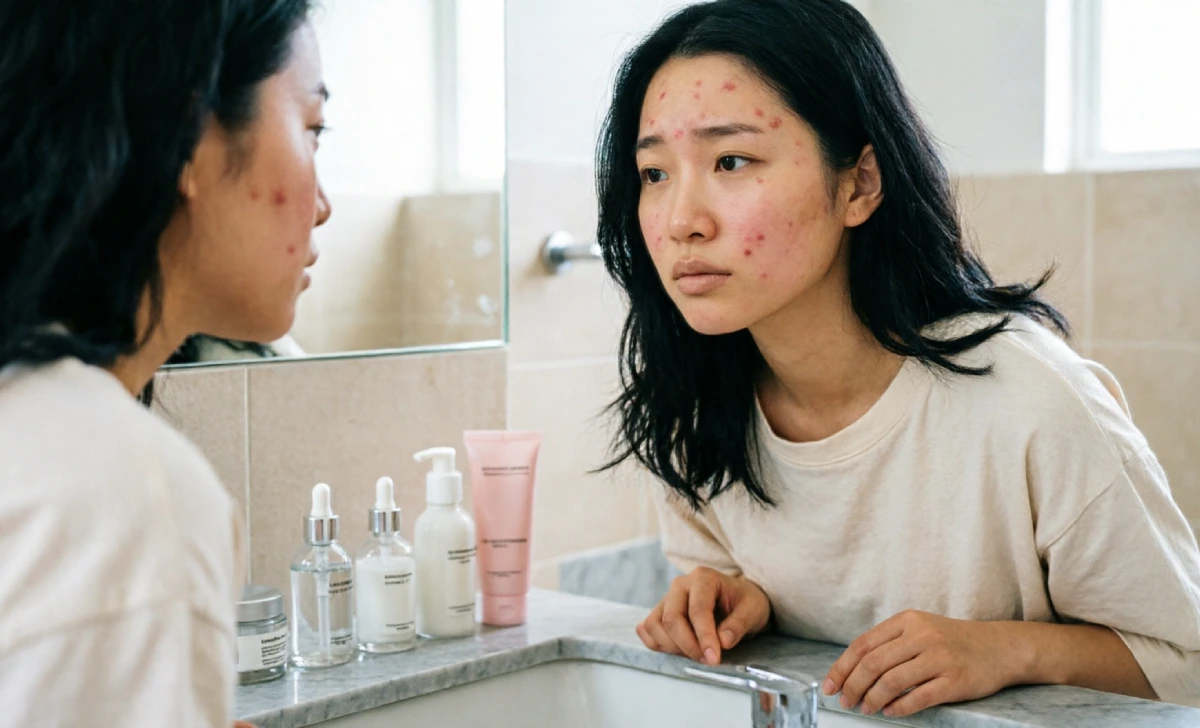
You started retinol to finally get clear skin — so why are you breaking out more than ever? It feels like a cruel joke, and the panic sets in fast. So can retinol cause acne, or is something else going on? You’re not alone in this confusion, and there is a real explanation waiting for you.
Retinol speeds up your skin’s natural shedding cycle, and for many people, this stirs up hidden clogs that were already forming deep in the pores. That temporary wave of pimples has a name: skin purging. And it is not a sign that something is terribly wrong. Research on gut and acne shows that skin reactions often have deeper biological roots than they appear — and the same is true here.
By the end of this guide, you’ll know exactly what’s happening, how to tell a true purge from a real problem, and the gentle steps that get your skin through it safely. Let’s walk through it together.
What Is Retinol and How Does It Work on Your Skin?
Retinol is a vitamin A derivative that binds to receptors inside your skin cells and pushes them to renew faster. This process is called cell turnover, and it simply means dead cells leave the surface sooner so fresher ones can take their place.
As turnover speeds up, pores that would normally stay clogged for weeks start to clear out in days. Excess sebum and old debris that were quietly building up suddenly have no place to hide.
Your skin isn’t breaking down — it’s waking up. Understanding that retinol uncovers what was already on its way can take a lot of the fear away and help you stay the course.
What Is Skin Purging and Why Does It Happen?
Beneath your skin’s surface, tiny invisible clogs called microcomedones are constantly forming. You can’t see them, and you wouldn’t feel them for weeks or months until they naturally become a visible pimple. Retinol dramatically speeds up that timeline.
When the retinization phase begins — the adjustment period your skin goes through when it first meets a retinoid — all those hidden microcomedones rise to the surface at once. They show up as small whiteheads or flesh-colored bumps, sometimes in clusters.
This is what dermatologists call purging, and it signals accelerated clearing, not new damage. The purge doesn’t invent acne out of nowhere. It reveals a buildup that was already destined to surface, just on a much slower schedule.
How Can You Tell the Difference Between Purging and a Real Breakout?
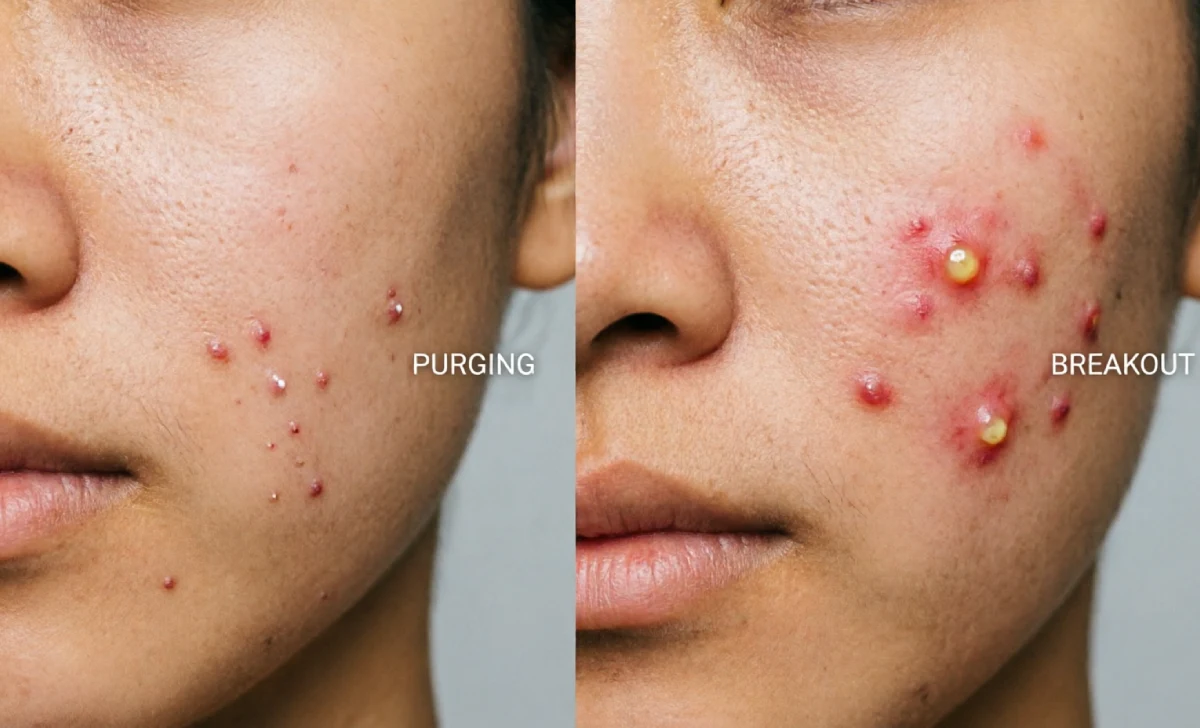
Purging typically appears exactly where you’ve always struggled — along the chin, jawline, or forehead. These spots tend to be small, surface-level, and they heal noticeably faster than your usual blemishes. They stay faithful to your personal acne map because they’re rooted in existing, deeply clogged oil glands.
A real breakout caused by irritation or a damaged skin barrier behaves differently. It often shows up in areas where you rarely get pimples, like your cheeks or temples. The surrounding skin may sting, burn, or feel flaky, and the spots themselves can be red and inflamed in a way a purge rarely is.
Think of purging as a conversation your skin is finally able to have, while irritation is an SOS signal. If your breakouts come with persistent redness, sensitivity to water, or a tight feeling across your face, your barrier is compromised — and that’s your cue to slow down. When you’re unsure whether your reaction is a purge or something like a food allergy or irritation, reading about the difference can help clarify what your body is actually doing.
What Does the Retinol Purge Timeline Look Like Week by Week?
You deserve a roadmap because the unknown is what feeds the anxiety. Around weeks one and two, you might not notice much beyond slight dryness. This quiet phase can trick you into thinking you’re in the clear, but under the surface, cell turnover is already picking up speed.
By weeks three and four, tiny grain-like whiteheads often cluster around the chin and nose. This is usually the peak of the storm, and it’s completely normal to feel discouraged. These spots are shallow and tend to resolve within a few days rather than lingering like a deep cystic pimple.
Weeks five and six bring a noticeable shift. New breakouts slow down, and your skin begins to look smoother in the areas that cleared first. Most people find that after six to eight weeks, the purge cycle has run its course, and the glow you were promised starts peeking through.
Where on Your Face Should You Expect Purging?
If you’re breaking out along your chin, jawline, or the center of your forehead, take a deep breath — that’s exactly where purging likes to show up. These zones are rich in oil glands and naturally prone to microcomedone formation. Retinol simply lifts those clogs faster, so the breakout map tends to mirror your history.
Irritation, on the other hand, often appears in spots you’d never consider problem areas. Sudden pimples on the outer cheeks, near the hairline, or along the sides of the neck can be your skin waving a white flag. Those areas tend to have a thinner skin barrier and fewer oil glands, making them more reactive to product aggression.
Mapping your breakout gives you real-time feedback about whether your skin is adjusting or asking for help. When the pattern stays within your familiar zones, you can move forward with more confidence.
Should You Stop Using Retinol If You Start Breaking Out?
This is the question that keeps people up at night. If your breakout consists of small, fast-healing whiteheads in your usual trouble spots and your skin doesn’t burn persistently, stopping isn’t necessary. Your skin is moving through retinization, and pausing now often resets the clock.
However, if you’re seeing deep, painful cysts in entirely new places — or if your face feels hot, raw, and inflamed no matter what you apply — it’s time to pause. A damaged skin barrier can’t heal while under constant assault, and pushing through real pain won’t earn you faster results.
A smart middle ground is simply reducing how often you apply retinol. Dropping from every other night to twice a week gives your skin breathing room to recover. You’re not quitting; you’re adapting. That distinction matters a lot for both your mental game and your moisture barrier. Keeping skin barrier health strong is one of the most overlooked pieces of any skincare routine, and retinol users need to be especially mindful of hydration signals.
How to Start Retinol the Right Way to Minimize Purging
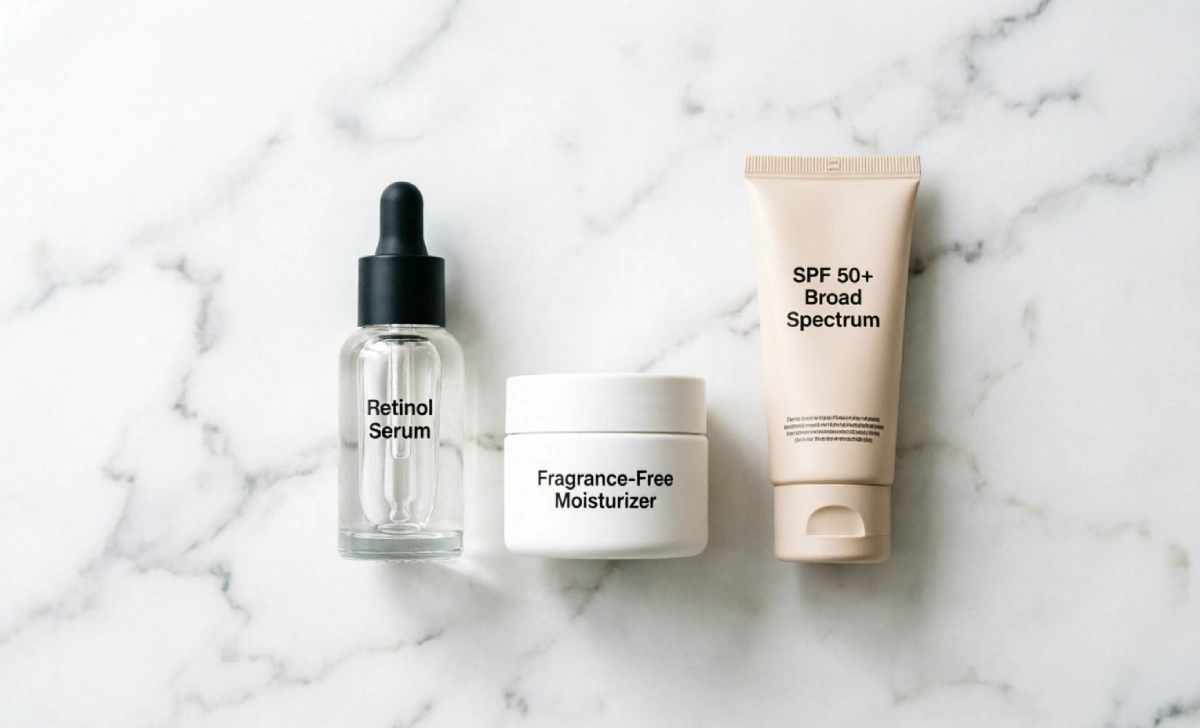
Starting slow is the single most powerful thing you can do to reduce the intensity of a purge. Begin with a low concentration applied just two nights a week, never on consecutive nights. Your skin needs those off nights to repair and process renewal without being overwhelmed.
The sandwich method can be a real game-changer if you’re nervous. Apply a thin layer of a basic, fragrance-free moisturizer first, then your pea-sized amount of retinol, and seal everything with one more light layer of moisturizer. This buffer doesn’t cancel retinol — it simply slows absorption enough to keep irritation from spiraling.
Never underestimate the size of a pea. Using more won’t speed up results; it will only speed up redness and peeling. And every single morning, without exception, a broad-spectrum sunscreen is non-negotiable. Retinol makes your fresh skin vulnerable to UV damage, and skipping SPF can darken the very spots you’re trying to fade.
Gentle Ingredients That Help Calm Retinol-Treated Skin
When your skin feels like it’s going through a rebellion, you might want to throw strong acne fighters at it. Resist that urge. Turn instead to ingredients that whisper rather than shout. Niacinamide is one of the most reliable companions during a purge — it calms redness and supports your barrier without any drama.
Ceramides are another quiet hero. These lipid molecules act like mortar between the bricks of your skin cells, reinforcing the barrier that retinol can temporarily weaken. A ceramide-rich moisturizer on your off nights can dramatically reduce the raw, tight feeling that makes a purge so uncomfortable.
Always circle back to sunscreen. It might not feel like a traditional soothing ingredient, but protecting vulnerable, newly surfaced skin from UV rays is the ultimate act of care. Niacinamide, ceramides, and consistent sun protection create a safety net that lets the purge run its course without leaving a lasting mark.
When Should You See a Dermatologist About Your Breakout?
Most purges resolve with time and gentle care, but there are clear signals that professional guidance is needed. If you’re still experiencing deep, painful cysts after twelve weeks, or if breakouts are leaving behind scars and dark marks that feel permanent, a dermatologist can help you adjust your approach or explore prescription options. Many people also find that issues like diet affect skin in ways they hadn’t considered — and a professional can help you see the full picture.
Itching, hives, or swelling that goes beyond a few small pimples is never part of a normal purge. That kind of reaction can indicate an allergy or a level of barrier damage that at-home adjustments can’t fix.
You are not failing if you seek help. The goal is healthy, comfortable skin — not a badge of honor for toughing out an unbearable reaction alone. A short visit can restore your clarity and bend your retinol journey back toward progress.
FAQs
Can retinol purging cause permanent scarring?
Purging itself rarely causes permanent scars because the pimples are usually small and surface-level. However, picking or squeezing purge spots can damage deeper tissue and leave marks that linger — so let them heal on their own as much as possible.
Should I use salicylic acid during a retinol purge?
Layering salicylic acid on top of an active purge usually creates more irritation than benefit by over-exfoliating an already sensitive barrier. If you want to incorporate it, use it on a completely separate night from retinol, and only after your skin has fully adjusted.
Does the strength of my retinol affect how badly I purge?
Higher strengths can trigger a more intense purge because they accelerate cell turnover more aggressively. Starting with a gentle, lower concentration allows your skin to adapt with less upheaval, making the process more gradual and manageable.
Is it possible to skip the purge entirely when starting retinol?
Some people never experience a visible purge, especially if they start with a very low concentration and a slow frequency. But if you’re prone to clogged pores, you may still see a mild version — and that’s still a normal, healthy response.
Conclusion
Retinol doesn’t create new, permanent acne — it reveals what was quietly forming beneath your skin long before you squeezed that first pea-sized drop. The purge can feel emotionally draining, but it comes with a clear endpoint and tools to manage it. You now know how to tell a true purge from a real problem, how to adjust your routine with confidence, and how to protect your skin barrier every step of the way. Trust the process, treat your skin with kindness, and know that clearer days are closer than they feel right now.