
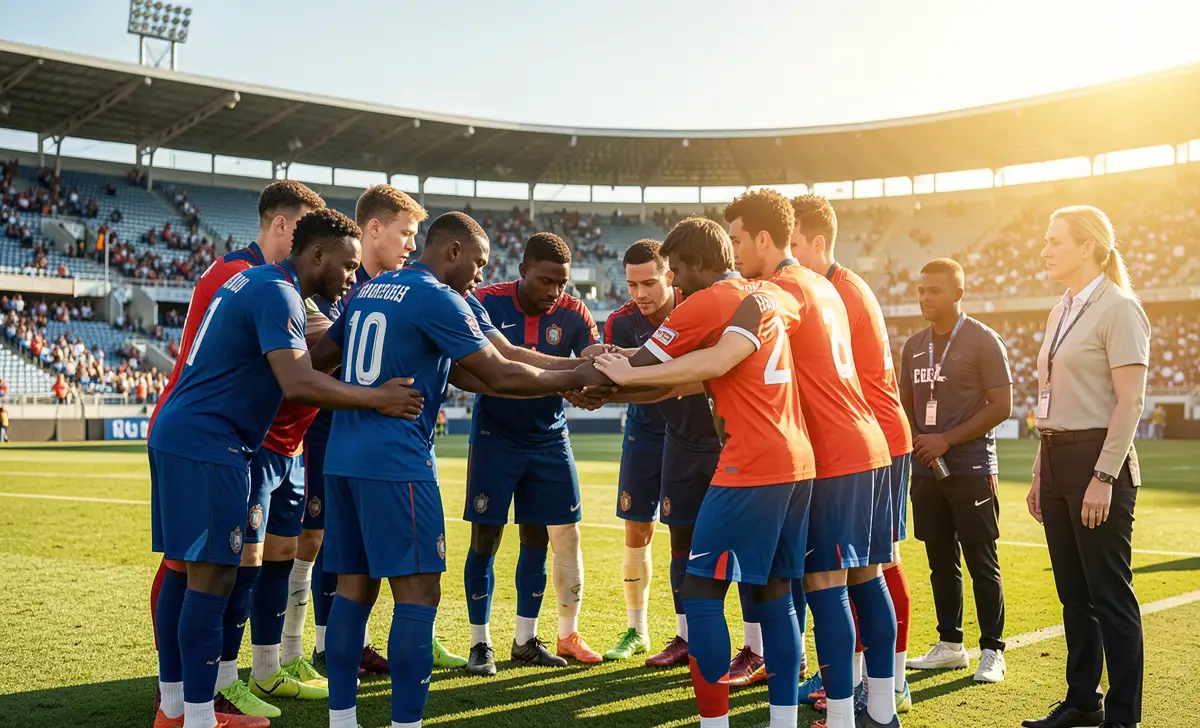
You’ve seen it happen. A team loaded with talent keeps falling apart mid-season. Arguments flare. Players stop passing to each other. The vibe just… shifts.
It’s rarely about skill. Usually, it’s about what’s happening between the ears.
That’s where a sports psychologist steps in. But how does sports psychologist team cohesion work, exactly? And more importantly, can their work actually turn a fractured group into a unit that trusts, communicates, and wins together?
Instead of vague theory, I’m breaking down a practical 30-day cohesion blueprint you can actually implement—starting with today’s practice. Here’s the thing, most coaches don’t realize: cohesion isn’t something you hope for. It’s something you build. And psychology provides the playbook.
What Is Team Cohesion & Why Does It Matter in Sports?
Cohesion isn’t just “getting along.” It’s the invisible glue that keeps a team moving in the same direction, especially when the scoreboard works against you.
Think of it like this: a cohesive squad doesn’t need the coach to yell to get effort. Players cover for each other without being asked. They celebrate the screen as much as the shot.
Research shows cohesive teams perform better under pressure, recover faster from losses, and stick with programs longer. That’s not a soft bonus. That’s a competitive edge.
But it doesn’t happen by accident. It needs intention.
5 Key Ways Sports Psychologists Strengthen Team Dynamics
Building Trust Through Psychological Safety
When we talk about building trust in sports teams, psychology gives us the framework—not just vague “good vibes.”
Trust isn’t built in halftime speeches. It’s built in the small moments. When a rookie admits a mistake and isn’t shut down. When a veteran asks for help without losing face.
Sports psychologists help coaches engineer what’s called “psychological safety.” A simple way to start? Run a 90-second check-in before practice. Each player drops one word about their headspace. No fixing. No judgment. Just listening. Over a month, that tiny ritual rewires how the room talks to itself.
Conflict Resolution Strategies That Actually Work
Let’s be honest: friction isn’t the enemy. Sweeping it under the rug is.
When tensions rise—two starters battling for minutes, or a coach clashing with a veteran—the sports psychologist conflict resolution teams struggle with becomes their biggest asset. They don’t erase the tension. They channel it.
One framework that actually sticks is the SBI model (Situation-Behavior-Impact). Instead of throwing accusations, players learn to say: “In yesterday’s scrimmage (situation), when you didn’t swing on the cross (behavior), I felt like my run wasn’t valued (impact).”
It’s precise. It removes ego. And it keeps disagreements from poisoning the locker room.
Communication Frameworks for On-Field Success
Ever notice how some teams just seem to know what the other is thinking? That’s not magic. That’s drilled communication.
Psychologists work with squads to build shared language—simple cues, hand signals, or code words that cut through crowd noise.
Example: A track relay team agrees that “smooth” means “focus on the exchange, ignore the split.” No long explanations. Just instant alignment.
When the moment gets loud, those micro-agreements keep everyone locked to the same rhythm.
Leadership Development for Captains & Coaches
Strong teams aren’t run by one voice. They’re anchored by a network of leaders. Captains, veterans, quiet players who lead by doing the dirty work.
Psychologists help identify and train those voices. Not with motivational posters, but with practical skills: how to give feedback that lands, how to spot burnout before it costs a game, how to step in without stepping on toes.
One high school coach told me, “We used to think leadership was just personality. Now we train it like conditioning.” Fewer meltdowns followed. More resilience showed up.
Shared Mental Models: Aligning Team Goals
Quick question: if you asked every player on your bench what “success” looks like this season, would you get the same answer?
If not, you’ve got an alignment problem.
Psychologists help teams build shared mental models—a clear, collective understanding of roles, expectations, and what winning actually requires. It’s not about forcing everyone to think identically. It’s about making sure the engine’s firing in sequence.
Try this: have each athlete write down their top three season goals. Compare them on a whiteboard. The overlaps become your non-negotiables. The gaps? That’s your first team meeting.
Mental Preparation Techniques for Team Sports
Individual routines get all the attention. Breathing, visualization, self-talk. But mental preparation techniques for sports teams have to account for group dynamics and shared pressure.
Psychologists design pre-game rituals that sync the whole group’s nervous system.
Try a 5-minute circle before warm-ups:
- One synchronized deep breath (lowers collective heart rate)
- One focus word from each player (aligns intention)
- One short team phrase (cements identity)
It sounds basic. But squads that run this consistently report feeling “locked in” from the opening whistle, cutting early-game mental errors by a noticeable margin.
How Coaches Use Sports Psychology for Team Success
You don’t need a full-time payroll specialist to see results. Even monthly collaboration can shift your season’s trajectory.
Start by being brutally clear about what’s broken. Are you trying to stop mid-season drama? Improve late-game communication? Help transfers mesh faster?
Then, look for someone who understands team ecosystems—not just one-on-one therapy. Ask them: “How do you track progress?” If they only talk in feelings, keep looking. You need measurable shifts.
And remember: you own the sports knowledge. They own the mind science. The best results come when those two lanes merge, not compete.
Real-World Case Studies: Youth, College & Pro Teams
This isn’t theoretical fluff. It’s working across every tier.
- A youth basketball program in Oregon cut bench friction by 70% after a 6-week communication workshop focused on on-court cue systems.
- A Division II college soccer team used pre-session communication audits and saw unforced errors drop by 18% in six weeks, turning a losing record into a playoff run.
- Even NFL and Premier League staff now mandate mental performance staff in training camps, citing faster recovery from high-pressure losses.
The pattern? They didn’t wait for a meltdown. They invested in the foundation before the cracks appeared.
Getting Started: Questions to Ask Before Hiring a Sports Psychologist
If you’re vetting support, start here:
- “What’s your track record with full team dynamics, not just individual athletes?”
- “How do you loop coaches into the process so we stay aligned?”
- “What does progress look like in 30 days, and how do we measure it?”
- “Can we run a single observation session before signing anything?”
Don’t overcomplicate the entry point. Sometimes, bringing a specialist in for one practice and getting three tactical notes is all you need to start shifting the culture.
FAQs
Do we only bring in a psychologist when things are already broken?
Not at all. Treat it like strength coaching. You don’t wait for a torn muscle to start lifting. Proactive cohesion work prevents bigger breakdowns.
How fast should we expect changes?
Some shifts show up overnight—like cleaner huddles or fewer on-field arguments. Deeper cultural trust usually takes 8–12 weeks of consistent reps.
Can’t we just run standard team-building exercises?
You should. But a specialist brings evidence-based frameworks and an outside lens that’s tough to replicate internally. They catch patterns coaches are too close to see.
What if half the roster resists the idea?
Totally normal. Start with the willing core. Let results speak. Skeptical players usually become the loudest advocates once they see the tangible payoff.
Wrapping This Up
Cohesion isn’t a soft skill. It’s a performance metric.
And sports psychologists? They’re not crisis managers. They’re system builders. When you plug them into your routine, you’re not fixing broken players. You’re wiring a smarter, more resilient unit.
Pick one tactic from this guide—the check-in round, the SBI script, the 5-minute sync—and run it at your next practice. Track what shifts. Adjust from there.