You’ve probably noticed this pattern before. You write three solid posts a week, push them out everywhere, and… crickets. Meanwhile, a competitor publishing twice a month is pulling in steady leads. The gap isn’t usually an effort. It’s timing. Understanding blog post ranking signals helps you write content that actually gets seen before you even map it to a funnel stage.
Most creators just throw random ideas into a spreadsheet and hope something sticks. Buyers don’t work that way. They move through a predictable path, and your articles need to meet them exactly where they are. That’s where a buyer journey content calendar comes in. I’ll walk you through a straightforward system to map your writing to the actual buying journey, so you stop guessing and start converting.
Understanding the 3 Core Buying Stages (Awareness → Consideration → Decision)
Think about the last time you bought a software tool or even a new pair of running shoes. You didn’t just open your wallet on day one.
First, you realized you had a problem. Maybe your old app kept crashing, or your current workflow was eating up too many hours. That’s awareness.
Next, you started comparing options. You read reviews, watched breakdown videos, and weighed features against price. That’s consideration.
Finally, you looked for a reason to commit. A free trial, a transparent pricing page, or a solid case study pushed you over the edge. Decision stage.
If your blog treats every reader like they’re ready to buy tomorrow, you’ll lose half of them at the door. People need permission to learn before they’re asked to purchase.
How to Align Blog Posts with Customer Buying Stages
Aligning blog posts with customer buying stages sounds academic, but it’s really just matching your message to someone’s current headspace. Start by taking a quick inventory of your last twenty published articles. Open a simple spreadsheet. Drop each post into one of three buckets.
If a piece answers a “what is this?” or “why is this happening?” question, it belongs in awareness. If it tackles “which option is better?” or “how does X compare to Y?”, that’s consideration. Anything with pricing, implementation steps, or “why pick us” goes in the decision.
You’ll probably spot a massive pile-up in one column. That’s normal. Awareness content naturally drives the most traffic. But if your funnel lacks middle or bottom-stage pieces, visitors will bounce without a clear next step. Patch those gaps by drafting posts that specifically bridge one stage to the next.
Building Your Content Calendar for Buyer Journey Stages
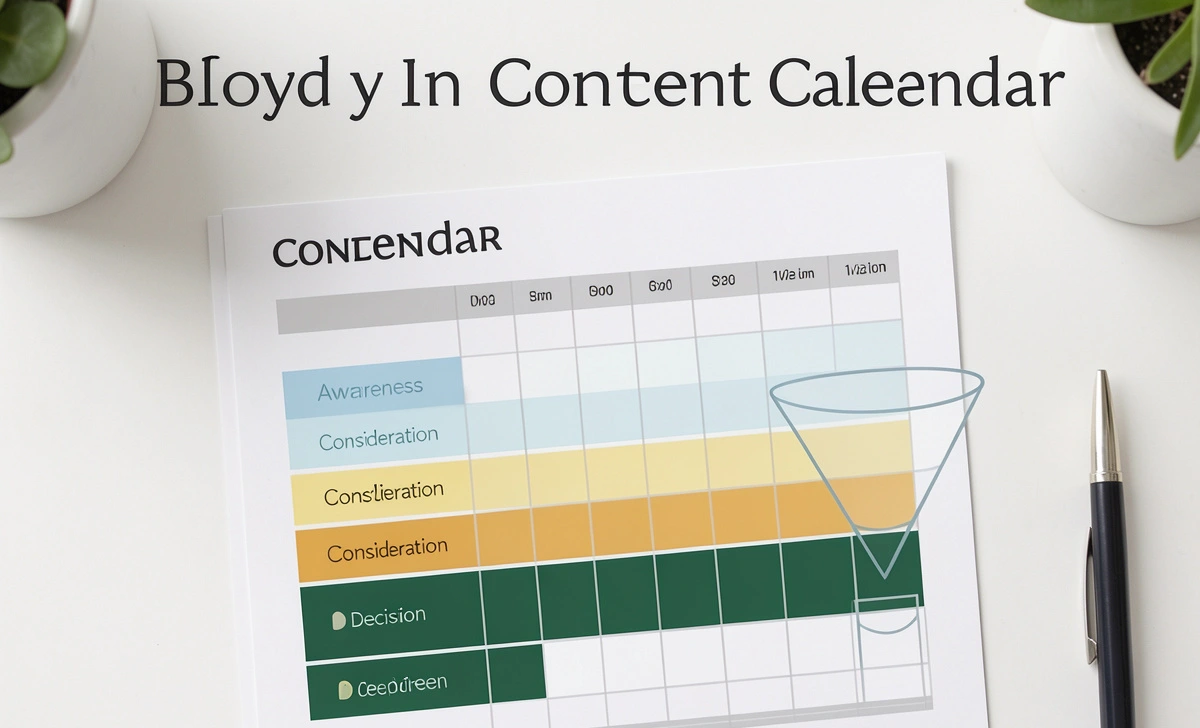
Here’s the thing about a content calendar for buyer journey stages. Most templates out there are just blank grids with due dates tacked on. That doesn’t tell you what to write or when to schedule it. I use a simple 3-3-3 framework to keep things manageable: three content types per stage, three posting cadences to test, and three metrics to watch.
For awareness, lean into problem-solving guides, industry myths, and beginner checklists. Consideration thrives on side-by-side comparisons, real customer stories, and “how to choose” breakdowns. Decision content? Case studies, setup tutorials, and honest pricing breakdowns.
Now, how often to post for each buying stage matters just as much as what you write. A reliable starting point is a 50-30-20 split. Half your monthly schedule covers top-of-funnel awareness to keep traffic flowing. Thirty percent goes to consideration pieces that build trust. The remaining twenty percent targets decision-ready readers with clear next steps. Tweak those ratios once your actual conversion data rolls in. Why waste hours publishing posts that never get a second look when your readers are asking a completely different question? If you’re short on time, learn how to repurpose an article into social snippets so one piece of research fuels multiple touchpoints.
Practical Examples: Content Calendar Templates by Funnel Stage
If you’re running a solo operation or a lean team, you don’t need a massive editorial machine. You need a repeatable rhythm that actually fits your schedule. Let’s say you run a B2B consulting blog. Instead of chasing trending hashtags, you batch your calendar around monthly themes.
Week 1: Publish an awareness post tackling a common industry misconception. Share it in two relevant professional groups. Week 2: Drop a consideration piece comparing two popular approaches to solving that exact problem. Send it to your email list. Week 3: Push a decision-focused article showing how a client implemented your recommended approach and what the numbers looked like. Link to it heavily from your older top-of-funnel posts. Week 4: Leave it open for repurposing, analytics review, or just catching up on reader comments. A content calendar for small business buyer journeys works best when it leaves breathing room. Rigid daily schedules kill creative output faster than writer’s block ever will.
Measuring Success: Tracking Content Performance Across Stages
You can’t fix what you don’t measure. But tracking everything at once will just drain your week. Stick to one primary metric per stage. For awareness, watch organic impressions and average time on page. Are people actually reading? For consideration, track newsletter sign-ups, PDF downloads, or clicks to comparison tables. For a decision, look at contact form submissions, demo requests, or direct product page visits.
Review these numbers monthly. If your awareness articles pull traffic but nobody clicks through to your comparison guides, you’re missing a bridge. Add a clear internal link or a “read next” callout near the end. If consideration posts get clicks but no one reaches out, your decision content might be too vague or lacking real proof. Tweak it. Keep testing. When you’re calculating ROI, don’t forget to factor in customer acquisition cost so you know which funnel stage actually drives profitable conversions.
FAQs
How many posts do I actually need before this starts working?
You don’t need fifty articles to see movement. Ten to fifteen well-targeted pieces spread across the three stages will give you a functional funnel. Focus on clear internal linking and matching intent over raw volume.
Can I reuse old articles that don’t fit my current schedule?
Absolutely. Update outdated stats, rewrite the opening to match your current voice, and add a direct link to a newer bottom-funnel post. Search engines reward refreshed content, and your readers won’t know it was a rewrite.
What if my business has a really short sales cycle?
Short cycles just mean your visitors skip straight from awareness to decision. In that case, shift your calendar to a 40-20-40 split. Keep awareness strong for traffic, but pack the decision stage with quick-start guides, transparent pricing, and straightforward social proof.
Wrap Up
Mapping your editorial schedule to where people actually are in their research phase changes everything. You’ll spend less time chasing random trends and more time writing posts that quietly work for you while you sleep. Start by slotting your existing articles into the three buckets, then draft one new piece for whichever stage looks empty. Once you lock in that rhythm, the rest just falls into place.
Before you publish your next batch, consider content pruning to remove outdated posts that dilute your funnel’s clarity. Focused content beats scattered volume every time.