

In this article
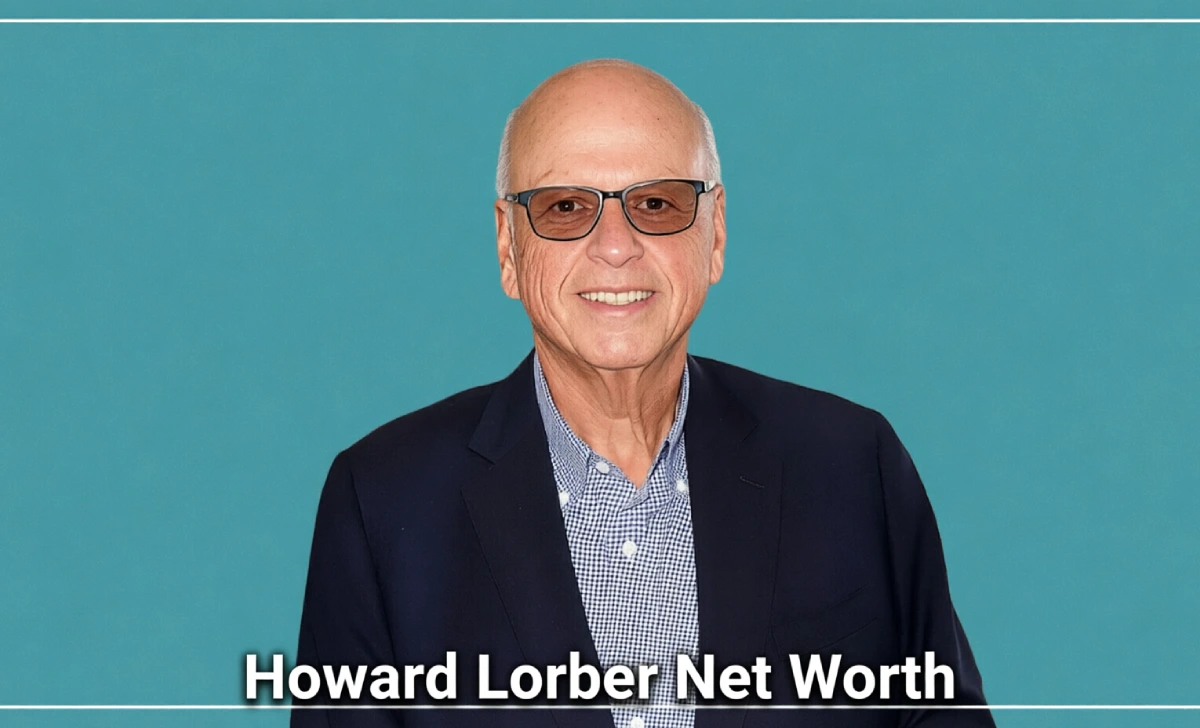
Few names carry as much weight in American business circles as Howard M. Lorber. For nearly two decades he ran Vector Group Ltd., chaired the luxury real estate brokerage Douglas Elliman, and has long led the hot dog chain Nathan’s Famous — turning corporate strategy into serious personal wealth along the way. From the boardroom of a tobacco company to the penthouses of New York’s most exclusive addresses, his financial story is one of patience, deal-making, and compounding rewards. So just how rich is Howard Lorber? Let’s break it all down.
Howard Lorber Net Worth

As of 2026, his net worth is estimated to fall between $400 million and $500 million. The biggest recent driver was the all-cash sale of Vector Group to Japan Tobacco’s JT Group, which closed in October 2024.
That deal valued Vector’s equity at roughly $2.4 billion, or $15 per share. Lorber’s February 2024 Schedule 13D filing showed him controlling about 4.36 million shares directly and through his partnership, Lorber Alpha II, plus roughly 2.5 million restricted shares and about 1.79 million vested options. At the $15 offer price, that position carried a gross value of well over $100 million — the exact cash he received depends on option strike prices and how the restricted stock vested, which the filings summarized here do not spell out.
It is worth noting that Forbes does not rank him, and no certified figure for his total wealth exists. The estimate above is built from SEC filings, executive compensation records, and documented real estate deals. It also assumes meaningful private wealth — decades of salary, bonuses, and dividends, plus holdings like his Nathan’s Famous stake — that is not fully visible in public data.
Main Income Sources

His wealth did not come from a single payday. It was assembled through multiple, overlapping income streams built over more than three decades.
Executive compensation at Vector Group was his most consistent earner. In recent years his packages ran well into eight figures: for 2023 alone he received a stock award valued at about $9.7 million at grant on top of a salary of roughly $2 million, for total compensation estimated near $18 million, up from about $11 million in 2022. Pay at that level, sustained across a long tenure, forms a substantial foundation of wealth.
Dividends from Vector Group added another reliable layer. The company was known for paying unusually high dividend yields, which meant a multimillion-share position generated meaningful passive income year after year.
The Vector Group buyout proceeds in 2024 were the single largest liquidity event of his career. JT Group’s tender offer ran from September 4 to October 4, 2024, and the merger closed on October 7, converting his long-held paper stake into cash.
Nathan’s Famous is the role most profiles overlook. Lorber has been a director of the Coney Island-born hot dog company since 1987, served as Chairman from 1990 to 2006 and as CEO from 1993 to 2006, and has been Executive Chairman since January 2007. That gives him board compensation and an equity position in a separate public company that had nothing to do with tobacco or real estate.
Douglas Elliman became another publicly traded vehicle after its spin-off from Vector in December 2021. Lorber served as Chairman and CEO of the new company, collecting executive pay and holding equity, until he stepped down in October 2024.
Real estate rounds out his picture. Lorber has been an active buyer and seller at the top of the market, most notably at the Sherry-Netherland on Fifth Avenue, where he sold his 30th-floor co-op for $11 million in 2018 and later sold a second unit in the building for $4.8 million. Property records also show him buying a Miami Beach home at 1525 North View Drive for $12 million in 2020.
Career Highlights

Lorber was born on September 8, 1948, in the Bronx and grew up in Paramus, New Jersey. He studied at Long Island University, earning a bachelor’s degree and a master’s in taxation; he later joined the university’s board of trustees, and its Lorber Hall carries his name. His training in tax and finance shaped the deal-driven career that followed.
His financial picture can’t be separated from the career decisions that built it. His path to the top of Vector was gradual. He became a consultant to Brooke Group — Vector’s former name, and the parent of Liggett Group, one of America’s oldest tobacco manufacturers — in 1994, while serving as President and COO of its affiliate New Valley Corporation from 1994 to 2005. In January 2001, he was named Vector’s President and Chief Operating Officer, and in January 2006 he became President and CEO, a post he held until October 2024.
Under his leadership, Vector carved out a durable niche in the discount cigarette market. While larger tobacco firms competed on brand prestige, Liggett focused on value-driven consumers, keeping the business cash-generative and dividend-friendly for decades.
The real masterstroke came in 2021, when Lorber engineered the spin-off of Douglas Elliman into a standalone public company, after chairing the brokerage for roughly two decades. The move unlocked value for Vector shareholders and positioned him as a major figure in luxury real estate in his own right.
Three years later, in 2024, he shepherded the sale of Vector Group to JT Group for about $2.4 billion. The deal was signed on August 21, 2024, priced at a 29.9% premium to Vector’s 60-day volume-weighted average share price, and closed that October — a clean exit that delivered cash to shareholders, including himself.
The same month brought a far less flattering exit. On October 22, 2024, he resigned as Chairman and CEO of Douglas Elliman, effective immediately, and board member Michael Liebowitz took over. The company said his departure was not due to any disagreement, but The Wall Street Journal reported that he was pushed out after an internal investigation raised concerns about the firm’s culture, following sexual misconduct allegations against former star brokers Oren and Tal Alexander. By then, Elliman’s market value had fallen from more than $900 million in 2021 to roughly $146 million, part of a broader slowdown in the housing real estate market cycle.
Beyond his companies, Lorber has kept deep ties to New York’s political and business circles. He served as Vice Chairman of Ladenburg Thalmann Financial Services from 2006 to 2019, was one of Donald Trump’s economic advisers during the 2016 campaign, and in 2017 was appointed Chairman of the United States Holocaust Memorial Council, which oversees the national Holocaust museum in Washington. He is married to Thea Hallman, and his son Michael Lorber is a Douglas Elliman broker known from Million Dollar Listing New York.
Financial Growth
Lorber’s wealth trajectory follows a clear arc. For most of the 2000s and 2010s, his net worth grew steadily through salary, bonuses, dividends, and rising Vector Group stock prices. There were no splashy IPOs or billion-dollar exits — just consistent, disciplined accumulation.
The first inflection point arrived in 2021 with the Douglas Elliman spin-off, which added a second public equity vehicle to his holdings. That gain proved fragile: as Elliman’s share price slid through 2022–2024, the value of that stake shrank sharply, a reminder that his fortune was never tied to a single company.
Then came 2024. The Vector Group buyout converted a large paper stake into cash and removed the volatility risk of holding a concentrated position in a tobacco company. With that liquidity, his balance sheet in 2026 is considerably more flexible than it was five years ago, even after the Elliman decline.
By most reasonable estimates, his fortune in 2026 sits within the $400–$500 million range once the Vector proceeds, his Nathan’s Famous position, his real estate holdings, and decades of accumulated compensation are counted together.
Conclusion
Howard Lorber’s financial story is a reminder that building lasting wealth in business rarely happens overnight. His estimated Howard Lorber net worth of $400 million to $500 million reflects three decades of executive leadership, shrewd deal-making, and a talent for creating value through spin-offs and strategic exits. From tobacco dividends and Nathan’s Famous to Manhattan real estate and a landmark $2.4 billion acquisition, each chapter added another layer — even as his Elliman exit showed that not every chapter ends on his terms.
Whether you view him as a tobacco executive, a real estate power broker, or a dealmaker with impeccable timing, the numbers speak for themselves. You may also enjoy reading about other founders who built wealth across multiple ventures — Justin Siegel’s business story offers useful context on how diversified holdings build durable net worth.
Disclaimer: The net worth figures mentioned are based on publicly available information, industry reports, and reliable estimates. In some cases, additional insights or updates may be considered where available. Although we aim to keep the data as accurate and current as possible, these figures should still be viewed as estimates rather than exact financial records. We always appreciate corrections or updated information from reliable sources.