
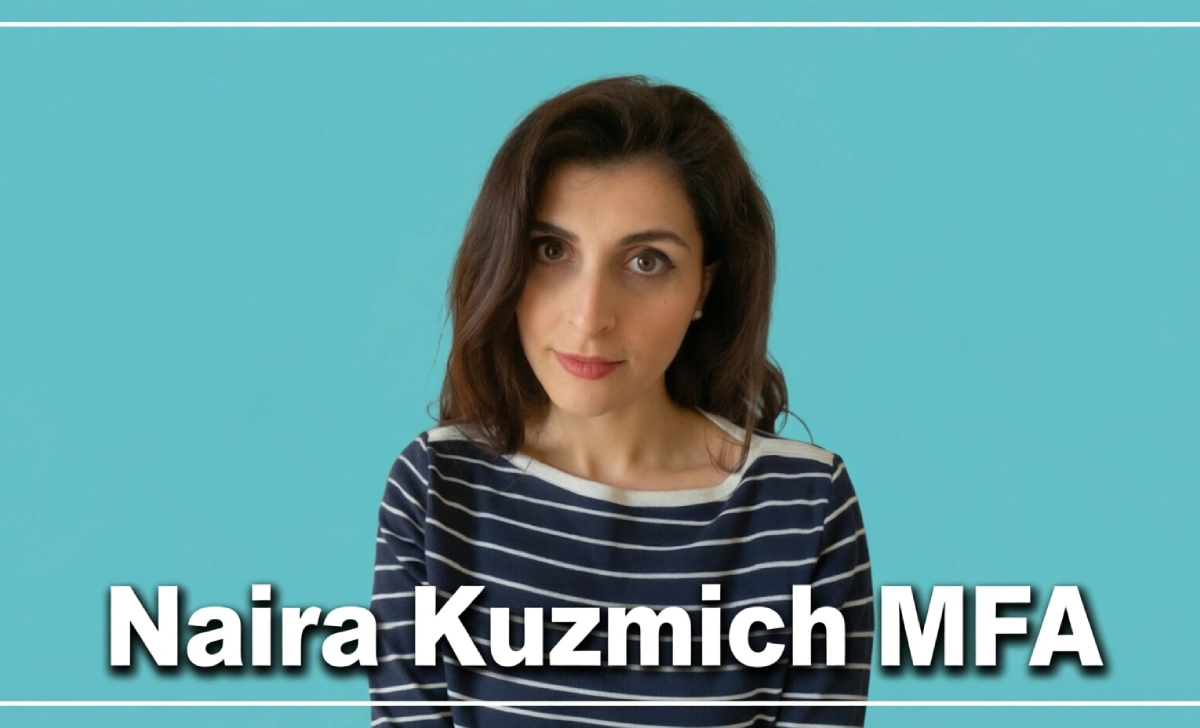
Naira Kuzmich MFA, and at just thirty years old, a voice that had only just begun was silenced. Yet everything she wrote continues to live on. Her short stories and essays are taught in universities, debated in literary circles, and shared by writers who feel seen in her words. She did not write to impress. She wrote to tell the truth.
From Yerevan to Little Armenia: The Making of a Writer
Naira was born in Armenia and raised in the Los Angeles enclave of Little Armenia. Growing up there wasn’t just a geographical fact. It was the soil her writing grew from.
Her work often explored complex familial histories — women’s relationships to one another, to religious and cultural traditions, and to the collision of cultural and personal priorities. These weren’t borrowed themes. They were her inheritance.
Her mother, her grandmother, her aunts — they all lived in her sentences. She once said she owed her entire artistic sensibility to the women in her family. That kind of rootedness is rare. It doesn’t come from workshops. It comes from paying attention to your whole life.
The MFA That Sharpened Everything
After completing her undergraduate studies, Kuzmich pursued her passion for creative writing academically. She earned an MFA in Creative Writing from Arizona State University in 2013, specializing in fiction.
ASU’s program was rigorous. But Naira didn’t just sit in workshops. She worked as an international editor for Hayden’s Ferry Review, helping foreign writers navigate the American literary world. She also taught writing to students. Both roles forced her to think about language with surgical precision.
Her MFA wasn’t just a credential. It was a turning point. The program gave her structure, but she brought the soul. Her thesis — a collection of stories about Armenian-American life — already carried the weight of a career’s worth of experience. That’s unusual for a graduate student. That’s rare for any writer.
The Breakthrough: One Prize, One Story, One Community
Some writers spend decades waiting for recognition. Naira didn’t have decades. But the recognition still came.
Her short fiction is remarkable in its range, scope, and intricate architecture, every story delivered in prose that feels stripped of contemporary craftism. No showing off. No tricks. Just honest language doing difficult work.
Her short story “The Kingsley Drive Chorus,” about Armenian-American mothers and sons, was published in Salamander magazine in 2013 and later included in The O. Henry Prize Stories 2015. The O. Henry Prize is one of the most prestigious awards in American short fiction. Being selected means editors and critics think your work belongs alongside the best writing of the year.
When it was republished in The O. Henry Prize Stories 2015, Naira gave a short explanation: “This story was born out of love for the mothers of these boys — women I had long admired and feared in equal measure.”
That sentence alone tells you everything about how she worked. She wrote with admiration. From complexity. From love that wasn’t simple.
The Literary Empire: Publications, Recognition, and Lasting Work
Naira Kuzmich wasn’t building a brand. She was building a body of work. And it grew fast.
Her fiction and nonfiction have appeared in West Branch, Blackbird, Ecotone, The O. Henry Prize Stories 2015, The Threepenny Review, The Massachusetts Review, The Cincinnati Review, and elsewhere.
These aren’t small outlets. These are some of the most selective literary journals in the country. Getting published in one is an achievement. Getting published in all of them — while still in your twenties — is extraordinary.
She also wrote essays. Her piece “Hava Nagila,” published in Michigan Quarterly Review, explored Armenian identity abroad through a single surreal night in Berlin. Her essay “My Evil Grandmother Wakes” appeared in Shenandoah. Her nonfiction was as strong as her fiction — maybe stronger, because it carried her actual voice without the shield of character.
Then came the posthumous collection. Naira Kuzmich died in 2017 at age 29 from lung cancer, but her posthumous short story collection, In Everything I See Your Hand, was brought to fruition by the University of New Orleans Press in June 2022.
In these ten brilliant stories, she spins variations of immigrant life in the Little Armenia neighborhood of Los Angeles. She finished this collection before her death at age twenty-nine.
Writers who leave behind remarkable literary legacies often do so because they wrote without compromise — and Naira was exactly that kind of writer.
The Cultural Impact: What She Changed and Why It Matters
It’s hard to imagine Naira was a young MFA graduate and PhD candidate at the time of her passing, given how far her work extends beyond the conventions of those programs.
That observation matters. MFA programs can sometimes flatten a writer’s voice — turning instinct into formula. Naira avoided that. Her work felt like it came from somewhere older and deeper than any workshop.
Her influence within Armenian-American literature is especially important. She contributed stories that felt specific yet universal, helping broaden representation in contemporary fiction.
She wrote about Armenian-American women during a period when that perspective was nearly invisible in mainstream literary publishing. She didn’t write as a representative of a community. She wrote as herself — and in doing so, represented thousands of others who had never seen themselves on the page.
Her voice was completely her own and utterly necessary. Literature needs voices that don’t exist anywhere else. Naira’s was one of those.
Personal Life, Illness, and Writing Through It All
Naira Kuzmich was diagnosed with lung cancer while still young. She didn’t stop writing. She wrote about it.
She once wrote: “I left home to write about home, as many writers do. But now, I’m back — me and the cancer. It’s new in some ways, but still very real.”
That line is not a performance of grief. It’s just honest. She wrote about cancer the same way she wrote about everything else — without ornament, without self-pity, without distance.
Cancer is a recurring motif in her work, reflecting both personal struggle and thematic exploration of human fragility. But her prose still carried unexpected warmth. Her characters didn’t crumble dramatically. They crumbled in ordinary, human ways. That’s the harder thing to write.
Final Thoughts: A Legacy That Refuses to Fade
Naira Kuzmich MFA is not just a search term. It’s an entry point into one of the most honest bodies of work in contemporary American literature.
Her work feels personal, honest, and deeply rooted in lived experience. Though her life was short, her impact was not.
She proved something important. You don’t need decades to matter. You need clarity. You need courage. You need to write from the place that actually hurts.
Naira’s stories have the weight of writing we should remember — and it’s a tragedy that the opportunity to revel in what could have been an extensive bibliography has been taken away.
But what remains is enough. More than enough. It is, as her collection title says, In Everything I See Your Hand — the hand of a writer who knew exactly what she was doing, even when time was running out.
FAQs
Who is Naira Kuzmich?
Naira Kuzmich was an Armenian-American fiction writer and essayist born in 1988 in Yerevan, Armenia. She was raised in Los Angeles’s Little Armenia neighborhood and earned her MFA from Arizona State University. She passed away in 2017 from lung cancer at age 29.
Where did Naira Kuzmich get her MFA?
She earned her MFA in Creative Writing from Arizona State University in 2013, specializing in fiction. During her time there, she also edited Hayden’s Ferry Review and taught writing courses.
What did Naira Kuzmich write?
She wrote short stories and personal essays published in top literary journals, including Ecotone, The Threepenny Review, West Branch, and The Massachusetts Review. Her posthumous collection In Everything I See Your Hand was published by the University of New Orleans Press in 2022.
Did Naira Kuzmich win any awards?
Yes. Her story “The Kingsley Drive Chorus” was selected for The O. Henry Prize Stories 2015, one of the most prestigious annual anthologies in American short fiction.
Why is Naira Kuzmich still relevant today?
Her work is studied in creative writing programs and literary courses because of its clarity, emotional depth, and authentic portrayal of Armenian-American life. Her posthumous publications have introduced her writing to new generations of readers and writers.