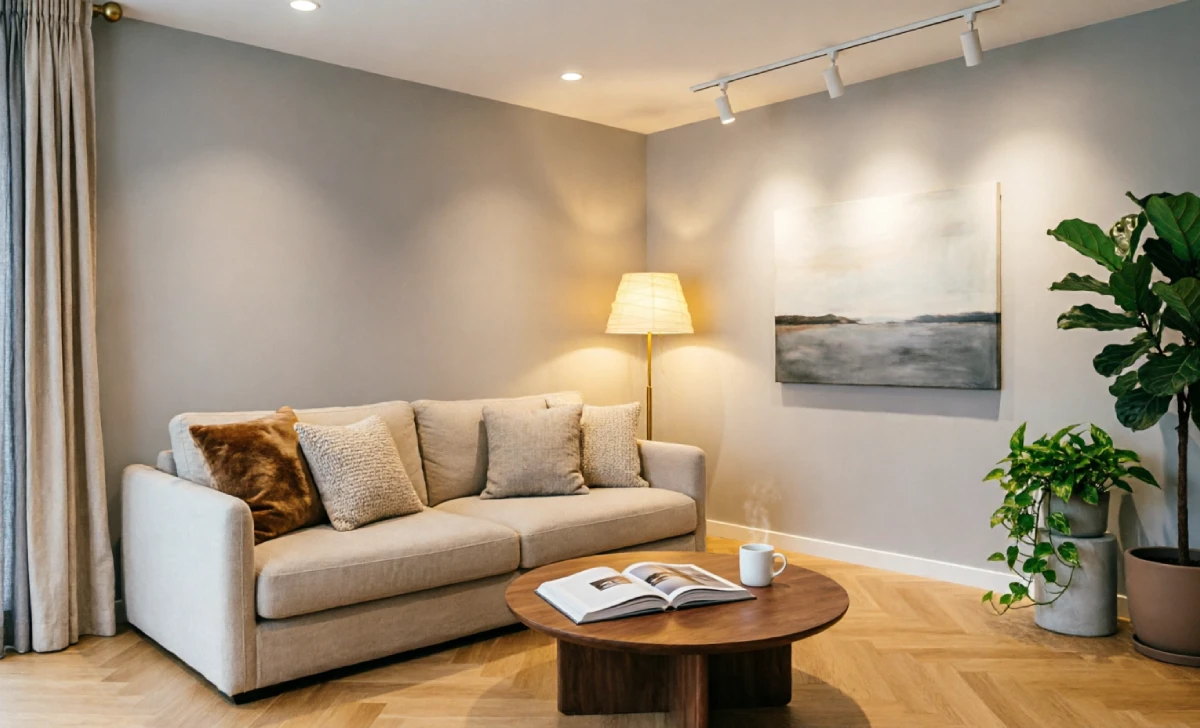
You look around your living room and feel a quiet pinch of disappointment today because something is clearly missing. You know this space could look much better, feel warmer, and work harder for your daily life, but every attempt at decorating leaves you frustrated.
Most of us were never taught how to create a home that balances good looks with deep comfort and smart function. We absorb beautiful room images but lack a real process. These home styling tips will bridge that gap.
That confusion is completely normal, and it is not a sign that you lack taste. You simply need the right guidance to transform your vision into reality.
By the time you finish reading this guide, you will understand exactly how to weave style, comfort, and function together seamlessly. You will have a clear plan to start today.
What Does It Really Mean to Make a Home Stylish, Comfortable, and Functional?
If you believe a beautiful room cannot also be cozy and practical, you are carrying a false rule in your mind. The most inviting homes are rarely the ones that look like stiff museums.
Function adds the third layer that keeps everything humming smoothly in your daily life. When a room is arranged so you can move freely, the beauty gets to be truly enjoyed.
Comfort is not the enemy of style at all, even if you worry about whether accent walls out of style are a thing of the past. A plush sofa only earns its place if it invites real lounging.
Defining Your Personal Home Style Without Chasing Trends
Chasing trends is the fastest way to end up with a home that feels borrowed rather than truly yours. Your personal style is already showing up in your favorite pieces.
Start by taking a slow walk through your home and noticing what genuinely makes you smile. It might be a nubby linen throw or the way morning light hits.
Those small, consistent preferences are the seeds of a signature style that will never go out of fashion. It is rooted in who you are rather than in what a catalog tells you.
When you decorate from that honest place, the result is a home that feels cohesive. You are not just filling rooms; you are telling a visual story.
What Are the Core Principles of Home Styling That Designers Use?
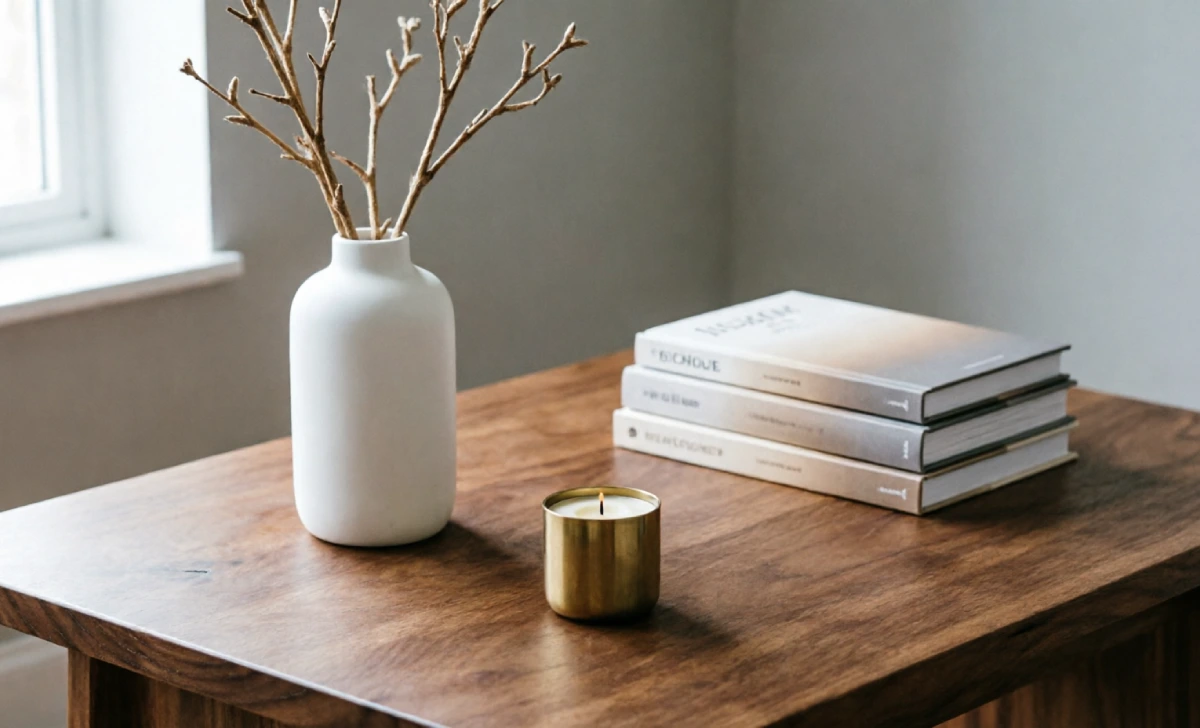
Designers are not working from a secret rulebook that is off-limits to regular people. The principles they rely on are surprisingly simple and immediately useful for you.
The rule of thirds is a perfect example of grouping objects on a shelf. Placing them in clusters of three with varying heights creates a visual rhythm.
Color theory offers another straightforward tool, captured best by the simple sixty-thirty-ten rule. You let a dominant color anchor sixty percent of the room visually.
Focal points give the eye a place to land and immediately signal that a room is put together. Every room benefits from one clear star.
How Do You Choose a Color Palette That Makes Your Home Feel Both Cozy and Elegant?
Color is one of the first things you notice in a room, and it sets your entire mood. A cozy yet elegant color scheme is about understanding temperature.
Begin by choosing one neutral that feels like a warm exhale, like a soft greige. This becomes your sixty percent anchor that wraps the walls in a steady embrace.
The final ten percent is where you get to add a pulse with a terracotta vase. The magic happens when you repeat a whisper of that accent color.
Arranging Furniture to Improve Flow and Conversation
You might notice that some living rooms pull you in and make you want to settle in for a long chat. The difference comes down to furniture positioning.
The most common mistake is pushing every piece against the walls, which turns a room into a dance floor. Pull your sofa away from the wall immediately.
Create a clear walking path about the width of a hallway so nobody has to squeeze sideways. Once you create that easy circulation, the room stops fighting against your daily life.
Orient your main seating to face each other or angle toward a shared focal point like a window. Make sure there is a clear walking path.
What Lighting Tricks Instantly Upgrade the Look and Comfort of a Room?
There is a reason designers call lighting the jewelry of a room, but it is more than just decoration. The right light changes how colors read.
The secret is layering three types of light for a fully realized space. Ambient light gives a gentle glow, task light makes activities comfortable, and accent light adds depth.
Put every lamp on a dimmer, and you can dial the mood from bright morning energy to soft evening calm in seconds. That small change alone makes a home feel infinitely more comfortable.
Even if you rent and cannot rewire anything, plug-in sconces and floor lamps let you create that same layered look. Put every lamp on a dimmer.
How Do You Add Texture and Warmth So Your Home Doesn’t Feel Flat?
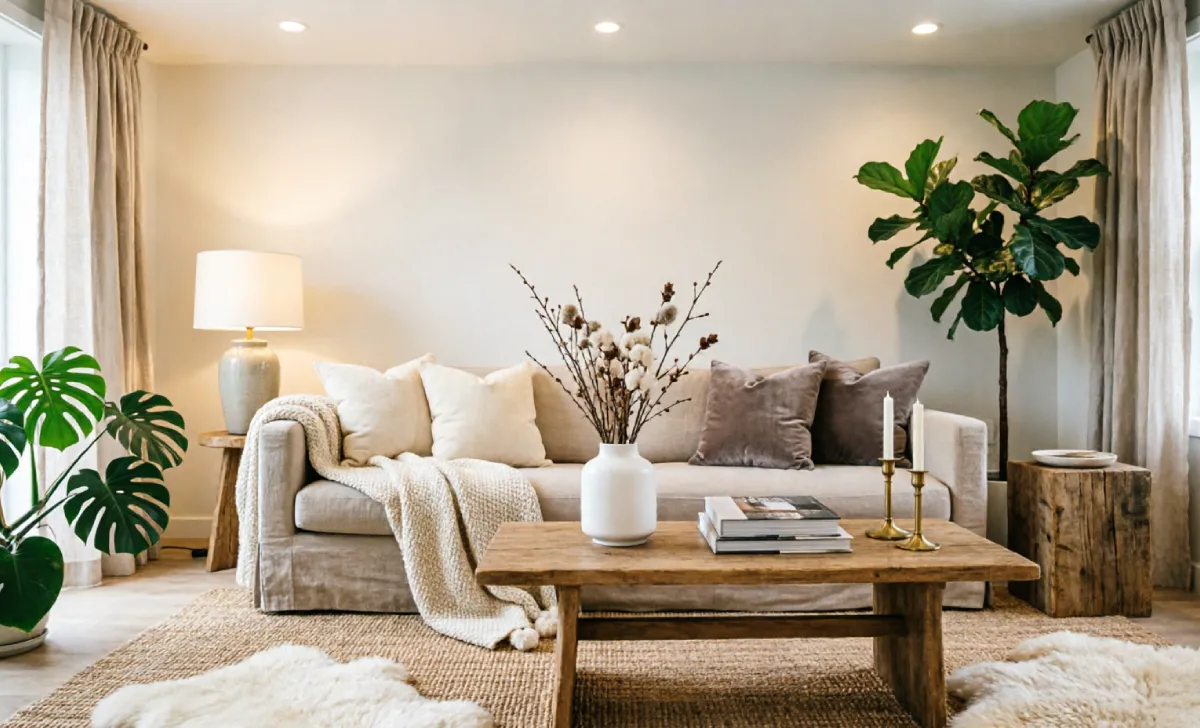
A room can be perfectly color-coordinated and still feel strangely hollow without the right sensory layer. Understanding texture in interior design helps you fix this easily.
Start by auditing what you already have to see if you need something nubby or fuzzy. Bring in a chunky knit throw or a wool rug.
Plants are another fast track to texture and warmth, adding organic shape and a living presence. A single oversized Monstera leaf softens hard corners beautifully.
How Do You Style Shelves, Tables, and Surfaces Without Creating Clutter?
Surfaces are often the places where good intentions go to pile up and become visual noise. The real trick is learning to style the space.
Start with a clean slate by removing everything from the surface you want to style. Then add back a single anchor piece like a large art book.
Next, layer in one or two vertical elements like a small vase with a stem. This leads the eye upward and creates a dynamic visual rhythm on the surface.
Leave deliberate gaps of space around each grouping to let your eye rest. If you feel tempted to fill every inch, remember that negative space is a luxury.
What Are the Best Home Styling Solutions for Renters and Small Spaces?
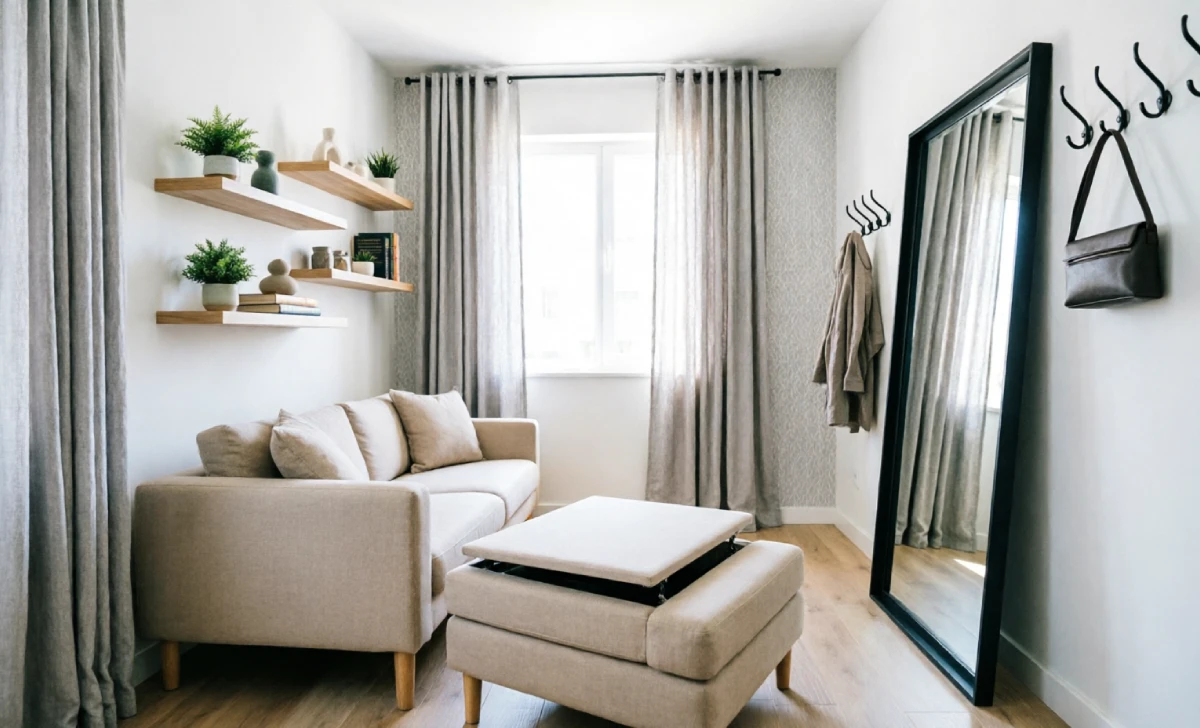
If you rent or live in a compact space, you have probably been told just to accept bland walls. Your home can overflow with personality without permanent changes.
Removable wallpaper and peel-and-stick tiles let you add pattern to a rental kitchen backsplash easily. Leaning a large mirror against the wall makes a small room feel expanded.
If you want to maximize space in a small home, multifunctional furniture is a small-space superpower. Think vertically with tall shelves and curtains hung close to the ceiling.
Think vertically, too, by using tall shelves that draw the eye upward. Wall hooks that hold bags and hats create storage and style without stealing floor space.
What Are the Most Common Home Styling Mistakes and How to Fix Them?
Most styling missteps are not taste failures; they are just invisible habits that quietly dull the effect. The good news is that you can correct them in minutes.
A rug that is too small for the seating area is one of the most common offenders. Ensure the front legs of your sofa sit comfortably on it.
Another frequent mistake is matching every piece of furniture from the same store collection. Mixing just one vintage find or an unexpected upholstery texture adds soul.
Good styling even boosts interior design home resale value by making spaces feel cared for and intentional. These tiny adjustments move a room from not quite right to perfect.
FAQs
What is the difference between home styling and interior design?
Home styling focuses on the surface layer of a space, arranging furniture and accessories to create a polished look without renovation.
How often should I update my home’s style?
You do not need a strict schedule, but swapping out a few textiles or introducing a new accent color can refresh the energy.
What is the easiest first step if I feel completely overwhelmed?
Choose one small surface like a coffee table and clear it completely. Then add back only three items with different heights.
Conclusion
A home that balances style, comfort, and function is not a distant fantasy reserved for design magazines. It is a quiet, achievable reality that starts with kinder eyes.
Every principle you have learned today is something you can begin applying right now. You can use the things you already own and the rooms you already live in.
You do not need to be perfect; you just need to start. Choose one lamp to reposition and let that small shift prove your home can hold beauty and real life.