
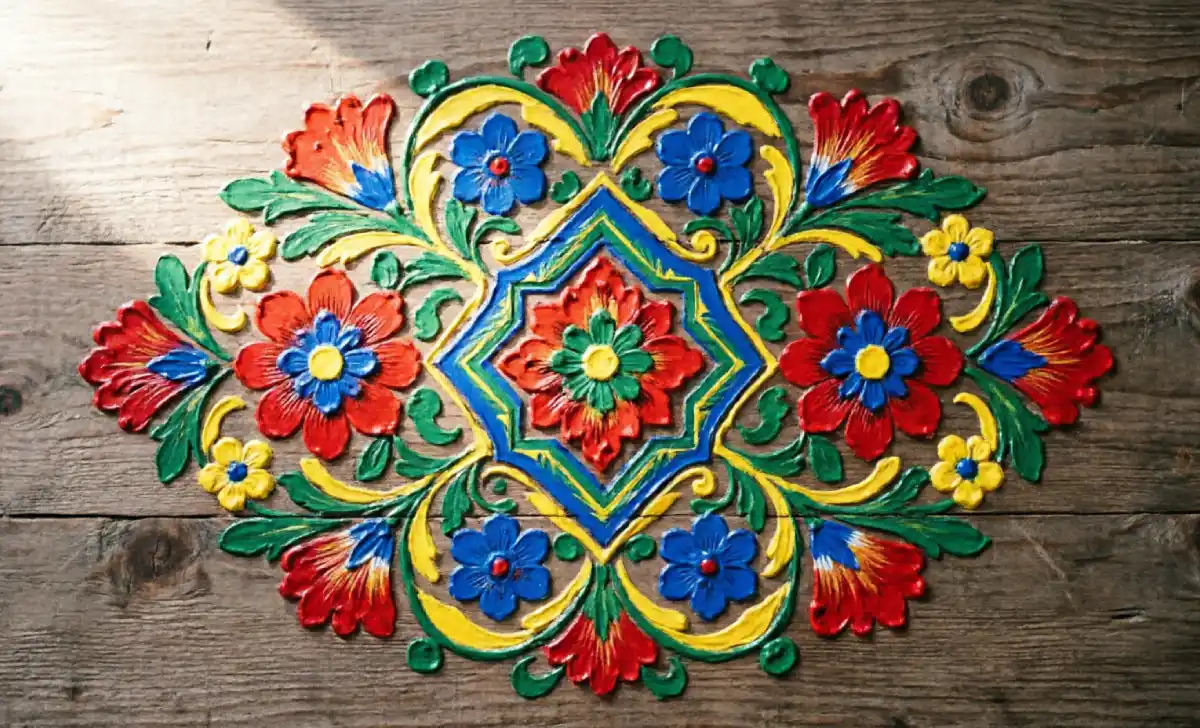
You have probably seen a hand-painted wooden chest, an embroidered blouse bursting with flowers, or a ceramic plate that seemed to carry an old song. That bold color, those repeating vines, those slightly uneven lines — that is the folklore art style reaching out across time. It stops you, even if you never had a name for it.
Folklore art style is the visual language of everyday people, passed through generations in small villages and around winter fires — and just like discovering music without language, it speaks directly to something deep inside you. By the time you finish reading, you will know what defines this art, recognize its most common patterns, and draw your first folk motif with confidence.
What Is Folklore Art Style and How Does It Differ from Fine Art?
If you have ever wondered what sets a hand-painted folk cupboard apart from a gallery painting, you are already asking the right question. Folklore art style is visual storytelling made by and for a community. It does not come from one artist’s personal genius — it belongs to shared traditions, often passed down without a single named creator.
Think of it as a visual dialect spoken by a village. Someone paints flowers on a hope chest, another embroiders protective symbols on a collar, and a third carves a border into a wooden spoon. Fine art comes from a trained individual and is meant to be viewed in a gallery. Folk art is meant to be used, touched, and lived with.
That difference changes how you see everyday objects. When you notice a symmetrical flower border on a textile, you are reading a language of belonging — one never meant to be isolated behind glass.
Key Characteristics That Define Folklore Art
Folk art speaks in a certain visual accent, no matter where it comes from. Shapes do not try to be realistic the way a photograph does. Figures and flowers get flattened into beautiful silhouettes, and shadows are rarely painted because clarity matters more than illusion.
Symmetry gives the eye a comfortable resting place, but it is never coldly perfect. A flower on one side might be slightly fuller than its twin, and that small imbalance carries the warmth of a human hand. Decorative borders frame the scene like a protective fence, using simple lines, dots, and repeating shapes that any beginner can learn.
Color behaves like a celebration — clear reds, deep blues, sunny yellows, and earthy greens, rarely muted or muddied. All of these traits together create an art form that feels direct, generous, and impossible to mistake.
What Are the Most Common Folklore Art Patterns and Motifs?
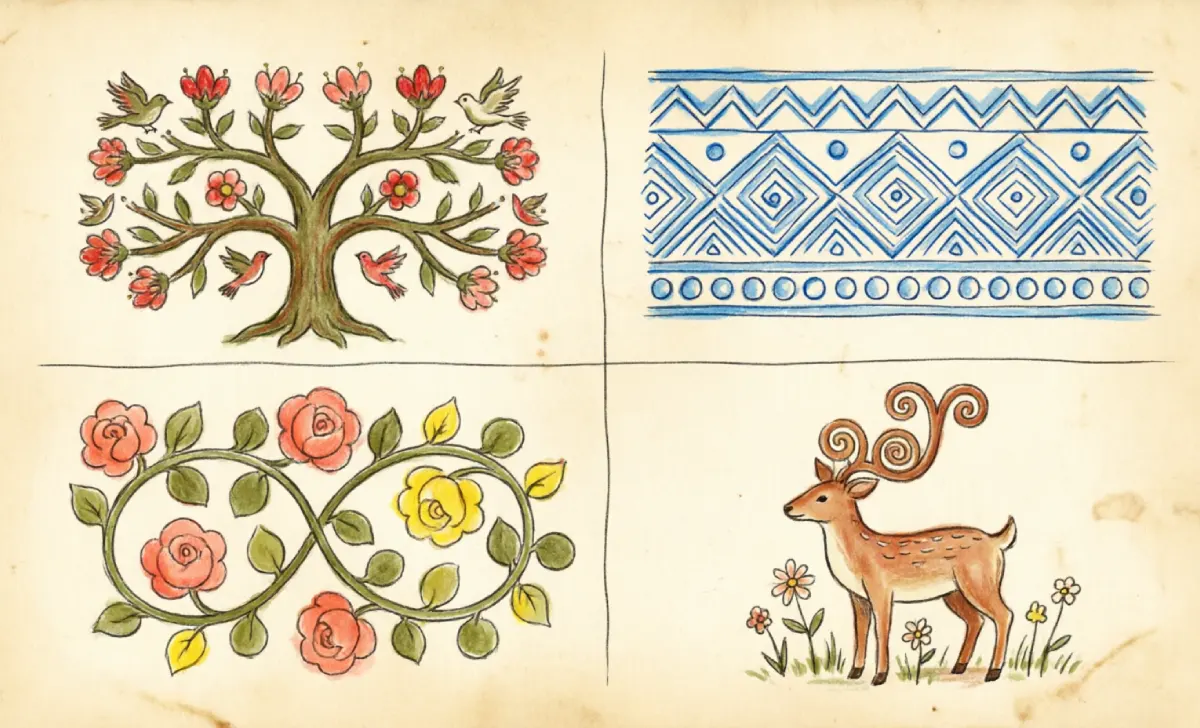
Folk patterns are not random decoration. They are a visual vocabulary, and each motif carries weight. You will find flowers almost everywhere — roses, tulips, lotuses — stretched and repeated until they become a rhythmic field of petals and leaves.
Geometric borders work like the chorus of a song. Zigzags, diamonds, and braided lines hold compositions together and often represent flowing water, plowed fields, or eternal protection. Animals appear too, simplified into gentle shapes: a bird with a berry in its beak, a deer with spiraling antlers, a lion reduced to its kindest outline.
The tree of life rises from a central mound with branches spreading in perfect symmetry, often holding flowers or birds. When you look at these patterns, you will start seeing the same visual conversations in a Norwegian cupboard, an Indian wall painting, and a Mexican ceramic plate — each speaking in its own accent.
How to Start Drawing a Simple Folklore Pattern Step by Step
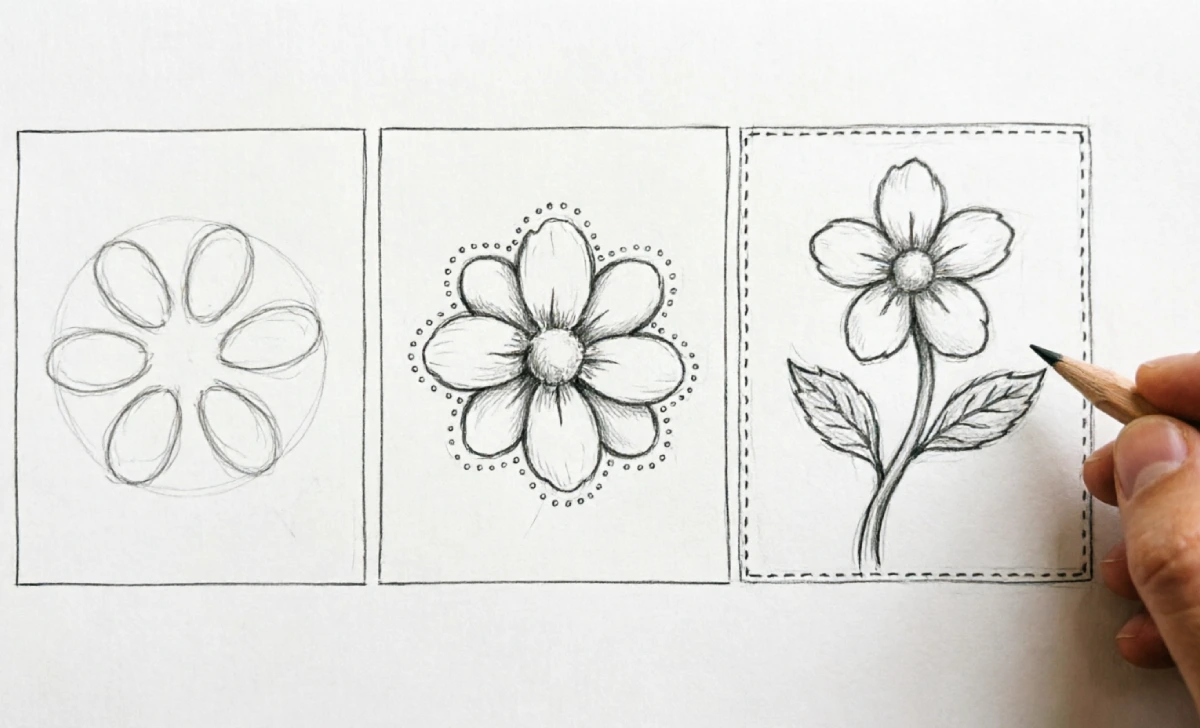
The most beautiful secret about folk art is that it builds from simple shapes. You do not need to be a skilled draftsperson. You need a pencil, paper, and a little patience.
Start by drawing a light circle in the center of your page — this is the heart of your flower. Around it, add four or five oval petals, roughly the same size. Do not worry if one looks a little plumper than its neighbor. That irregularity is part of the charm.
Next, add a second layer of petals peeking between the first ones. Frame your flower with a simple border — a line of dots between two parallel lines, like a stitched seam. Add a mirrored leaf on each side of the stem. You have just created your first folk motif, and the more you repeat it, the more your hand will find its own natural rhythm.
Global Folklore Art Styles That Inspire Modern Creatives
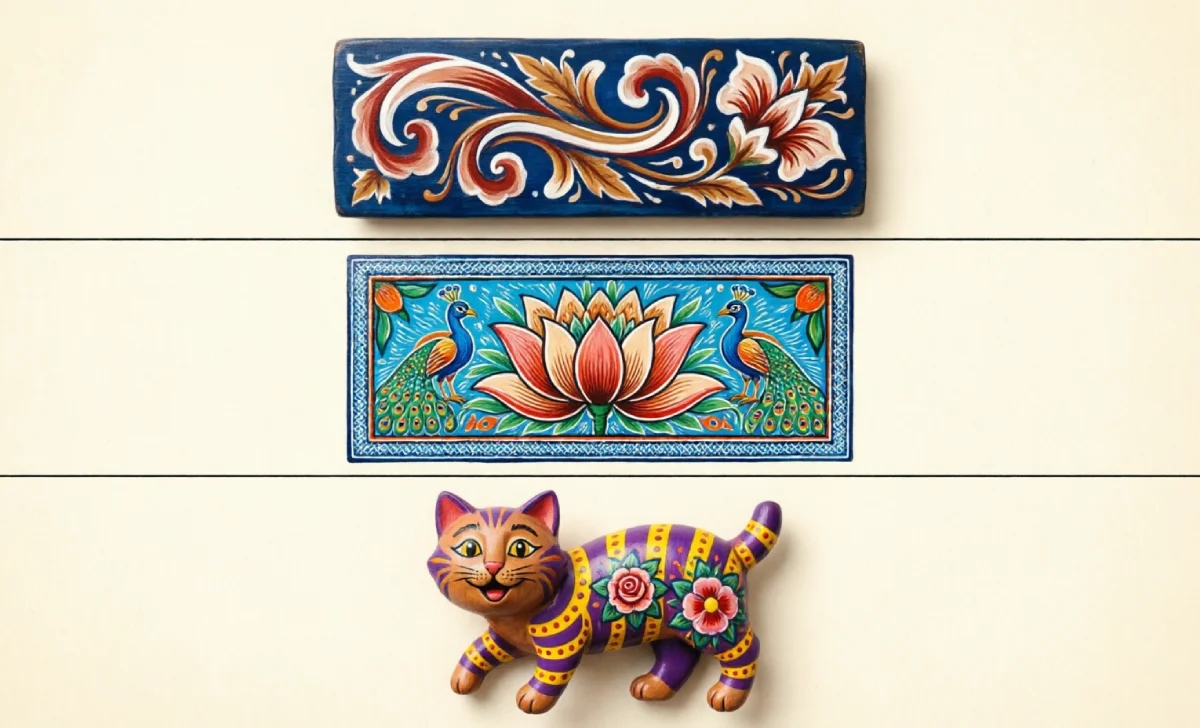
Certain regions have developed especially beloved visual dialects. Scandinavian rosemaling sweeps across wooden surfaces in flowing curves and scrollwork, with flowers that seem to dance. The colors tend to be deep and jewel-like against dark backgrounds.
In India, Madhubani painting fills every inch of space with intricate linework, peacocks, and sun motifs — originally painted on mud walls during festivals. Mexican folk art brings a lively spirit through painted animals, where bold dots and stripes transform simple creatures into something magical. Much like building emotional connection through performance, these traditions use visual language to bridge distance and feeling.
From the delicate brushwork of Ukrainian Petrykivka to the embroidered storytelling of Eastern European textiles, each tradition offers a different way to hold the same truths — celebration, protection, and love of the land.
Traditional Materials and Techniques Used in Folklore Art
The materials that shaped folklore art style came from the immediate world — wood, cloth, clay, and natural pigments. Wood painting turned plain furniture into treasured heirlooms. A thin brush dipped in acrylic or oil paint could make a small chest bloom with meaning.
Embroidery uses needle and thread to draw lines on fabric, creating rhythmic borders along cuffs and hems. The grid of woven cloth naturally encouraged the repetition you see so often in folk patterns. Pottery painting and papercutting each offered their own surfaces and constraints, teaching artists to repeat and simplify form.
Even if you are using modern acrylics or a digital app, keeping the spirit of those simple tools in mind will keep your work connected to the tradition it comes from.
What Do the Colors and Symbols in Folk Art Mean?
Red appears often in folk pieces for good reason. In many traditions, red is the color of life, protection, and vitality — believed to ward off harm and attract joy. You see it on bridal textiles, household objects, and ceremonial items across many cultures.
Blue carries a quieter energy — spirituality, sky, and calm. Yellow suggests the sun and harvest, while green connects to growth and the natural world. Symbols follow similar logic: a circle stands for wholeness, repeated waves suggest water or time, and birds are messengers between earth and sky.
When you choose colors and shapes for your own folk-inspired work, you are not just decorating. You are continuing a conversation carried in pigment and thread for centuries.
How Can You Apply Folklore Art Style in Modern Creative Projects?
Folk art fits beautifully into the things you make today. A folk flower motif can become a repeating pattern on a tote bag, a vibrant accent on a journal cover, or a simple mural on a tired piece of furniture. Digital artists can create brushes that mimic the thick, imperfect stroke of a folk painter.
With digital tools becoming more sophisticated, it is worth knowing how to detect AI-generated content so you can keep your folk-inspired work feeling authentically handcrafted and human. Surface designers borrow the symmetry and density of folk borders to build fabrics that feel both nostalgic and fresh.
The key is to approach the style with respect. Learn about the motif you are using and credit the cultural tradition it comes from. Doing so keeps your creativity rooted rather than rootless.
What Are Common Beginner Mistakes in Folk Art and How to Avoid Them?
Your lines might feel too wobbly when you first start. That wobble is not a mistake — chasing machine-like precision is the fastest way to lose the handmade soul that makes folk art feel alive. Let your hand move with confidence and welcome the small variations.
Another common misstep is packing too much into one piece. Folk art thrives on clarity and repetition, not clutter. Choose one or two central motifs and let them breathe. The simplicity will feel more powerful, not less.
Finally, research the meaning behind any symbol you borrow. A folk motif is never just a shape. Using it with understanding shows respect for the tradition and makes your work richer.
How Will You Continue Your Folklore Art Journey?
You now know what folklore art style is, how to read its patterns, and how to draw your first motif. Pick one tradition that made your heart beat a little faster — maybe the swirling florals of rosemaling or the storytelling lines of Madhubani. Fill a sketchbook with motifs or paint a small wooden box. When inspiration runs low, finding something new to explore can open unexpected creative doors.
The thread is now in your hands. Keep pulling it.
FAQs
Can I mix patterns from different folklore traditions in one artwork?
Yes, but treat each tradition’s motifs with care. Acknowledge where they come from and understand the meaning behind the symbols before combining them.
Do I need special brushes or paints for folk art?
No. A round brush with a good point and opaque acrylic or gouache paint works well. The authentic effect comes from stroke confidence and symmetry, not expensive tools.
What is the difference between naive art and folklore art style?
Naive art comes from an individual painting in a simple, untrained, personal way. Folklore art style is rooted in community traditions and shared symbols passed down across generations.
Is it okay to use folk art patterns commercially?
It can be, if you create original work inspired by general principles. Directly copying specific traditional designs without credit or permission is disrespectful. Research the source and support artisan communities where possible.
Conclusion
Folklore art style is a living language of shape and color, made by hands that wanted to protect, celebrate, and beautify their world. You now have the vocabulary to understand it, draw your first folk flower, and carry it forward. Every petal you paint adds another note to a song sung for centuries. You are part of it now.