
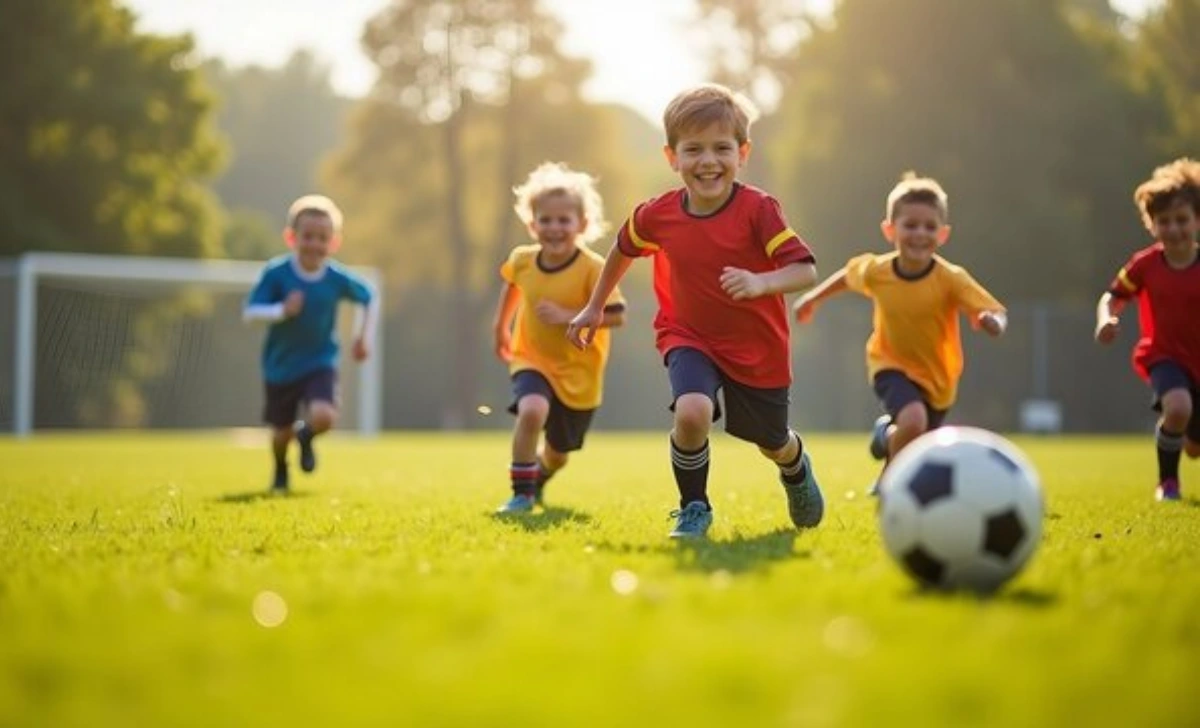
You’re watching your kid sprint after a soccer ball, all scraped knees and boundless energy, and a question pops into your head: Is this just burning off afternoon energy, or is it actually building something that lasts? Maybe you’re asking for yourself now—wondering if those weekend games you played decades ago are still paying dividends in your bones today. Research on childhood soccer bone strength shows the answer might surprise you.
Here’s the short answer: yes, playing soccer (and similar team sports) as a kid does help bone strength later. But the full picture is more interesting—and more useful—than a simple yes or no. Let’s walk through what the science actually says, without the jargon.
The Critical Window: When Peak Bone Mass Develops in Teens
Your bones aren’t just static frames holding you up. They’re alive, constantly breaking down and rebuilding. And there’s a specific window—roughly ages 10 to 20—when they’re most responsive to getting stronger.
Think of it like a bone savings account. The deposits you make during those growing years? They compound. By around age 18–20, most people have built about 90% of their peak bone mass. That number isn’t just a statistic—it’s your foundation for decades to come.
So what triggers those deposits? It’s mechanical loading. Every jump, sprint, or sharp turn sends a signal through the skeleton: “Hey, we need to be stronger here.” The bone responds by laying down more mineral matrix. It’s biology adapting to demand, plain and simple—and the consistency that builds muscle memory also reinforces those skeletal adaptations.
You’ve probably noticed teens seem to bounce back from tumbles faster than adults do. Part of that resilience comes from bones that are actively remodeling during growth spurts. Miss that window, and you’re not starting from zero later—but you are playing catch-up.
Weight-Bearing Sports That Build Stronger Bones in Children
Not all movement sends the same signal to your bones. If you’re looking at weight-bearing sports for children’s bone health, focus on activities where feet impact the ground with force.
Soccer fits the bill nicely: the running, cutting, and occasional header create those beneficial forces. Basketball? Even better—more frequent high-impact landings. Gymnastics often tops studies for radial and spinal density thanks to those repetitive load-bearing routines.
But here’s where parents sometimes get tripped up: swimming and cycling are fantastic for heart health and coordination, but they’re non-weight-bearing. The water or bike seat supports the body, so bones don’t get that same “build me stronger” message.
That doesn’t mean pulling your kid out of the swim team. Just consider pairing it with something like soccer or even 10 minutes of jump rope a few times a week. Small additions can make a real difference. Understanding aerobic vs anaerobic demands helps you balance cardiovascular fitness with bone-building impact.
| Sport | Bone-Building Potential | Why It Works |
|---|---|---|
| Soccer | High | Multi-directional running + occasional jumps |
| Basketball | Very High | Frequent jumping/landing on hard surfaces |
| Gymnastics | Very High | High-impact landings + unusual loading angles |
| Tennis | Moderate-High | Quick stops/starts + unilateral loading |
| Swimming | Low | Buoyancy reduces skeletal stress |
| Cycling | Low | Seated position limits impact forces |
The Long-Term Payoff: How Childhood Sports Affect Adult Osteoporosis Risk
This is where it gets personal. That question about how childhood sports affect adult osteoporosis risk isn’t just academic—it’s about real people decades later.
Research following former youth athletes for 20 years found that those who participated in impact sports during adolescence had 10–15% higher bone mineral density in their 30s and 40s compared to non-athletes. That gap might sound small, but in osteoporosis prevention, it’s meaningful.
Now, let’s address the question hanging in the room: what if you weren’t active as a kid? Does that sentence sentence you to weaker bones forever?
Truth is, no. Bone stays adaptable throughout life. Weight training, jumping exercises, and adequate protein and calcium intake can still stimulate gains after age 20. Just be mindful of the recovery timeline for new movements—your muscles might protest before your bones adapt. You just won’t see the same magnitude of change as someone who built a higher peak during their growth years.
Think of it this way: childhood sports give you a higher starting balance. Adult habits determine how well you maintain—or even grow—that balance over time.
Soccer vs. Basketball vs. Gymnastics: Which Sport Gives the Biggest Bone Boost?
You asked: Does playing soccer as a kid help bone strength later? Yes—but depending on the outcome you care about, other sports might edge it out.
Soccer’s strength is its variety. The stop-start running, cutting, and occasional headers create multidirectional forces that strengthen bones in multiple planes. That matters because fracture risk isn’t just about density—it’s also about bone geometry and microarchitecture.
Basketball, though? Studies focusing on youth basketball bone strength in adults show particularly strong benefits for femoral neck density—the hip area most vulnerable to age-related fractures. Why? More frequent, higher-impact landings.
Gymnastics often shows the highest radial (forearm) and spinal density in research, thanks to those repetitive handstands and landings. But accessibility and injury risk make it less practical for every child.
So which should your kid play? The one they’ll stick with. Consistency beats optimization. A sport enjoyed for years will do more for bone health than a “perfect” sport abandoned after one season.
Practical Takeaways: How to Apply This Research Today
Let’s get actionable. Whether you’re a parent planning activities or an adult reflecting on your own history, here’s what actually moves the needle.
If you’re choosing sports for a child:
- Prioritize impact: look for running, jumping, or quick direction changes
- Mix it up: multi-sport participation before age 12 reduces overuse injuries and exposes bones to varied stresses
- Don’t stress perfection: even 2–3 sessions per week of weight-bearing activity during growth years makes a measurable difference
If you’re an adult who wasn’t active as a kid:
- Start where you are: bodyweight squats, brisk walking, or low-impact jumping progressions still stimulate bone
- Pair movement with nutrition: adequate protein and calcium intake support remodeling
- Consider strength training: resistance work is one of the most potent bone stimuli available at any age
One more thing: gender matters. Girls experience a sharper decline in bone accrual during late adolescence if activity drops off. Encouraging continued participation through the teen years is especially protective for future osteoporosis risk—and teaching kids to prevent ankle sprains keeps them in the game longer.
FAQs
If my child only plays one season of soccer, will it still help their bones?
Some benefit, yes—but consistency matters more than a single season. Aim for at least 1–2 years of regular participation during the 10–16 age window for measurable long-term effects.
Does swimming count if my child loves it but won’t do impact sports?
Swimming builds cardiovascular fitness and coordination, but has minimal bone density. Try adding 10 minutes of jump rope or hopscotch after swim practice to bridge the gap.
I’m 35 and never played sports. Can I still improve my bone density?
Absolutely. While you can’t replicate the adolescent growth spurt window, progressive strength training and impact exercises can increase density by 1–3% per year with consistency.
Are the bone benefits from childhood sports permanent?
They persist but aren’t “locked in.” Without maintenance through adult activity and nutrition, the advantage gradually diminishes. Think of childhood gains as a head start, not a lifetime pass.
Wrapping This Up
So, does playing soccer as a kid help bone strength later? Yes—especially when it’s part of a consistent, active childhood. But the bigger picture matters more: building movement habits that last.
If you’re a parent, focus on fun first. The bone benefits are a bonus that accumulates quietly in the background. If you’re an adult reflecting on your own history, don’t dwell on what you missed. Start where you are. Your bones will respond.