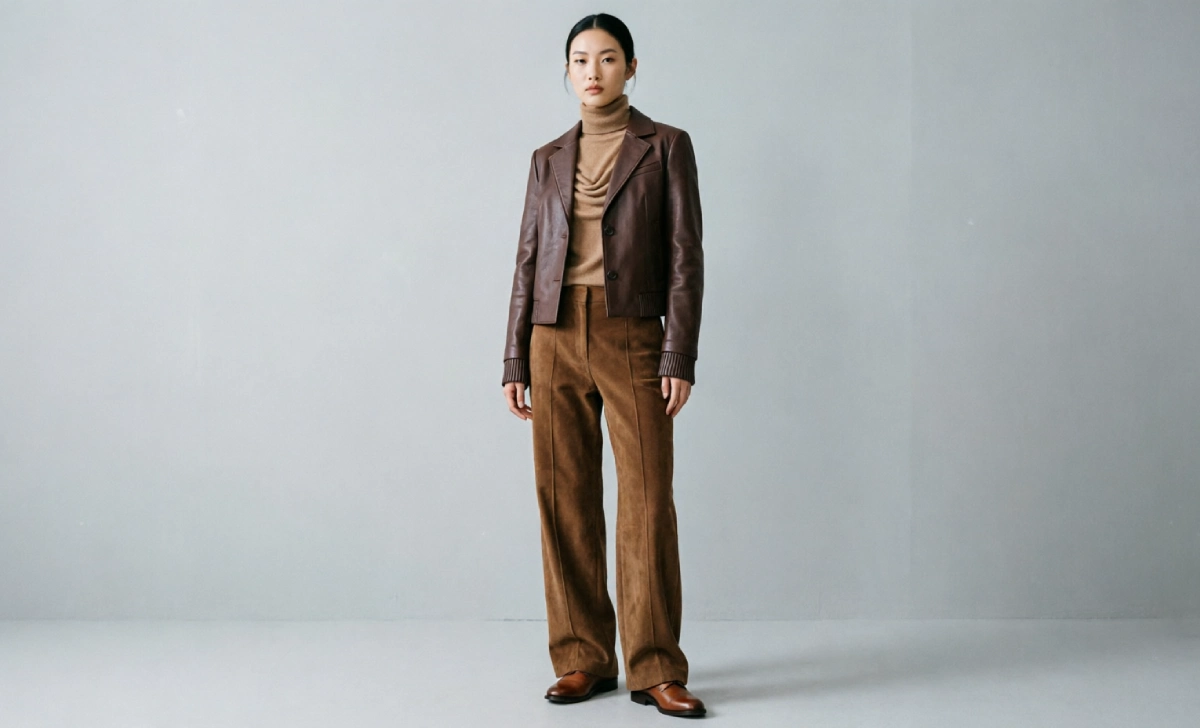
You pair a chocolate sweater with camel trousers, look in the mirror, and something feels off. It’s not a bad idea; a brown on brown outfit just needs one or two rules to separate a styled look from a flat one.
Brown-on-brown dressing has a reputation for being tricky. People assume it needs an exact color match, or that it will read as one boring block. Even figuring out basic brown pants pairing rules can feel confusing at first. Neither assumption is true. Once you understand shade depth and texture, brown on brown becomes one of the easiest looks to repeat, and one of the hardest to get wrong.
This guide covers the shade rules, the texture trick that makes the biggest visual difference, five outfit formulas you can copy, and the mistakes that make brown-on-brown outfits look accidental instead of intentional.
Why Brown-on-Brown Works So Well
A single-color outfit reads as one long line from head to toe. That column effect makes you look taller and leaner without changing anything about your actual body shape.
It also removes a common source of decision fatigue. You’re not hunting for a “matching” color every morning. You’re layering depth and texture within a color family you already own.
The look is sometimes called quiet luxury, because it doesn’t shout, but it does take real skill to execute well. That’s also why it’s forgiving once you learn the underlying rules; you’re not chasing a trend, you’re applying a system.
Understanding the Brown Palette: Light, Mid, and Deep Tones
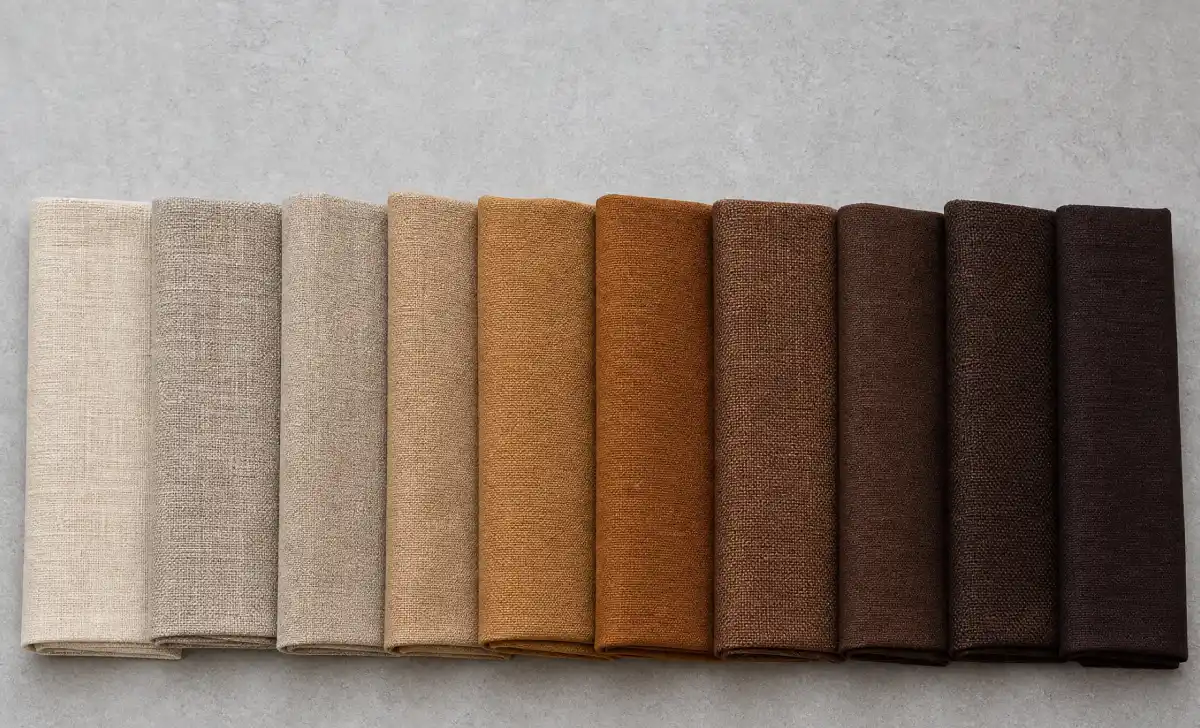
Treat brown as a scale, not one color. Where you land on that scale changes what a piece can do in your outfit.
Light tones — beige, taupe, sand — work best as a base layer: a linen shirt, light trousers, or an underlayer piece.
Mid-tones — camel, caramel — are the most flexible. They bridge light and dark pieces and usually work as the “connector” in an outfit.
Deep tones — chocolate, espresso, cognac — anchor the look. They carry the most visual weight, so they usually work best in outer layers like a coat, blazer, or boots.
The rule that ties this together is contrast ratio. Pair a light top with a deep bottom, or the reverse. That gap in depth is what makes an outfit read as styled rather than thrown together.
Undertone matters too. Warm browns lean orange or red. Cool browns lean grey or taupe. Mixing a warm-toned piece with a cool-toned one in the same outfit is usually what makes a brown-on-brown look feel slightly wrong, even if the shades are technically similar. Knowing which colors complement your undertone works best also helps once you start adding accessories or a second neutral into the mix.
The Texture Rule That Changes Everything
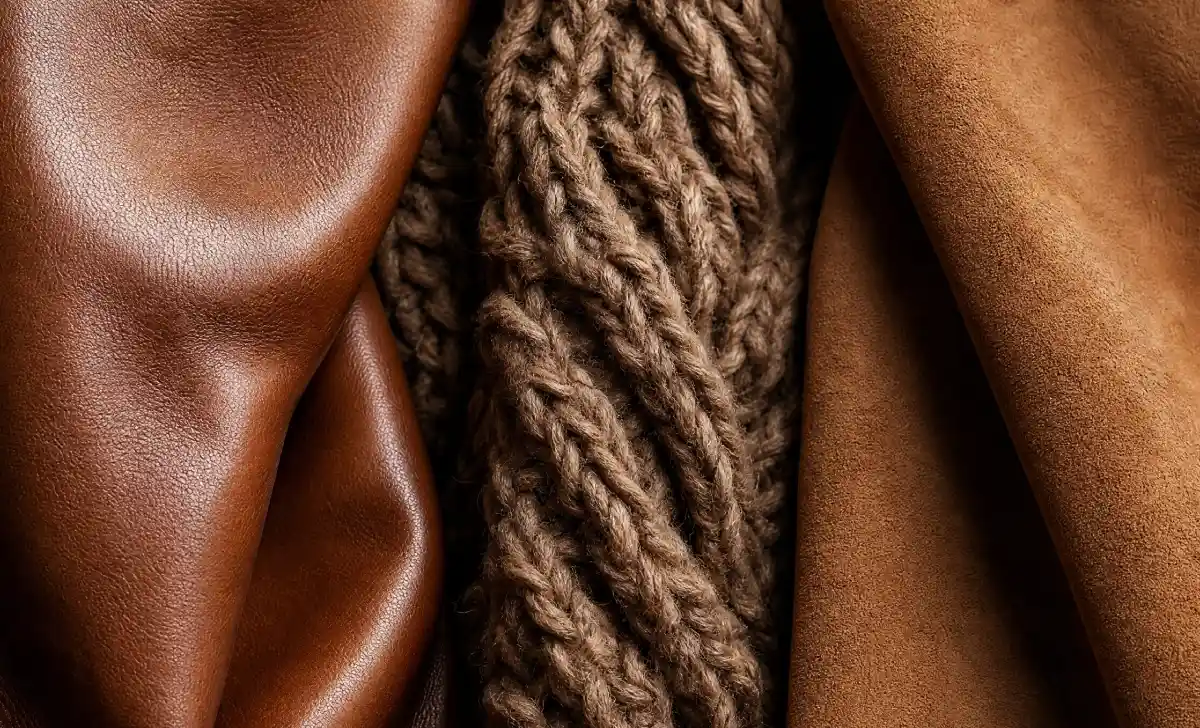
When color contrast is low, texture becomes your main tool. This is the single biggest lever for making a brown-on-brown outfit look expensive instead of flat.
A few combinations that consistently work:
- Leather + chunky knit — the shine of leather against a soft, textured knit creates depth even in the same shade.
- Suede + silk — matte grip against fluid drape gives the eye somewhere to travel.
- Crisp cotton + brushed wool — one structured, one soft, and the contrast stops the outfit from reading as a flat surface.
You don’t need five fabrics in one outfit. Two, occasionally three, is enough to make the whole look feel considered.
Styling Brown-on-Brown by Season
Brown isn’t just a fall color. Adjust fabric weight and shade depth, and it works year-round.
| Season | Shade Direction | Fabric Weight | Example |
|---|---|---|---|
| Summer | Light (sand, beige, tan) | Lightweight | Linen shirt + cotton trousers |
| Winter | Deep (chocolate, espresso) | Heavy | Wool coat + cashmere sweater + leather boots |
| Spring/Fall | Mid (camel, caramel, khaki) | Medium | Twill jacket + caramel sweater |
Once brown stops being an “autumn color” in your head, it opens up a lot more of your closet for regular use.
Five Brown-on-Brown Outfit Formulas to Copy
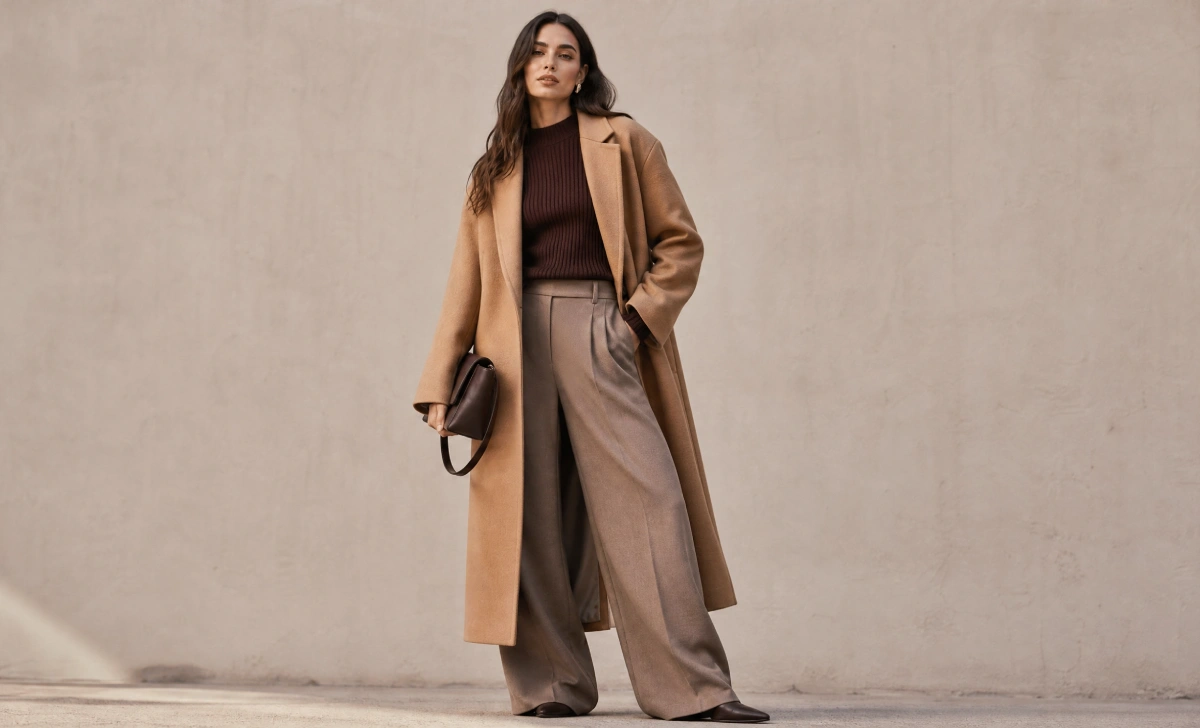
- The gradient layer — camel coat over a chocolate knit, taupe trousers underneath. Light to dark, top to bottom.
- The tonal suit — a brown linen suit broken up with a plain white T-shirt, so it doesn’t read as overly formal.
- The casual mix — caramel suede jacket, brown graphic tee, chocolate-wash jeans.
- The office formula — chocolate blazer, beige blouse, tailored camel trousers. Polished without looking stiff.
- The texture-forward look — cognac leather jacket, cream-brown knit, wide-leg taupe pants, suede ankle boots.
Every formula follows the same logic: vary the shade depth first, then vary the texture. That’s the whole system.
Common Mistakes That Make Brown-on-Brown Look Accidental
- Mixing warm and cool undertones without a plan. A cognac bag with a taupe coat can clash even though both are “brown.”
- Skipping the contrast ratio. Two mid-tone pieces next to each other with no light or deep anchor tend to look flat.
- Overloading on the same texture. All-suede or all-knit removes the depth that makes the look work.
- Ignoring proportion. A boxy deep-brown coat over an equally loose sweater can add bulk. Balance a loose piece with a fitted one.
What Accessories and Shoes Complete the Look
Metal finishes aren’t neutral. Gold hardware suits warm browns like caramel and cognac. Silver suits cooler tones like taupe and grey-brown.
Keep leather goods in the same shade family, but vary the finish. A matte belt with a slightly glossy bag still feels cohesive while adding texture.
Shoes can either extend the tonal effect or act as a deliberate break. A dark brown boot keeps things monochrome. A black or cream shoe becomes an intentional accent if you want a sharper, modern edge.
Keep jewelry minimal. One or two pieces is enough, since the outfit is already doing the visual work.
If you’re new to this, keep your bag and belt in the same shade as your deepest garment. That gives you one fixed anchor point while you experiment with contrast elsewhere.
Frequently Asked Questions
Can you wear black and brown together?
Yes. Used sparingly, like a belt or a bag, black acts as a clean break rather than a clash. If you want the full rules on this, a dedicated black and brown outfit guide covers proportion and placement in more depth.
What’s the difference between tonal and monochromatic dressing?
Monochromatic means one exact color throughout. Tonal means variation in shade depth within the same color family, which is what most brown-on-brown outfits actually are.
How do I choose the right brown for my skin tone?
Match undertones. Warm skin tones generally suit caramel and cognac. Cooler skin tones generally suit taupe and espresso.
Does brown-on-brown work for formal settings?
Yes. A tailored chocolate blazer with camel trousers reads as sharp as a standard business-casual outfit, provided the fit is clean and the fabric looks polished, not casual.
Is an all-brown outfit slimming?
It can be. An unbroken column of color, especially in a deeper shade, draws the eye vertically and creates a longer line without any other change.
What makeup pairs well with a brown monochrome outfit?
Warm bronze eyeshadow, a soft brown lip, and a light bronzer usually complement the palette without competing with it.
Conclusion
You don’t need a full wardrobe overhaul to try this. Pick two shades and one texture pairing from the list above, wear it once, and adjust from there. If you’re still on the fence about the color itself, it’s worth knowing that brown looks attractive on far more skin tones and body types than people assume.
The system is simple: vary the depth, vary the texture, and keep undertones consistent. Once that clicks, brown stops being a “safe” color and becomes one of the most versatile ones in your closet.