
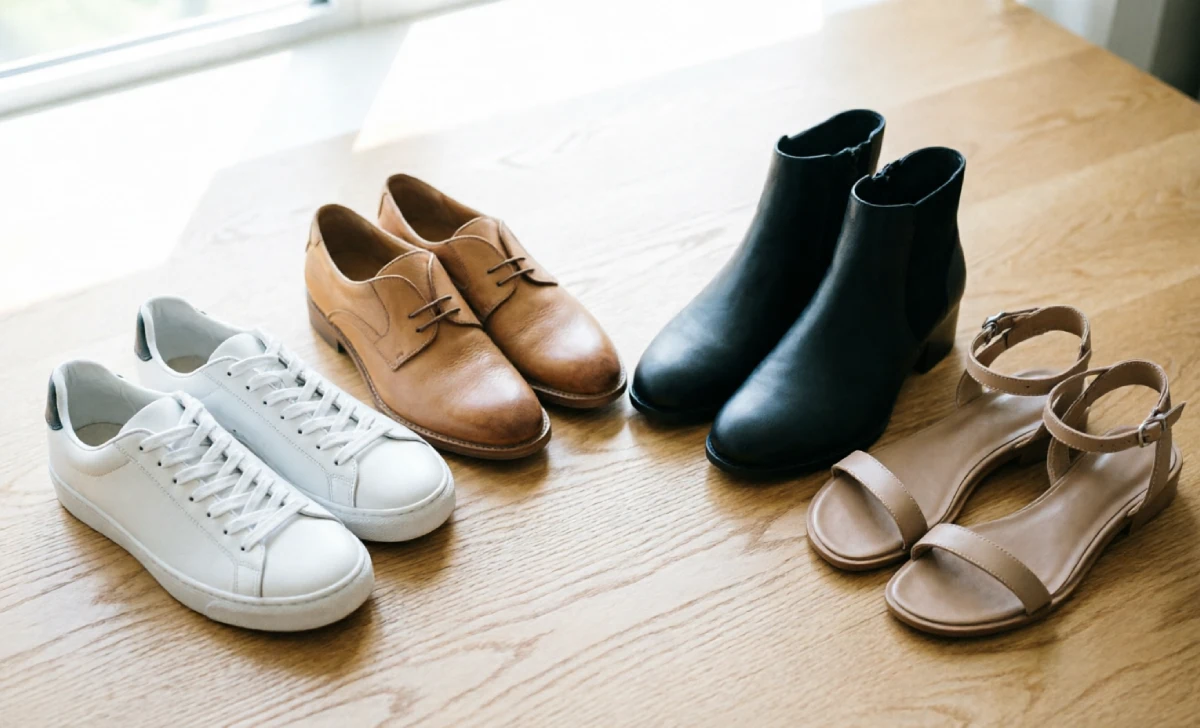
You stand in front of a closet full of clothes, yet you still feel like you have nothing to wear. That quiet frustration almost always comes down to your shoes, not your outfits, and knowing the right types of shoes for wardrobe building changes everything. As you start to explore your style, you’ll notice that the right pair of shoes can pull an entire look together in seconds.
By the end of this guide, you’ll know exactly which shoe types belong in your closet, how to pair them with jeans, trousers, and dresses, and how to build a small collection that works with almost everything you own.
Why Your Shoe Choices Make or Break Your Entire Wardrobe
Shoes are the quiet foundation of every outfit you wear. They set the mood, define how formal you look, and carry your personal style from head to toe. A tailored blazer can fall flat with scuffed sneakers, yet the same outfit looks intentional with a sleek leather loafer.
Think about your favorite jeans. Pair them with worn-out gym shoes, and you send a completely different message than if you slide into a sharp ankle boot. You don’t need a huge shoe collection to get this right. You just need a small edit of styles that speak the same visual language as the rest of your closet.
How Do You Identify the Shoes That Truly Complement Your Wardrobe?
The best shoe isn’t the trendiest one on the shelf. It’s the one that matches your actual daily life, your schedule, and the way you already dress. If your week is full of school runs, coffee shops, and casual meetings, a towering heel simply won’t earn its place.
Your existing color palette gives you another clue. Open your closet and notice which neutrals show up again and again, whether that’s black, navy, beige, or gray. Shoes within that same neutral family blend instantly with almost everything you own.
Body shape also plays a role in how a shoe looks on you. Learning what flatters your body type can help you choose heel heights, toe shapes, and boot lengths that feel balanced rather than random. Once you understand this, shopping becomes far less overwhelming.
The Absolute Essential Types of Shoes for Every Wardrobe
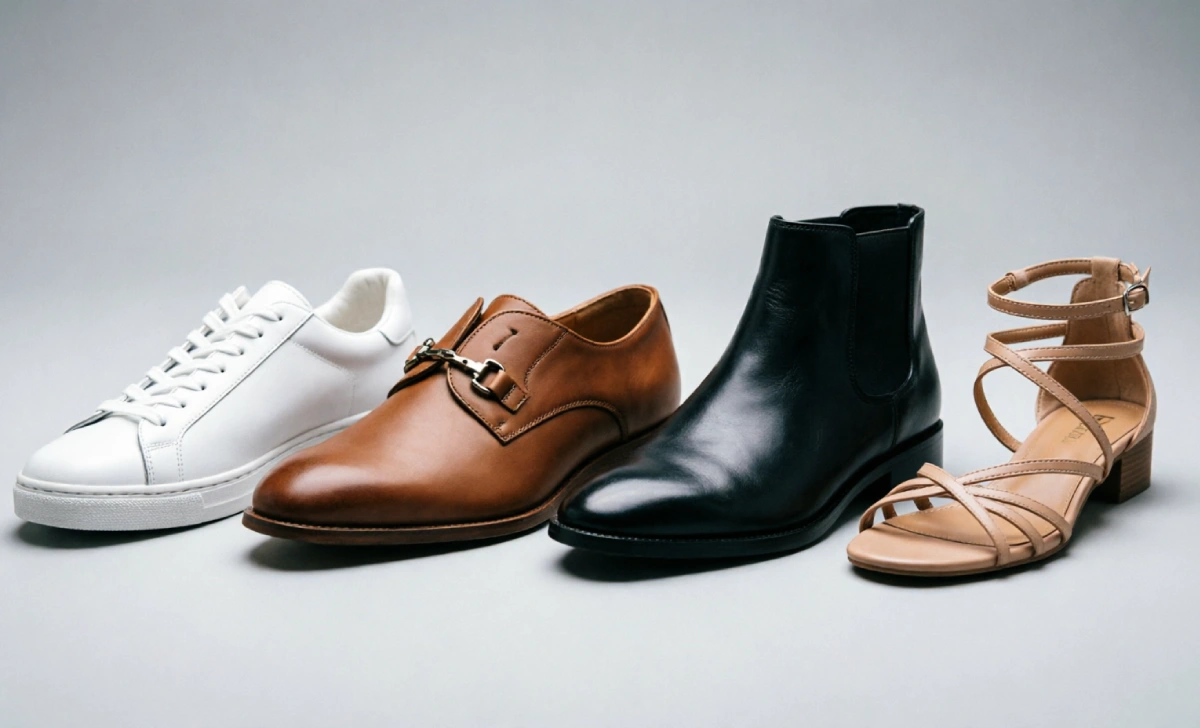
Fewer than ten shoe styles can cover nearly every occasion your week throws at you. A clean white leather sneaker sits at the top of the list. A simple silhouette like the Adidas Stan Smith bridges casual and smart with ease, working with sundresses, dark denim, and relaxed trousers alike.
A refined loafer is the next quiet workhorse. Brands like Cole Haan build loafers that feel broken in from the first wear, while a horsebit detail can instantly dress up a plain outfit. Pair loafers with chinos or a blazer for a look that feels put-together without trying too hard.
An ankle boot with a low block heel fills the gap between casual and dressy. A Chelsea-style boot adds structure to floaty skirts and makes skinny jeans look intentional. For lighter days, a pointed flat or modest kitten heel offers the same dressed-up feeling with far more comfort.
When warm weather arrives, a timeless sandal becomes essential. A contoured footbed style is the casual choice many people already own, while a strappy flat sandal in tan or black carries you through summer dresses and shorts. Finally, a sharp oxford or derby handles the moments that call for real formality, from suits to ceremonies.
How Can You Build a Capsule Shoe Wardrobe from Scratch?
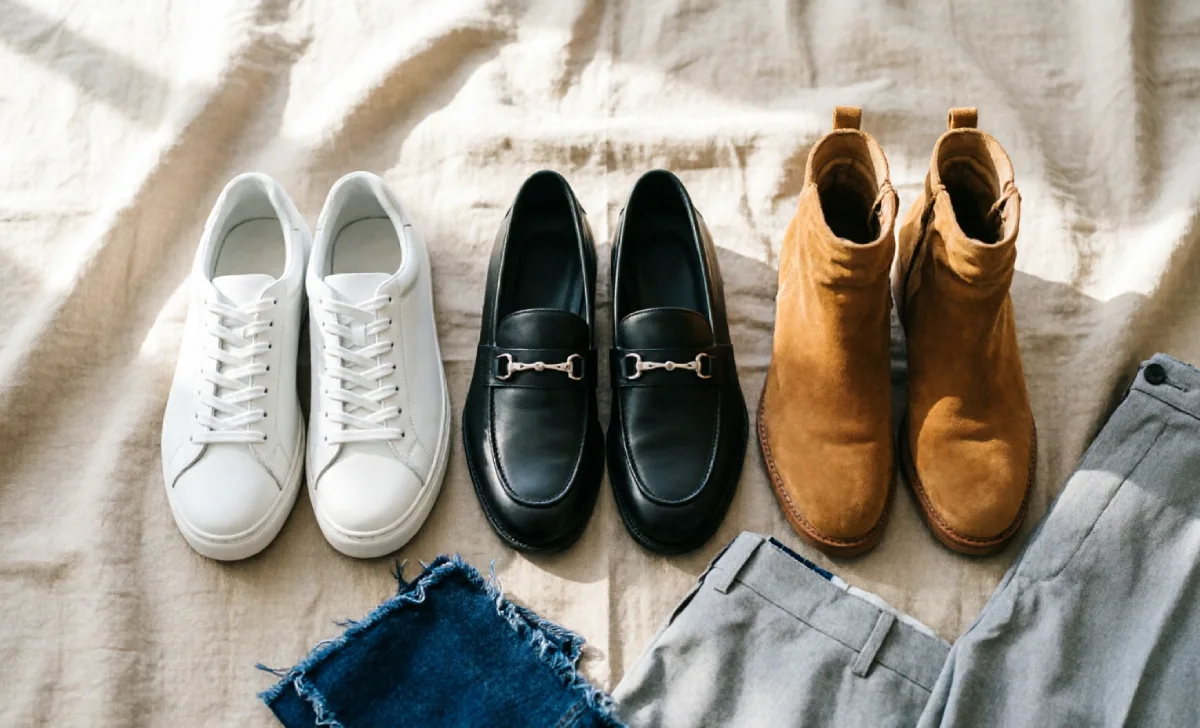
Starting from zero can feel overwhelming, but a capsule approach keeps it simple. You begin with one neutral, high-mileage shoe, usually a white sneaker or a simple flat. That single pair will likely work with most of your casual outfits right away.
Next, add a dressier partner like a loafer or a low-heel boot in black, tan, or bone. This second pair instantly opens up smarter looks for work and evenings out. A third pair, whether a sandal or a weather-ready boot, rounds things out depending on your climate and lifestyle.
With just three intentional pairs, your outfit options multiply without adding clutter. The cost per wear on each shoe drops fast once you actually use them often, which is the whole point of a capsule wardrobe.
What Shoes Should You Pair with Jeans, Trousers, and Dresses?
The silhouette of your bottoms decides the shoe. Slim and straight-leg jeans pair beautifully with sleek ankle boots or pointed flats that keep the leg line long. A cropped wide-leg jean calls for a shoe with more presence, like a chunky loafer or a platform sandal.
Trousers follow the same logic. Tailored trousers with a tapered leg love a refined loafer or a minimal sneaker, while a floor-grazing wide-leg pant pairs well with an elongated toe or a low block heel peeking out just enough.
Dresses thrive on contrast. A floaty midi dress feels fresh with clean white sneakers, and instantly more dressed up with a heeled sandal or a slim ankle boot. Try what you already own before buying anything new.
Which Shoe Colors Go with Everything and When to Add a Pop?
Neutral shoe shades like bone, tan, warm taupe, and soft black act as a bridge between different clothing pieces. They recede just enough to let the rest of your outfit shine while still tying everything together visually.
Adding a pop of color works best when the rest of your outfit stays simple. A single pair in cobalt blue or cherry red can turn a plain look into something memorable, as long as you let that one shoe be the star of the outfit.
How Do You Match Shoes to Different Dress Codes?
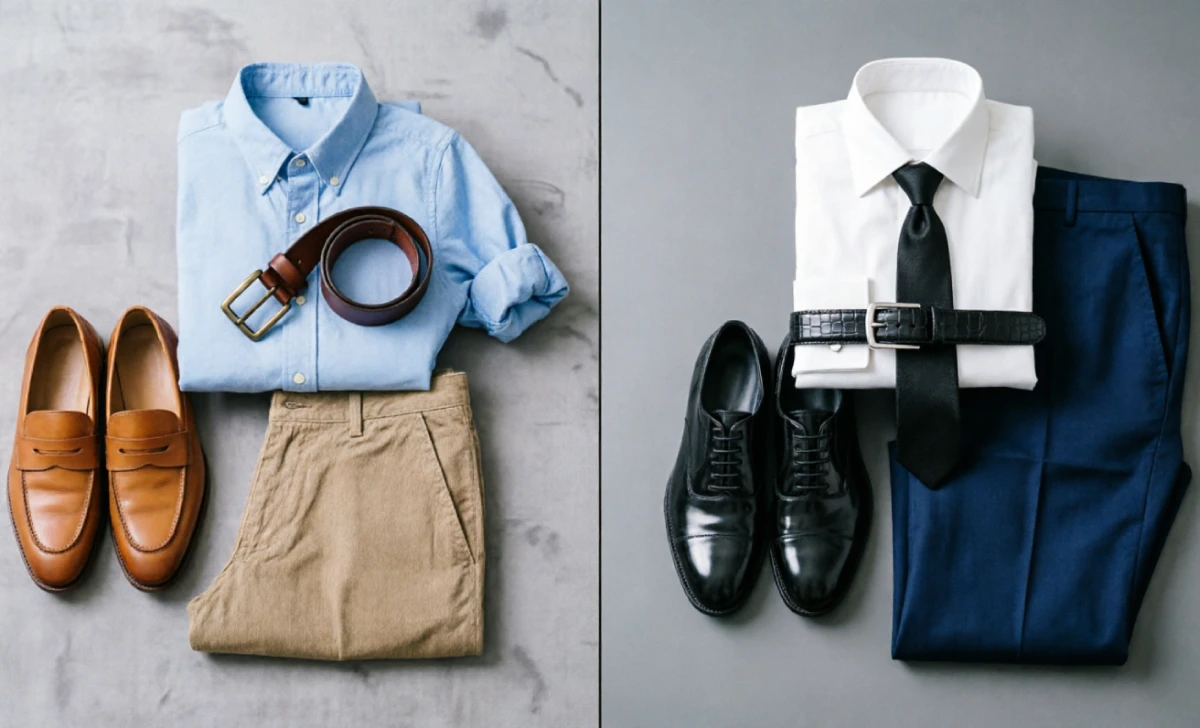
Dress codes can feel like a foreign language, but your shoes translate them instantly. For a business casual office, a polished loafer or a sleek leather sneaker usually hits the mark. Avoid anything too athletic and lean into clean lines instead.
When the invitation says formal, the rules narrow fast. A black oxford or a classic court shoe is your safest, most elegant choice. Open-toe styles rarely belong in formal business settings, so save them for smart casual or weekend plans instead.
Shoe Care and Rotation Best Practices for Long-Lasting Style
A little care makes even budget-friendly shoes look far more expensive than they are. Letting leather rest for a day between wears helps it release moisture, and slipping in a cedar shoe tree keeps the shape intact while absorbing odor.
Surface care doesn’t need to be complicated either. A quick brush for suede and a damp cloth for smooth leather keep your shoes looking intentional rather than tired. Rotating your shoes regularly also keeps your feet more comfortable over time.
What Common Shoe Mistakes Should You Avoid When Building Your Wardrobe?
The first mistake is buying shoes for a fantasy life, like a formal heel for a gala that never happens. If a shoe doesn’t match your actual calendar, it doesn’t belong in your core rotation, no matter how good it looks in the store.
The second mistake is sacrificing fit for a good sale price. A shoe that’s slightly too small will sit in your closet while you keep reaching for the comfortable pair instead. Shopping with your real life and real size in mind saves you money in the long run.
Frequently Asked Questions About Types of Shoes for Your Wardrobe
How many pairs of shoes does the average person really need?
Most people do well with five to eight pairs total. This usually includes a casual sneaker, a dressier flat or loafer, an ankle boot, a sandal, and one formal shoe for special occasions.
Can I wear sneakers to a business casual office?
Yes, as long as the sneaker is clean, minimal, and made from leather rather than mesh. Avoid chunky athletic trainers or anything with bright logos, since these lean too casual for most offices.
What’s the best first investment shoe for a young professional?
A quality black loafer or oxford is the smartest starting point for most workplaces. Once your basics are covered, you can experiment with a bold statement shoe for evenings and weekends without risking your everyday wardrobe.
How do I transition my shoe wardrobe from summer to fall without buying everything new?
Swap open sandals for closed-toe flats and start pairing ankle boots with your summer dresses using sheer tights. If you enjoy putting together smart casual outfits, richer leather tones like burgundy work well for the cooler months ahead.
Conclusion
A wardrobe that works starts from the ground up, and the right shoes make every outfit feel complete. You don’t need a closet full of options, just a small collection of versatile styles that fit your real life and color palette. Start with the pair you already own that works with everything, notice the gaps, and fill them in one intentional pair at a time.