
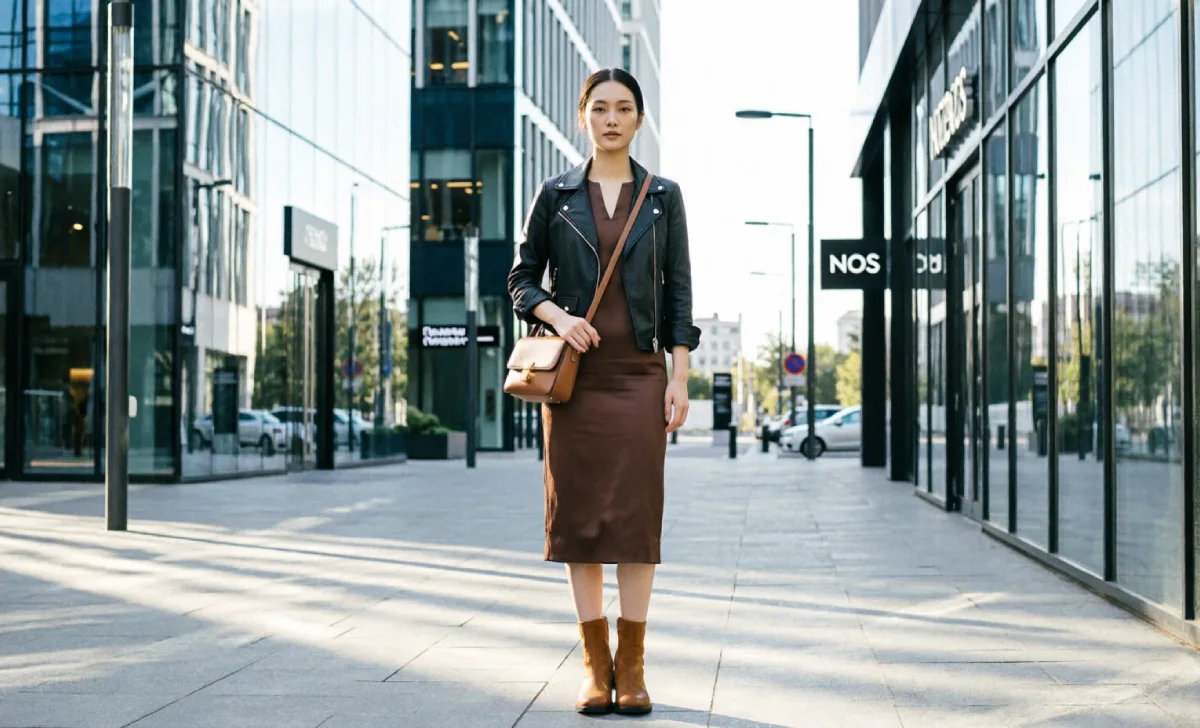
You’ve probably heard the old rule whispered in dressing rooms: never wear black and brown together. It creeps into your mind every time you reach for a chocolate sweater and hesitate before grabbing black trousers. That warning was never really about color harmony, and building a modern black and brown outfit today fits neatly into a fashion movement that keeps rewriting outdated rules.
This decree came from rigid formal menswear codes more than a century ago. It had nothing to do with beauty and everything to do with drawing a line between city and country attire. The rule simply stuck around, passed down without much questioning.
Once you know which colors go with brown, the black pairing stops feeling like a separate mystery and starts feeling like one piece of the same puzzle.
You’ll walk away knowing why the restriction no longer applies, which brown shades pair best with black, and why texture makes the whole combination click. Let’s start with where this so-called fashion crime actually came from.
Why Did People Ever Say Not to Wear Black and Brown Together?
The rule feels so absolute that it seems like it must have a solid foundation. Look closer, though, and the reasoning falls apart fast.
Nineteenth-century menswear was tied tightly to class identity. Black suits and shoes belonged to formal city business, while brown leather and earth tones marked casual country life. Mixing the two broke a social code, not a color rule.
Fashion magazines repeated the advice for decades until it hardened into an unquestioned belief. Many people absorbed it secondhand, long after the original reasoning had gone stale.
Designers eventually broke the rule on purpose, pairing chocolate leather coats with black silk on the runway. What once read as ignorance became a mark of confidence.
Is the No Black and Brown Rule Still Relevant?
No. Street style has been proving it wrong for years, and mixing these neutrals reads as sophistication today, not a mistake.
Major fashion houses build entire collections around black and deep brown, treating the two as partners rather than rivals. You’ll spot the same pairing on stylish people everywhere, worn with total confidence.
What matters now isn’t whether you combine the colors, but how. A few principles about shade and texture turn the combination from a risky guess into a deliberate choice.
So drop the guilt. A rule this outdated shouldn’t still be shrinking your wardrobe.
Which Shades of Brown Look Best with Black?
Almost any brown pairs with black, but certain tones work instantly. Knowing warm from cool browns turns hesitation into confidence.
Warm browns — caramel, tan, camel, cognac — create soft contrast against black’s depth and brighten a dark outfit. A camel coat over an all-black base feels polished rather than heavy, making this the easiest starting point.
Cool browns like espresso and dark chocolate sit closer to black, producing a moodier effect. Because two dark colors side by side can look flat, fabric choice matters more here; the brown needs to read clearly as brown.
One rule covers most situations: lighter warm brown for daytime, deep cool brown for evening. Mixing both temperatures in one outfit — say, chocolate trousers with a tan bag — actually shows a more advanced eye.
What Is the Secret to Making Black and Brown Look Intentional?
Texture. That’s the whole answer. Skip it, and the pairing looks accidental; prioritize it, and the same colors suddenly feel deliberate.
Black leather has a subtle sheen; brown suede is soft and matte. Your brain registers that surface difference before it even processes color, which is why leather-and-cashmere reads as a considered choice rather than a coincidence.
Try a chunky black knit with a silky brown skirt, or black denim against a brown suede bag. If both pieces are dark and smooth — a wool blazer and polyester trousers — the outfit can go flat, so a textured belt or suede shoes fix it instantly.
Treat texture like a volume knob: turn it up with patent leather against fuzzy mohair, or keep it quiet with soft cotton and fine linen.
The Modern Rules for Mixing Black and Brown Flawlessly
Three principles cover nearly every scenario. Learn them once, and formulas stop mattering.
First, proportion. Split black and brown roughly evenly — a brown blazer over a black dress, or black trousers with a brown knit — so neither color dominates by accident. This same balance principle carries over into a brown-on-brown outfit too — once you’re comfortable weighing shades against each other, mixing multiple browns without black feels just as natural.
Second, the bridge color. A third neutral like cream, ivory, or olive softens the transition between two darker tones; a cream shirt peeking out under a black sweater resolves the whole composition.
Third, fit. Even great color choices look careless in ill-fitting clothes, while a good fit makes any pairing feel purposeful.
Common Mistakes to Avoid When Wearing Black and Brown
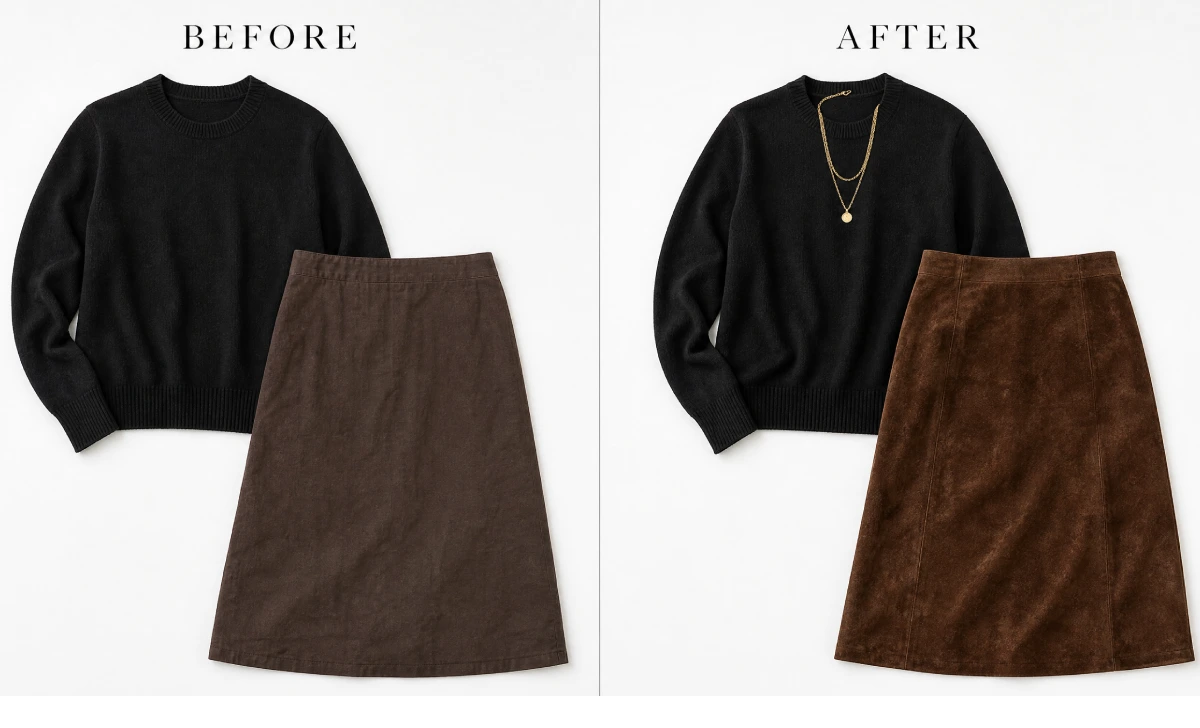
Pairing two matte, flat-finish pieces is the most common misstep — a matte black sweater with a matte brown skirt can read muddy instead of intentional. Add one piece with sheen or texture to fix it.
Mismatched undertones trip people up too. A brown with an orange undertone next to a cool, blue-based black can clash instead of complement, so hold the two fabrics side by side in daylight before committing.
Over-accessorizing is the third trap. Once you’ve balanced black and brown in your clothing, one or two accessories are enough — a third competing neutral (navy, grey, or a bold color) can pull the whole look apart.
How Can You Style a Black and Brown Outfit for a Casual Day?
Start with black straight-leg jeans as your base — they accept nearly any brown you add. A caramel or rust knit sweater instantly lifts the denim’s darkness.
On your feet, tan suede sneakers or chocolate loafers add intentional contrast. Finish with a brown leather crossbody bag for a look that works for coffee runs or weekend errands without effort.
What Are the Best Black and Brown Outfit Ideas for the Office?
A well-cut black blazer anchors the look. Underneath, a chocolate blouse or fine merino turtleneck adds rich contrast, while tan tailored trousers keep the outfit from feeling heavy — a combination that echoes the quiet luxury movement favoring timeless pieces over trends.
Match your belt to your shoes for a coordinated finish; dark brown oxfords next to black trousers read as intentional, not mismatched. A structured black tote seals the professional, confident effect.
Can You Wear Black and Brown on a Date Night or Evening Event?
Deeper browns against black create a richness that beats plain black alone. Picture a black satin camisole tucked into chocolate leather trousers: glossy fabric catches light, matte leather absorbs it, and the contrast feels glamorous.
A black velvet blazer over a dark brown silk slip dress works the same magic. Finish with black strappy heels or dark brown suede pumps, plus a small clutch with tortoiseshell hardware for a natural accent.
Styling Black and Brown for Men
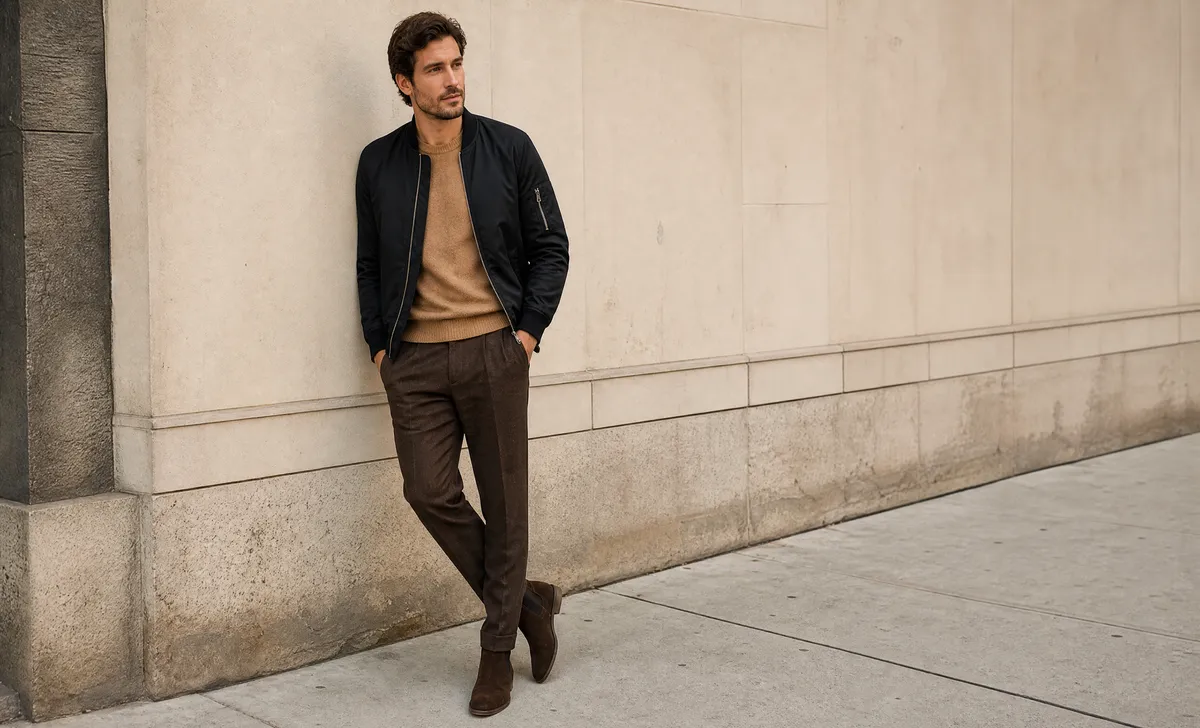
The same shade and texture rules apply, just tailored to menswear staples. A charcoal-black suit with brown leather shoes and a matching belt is the safest entry point — one dominant color, one grounding accent.
For casual wear, a black bomber jacket over a camel or rust crewneck works the same way a coat does in womenswear: brown lifts the black instead of competing with it. Brown suede boots or derbies finish it without needing a third color.
Knitwear is the easiest place to experiment — a chocolate cardigan over a black tee, or a black roll-neck under a camel overcoat, both lean on the same warm-brown-lightens-black principle covered earlier.
Building a Seasonal Black and Brown Wardrobe All Year Round
The palette doesn’t change with the seasons — only the fabric weight and brown depth do. In spring and summer, lighter linens and sandy browns keep things breezy; swap leather for woven straw bags and open-toe sandals.
Winter calls for richer textures: black wool coats over dark brown cashmere, or chocolate corduroy with black leather boots. A burgundy or olive scarf adds a seasonal accent without stealing focus from the base palette.
What Accessories Perfectly Tie a Black and Brown Look Together?
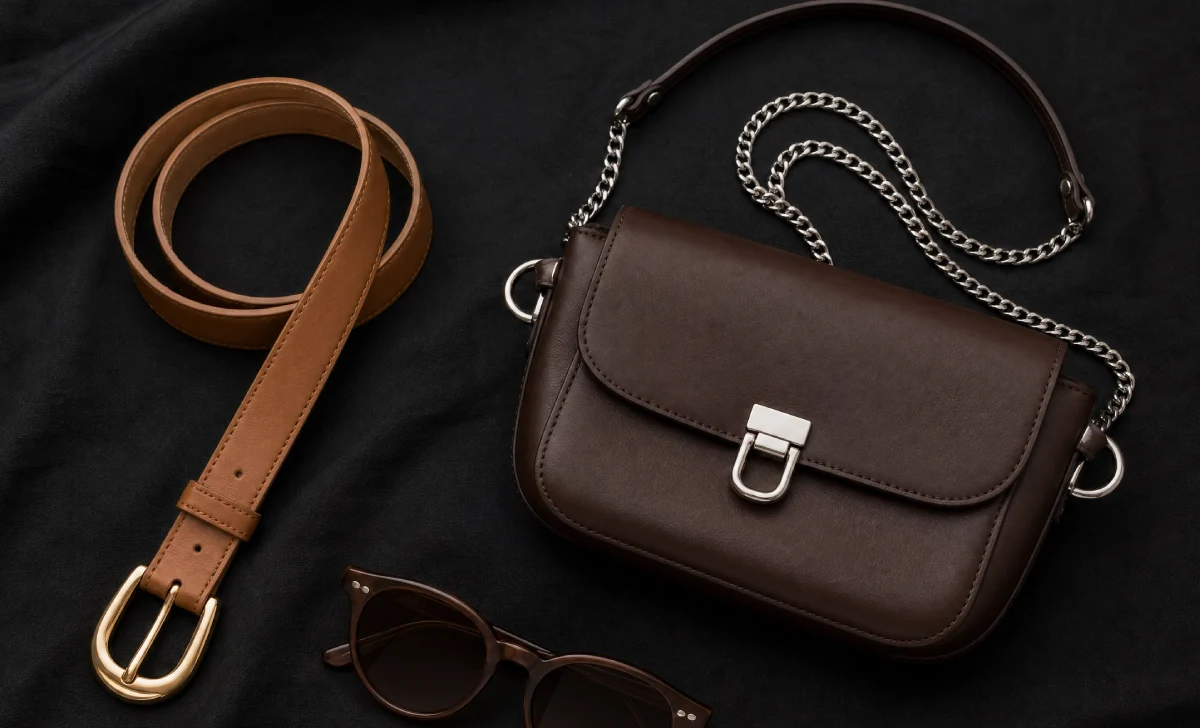
A brown leather belt with black trousers is the simplest starting point, especially when it matches your shoes so the eye travels smoothly through the outfit. The same instinct you’d use to accessorize a brown piece on its own applies here — repeat one tone through your belt, bag, and shoes and the rest falls into place.
Bags do heavier lifting: a tan shoulder bag against a black coat draws the eye and frames your silhouette. Even brown-rimmed sunglasses or a felt hat can bridge the two tones without changing your wardrobe.
Metal tones matter more than people expect. Gold hardware — on a belt buckle, watch, or jewelry — warms up a black-and-brown outfit and pairs naturally with warm browns like camel and cognac. Silver or gunmetal hardware cools the look down and sits better with espresso or near-black browns, so matching your metals to your brown’s undertone keeps the whole outfit consistent.
Black and Brown Outfit Formulas You Can Copy Right Now
The Weekend Walk: black relaxed jeans, a tan crewneck, chocolate suede boots, and a brown leather backpack — built from items you already own.
The Creative Office: black tailored trousers, a camel turtleneck, a black leather belt, and loafers with a subtle brown sole detail.
The Evening Edit: a black silk midi skirt, dark brown cashmere top, black heeled sandals, and a tortoiseshell clutch for the final textural note.
FAQs
Can I wear black shoes with a brown outfit?
Yes — just repeat a touch of black elsewhere in your accessories to balance the shoe.
Does the black and brown rule apply to formal suits?
That world has relaxed too. A dark brown suit with black shoes works for creative or evening settings.
Is a black belt with brown trousers still a mistake?
No, especially as a deliberate textural choice, though a matching brown belt remains the safer office pick.
How can I add a third color without chaos?
Keep it to a small dose — a scarf or bag in cream, ivory, or burgundy — so it extends the palette instead of interrupting it.
Does gold or silver jewelry work better with black and brown?
Gold generally suits warm browns like camel and cognac, while silver pairs more naturally with cooler, near-black browns like espresso. It’s the same logic behind whether brown is attractive as a standalone color — the metal you choose often decides how warm or cool the whole outfit reads.
Conclusion
Wearing black and brown together was never the mistake you were told it was. Shade sense and texture awareness are all you need to make the pairing look deliberate. Pull that neglected brown piece from your closet and pair it with your favorite black staple today — this isn’t rule-breaking, it’s informed style.