
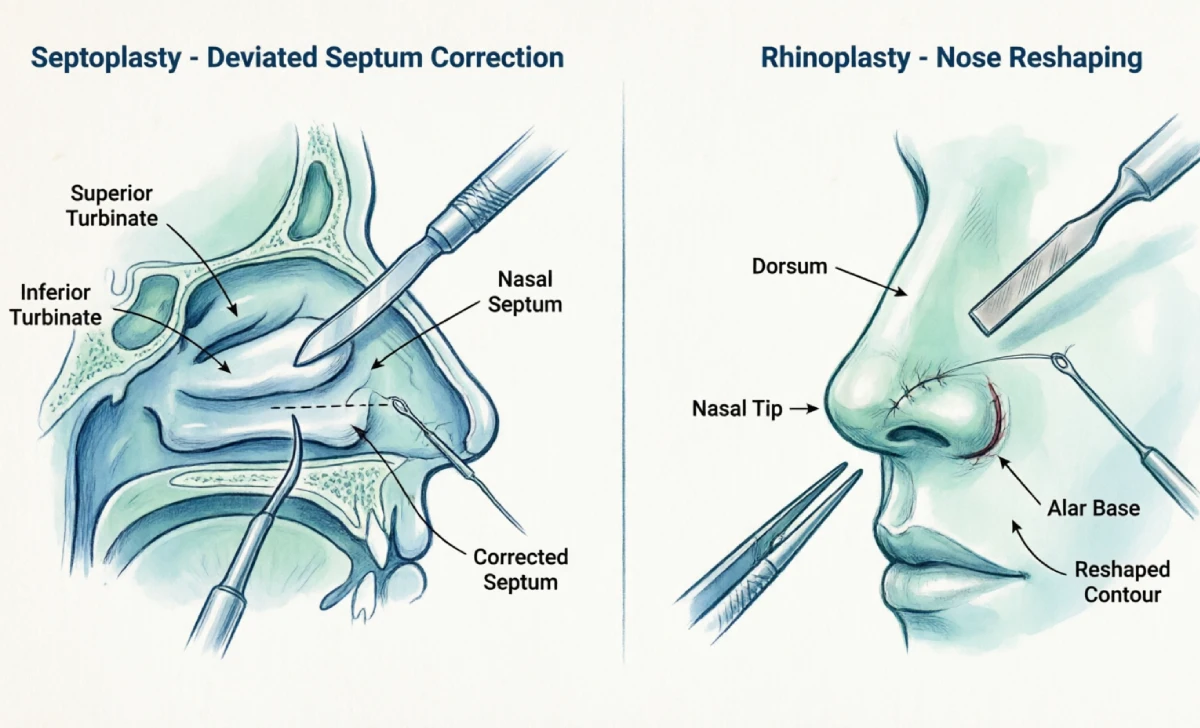
If you’ve been told you might need nose surgery but the terms feel confusing, you’re not alone. Understanding septoplasty vs rhinoplasty is the first step — maybe you struggle to breathe at night, or you’ve never loved how your nose looks, and now a doctor mentioned both in the same sentence. This guide walks you through what each surgery does, how recovery compares, what insurance covers, and how to decide — so you can breathe better and look younger with confidence.
What Exactly Is Septoplasty?
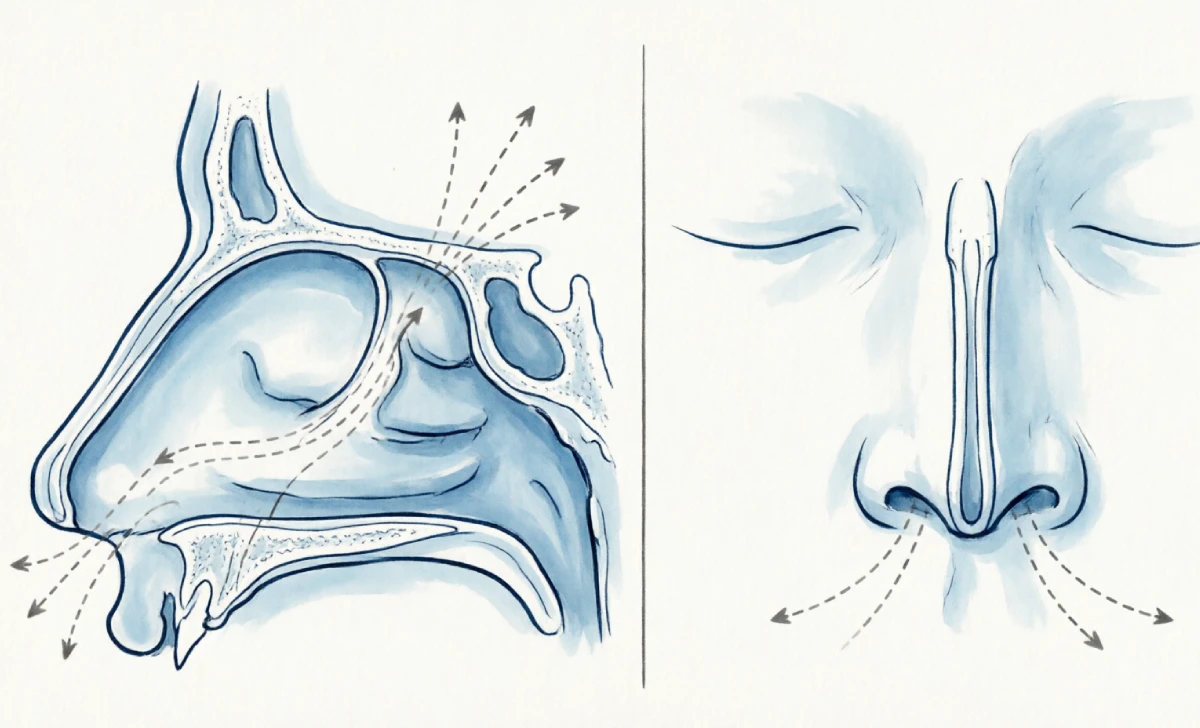
You might not think much about the wall inside your nose — until it causes problems. That wall is called the nasal septum, and when it’s deviated, meaning shifted to one side, air struggles to flow freely. Septoplasty is the surgery that straightens that wall so you can breathe more easily.
The entire procedure happens inside your nostrils. There are no cuts on the outside of your nose, so you won’t have visible scars. Your surgeon carefully lifts the tissue lining, reshapes the bent cartilage and bone, and puts everything back in a straighter position.
Septoplasty has one clear goal: function. It is not designed to change how your nose looks from the outside. People who need this surgery usually deal with constant stuffiness, loud snoring, or poor sleep because air simply cannot get through.
What Is Rhinoplasty (a Nose Job)?
Rhinoplasty is the surgery most people picture when they hear the words “nose job.” It focuses on reshaping the outside of your nose to bring it into better balance with your face. Whether your nose has a bump on the bridge, feels too wide, or has a drooping tip, rhinoplasty can address those concerns.
But rhinoplasty isn’t only about appearance. Surgeons can also reinforce weak cartilage inside the nose to keep your airway open during breathing. This version is called functional rhinoplasty, and it sits at the crossover between cosmetic work and medical necessity.
The procedure works with the bone and cartilage that shape your nose. Depending on your needs, your surgeon may make a small incision between your nostrils or work entirely from inside. Either way, expect some visible swelling and bruising during recovery — something most septoplasty patients don’t experience.
Septoplasty vs Rhinoplasty: What’s the Real Difference?
Here is the simplest way to keep these two surgeries straight. Septoplasty fixes how you breathe. Rhinoplasty changes how your nose looks. If your main complaint is blocked airflow, the problem is almost certainly internal — that’s septoplasty territory. If you look in the mirror and wish something were different about your nose’s shape, you’re thinking rhinoplasty.
Septoplasty is almost always treated as a medical necessity when a deviated septum blocks your airway. That’s why insurance often covers it. Rhinoplasty is typically seen as a cosmetic choice, meaning you’ll usually pay out of pocket unless a clear functional breathing issue is also being corrected.
Another key difference shows on the surface. Septoplasty leaves your external appearance unchanged in any meaningful way. Rhinoplasty is built to alter how your nose looks — sometimes dramatically. One surgery provides invisible internal relief; the other delivers visible external refinement.
Can Septoplasty and Rhinoplasty Be Done Together?
If you’re wondering whether you can fix a deviated septum and improve the look of your nose at the same time, the answer is yes. The combined procedure is called septorhinoplasty, and it is surprisingly common.
You might be a good candidate if you struggle with both chronic stuffiness and self-consciousness about your nose’s shape. Rather than going through two separate recoveries, you handle everything at once. Your surgeon addresses the internal structure to improve airflow, then makes the cosmetic changes you want.
Don’t assume combining the procedures means insurance covers the whole bill. Typically, only the septoplasty portion qualifies for coverage. The cosmetic part remains your financial responsibility. From a practical standpoint, recovering once is often far easier than recovering twice.
How Recovery Compares Between the Two Surgeries
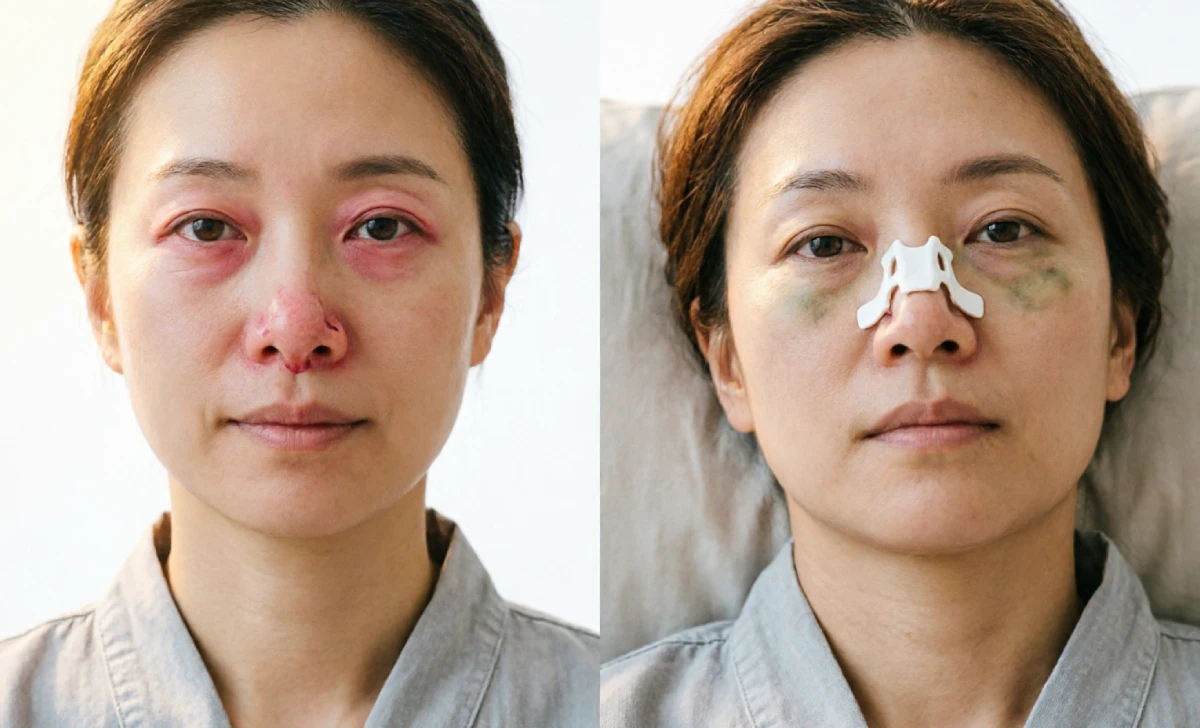
Recovery is where you’ll feel the biggest personal difference between these procedures. With septoplasty, most of your discomfort is internal. You may have soft splints or packing inside your nose for a few days, which temporarily makes nasal breathing impossible.
You’ll likely feel some dull sinus pressure and tire easily in the first week. What you usually won’t see is significant facial bruising. Because the work happens entirely inside the nose, your face tends to stay bruise-free. Most people return to desk work within about a week, and the healing stages follow a predictable and manageable timeline.
Rhinoplasty recovery looks quite different. Swelling and bruising around your eyes and cheeks are normal in the first week. You’ll wear an external splint that protects the new shape of your nose. The acute recovery also runs one to two weeks, but subtle swelling can linger for months before your final result fully appears.
Does Insurance Cover Septoplasty or Rhinoplasty?
Insurance coverage is one of the most stressful parts of this decision. If you have a documented deviated septum causing significant breathing problems, septoplasty is often covered. Your insurer will typically want proof — such as a CT scan and a record of failed non-surgical treatments — before approving the procedure.
Purely cosmetic rhinoplasty is rarely covered. However, if your surgeon shows that part of the reshaping is medically necessary to open a collapsed airway, that functional portion might qualify. The American Academy of Otolaryngology provides widely used guidelines on medical necessity that many insurers follow when reviewing claims.
Your surgeon’s office will usually manage the pre-authorization paperwork, but always ask upfront what your specific plan requires. Never assume coverage is approved until you have it in writing.
How Much Does Septoplasty Cost vs Rhinoplasty?
Costs vary based on your location, surgeon experience, and procedure complexity. With insurance, your septoplasty may cost only a deductible and co-pay — anywhere from a few hundred to a couple of thousand dollars. Without coverage, septoplasty typically ranges from about $5,000 to $10,000.
Rhinoplasty, being primarily cosmetic, usually falls entirely on you. Most patients pay between $6,000 and $15,000, though that number can climb higher with highly experienced surgeons in major cities. Just like many other cosmetic procedures, pricing reflects complexity, skill, and your specific goals. The fee generally bundles the surgeon’s charge, anesthesia, and facility costs.
If you combine both into a septorhinoplasty, your total will blend covered costs for the medical portion with out-of-pocket costs for the cosmetic work. Ask your surgeon’s billing team to break this down clearly before you commit.
How Do You Know Which Procedure You Actually Need?
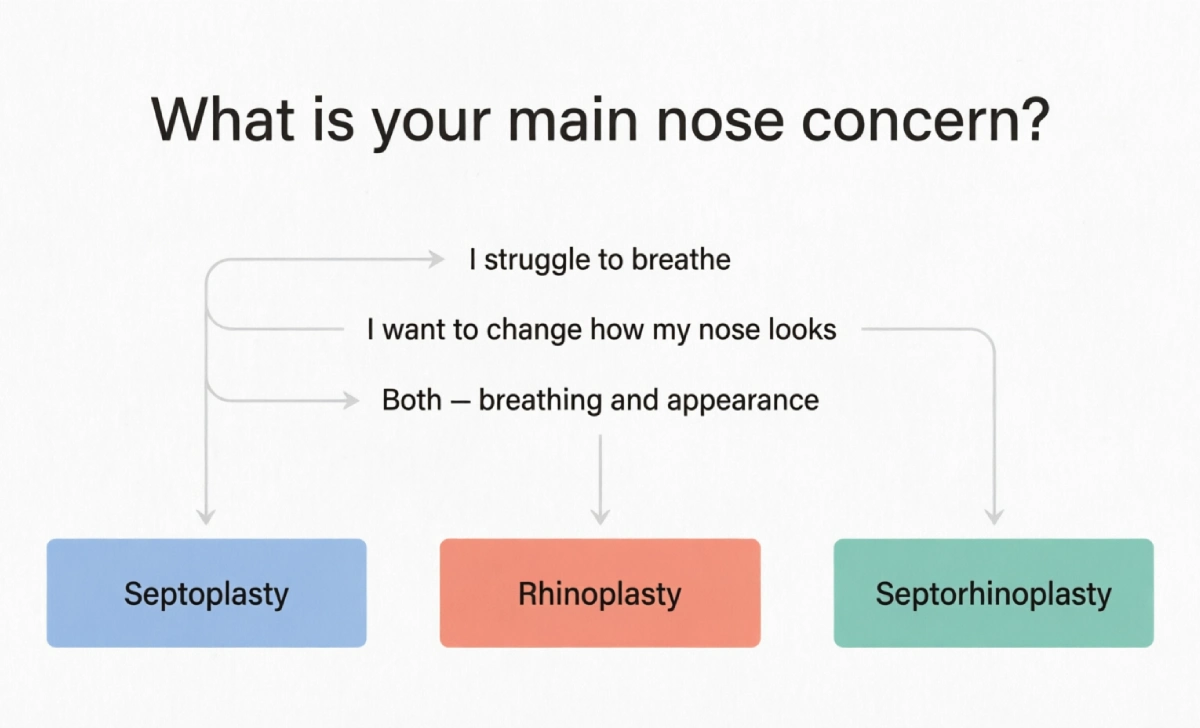
The answer starts with your own body and your own concerns. If you constantly breathe through your mouth, snore heavily, or wake up exhausted because your nose feels blocked all night, a deviated septum is the likely cause. That points directly toward septoplasty.
If your main concern is the shape, size, or profile of your nose — and breathing feels fine — you’re in rhinoplasty territory. Some people have a visibly crooked nose that looks asymmetric but doesn’t restrict airflow, which is still a cosmetic case unless testing shows actual limitation.
Many people land in a gray zone where the nose both looks off and feels blocked. That’s when septorhinoplasty becomes the conversation. The only way to be certain is a thorough evaluation with a specialist who can examine your nasal passages and understand your goals. The next section will help you prepare for that visit.
What Questions Should You Ask Your Surgeon?
Walking into a consultation with a plan makes you feel grounded instead of overwhelmed. Start with the basics. Ask if the surgeon is board-certified and how many of these specific procedures they perform each year. Experience matters more than marketing.
Then get personal. Ask your surgeon to explain whether your breathing issue is structural, and exactly where the blockage sits. Ask whether a cosmetic change could affect your breathing, or if a functional repair might subtly alter your appearance. A good surgeon welcomes every question without rushing you.
Finally, be honest about recovery expectations. Ask what the first three days will feel like, when you can return to work, and what activity limits apply. The American Society of Plastic Surgeons maintains a directory of board-certified surgeons, and verifying credentials there takes only a few minutes before your appointment.
Frequently Asked Questions
Will septoplasty change how my nose looks?
In almost all cases, no. Septoplasty is designed to preserve your external appearance completely. A minor visible change can occasionally occur with a severely displaced septum, but your surgeon will discuss this before the procedure.
How long do results from both surgeries last?
Septoplasty results are generally permanent, though cartilage can shift slightly over many years. Rhinoplasty results are also long-lasting, but aging can gently alter the nose’s shape over time. Both surgeries aim for lifetime improvement.
Is one surgery riskier than the other?
Both carry standard surgical risks like bleeding, infection, or anesthesia reactions. Rhinoplasty adds the risk of cosmetic dissatisfaction, which can lead to revision surgery. Septoplasty’s main risk is incomplete symptom relief if other structures like turbinates were also contributing to the blockage.
What if I still can’t breathe after septoplasty?
If breathing problems persist, other structures such as turbinates or nasal valves might be involved. Your surgeon will recommend further evaluation. Communicating any lingering symptoms early in recovery gives you the best chance of a full solution.
Making Your Choice with Confidence
You now know that septoplasty fixes the hidden, functional side of your nose while rhinoplasty reshapes the outside you present to the world. Most confusion clears the moment you identify your primary complaint — breathing, appearance, or both.
Many rhinoplasty patients are also pleased to see improvements in facial appearance as swelling fades, including reduced under-eye bruising over the weeks following surgery. A board-certified specialist will evaluate your unique anatomy and confirm which direction makes the most sense for your life. With everything you’ve learned here, you’re ready to walk into that consultation feeling informed, confident, and in control.