

You’ve scrolled past dozens of goth looks online—jet-black lace, neon dreads, velvet capes—and maybe wondered if they all belong under the same dark umbrella. The goth world is a whole family of distinct styles, each with its own look, sound, and way of seeing beauty in the shadows.
Goth first crept out of the post-punk underground in the late 1970s, and the gothic rock pioneers who shaped that original sound gave the subculture its soul. This guide walks you through all the main types of goths so you can finally put a name to the aesthetics you’ve been seeing—and maybe find the dark blend that feels like home.
What Are the Different Types of Goths?
Goth didn’t grow from a fashion catalogue—it came from music, and music evolves in messy, beautiful ways. What began as a tight post-punk scene in one London club gradually sprouted romantic offshoots, industrial hybrids, and internet-born reinterpretations.
Think of goth as a family tree. The roots run deep in bands like Bauhaus and Siouxsie and the Banshees, who played at the legendary Batcave nightclub in London. From that trunk, different branches reached toward Victorian elegance, rave culture, punk anger, and the soft hues of online art communities. None of these categories is locked boxes—they’re rooms in a house you can walk between freely.
What Is Traditional Goth (Trad Goth)?

When you picture the original goth, you’re seeing Trad Goth. This is the style that crawled out of the early 1980s underground, all sharp cheekbones, backcombed hair, and an aura that knows every word to “Bela Lugosi’s Dead.”
The silhouette is built on band tees—torn or safety-pinned—paired with fishnets and pointed winklepicker boots. Makeup is dramatic: heavy black eyeliner, pale foundation, and a slash of dark lipstick. Siouxsie Sioux’s fierce eye art and Robert Smith’s dishevelled hair remain the blueprint even today.
What most people miss is that Trad Goth is as much about sound as style. The music was gothic rock and deathrock—bands like Bauhaus, The Sisters of Mercy, and early Christian Death. For a Trad Goth, the outfit is incomplete without the right song already playing in your head.
What Is Romantic Goth?
If Trad Goth is the punk-spiked root, Romantic Goth is the first velvet bloom. This style trades sharpness for softness, reaching back to Victorian mourning wear and gothic literature. You’ll notice more lace, flowing skirts, corsets, and antique jewellery that looks lifted from a locked attic trunk.
The palette stays mainly black, but deep burgundy, plum, and ivory sneak in. Fabrics matter here—crushed velvet, silk, and fine mesh—and the overall effect is elegant rather than aggressive. Ethereal wave acts like Cocteau Twins and Deadmau5 fit its dreamy texture well.
What Is Cyber Goth?

Now you step into a room drenched in neon and throbbing with a beat far faster than anything the Batcave ever played. Cyber Goth is the futuristic, rave-fuelled cousin that looks like it landed from a sci-fi club in 2099. The look features gas masks, platform boots, glowing hair falls, vinyl, and cyber goggles—and yes, it is absolutely still goth.
This style exploded out of the European industrial and hard electronic scene. The music driving it is aggressive EBM, industrial, and aggrotech. Cyber Goth gathers in force at legendary live festivals like Wave-Gotik-Treffen in Leipzig, where thousands move as one under strobe lights.
What Is Pastel Goth?
Mixing baby pink and lavender with skulls and crosses can feel like a contradiction—but Pastel Goth wasn’t born in a music scene. It emerged on Tumblr in the early 2010s as a creative collision between gothic imagery and Japanese kawaii culture. Classic goth symbols like bats and coffins get washed in soft, candy-like tones instead of jet black.
You might see a pastel pink top with an inverted cross, or mint hair paired with black chokers and platform creepers. Pastel Goth opened the dark aesthetic to people who don’t connect with guitar-driven goth rock, and brands like Killstar eventually embraced it fully.
What Is Deathrock?
Deathrock is where goth collides head-on with punk. Think of it as Trad Goth’s feral sibling: same family, but more torn fabric, more chaos, and a lot less precision. Deathhawks replace softer backcombing, and ripped fishnets are covered in patches and scrawled lyrics.
The makeup can be extreme—sharp cheek contouring and skeletal designs straight from a black-and-white horror film. Bands like Christian Death and 45 Grave defined the sound, and Rozz Williams remains an icon of the movement. Deathrock encourages you to be messy, loud, and completely yourself.
Nu Goth and the Modern Minimalist Aesthetic
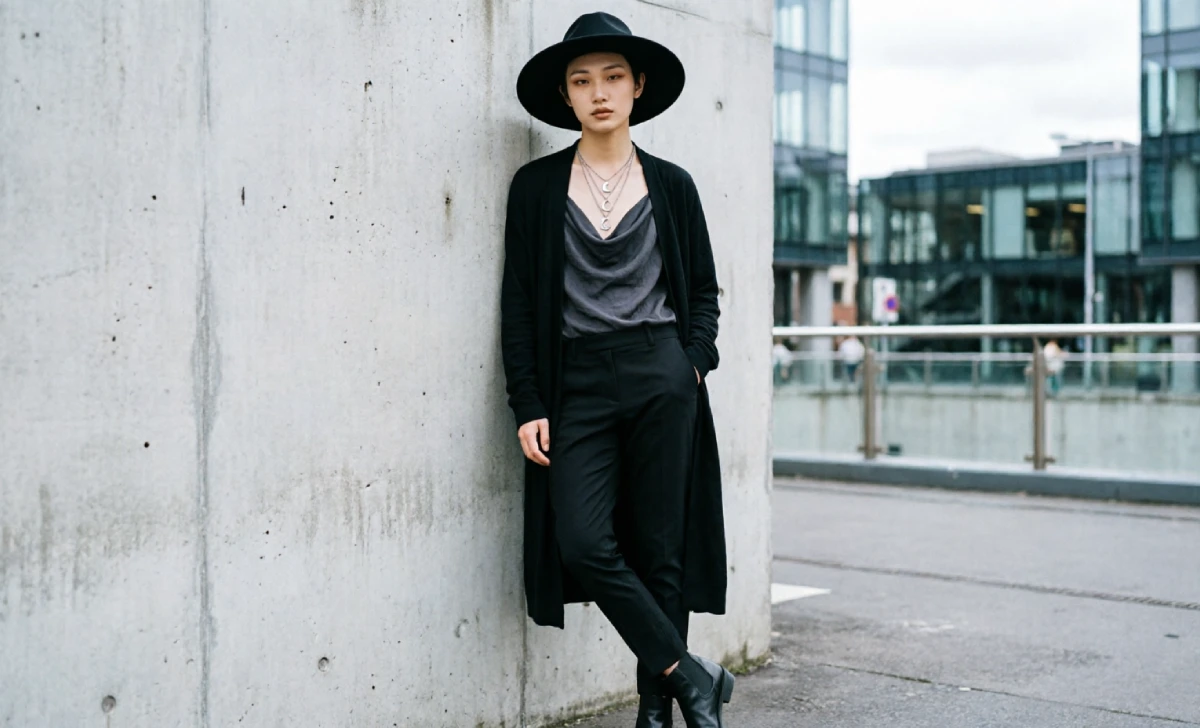
You’ve almost certainly seen Nu Goth without realising it—long cardigans, drapey black tops, wide-brim hats, and delicate chokers all over your social media feed. It’s goth adapted for everyday life, where the statement is quiet confidence rather than dramatic shock.
Nu Goth emerged around the 2010s alongside occult-inspired minimalism. Many Nu Goths listen to dark pop music, witch house, or moody indie rather than strictly gothic rock. Brands like Disturbia and BlackCraft Cult made the look accessible, and it remains the most popular entry point for people discovering the dark aesthetic for the first time.
What Are Vampire Goth and Gothic Lolita?
Vampire Goth draws from classic vampire fiction—all red velvet, black capes, and the smouldering romanticism of eternal night. Gothic Lolita, by contrast, emerged from Japan’s Harajuku district and visual kei music. It blends Victorian doll-like silhouettes—bell-shaped skirts, petticoats, lace gloves—with a gothic colour scheme and strict style rules.
Both types share a love for darkness and drama, but Vampire Goth is fluid and seductive while Gothic Lolita is precise and porcelain. Each offers a different way to embody the beauty of the macabre.
What Are Hippie Goth and Ethereal Goth?
Not every goth wants to stomp in heavy boots. Hippie Goth blends 1970s bohemian vibes with gothic soul—maxi skirts, bell sleeves, crystals, and crochet paired with black everything. The music wanders into neofolk or psychedelic darkwave, and the feeling is free-spirited and grounded.
Ethereal Goth is even lighter. Think diaphanous layers, pale silvers mixed with black, and jewellery that catches light like a cobweb in morning dew. Bands like This Mortal Coil and Lycia soundtrack this dreamlike aesthetic perfectly. Both styles remind us that the dark aesthetic can be gentle and expansive.
How to Find Your Goth Style Without the Labels
Now that you’ve walked through every major room in the goth house, you might feel pulled in several directions at once. Maybe you love Trad Goth music but the everyday comfort of Nu Goth clothing. Maybe Romantic Goth’s lace calls to you, but you can’t resist Deathrock’s raw energy. That’s not a problem—it’s the whole point.
Labels are just notes on a map. The real spirit of goth has always been about exploring beauty that others overlook, not about wearing the right uniform. You can take Romantic Goth’s velvet, pair it with Trad Goth boots, and add a Cyber Goth neon hair streak if you like. Trust your instincts—the goth community, at its best, welcomes that personal journey.
FAQs
What is the difference between goth and emo?
Goth grew out of post-punk and gothic rock in the late 1970s, built around dark atmospheric music and a broad range of fashion styles. Emo originated in the mid-1980s hardcore punk scene with a distinct emotional and musical identity of its own. They are separate subcultures with different roots. For more, check out this breakdown of goth and emo.
Can I mix different goth styles?
Absolutely. The categories in this guide are descriptive, not rulebooks. Many people blend Romantic Goth’s lace with Trad Goth’s band tees, or layer Nu Goth’s minimalism over Deathrock’s dramatic makeup. Mixing is genuinely celebrated within the community.
Do I have to listen to specific music to be a certain type of goth?
Not at all. While each goth type has a musical connection, you don’t need to pass a listening test. The fashion can stand entirely on its own.
Which goth style is easiest for a beginner?
Nu Goth is the most accessible entry point. It relies on simple black basics—long cardigans, tees, layered pieces—and requires far less intricate makeup or footwear than Trad Goth or Cyber Goth.
Conclusion
You’ve now journeyed from the Batcave’s smokiest corners all the way to the soft pastel edges of online creativity. Each type of goth offers a different doorway into a culture that values individuality, artistry, and the strange beauty of the dark.
What ties them all together is you—your curiosity, your creativity, and your right to shape a style that feels honest. These labels are just lanterns along the path, lighting up possibilities you might not have seen before. Step forward and claim the darkness that is truly yours.