
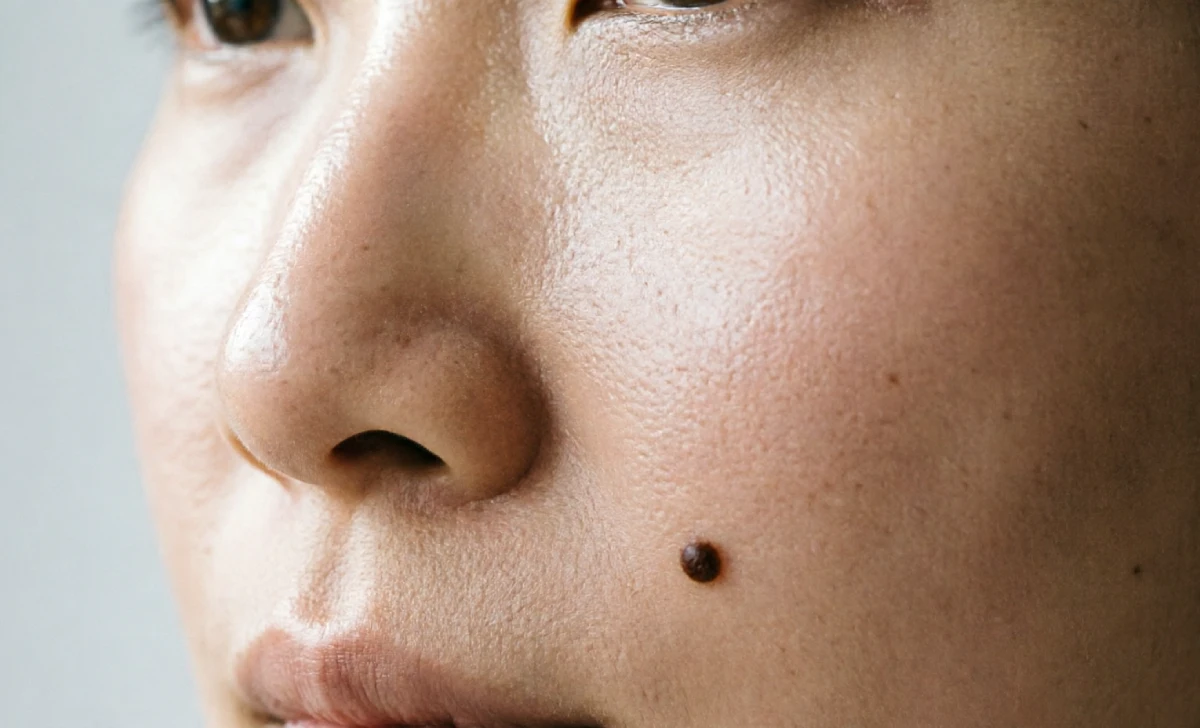
You’ve probably leaned close to the mirror, staring at that one little spot and wondering what your face would look like without it. If you want to know how to remove beauty marks safely, this guide covers every option — from gentle home remedies to clinic procedures. You’ll learn what actually works, what never to try, and how to protect your skincare routine at every step.
What Are Beauty Marks and Why Do They Appear?
A beauty mark is a cluster of pigmented cells called melanocytes that are grouped instead of spreading out evenly. Some people are born with them, while others notice new ones appearing during childhood, adolescence, or after years of sun exposure.
Most beauty marks are completely benign and carry no health risk on their own. Dermatologists classify the vast majority as harmless, which lets you approach any removal decision from a calmer, more confident place.
You might notice some marks are flat while others sit slightly raised above the skin. That difference simply reflects how deep the pigmented cells sit in your skin layers. Neither type is automatically dangerous, and both can be addressed with the right method.
Is It Safe to Remove a Beauty Mark at Home?
The first thing every dermatologist wants you to understand is that safety depends entirely on the method and the mark itself. You cannot treat a beauty mark like a simple blemish and expect safe results. Before you touch anything, make sure the mark isn’t hiding something more serious.
When a beauty mark is flat, stable, and cleared by a skin professional, some gentle topical approaches may be worth exploring. But if the mark is raised, changing, or bleeding, anything you apply at home can turn a small cosmetic concern into a real medical problem.
The American Academy of Dermatology consistently emphasizes that any removal attempt should begin with a proper skin check. That one quick appointment is the step you should never skip.
Which Home Remedies Can Safely Fade a Beauty Mark?
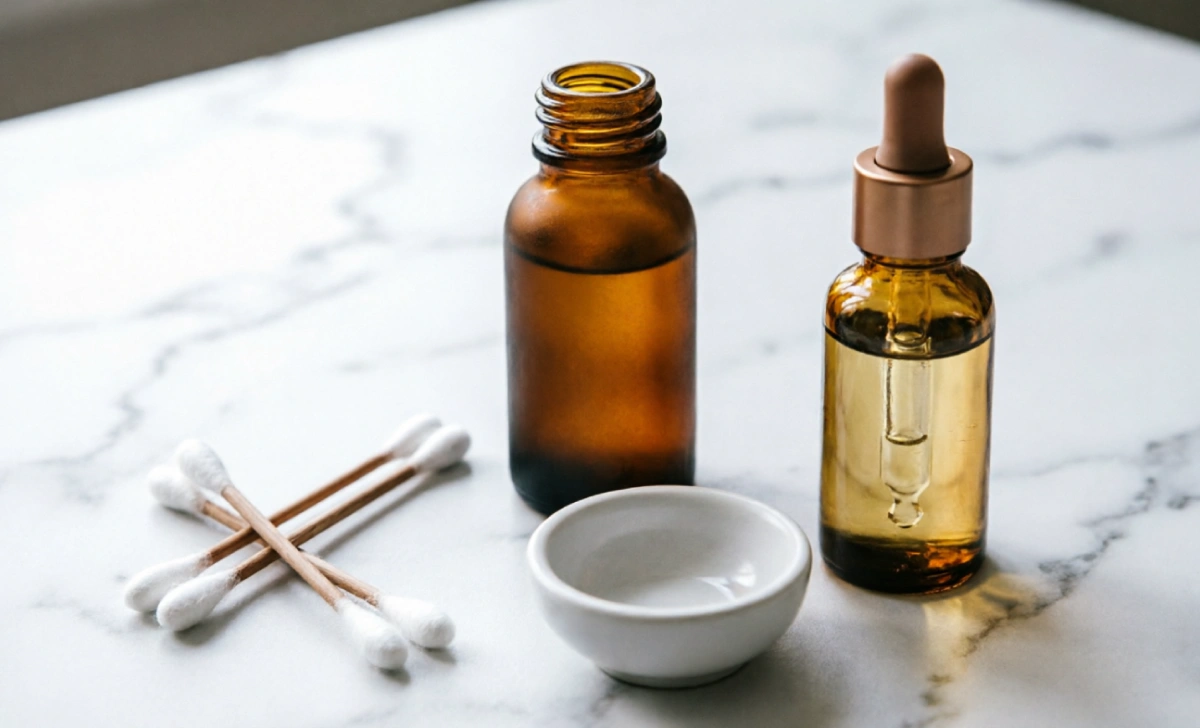
If your mark has been checked and cleared, a few natural options have been used for gradual fading. Diluted apple cider vinegar is commonly mentioned because its mild acetic acid may slowly lighten superficial pigmentation over many weeks. Tea tree oil is another remedy valued for its drying and skin-renewing properties.
These methods rely on patience far more than speed. A tiny dab of diluted solution applied only to the mark, followed by a protective layer of ointment, is how careful users approach it. Your skin’s tolerance matters enormously here.
What online advice rarely says is that natural does not automatically mean safe. Even tea tree oil can cause a reaction if used undiluted or on sensitive skin. Always test a small area on your arm and watch your skin’s response over 24 hours before applying anything near your face.
What Home Removal Methods Should You Never Attempt?
Some of the most dangerous advice online sounds deceptively simple. Cutting a beauty mark off with scissors, a razor, or thread leads directly to uncontrolled bleeding, deep infection, and a permanent scar far worse than the original mark. You are cutting into living tissue, not removing a surface blemish.
Dermatologists also actively warn against applying wart removers to a mole. These products contain strong acids meant for viral warts, and they can burn deeply into healthy pigmented skin. Picking, scratching, or sealing the mark under undiluted oil overnight also falls firmly in the danger zone.
What makes these shortcuts truly risky goes beyond scarring. If you destroy the surface of a mole that is actually a melanoma, you delay diagnosis while the cancer potentially spreads beneath the skin. No home shortcut is ever worth that risk.
What Are the Professional Options for Beauty Mark Removal?

When you are ready to explore a clinic-based route, dermatologists have several precise methods available. Shave excision is a popular choice for raised marks, where a small blade removes the mark level with the skin after numbing. Surgical excision goes deeper and removes the full thickness of the mark, preferred when tissue needs to be sent for a biopsy.
Laser removal works well for flat, pigmented marks that don’t extend deeply. The laser breaks up the melanin and fades the spot over one or two sessions. For a closer look at what this involves, the guide on flat mole removal covers exactly what to expect before and after.
Cryotherapy uses liquid nitrogen to freeze the mark and suits certain superficial spots. What you will appreciate about any professional setting is the numbing, the sterile environment, and a dermatologist who tailors the technique to your skin and mark type.
How Much Does Professional Beauty Mark Removal Cost?
Cost is a real part of your decision, and you deserve a transparent picture. A simple shave excision typically runs between $150 and $400 out of pocket, depending on your location and the clinic. Laser removal often falls in a similar per-session range, and some marks need more than one session.
If the removal includes a biopsy and is medically necessary, health insurance may cover a meaningful portion. Cosmetic removals are usually not covered, so always ask the clinic for a clear estimate during your consultation.
The price reflects the expertise you are paying for. A board-certified dermatologist brings sterile tools, proper numbing, and a far lower chance of complications — well worth it for most people.
Will You Scar After Removing a Beauty Mark?
Scarring is the worry that lingers most, and it is a fair one. Anytime skin is broken, some scarring is possible, but how noticeable it becomes depends on the method, your skin type, and aftercare quality.
Dermatologists minimize scarring by following the natural lines of your skin. Shave excision often heals as a flat, pale circle that blends in gradually, while surgical excision leaves a fine line that fades over six to twelve months.
You can improve your outcome by keeping the healing area protected from the sun every day. UV exposure is the top reason a fresh removal site darkens permanently. A consistent sunscreen habit and silicone gel can help you look years younger by keeping treated skin smooth and even-toned as it heals.
How to Care for Your Skin After Beauty Mark Removal
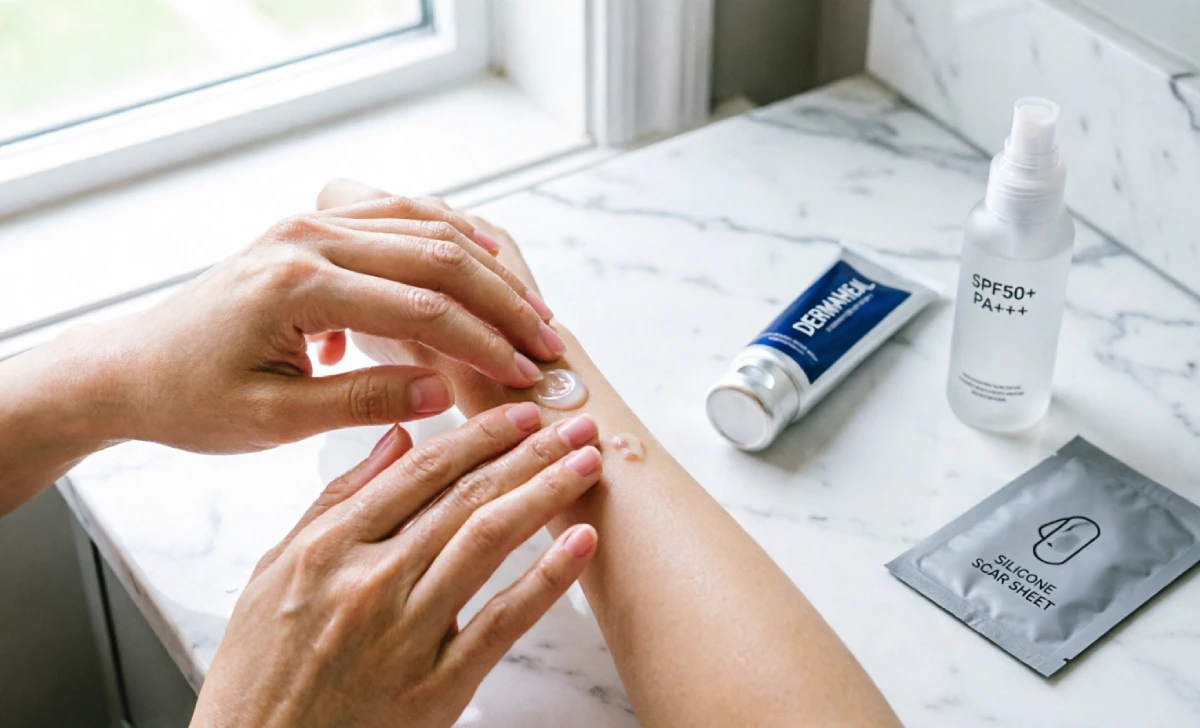
Your aftercare routine must be consistent, even if it is simple. For the first few days, gently clean the area with mild soap and water, then apply a thin layer of antibiotic or healing ointment as your dermatologist directs. This basic routine creates the ideal environment for fresh skin to form without complications.
You will likely notice a small scab developing over the site. The most important rule is to leave it completely alone and let it fall off naturally. Pulling it away early tears the new skin underneath and often creates a deeper scar.
As weeks pass, switching from ointment to a silicone scar sheet or gel helps flatten and soften any remaining texture. Broad-spectrum SPF 30 or higher, applied daily, is your most powerful long-term tool for a clean, even result.
How to Tell if a Beauty Mark Requires Medical Attention
Before any cosmetic decision, give your skin a quick self-check using the ABCDE rule. A is for asymmetry, where one half doesn’t mirror the other. B is for border — jagged or blurry edges are a clear warning sign.
C stands for color, watching for multiple shades of brown, black, red, or white within the same mark. D is for diameter; anything larger than a pencil eraser deserves a professional look. E means evolving — any change in size, shape, color, or sensation like itching or bleeding.
If your beauty mark checks any of these boxes, book a medical appointment immediately — not a cosmetic one. Catching melanoma early is what makes it highly treatable, and a quick annual skin check is one of the simplest forms of self-care you can do.
FAQs
Can I use apple cider vinegar to remove a beauty mark safely?
Diluted apple cider vinegar may gradually lighten some flat, benign marks over many weeks. However, it can also cause burns or dark spots if used too often or too concentrated. Always get dermatologist clearance first and never apply it to a raised or changing mark.
What happens if I pick off a beauty mark?
Picking a beauty mark leads to bleeding, infection risk, and a scar far more visible than the original mark. It also destroys tissue that a doctor would need to examine if the mark were suspicious. The temporary relief is never worth the lasting damage.
How long does it take for a removed beauty mark to heal completely?
Initial skin closure after professional removal takes one to two weeks. Full scar maturation, where the site flattens and fades, can take six months to a full year. Consistent sun protection throughout that window makes the biggest difference in your final result.
Do beauty marks grow back after professional removal?
In some cases, a small portion can regrow if pigmented cells remain deep in the skin after shave excision or laser treatment. If that happens, your dermatologist can assess whether a repeat procedure is needed. Wanting to glow up faster after removal is completely natural — just give your skin its full healing window first.
Conclusion
You now have a clear, safety-first map for whatever you decide to do next. The most important takeaway is that your skin deserves a dermatologist’s eyes before any removal attempt. From gentle home fading to precise clinic procedures, you have real options that respect both your appearance and your health. Trust the process, listen to your skin, and let safety lead every decision.