
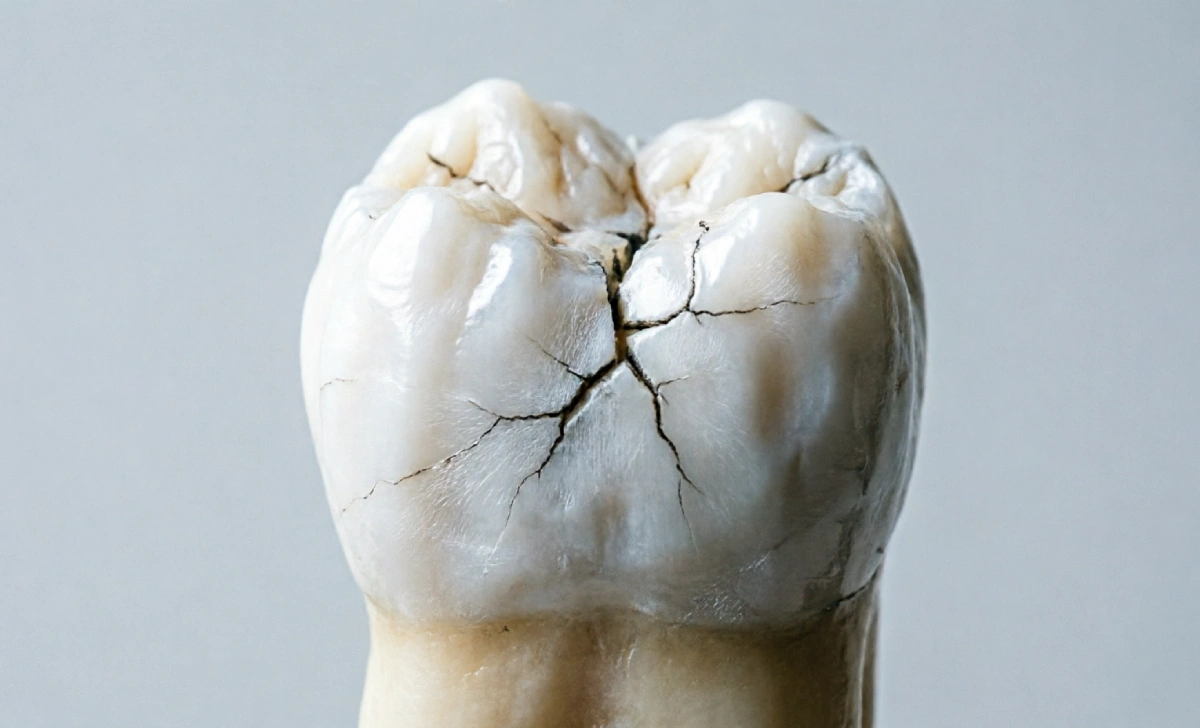
You know that sharp, satisfying crunch of biting into an ice cube? Your brain loves it. Your teeth don’t. If you’ve been asking yourself if pagophagia is bad for tooth enamel, you’re already ahead of the curve. That habit isn’t just annoying—it’s quietly stressing your enamel in ways most people don’t notice until it’s too late.
Chewing ice tooth damage starts silently, creating microscopic fractures that multiply with every cube you crunch. Often, these cravings connect to underlying issues like chronic fatigue symptoms or nutrient deficiencies that deserve attention.
Here’s the straightforward breakdown: what’s driving the craving, how the damage actually happens, how to spot it early, and what you can do right now to protect your smile.
1. What’s Actually Behind the Ice Craving
Pagophagia is just the clinical term for compulsively craving and chewing ice. It’s rarely about the ice itself. More often, it’s your body sending a quiet distress signal.
Studies consistently link intense ice cravings to iron deficiency or anemia. When your iron drops, your brain sometimes latches onto the cold, crisp sensation of ice as a weird but real coping mechanism. The good news? It’s usually reversible. A quick blood panel can confirm it, and once your levels normalize, the craving often fades on its own.
But even if your labs come back perfect, the mechanical habit still matters. Chewing ice isn’t harmless just because you’re not deficient. The pressure alone starts a slow chain reaction inside your teeth.
2. How Chewing Ice Quietly Cracks Your Enamel
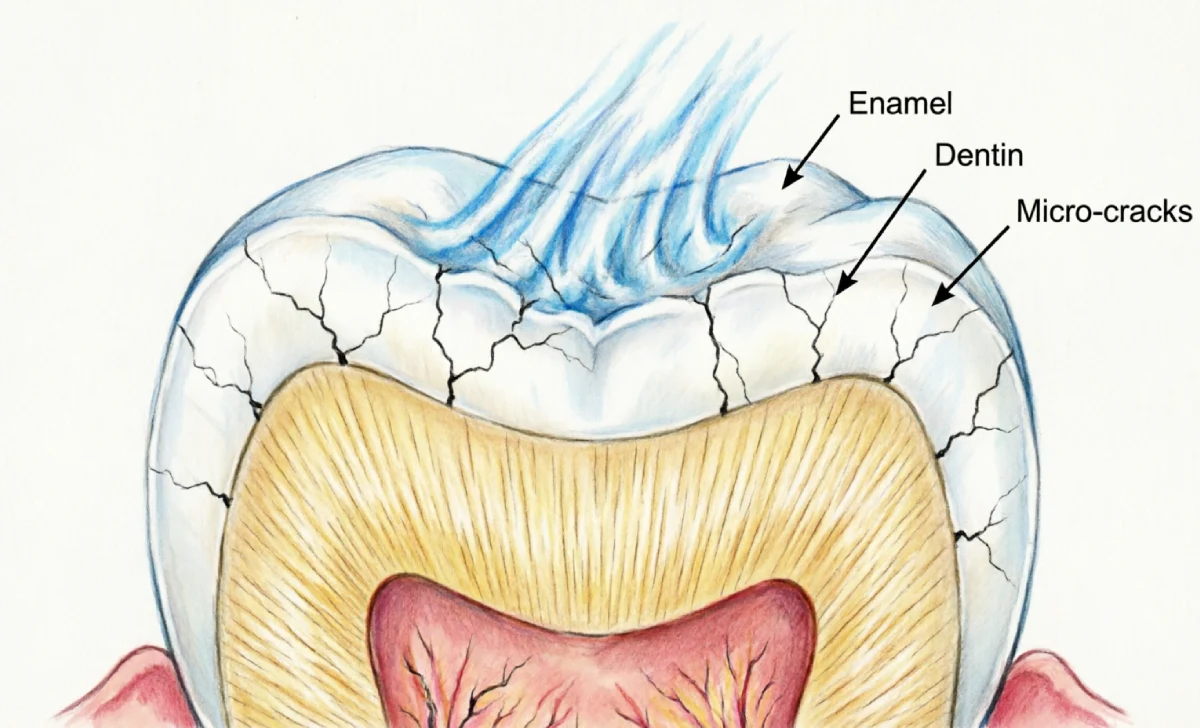
Let’s clear up a common myth: enamel is tough, but it’s not indestructible. Think of it like tempered glass. Strong under even pressure, but brittle under sharp, repetitive impact.
Why does chewing ice crack teeth? It’s simple physics. Ice at freezing temperature is harder than your enamel at the point of impact. When you bite down, that sudden force creates micro-stress points. Add in thermal shock—super cold hitting warm tooth structure—and those stress points turn into microscopic fractures. You won’t see them. You won’t feel them. But they’re there.
Here’s a trick I recommend: next time you’re at the dentist, ask to see your molars under an intraoral camera. Many dentists will pull up a high-magnification view showing faint, branching lines across the chewing surfaces. Patients are always shocked. “I had no idea,” they say. That’s the reality of whether chewing ice causes hairline cracks in teeth. Yes. And they multiply with every cube.
3. Catching Silent Damage Before It Turns Painful
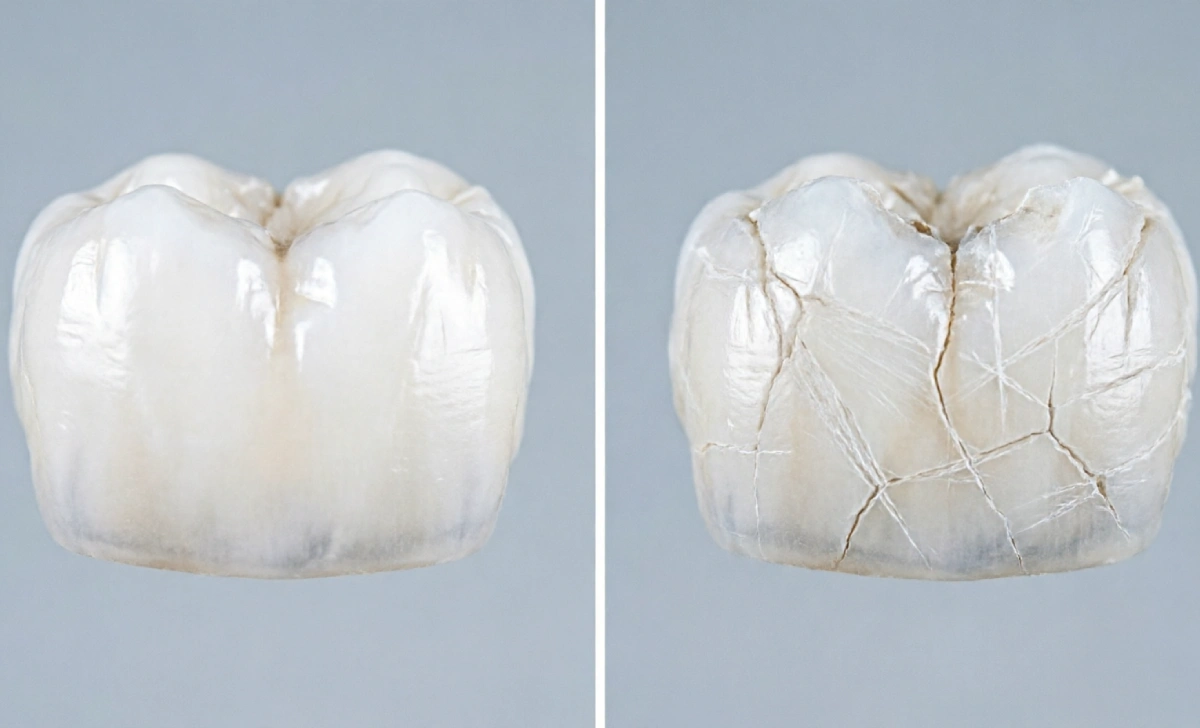
The scariest part isn’t the cracking. It’s the silence that comes after.
Can crunching ice damage enamel without pain? Absolutely. Early microfractures stay confined to the outer enamel layer, which has no nerves. You can accumulate months of wear before a single signal reaches your brain. By the time you feel a sharp zing, the crack has usually breached into the dentin underneath.
Watch for these subtle signs of microscopic tooth damage from ice:
- A faint “catch” or rough edge when your tongue sweeps across a tooth
- Fleeting sensitivity to cold that disappears as soon as you swallow
- Teeth that feel slightly weaker when biting into firm foods (like crusty bread or raw carrots)
- A hairline shadow visible only under direct bathroom lighting
- Random, unexplained sensitivity that jumps from one tooth to another
None of these screams “emergency.” But they’re early warnings. Catching them now means your dentist can seal the microfractures with a simple bonding resin or fluoride treatment. Wait until biting hurts, and you’re looking at crowns or root canals. Supporting your recovery with a balanced weekly meal plan can help restore the nutrients your body needs.
4. Breaking the Habit Without Losing Your Cool
Quitting cold turkey rarely works. Your brain is wired to chase that cold, crisp payoff. The smarter move is harm reduction paired with habit swapping.
If you crave the crunch:
- Swap ice cubes for chilled cucumber slices, apple chunks, or raw jicama
- Keep sugar-free xylitol gum handy—it mimics the chewing motion safely
- Try crushed ice or shaved ice. Smaller fragments require significantly less biting force
If you crave the cold sensation:
- Let the cubes sit in a glass for 60–90 seconds before putting them in your mouth. Slightly softened ice = less enamel stress
- Sip ice water through a straw to bypass direct tooth contact
- Freeze grapes or blueberries. They give you that chill without the hard impact
If the craving feels uncontrollable:
- Track it for one week. Note the time, your stress level, and what you were doing. Patterns emerge fast. Boredom, anxiety, and fatigue are the usual triggers.
- Pair the swap with a tangible plan. I keep a free, one-page Ice Craving Action Plan linked at the bottom of this post. It’s dentist-reviewed, fits on your fridge, and gives you a clear fallback when the urge hits.
FAQs
Can enamel cracks heal on their own if I stop chewing ice?
No. Enamel doesn’t regenerate. But stopping prevents new fractures from forming. Existing microcracks can be professionally sealed to stop them from deepening.
How long does it take for ice cravings to fade after fixing iron levels?
Most patients report a noticeable drop within 3–6 weeks of consistent supplementation. Full normalization usually takes 2–3 months. Stick with it.
Is sucking on ice safer than chewing it?
Yes. Sucking removes the mechanical grinding force. Just keep in mind that prolonged cold exposure can still trigger sensitivity in already-weakened teeth.
Should I mention ice chewing to my dentist if I feel fine?
Always. Dentists aren’t there to scold you. Knowing your habits lets them adjust your cleaning technique, recommend early sealants, and catch fractures before they split.
Conclusion
You don’t have to white-knuckle your way out of a habit that’s literally cracking your teeth. Understanding the trigger, recognizing the silent damage, and swapping to safer alternatives is enough to turn the tide. Your enamel has carried you through years of meals, conversations, and laughs. Give it a break before it gives out.