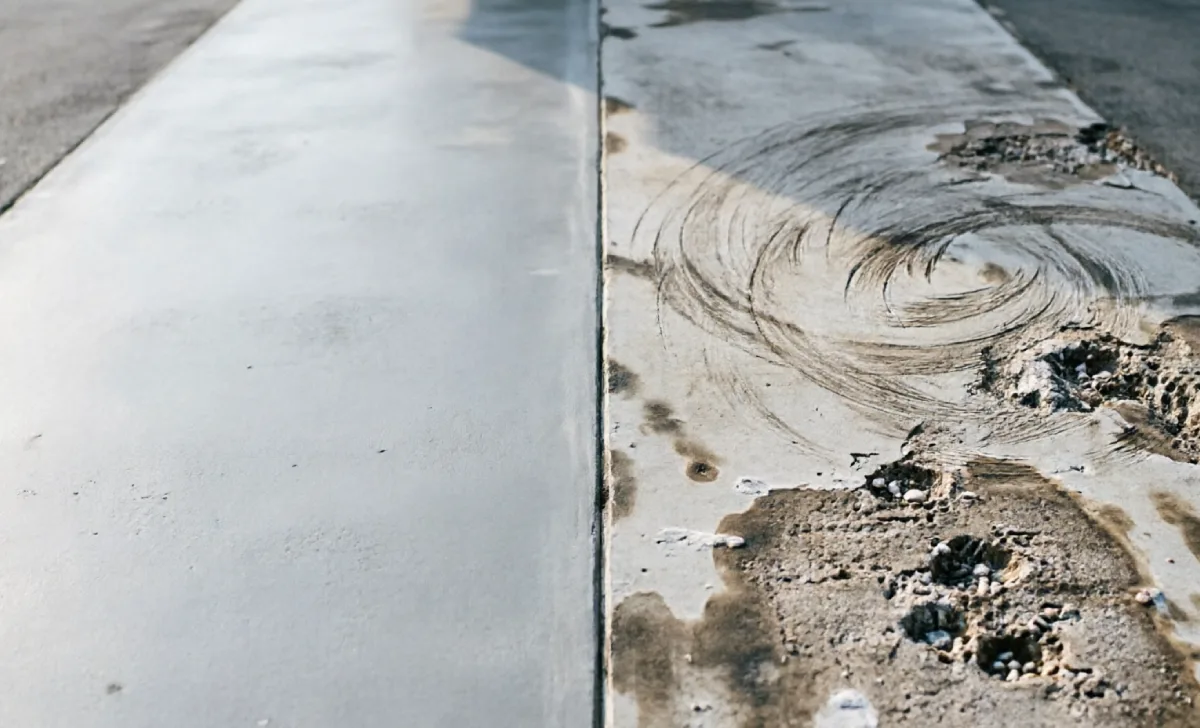
You know that satisfying moment when the grime blasts away and your driveway looks brand new? Yeah, we love that too. But here’s the thing: pressure washing driveway damage is more common than you think — and you might be causing it without realizing.
Truth is, I’ve seen more driveways ruined by over-enthusiastic cleaning than by actual neglect. A neighbor of mine power-washed his concrete driveway every spring for three years. By year four, the surface looked like sandpaper. The top layer — what pros call the “cream” — was just gone.
So let’s talk about how often you should wash, what damage to watch for, and how to keep your driveway clean without accidentally destroying it.
What Is the ‘Cream Layer’ and Why Losing It Matters
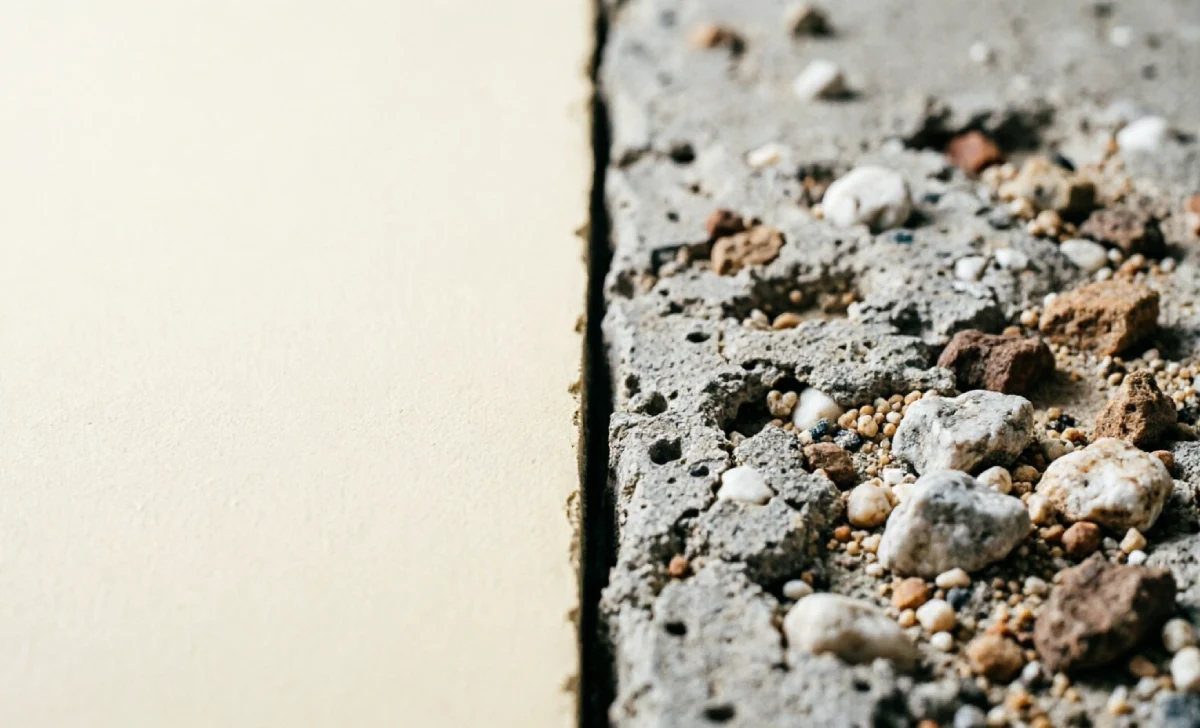
Ruined by over-enthusiastic cleaning rather than by actual neglect. A neighbor of mine power-washed his concrete driveway every spring for three years. By year four, the surface looked like sandpaper. The top layer — what pros call the “cream” — was just gone.
So let’s talk about how often you should wash, what damage to watch for, and how to keep your driveway clean without accidentally destroying it.
How Often Should You Really Pressure Wash Your Driveway?
Short answer: It depends. But for most homeowners in moderate climates, pressure washing the driveway once a year is actually the sweet spot — if you’re using the right technique.
Here’s a quick reality check:
| Driveway Material | Safe Frequency | When to Wash Sooner |
|---|---|---|
| Concrete | Every 12–18 months | Heavy oil stains, moss buildup |
| Block Paving | Every 18–24 months | Jointing sand washed out, weeds |
| Tarmac/Asphalt | Every 2–3 years | Oil spills, visible algae |
| Stamped/Sealed Concrete | Every 2+ years | Sealant peeling, discoloration |
You’ve probably noticed your driveway gets dirtier faster after rain or in shady spots. That’s normal. But dirt ≠ damage. Sometimes a stiff brush and garden hose do the job without the risk, especially if you’re maintaining water-resistant surfaces that don’t need heavy blasting.
Three factors that change the rule:
- Climate: Humid or coastal areas = more moss/algae = maybe annual washes. Dry climates? Stretch it out.
- Usage: Oil drips, tire marks, or heavy foot traffic might justify a mid-year spot clean.
- Material age: Older, already-worn surfaces tolerate less pressure. Gentle does it.
Now, let’s break down what actually happens when you go overboard.
Warning Signs You’ve Over-Washed Your Driveway
What Is the “Cream Layer” and Why Losing It Matters
Fresh concrete has a smooth, dense top layer — the “cream.” It’s what gives your driveway that finished look and protects the aggregate underneath. When you blast it with too much pressure (or the wrong nozzle), that layer erodes.
What’s left? A rough, pitted surface that:
- Stains faster (more nooks for dirt to hide)
- Feels gritty underfoot
- Looks dull, even when clean
If you run your hand over your driveway and it feels like fine sandpaper instead of smooth stone, you’ve likely lost the cream. And once it’s gone, you can’t just “add it back.”
Etching, Pitting & Exposed Aggregate: Visual Damage Guide
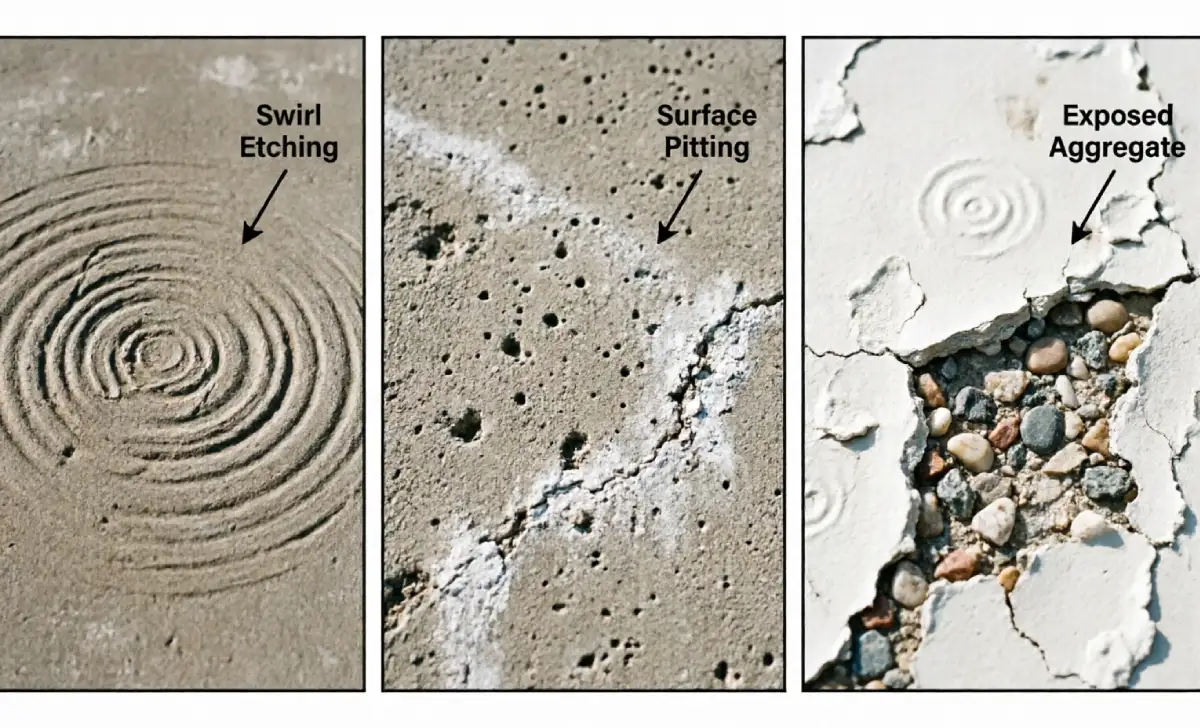
Ever noticed weird swirl marks or faint lines after washing? That’s etching — basically, the pressure washer carved micro-grooves into the surface. It happens when:
- You hold the nozzle too close (<12 inches)
- You use a 0° or 15° tip on concrete (yikes)
- You linger too long in one spot
Exposed aggregate isn’t always bad (some driveways are designed that way). But if your smooth driveway suddenly has pebbles poking through? That’s over-washing damage — similar to how you’d spot concrete crack repair needs elsewhere in your home.
Common Over-Washing Mistakes (And How to Avoid Them)
Nozzle Selection: Why the Wrong Tip Destroys Concrete
Here’s a quick nozzle cheat sheet most DIYers miss:
0° (Red): Never on driveways. Cuts like a laser.
15° (Yellow): For tough stains only, keep moving.
25° (Green): Safe for most concrete, good balance.
40° (White): Best for routine cleaning, gentle spread.
Soap nozzle (Black): For applying detergent, zero pressure.
If you’re asking, can you pressure wash a driveway too much, the nozzle matters more than frequency. A 40° tip at 2,500 PSI is safer than a 15° tip at 1,800 PSI.
PSI Settings by Material: Safe Ranges for Concrete, Paving & Tarmac
- Concrete: 2,500–3,000 PSI max (start lower)
- Block Paving: 1,500–2,000 PSI (protect jointing sand)
- Tarmac: Under 1,500 PSI (it’s softer than you think)
- Sealed surfaces: 1,200 PSI or less + wide fan pattern
Pro tip: Test in an inconspicuous corner first. If the water leaves a visible “trail” or changes the texture, back off.
How to Fix a Pressure-Washed Damaged Driveway
DIY Repair Options for Minor Etching
If the damage is light (just slight roughness or faint marks), you’ve got options:
- Concrete resurfacer: Thin coating that fills micro-pits. Good for small areas.
- Acid wash + reseal: For etching that’s mostly cosmetic. Only if you’re experienced — muriatic acid is no joke.
- Paver sand + polymeric jointing: For block paving where sand has been blasted out. Sweep in fresh sand, mist with water, let it set.
Important: Don’t just slap sealant over damaged concrete. It’ll trap moisture and make things worse. Clean, repair, then seal — and always practice sealing without damage techniques to protect the surface long-term.
When to Call a Professional: Cost vs. Benefit Breakdown
If you see deep pitting, spalling (flaking chunks), or large uneven areas, DIY fixes might not cut it. A pro can:
- Diamond-grind the surface smooth
- Apply a micro-topping for a fresh finish
- Assess structural issues you might miss
Typical cost: $3–$8/sq ft for repair + resealing. Compare that to full replacement ($10–$20/sq ft) — sometimes fixing early saves thousands.
Smart Maintenance: Clean Without Destroying
Soft Washing vs. Pressure Washing: Which Is Safer?
Soft washing uses low pressure + biodegradable cleaners to kill algae/moss without blasting the surface. It’s ideal for:
- Older or already-worn driveways
- Areas with heavy organic growth (shade, damp climates)
- Homeowners who want “set it and forget it” maintenance
Downside? Takes longer to work (24–48 hours for cleaners to do their thing). But your driveway stays intact.
Sealants & Re-Sanding: Protecting Your Driveway Long-Term
After cleaning (and repairing, if needed), a quality sealant adds a protective layer that:
- Repels oil and water
- Reduces future staining
- Extends the time between washes
For block paving, re-sanding joints after washing prevents weeds and keeps pavers locked. Just wait 48–72 hours after washing for everything to fully dry first.
Quick Damage Risk Score (Your USP Checklist)
Before you fire up the pressure washer, run this 30-second check:
Surface Test: Run your palm over the driveway. Smooth = safe to wash. Gritty = skip pressure, try soft wash.
Age Check: Driveway under 5 years? Use a 40° nozzle only. Over 10 years? Consider a professional assessment first.
Weather Window: Wash only in dry conditions, 50°F+ temps. Cold + wet = freeze damage risk.
If you hit two or more “caution” flags, you’re looking at overwashing concrete driveway problems before you even start. Sometimes the smartest move is to wait or call someone who knows the signs.
FAQs
Can pressure washing cause concrete spalling?
Yes — if water gets into existing micro-cracks and freezes, or if high pressure breaks the surface tension. That’s why gentle, consistent cleaning beats aggressive annual blasts.
Does pressure washing remove driveway sealant?
Often, yes. Even at safe PSI, repeated washing degrades the sealant over time. That’s not always bad (old sealant can peel), but plan to reseal after a deep clean.
How do I know if my driveway is already damaged?
Run your hand over it. Smooth = good. Gritty, pitted, or rough = possible over-washing. Also watch for water pooling in weird spots — that can mean surface erosion.
Is it okay to pressure wash in winter?
Generally no. Cold + wet = higher risk of freeze damage. Wait for temperatures above 50°F (10°C) and dry conditions.
The Bottom Line
Your driveway doesn’t need a spa day every spring. In most cases, pressure washing the driveway once a year is enough to keep it clean and preserve the surface. The real secret isn’t how often you wash — it’s how you wash.
Next time you’re tempted to blast away the dirt, pause. Ask: Is this stain worth risking the cream layer? Could a brush and hose handle it? And if you do pull out the pressure washer, start gently, test first, and keep that nozzle moving.
And if you’re dealing with damage already? Don’t panic. Most issues are fixable. Just take it slow, and when in doubt, call a pro who understands over-washing concrete driveway problems aren’t just about looks — they’re about longevity. For more home sealing tips that protect your investment, keep these maintenance habits in mind.