
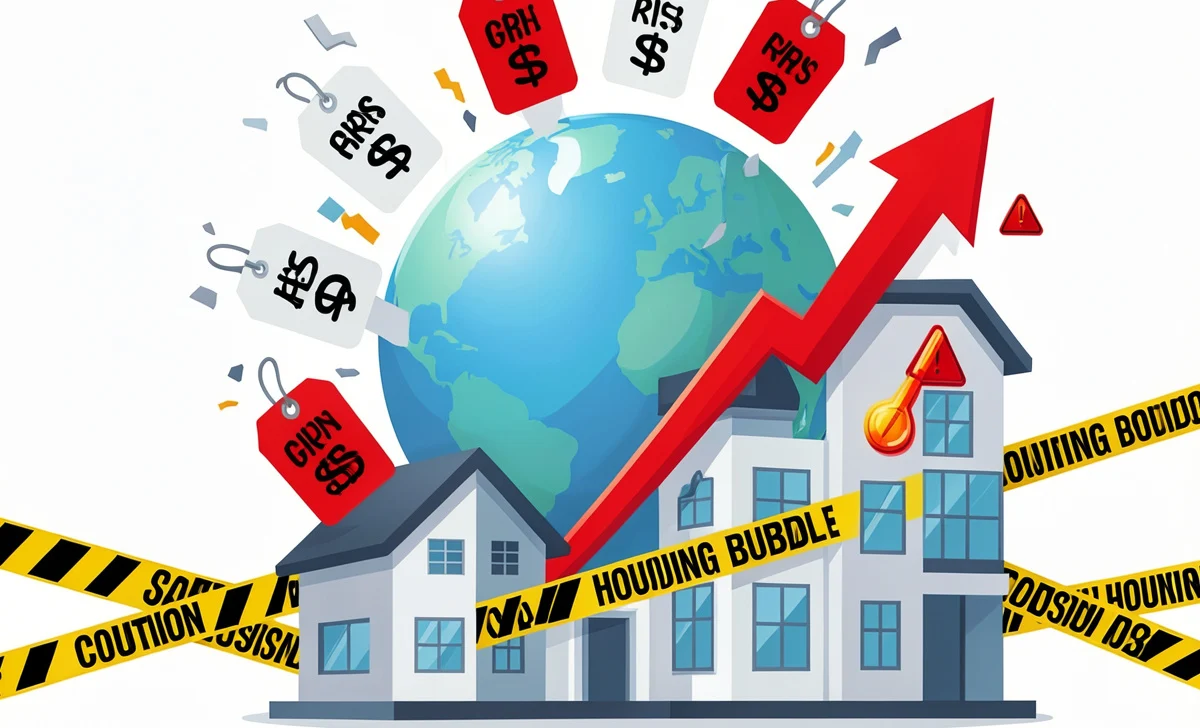
You’ve seen the headlines. “Prices are insane.” “Is this 2008 all over again?” “Should I wait or buy now?” It’s enough to make your head spin. If you’re trying to figure out how to tell if the housing market is a bubble, you’re not overthinking it. You’re just being smart with your money. Learning to recognize housing bubble warning signs early can save you from costly mistakes.
Here’s the thing: bubbles don’t appear out of nowhere. They leave footprints. And once you know what to look for, you can spot them long before the pop. If you want a quick reference, bookmark this guide on bubble warning signs—it cuts through the noise.
Truth is, you don’t need a finance degree to read the signs. You just need a practical, step-by-step way to separate real demand from hype. That’s exactly what we’re walking through.
What Is a Real Estate Bubble? (Quick Definition)
Let’s skip the textbook jargon. A real estate bubble happens when home prices climb way faster than the actual economy can support. Think wages, local job growth, or rental demand. People start buying because they assume prices will always go up, not because the house fits their budget or the neighborhood makes sense.
Picture a balloon. A little air? Normal market growth. Too much, too fast? That’s when it gets fragile.
The tricky part: bubbles look a lot like “hot markets” while they’re inflating. So how do you separate the two? That’s where the early signs come in.
7 Early Warning Signs of a Housing Bubble in 2026
These aren’t guesses. They’re patterns that showed up before past corrections—and they’re popping up again in certain metros right now.
1. Prices are soaring, but wages aren’t
When median home prices jump 15–20% in a year but local incomes creep up 2–3%, the math breaks. Check your metro’s price-to-income ratio. If it’s well above the 10-year average, that’s your first yellow flag.
2. Speculative buying takes over
A healthy market has some investors. A frothy one has influencers pushing “wholesale deals” and first-timers asking if they should “buy three condos to flip.” When speculation becomes the main driver of demand, the market gets fragile fast.
3. Lenders loosen their standards
We’re not back to 2006 no-doc loans, but if you start seeing more interest-only mortgages, ultra-low down programs with weak underwriting, or ads screaming “easy approval for low credit,” pay attention. Risky lending fueled the last crash.
4. Price-to-rent ratios are stretched thin
If buying costs 2–3x more per month than renting a similar place and the gap keeps widening, prices are disconnected from reality. Renters aren’t “missing out.” They might be making the smarter financial call.
5. Inventory is low, but bidding wars feel desperate
Low supply alone doesn’t mean a bubble. But when every listing gets 12+ offers, buyers waive inspections and appraisals, and people are crying in driveway parking lots after losing another bid? That’s emotional demand. It burns out quickly.
6. The media narrative shifts to FOMO
When every podcast, news segment, and group chat is about “getting in before it’s too late,” that’s often a late-cycle signal. Healthy markets don’t run on panic.
7. Interest rate swings cause wild price swings
In a stable market, rates move, and prices adjust gradually. In a bubble-prone one, a small rate hike triggers a sudden freeze—or a frantic rush to “lock in before it’s worse.” Volatility like that hints at fragile confidence.
You don’t need to check off all seven to be cautious. But if your market hits four or more? That’s your cue to dig deeper.
Is YOUR City in a Bubble? Local Red Flags to Check
National headlines don’t tell your story. Real estate is hyperlocal. A bubble might be forming in Austin, but barely touching Pittsburgh. So how do you figure out if your area is overheating?
Start with a quick self-audit:
- Pull your metro’s price-to-income ratio. Census data + local listing sites make this easy. If it’s 30%+ above its historical average, proceed with caution.
- Check days on market + price cuts. Are homes sitting longer? Are sellers quietly reducing prices after listing? That’s cool. If everything sells in 72 hours above asking? That’s heat.
- Look at new construction permits. A sudden surge in building can signal optimism—or overbuilding. Pair this with local job growth data. No new jobs + lots of new homes = potential oversupply.
- Ask a local agent (the honest ones). Not the one trying to close a deal this weekend. The one who’ll say, “Honestly, this zip code feels stretched right now.” Their on-the-ground read matters.
Try the 10-Minute Bubble Self-Test: Grab a notebook. Write down your city’s median home price, median household income, and average rent for a 2-bedroom. Now divide the price by the income. If the number sits over 5, pause. If it’s over 7? That’s a serious warning sign. Save this checklist. Run it quarterly. It’ll save you from making decisions based on headlines alone.
And if you’re noticing shifts beyond your neighborhood, it’s worth checking trends in global market cooling—sometimes local heat is part of a bigger pattern.
Bubble vs. Healthy Growth: How to Tell the Difference
This is where most guides drop the ball. They list warning signs but don’t help you separate a genuine bubble from a market that’s just… popular.
Here’s the filter: fundamentals.
Healthy growth is backed by:
- Strong local job creation (new tech campus, hospital expansion, manufacturing shift)
- Population moving in for real reasons (better schools, remote work flexibility, actual affordability)
- Rents rising alongside prices (showing real demand, not just investor speculation)
Bubble growth leans on:
- “Prices only go up” mentality
- Out-of-area buyers bidding sight-unseen
- Media hype driving emotional decisions
You’ve probably noticed some markets feel “off” even when prices are rising. Trust that instinct. Then verify it with numbers.
What to Do If You Spot real estate bubble warning signs for buyers
Okay, let’s say you’ve run the self-test. Your area checks several boxes. Now what?
If you’re looking to buy:
- Don’t panic-buy. A “fear of missing out” purchase in a frothy market is how people end up underwater.
- Focus on affordability, not appreciation. Buy a home you can comfortably pay for, even if prices dip 10% next year.
- Get pre-approved, but stay flexible. Being ready to act is smart. Being desperate isn’t.
One more thing: if you’re tempted to skip inspections to win a bid, don’t. A quick hidden damage inspection could save you thousands—and keep you from buying someone else’s problem.
If you already own:
- Don’t over-leverage. That rising equity feels great—until it doesn’t. Avoid cash-out refis or HELOCs unless you have a clear, non-speculative reason.
- Think long-term. If you plan to stay 7+ years, short-term swings matter less. If you might move in 2–3? Be careful about timing.
If you’re investing:
- Stress-test your numbers. What if rents drop 8%? What if vacancy hits 12%? If the deal only works in a “perfect” market, it’s too risky.
- Diversify. Don’t park all your capital in one overheated metro.
And if you’re wondering how to protect savings from housing bubble volatility, the answer isn’t timing the market perfectly. It’s keeping a 3–6 month emergency fund separate from your down payment. Cash reserves beat guesswork every time.
FAQs
Will the housing market crash in 2026?
Nobody knows for sure—and anyone who says they do is usually selling something. What we can say: markets showing multiple early signs of a housing bubble in 2026 are more vulnerable to corrections. That doesn’t mean a 2008-style collapse. It could mean a 5–12% pullback or a few years of flat prices. Preparation beats prediction.
How long do housing bubbles last?
The inflation phase usually runs 2–5 years. The correction? Anywhere from 6 months to 3 years, depending on what triggers it. The key isn’t guessing the timeline—it’s making decisions that work across multiple scenarios.
Can I still buy a home if my city shows bubble signs?
Yes—if you buy for the right reasons. Focus on a home you like, can afford, and plan to stay in for 5+ years. Avoid stretching your budget based on “it’ll be worth more next year.” That’s speculation, not homeownership.
What’s the #1 metric I should watch?
Price-to-income ratio. It’s simple, publicly available, and cuts through the noise. If homes cost 7x what locals earn, that’s unsustainable long-term.
The Bottom Line
Spotting a real estate bubble isn’t about being a doomscrolling pessimist. It’s about making clear-eyed decisions with your biggest financial asset.
You don’t need to predict the top. You just need to avoid buying at the peak out of panic—or sitting on the sidelines forever waiting for a crash that might not come.
Use the self-test. Check your local data. Run your numbers twice. And remember: the best time to buy isn’t when the market’s “perfect.” It’s when your finances, timeline, and goals actually align. Before you make a move, factor in closing costs for buyers—they add up faster than most first-timers expect.