
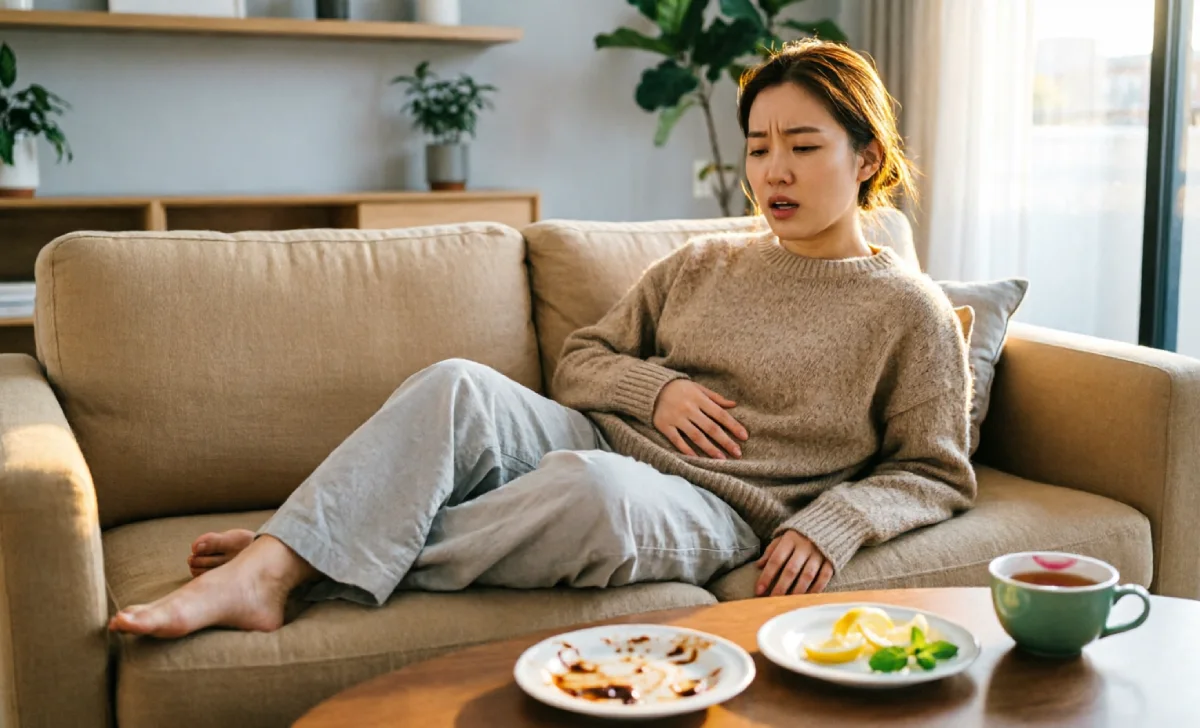
You know that heavy, tight feeling. The one where your jeans suddenly feel two sizes too small and sitting down becomes an awkward negotiation with your own stomach. You’re not alone. So why does a perfectly good meal suddenly turn you into a human balloon? If certain foods seem to trigger your symptoms, learning about food intolerance signs might explain why. The good news? You can stop bloating after overeating without resorting to questionable detox teas or waiting it out in misery.
Truth is, your digestive system isn’t broken. It’s just overloaded. Here’s exactly how to ease the pressure, calm the gas, and get back to feeling like yourself again.
Why You Feel Bloated After a Large Meal (It’s Not Just “Gas”)
When you eat past your comfort level, a few things happen simultaneously. Your stomach physically stretches beyond its usual capacity. That stretch triggers nerve signals that read as “fullness” but often cross into discomfort.
At the same time, digestion slows down. Your gut needs more time to break down dense, fatty, or fiber-heavy foods. While everything sits there longer than usual, gut bacteria get to work fermenting undigested bits. That fermentation produces gas. Add swallowed air from talking or eating quickly, and you’ve got a perfect recipe for that tight, drum-like pressure.
It’s a mechanical and chemical process. Not a personal failure.
Immediate Relief: 5 Quick Fixes for Bloating After a Large Meal
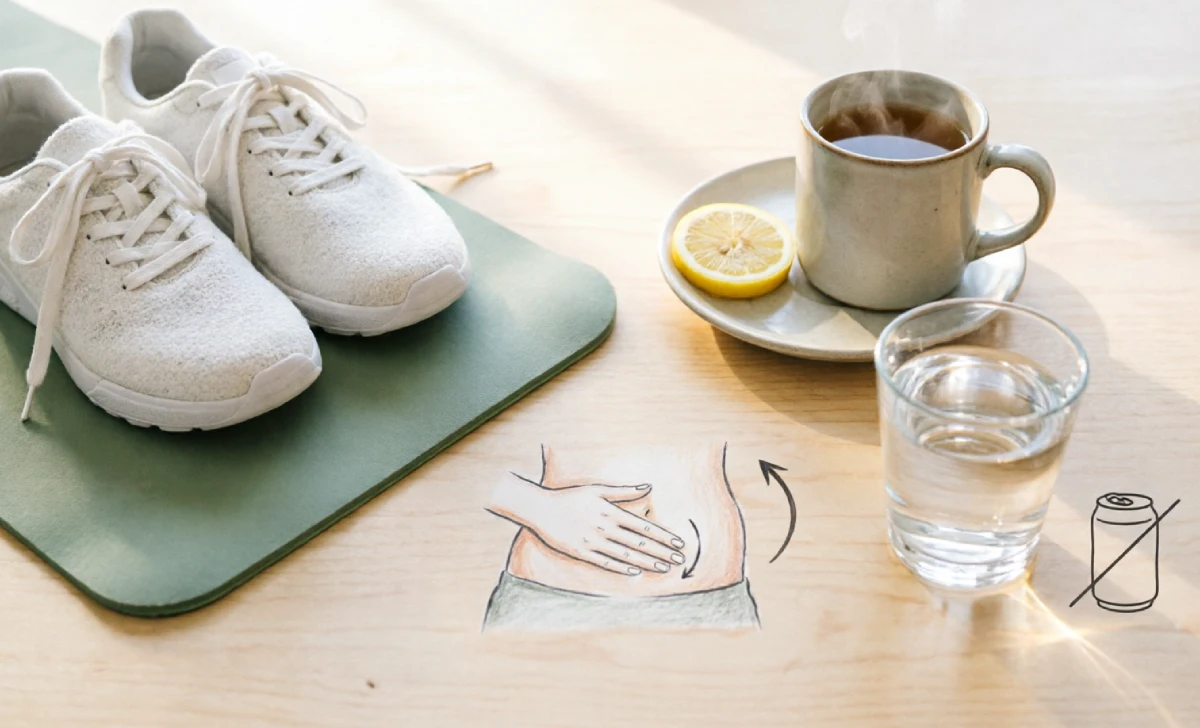
If you’re stuck at a dinner table or curled up on the couch five minutes after dessert, here’s what actually moves the needle. These aren’t magic tricks. They’re physical nudges to help your gut reset.
- Take a 10-minute walk. Don’t run. Just pace around your neighborhood or hallway. Gentle movement stimulates peristalsis, the wave-like muscle contractions that push food through your intestines. Studies show that light activity after meals significantly reduces gas buildup.
- Sip warm ginger or peppermint tea. Cold liquids can temporarily shock a full stomach. Warm liquids relax smooth muscle. Peppermint calms spasms, while ginger speeds gastric emptying. Keep it to one mug, not a gallon.
- Try the knees-to-chest pose. Lie on your back, hug your knees toward your chest, and rock gently side to side. It physically compresses the lower abdomen in a way that encourages trapped gas to move downward. Hold it for 30 seconds, breathe slowly, repeat twice.
- Massage your stomach clockwise. Follow the path of your colon. Start at your lower right hip, sweep up to your ribs, cross left, then down your left side. Use light pressure. It takes about two minutes and often brings noticeable relief.
- Skip the soda and chugging water. Carbonation adds more gas to an already pressurized system. Gulping water swallows air. Sip slowly if you’re thirsty. Also, watch out for swallowed air triggers like chewing gum or drinking through straws.
Natural Ways to Debloat After Dinner (No Pills Needed)
You don’t always need a supplement aisle to feel lighter. Natural ways to debloat after dinner usually come down to temperature, timing, and simple plant compounds your kitchen already has.
Keep your drinks lukewarm. Cold water forces your stomach to warm it up first, which briefly slows the whole digestive chain. If you love crunch, chew thoroughly. Incomplete chewing means larger food particles hit your intestines, giving bacteria more surface area to ferment. More fermentation equals more gas.
Try chewing a half-teaspoon of fennel seeds after eating. They’ve been used in Mediterranean and South Asian households for centuries because they contain anethole, a compound that relaxes intestinal muscles. You can also add a squeeze of lemon to warm water. The mild acidity can encourage digestive enzymes to work a bit more efficiently without irritating the stomach lining.
What to Do When You Feel Bloated After Eating: A Timeline
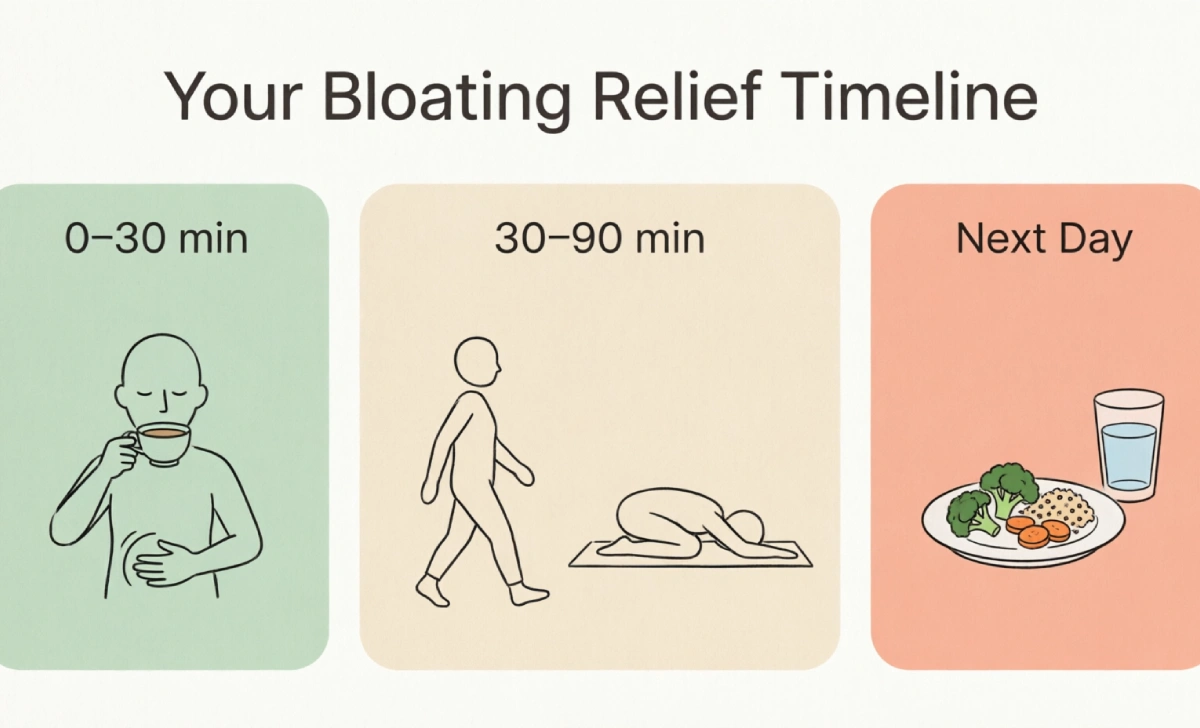
Guessing what to do when you feel bloated after eating usually leads to doing everything at once. That overwhelms your system. Instead, follow a simple windowed approach.
Not sure which window you’re in? Bookmark this page. It maps every symptom to the exact move that works at that stage.
0–30 Minutes Post-Meal Don’t lie flat. Stand or sit upright. Take slow, deep breaths through your nose to reduce stress signals that tense your gut. Sip one cup of warm tea. Avoid tight waistbands if possible.
30–90 Minutes. If the tightness hasn’t eased, get moving. A 10 to 15-minute walk does more than you’d expect. If you’re at home, try the gentle abdominal massage or a few yoga poses. This is the window where trapped gas usually starts shifting.
The next day, your stomach should feel normal. If it doesn’t, dial back heavy fats and large portions for 24 hours. Focus on easy-to-digest foods like broth, steamed vegetables, or plain rice. Hydrate steadily, but keep sips small and consistent. Adding more gut-healthy plant foods to your regular meals can also reduce future bloating episodes.
You’ve probably noticed that pushing through the discomfort rarely helps. Your gut just needs space and gentle movement.
Post-Meal Bloating Home Remedies: What Actually Works (And What Doesn’t)
The wellness space loves to push every tincture and capsule under the sun. Let’s cut through the noise and rank common post-meal bloating home remedies by real-world effectiveness.
- Walking & Light Movement: ★★★★★. Backed by physiology. Consistently reduces pressure within 15–20 minutes.
- Peppermint/Ginger Tea: ★★★★☆. Excellent for muscle relaxation and mild nausea. Less effective for severe gas but very safe.
- Apple Cider Vinegar: ★★☆☆☆. Popular online, but weak clinical support for acute bloating. Can actually irritate your esophagus if taken undiluted.
- Activated Charcoal: ★★☆☆☆. Binds to gas in the gut, but also binds to nutrients and medications. Only use it if you know it won’t interfere with prescriptions, and don’t make it a habit.
- Abdominal Massage: ★★★★☆. Low risk, high immediate comfort. Works best when done slowly and with light pressure.
Stick to what’s simple. Your body knows how to digest. You’re just clearing the traffic jam.
Prevent Bloating Before Your Next Big Meal
You don’t need to avoid social meals or special dinners. Just tweak how you approach them.
Start with a glass of water 20 minutes before eating, not during. It primes your stomach without diluting digestive juices mid-chew. Eat your fiber and protein before heavy carbs or rich sauces. They create a gentler digestion curve. Chew until each bite actually loses its texture. It sounds tedious until you realize you’re swallowing half the air that usually causes trouble.
If you know heavy meals trigger discomfort, consider keeping a digestive enzyme or a small dose of simethicone on hand. They won’t fix poor habits, but they take the edge off occasional overindulgence. Track your personal triggers in a simple notebook. Dairy? Beans? Artificial sweeteners? Your pattern will show up within two weeks. And don’t overlook proper hydration habits — consistent, small sips throughout the day support smoother digestion than large amounts during meals.
FAQs
Does lying down make bloating worse?
Usually, yes. Gravity helps keep stomach acid and food moving downward. Lying flat right after eating slows that process and can push gas upward, causing discomfort or heartburn. Wait at least two hours before reclining.
How long does normal post-meal bloating last?
For most people, mild to moderate pressure fades within 60 to 90 minutes as digestion catches up. If it lingers past 4 hours or repeats daily regardless of portion size, it’s worth discussing with a healthcare provider.
Is it better to drink water or tea after overeating?
Warm tea wins for immediate relief. Cold water is fine for hydration later, but temperature shock can temporarily slow stomach emptying. Sip either way slowly.
Can stress make bloating feel worse?
Absolutely. Your gut and brain share a direct nerve highway. When you’re anxious or rushed, your body shunts blood away from digestion and tenses intestinal muscles. Slow breathing actually tells your nervous system it’s safe to resume normal gut function.
Final Thoughts
Overeating happens. Your digestive system is resilient, and it usually just needs a bit of time, gentle movement, and less panic. Follow the timeline, stick to the proven fixes, and give your body the space it’s asking for.
Next time you’re planning a big dinner or heading into a weekend full of heavy meals, check out our guide on mindful eating habits that actually stick without feeling restrictive.