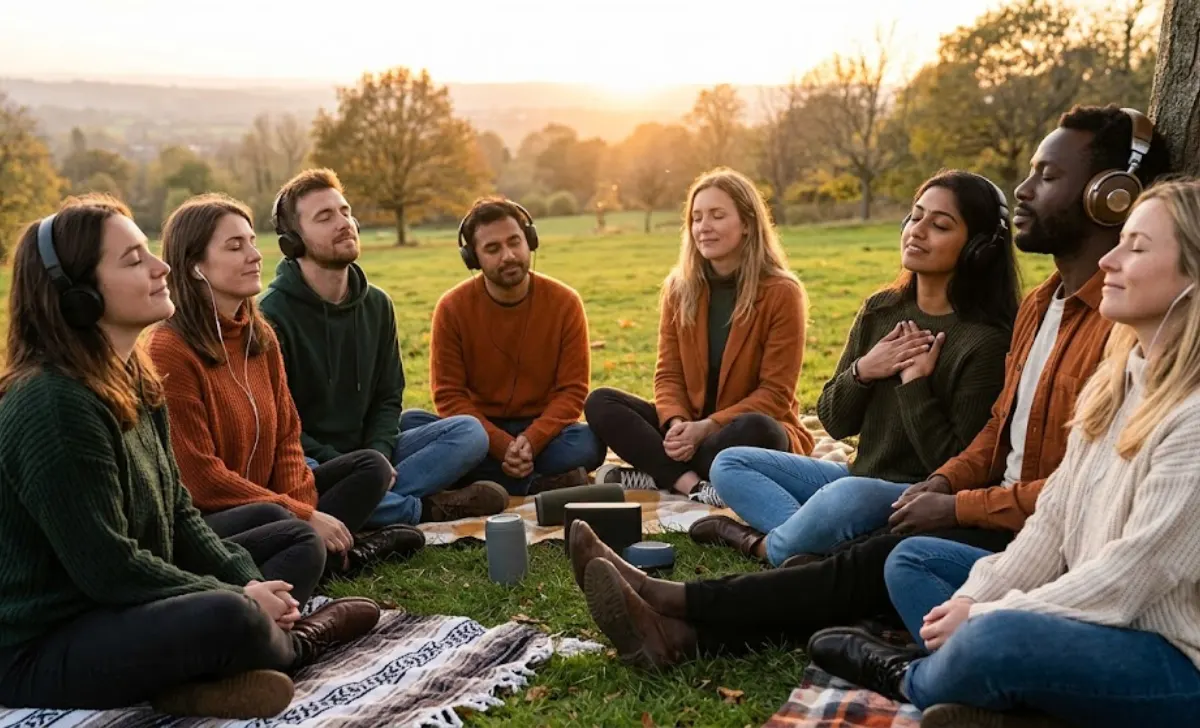
Have you ever been stopped in your tracks by a melody, even though you couldn’t understand a single word? That moment — when sound moves you before your mind catches up — is the heart of what it means to discover music without language. Something inside you understood perfectly, no translation needed. That wordless recognition is what we’re about to explore.
This experience is deeply human, hardwired into all of us long before language existed. Scientists, musicians, and everyday listeners keep arriving at the same conclusion. Music without words can bridge gaps that spoken language never could.
In this guide, you’ll learn why music doesn’t need translation, how your brain already knows this, and the simplest ways to fill your life with sound that connects you to people everywhere.
Why Is Music Called a Universal Language?
You’ve probably heard the phrase “music is the universal language” so many times it sounds hollow. But the idea has stayed alive for centuries because it points to something real, something that runs deeper than any quote.
Long before alphabets and grammar, early humans gathered around fires and used drums, flutes, and their voices to share emotions. They mourned, celebrated, and warned each other through sound. A lament didn’t need a translator then, and it still doesn’t today.
Ethnomusicologists have documented how similar melodic patterns signal joy or sorrow across completely unrelated cultures. This isn’t learned behavior. It’s a shared emotional grammar that belongs to all of us.
When cellist Yo‑Yo Ma plays a folk tune from a country he’s never visited, audiences weep without knowing the song’s origin. He often describes music as creating a moment of “shared presence” that no words can duplicate. You become part of a circle that includes people you will never meet, and yet you feel them.
What Happens in Your Brain When You Listen to Music Without Words?
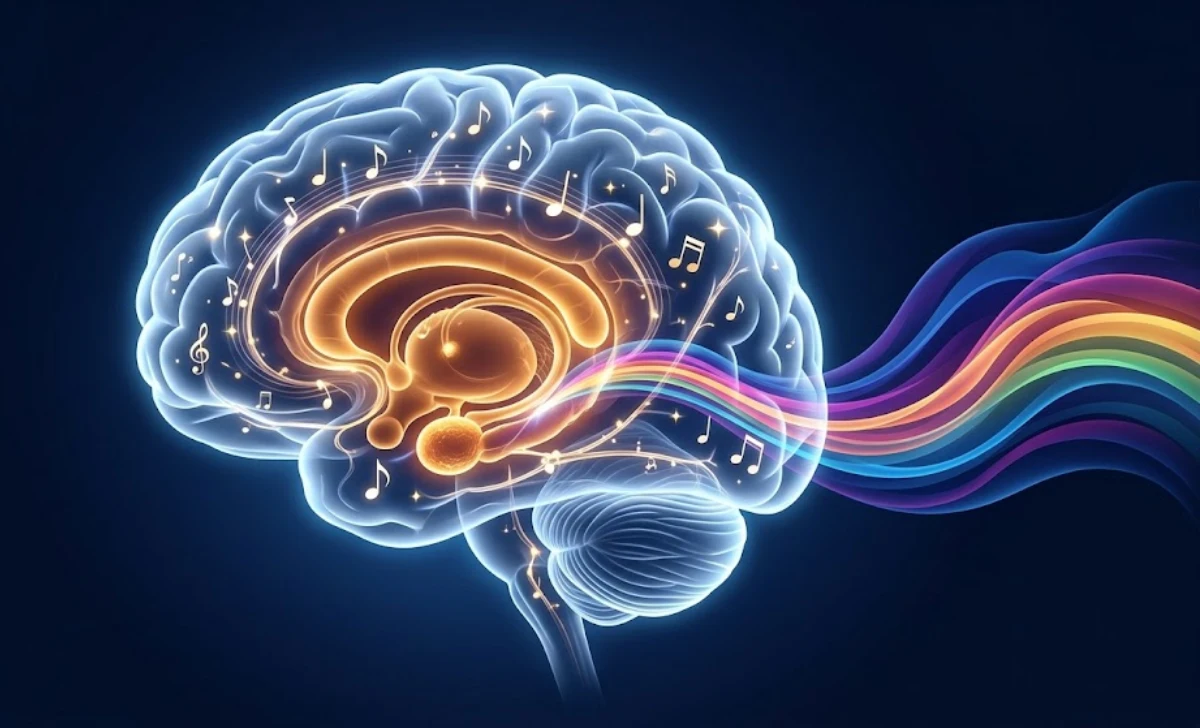
If you’ve ever wondered why a piece of music gives you chills, your brain holds the answer. The moment sound enters your ears, a cascade of activity lights up regions far beyond the ones that process speech. This is not just poetic. It’s biology.
Neuroscientist Daniel Levitin has spent decades studying how rhythm and melody affect the mind. He explains that music activates the limbic system — your emotional center — without needing to pass through language centers at all. A sad violin line can make your chest ache before you have time to think about it.
Your brain also uses mirror neurons when you hear someone else play or sing. These are the same cells that fire when you watch another person smile or cry. A soaring note can make your own body feel the tension and release as if you were creating the sound yourself.
Rhythm, in particular, pulls you into a shared physical experience. When you tap your foot without meaning to, your motor cortex is syncing with the beat. Even if you’re alone in the room, your body is practicing a kind of invisible togetherness. That’s exactly why a stadium full of strangers can suddenly move as one when a drumline begins. Music and tempo affect endurance in measurable, physical ways for this same reason.
Can You Really Feel a Song Without Understanding the Lyrics?
You might assume that lyrics carry most of a song’s meaning. Without words, music is just a pleasant backdrop — right? But your own experience probably tells a different story if you look at it honestly.
Think about the last time a film score made your heart race. Composers like Hans Zimmer build entire worlds of tension and release without a single word. The melody, the instrumentation, and the pacing do all the emotional work. The story goes directly to your nervous system.
The human voice itself carries emotional meaning even when you strip away language. You can tell if someone is happy, frightened, or grieving from the tone and rhythm of their speech alone. Music takes that raw non-verbal signal and heightens it into something you feel in your bones.
Hans Christian Andersen put it simply: “Where words fail, music speaks.” That line has been quoted for over a century because it matches our deepest intuition. The fact that you can be moved by a song in a language you don’t know proves that language is only one small part of music’s message.
How Can You Start Discovering Music Without Language Today?
Now that you understand the why, here is the how. Finding music that connects you across cultures is easier than it has ever been. The tools are already in your pocket.
Open Spotify or Apple Music and search for playlists like “Instrumental World,” “Global Ambient,” or “Peaceful Piano.” These are curated by real listeners and often feature artists from dozens of countries. Let the music play while you work, walk, or rest, and notice what moves you.
For something more adventurous, try the free app Radio Garden. It lets you spin a globe and tune into live radio stations anywhere on Earth. One moment you’re listening to a folk station in Mongolia, the next you’re drifting through West African kora melodies. There’s no algorithm deciding what you hear — just the unfiltered sound of a place.
You don’t need to understand the artist bios or the track titles. Just listen. When something moves you, save it. Over time, you’ll build a personal library of music that speaks to you without a single word. This practice slowly rewires your ear to find meaning beyond language. It’s the same spirit behind creating shared playlists with people you care about — music becomes the common thread.
What Can 5 Instrumental Traditions Teach Us About Connection?
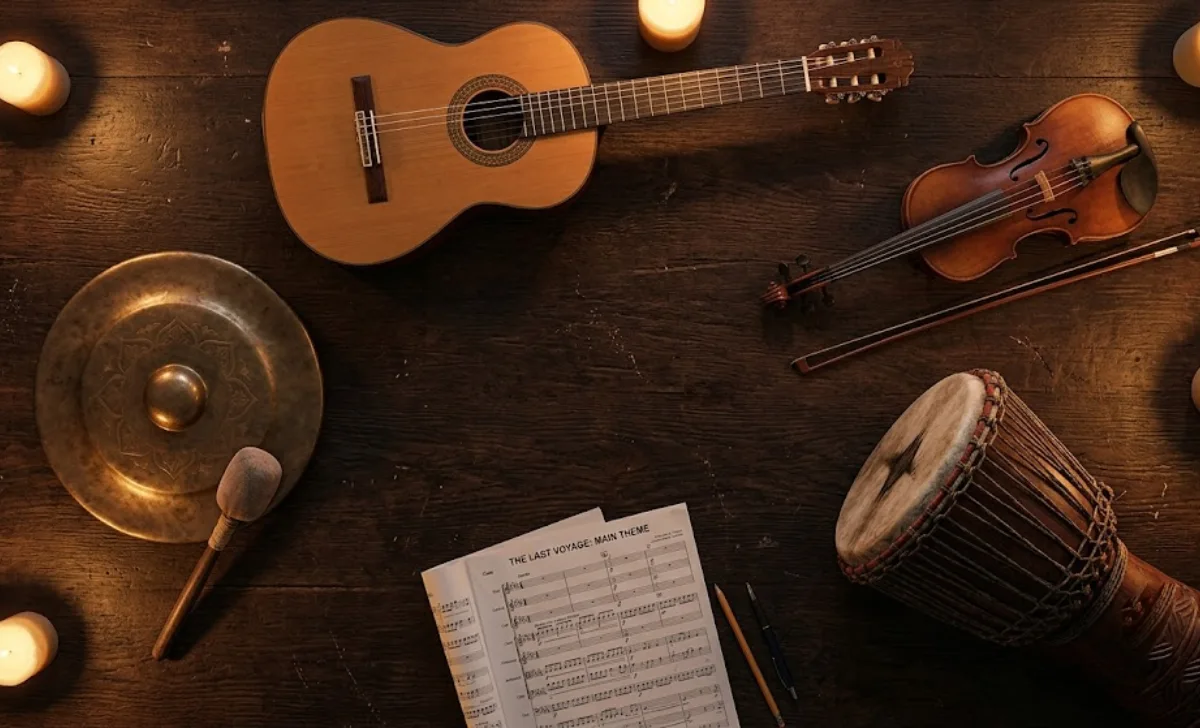
Different cultures have been refining the art of wordless music for centuries. Each tradition offers a unique lesson in how sound alone can build community, express grief, or capture joy.
Gamelan music from Indonesia is built on interlocking rhythms and metallic gongs that create a shimmering, collective sound. There is no single star performer. The whole is always greater than the parts, and the music teaches you to listen not for a voice, but for the spaces between the notes.
Indian classical ragas are tied to specific times of day and seasons. A morning raga doesn’t tell you the sun is rising — its melodic structure evokes that precise feeling of slow, golden light. You don’t study this tradition to understand it. You simply sit with it and let it color your mood.
Irish fiddle tunes, often played at speed in cozy pubs, bind a room through shared foot-tapping energy. That driving pulse pulls you into a communal joy that no conversation could create so instantly.
West African drumming uses layered polyrhythms to weave multiple voices into one conversation. Each drum speaks a different pattern, and together they form a dense, uplifting fabric that functions as both storyteller and heartbeat for the whole community.
Film scores give you perhaps the most personal lesson of all. The swelling strings in a pivotal scene don’t explain the plot — they bypass your analytical mind and go straight to your emotions. This is why hybrid theatrical streaming has kept the full orchestral experience at the center of cinema, regardless of format.
Why Does Rhythm Make Us Feel Like We Belong?
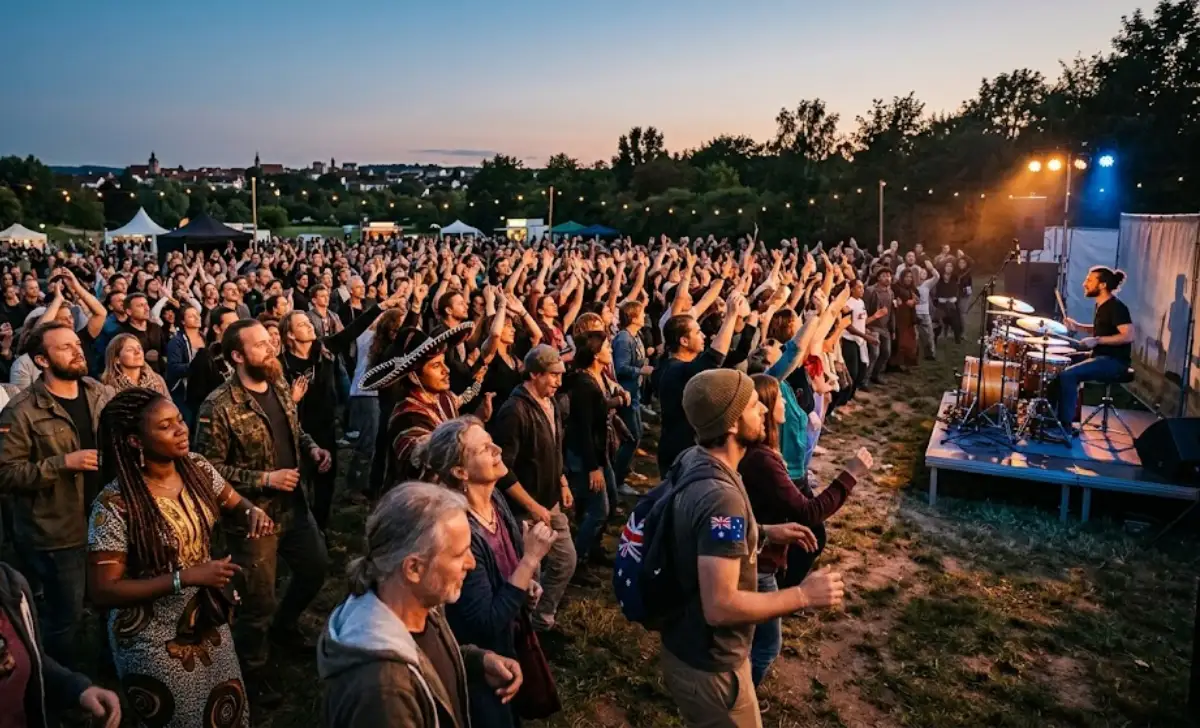
If you’ve ever joined a crowd clapping in unison or found yourself swaying at a concert, you’ve touched something ancient. Rhythm does more than organize sound. It brings people’s bodies into physical sync, and that synchronization triggers a deep sense of belonging.
Research shows that moving together to a beat releases oxytocin — the same hormone that bonds parents to children and close friends to each other. Even in a crowd of strangers, your brain begins to blur the line between “me” and “us.” This effect is measurable and profoundly real.
You can see it in a drum circle or a virtual watch party where people share an experience across distance yet move through it together. The shared beat acts as social glue. It quietens self-consciousness and replaces it with a simple, shared present.
When you listen to rhythm-heavy music from another part of the world, your body is already preparing to connect. That gut-level sense of belonging doesn’t need a translator. It just needs you to lean in.
How Can Music Help You Feel Closer to the World Every Day?
Knowing all of this changes how you can show up each day. Wordless music doesn’t have to be a separate activity you schedule. It can become a quiet, constant thread connecting you to a much bigger human story.
Try starting your morning with an instrumental track from a country you’ve never visited. Let it replace the news for a few minutes. Notice how your body responds before your mind labels anything. That brief window, free from verbal chatter, can set a calmer and more open tone for everything that follows.
When you feel isolated or stuck inside your own thoughts, a few minutes of wordless music can act as a bridge. It doesn’t fix your problems, but it quietly signals that the feeling is universal. Somewhere, someone else has felt exactly what you’re feeling, and they turned it into sound you can now share. This sense of global reach is why budget home entertainment setups have become so important — access to the world’s music shouldn’t require expensive gear.
Over time, this practice builds a quiet emotional resilience. Connection is always available, even when words fail. All you need to do is press play.
FAQs
Do I need musical training to feel connected through instrumental music?
Not at all. The emotional response to music is built into your brain, not your education. You don’t need to name notes or understand music theory to be deeply moved. The connection happens before your thinking mind even gets involved.
What if I miss lyrics and feel something is missing?
This is very common, but it’s a habit, not a limitation. Start with film scores or soundtracks that carry a clear emotional story. Soon your ear will begin to find the narrative in the melody itself, and the absence of words will feel like freedom rather than emptiness.
Are there playlists updated regularly for world instrumental music?
Yes, and they’re easy to find. Spotify’s “Instrumental World” and “Atmospheric Calm” playlists are refreshed often. YouTube channels focused on ethnomusicology also share carefully recorded traditional pieces. Treat them as a weekly window into global sound.
Can music without words really help with loneliness?
It can be a steady, gentle companion. When a melody echoes your mood, it signals that another human somewhere has felt this too. That quiet recognition can soften the edges of solitude and make the world feel a little more kind.
Conclusion
Music’s deepest gift has never been about language. It’s about the undeniable feeling that you belong to the same human family as strangers on the other side of the world. You now understand why that feeling is real, where it lives in your brain, and how to welcome more of it into your daily life.
Every instrumental piece you explore is a door left open by someone you may never meet. Walk through it with curiosity, and you’ll find that much of what you thought needed words never really did. Connection has always been simpler than language, and it’s already playing all around you.