
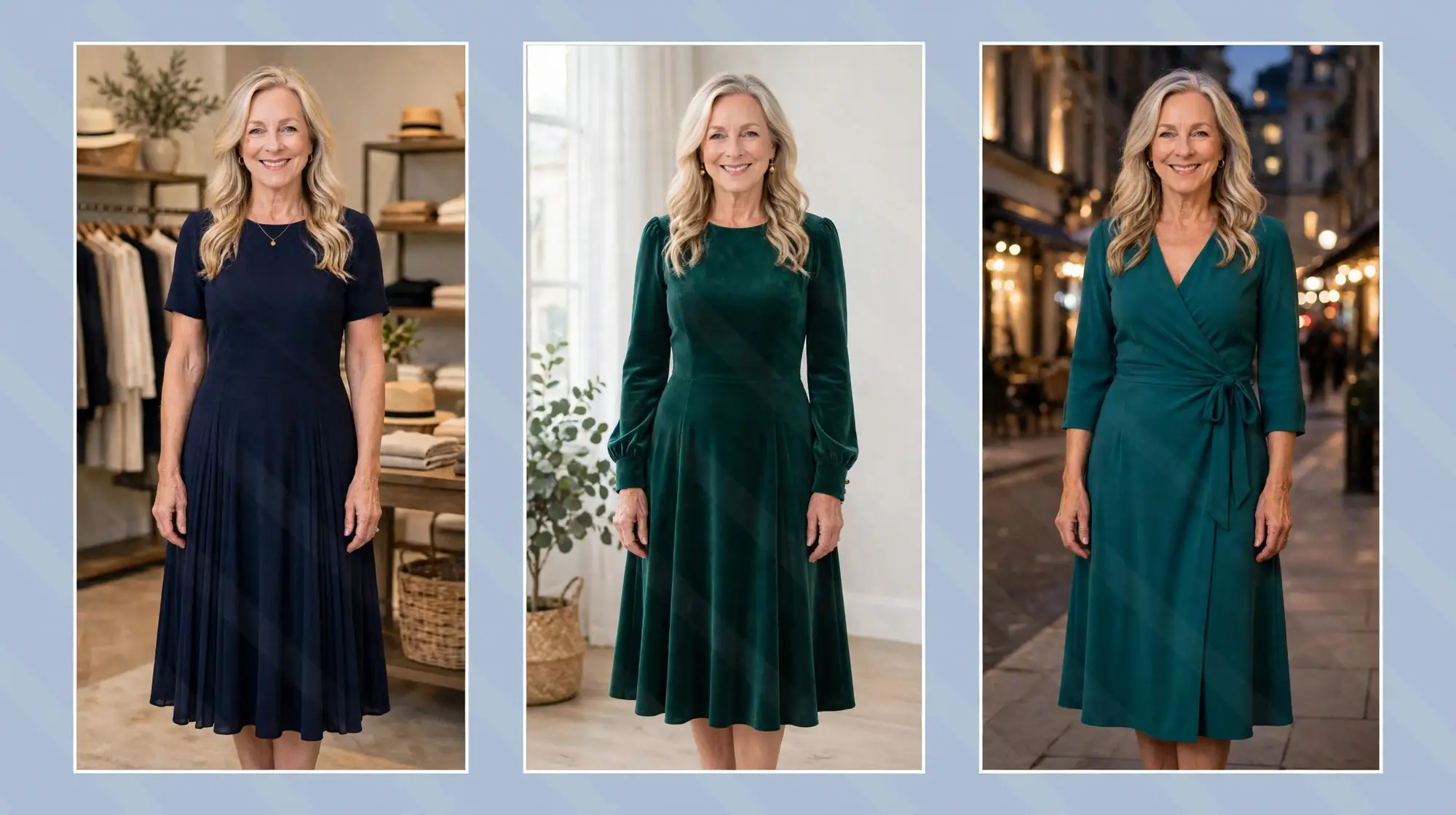
In this article
- Three Quick Questions to Identify an Inverted Triangle
- The Halter-Neck Midi
- The Deep V-Neck Fit-and-Flare
- The Full-Skirted Dress
- The Wrap Dress With a Flared Skirt
- The One-Shoulder or Asymmetric Dress
- The Drop-Waist Dress
- The Dress With Hip Detail
- The Two-Tone Dress
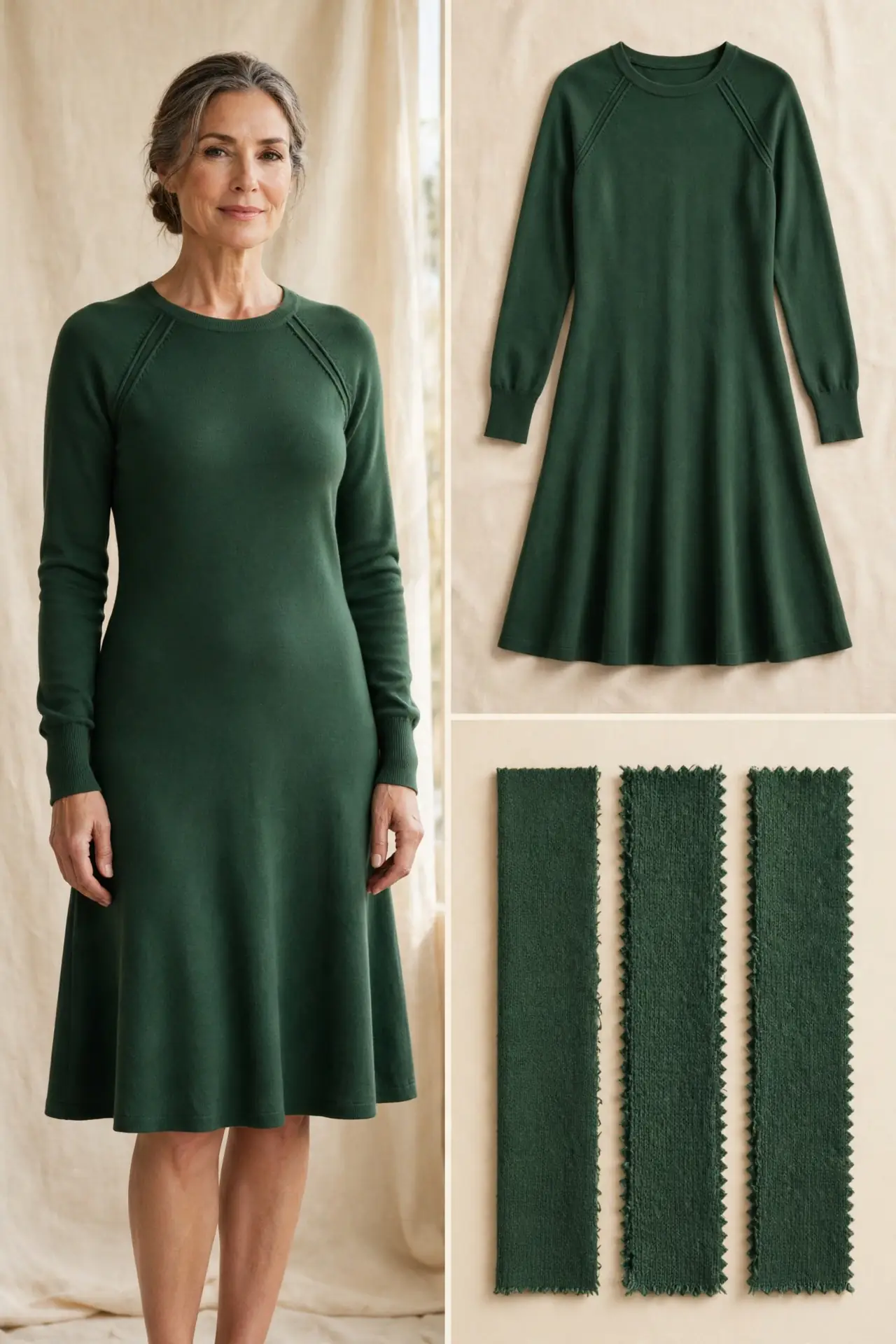
- The Raglan-Sleeve Dress
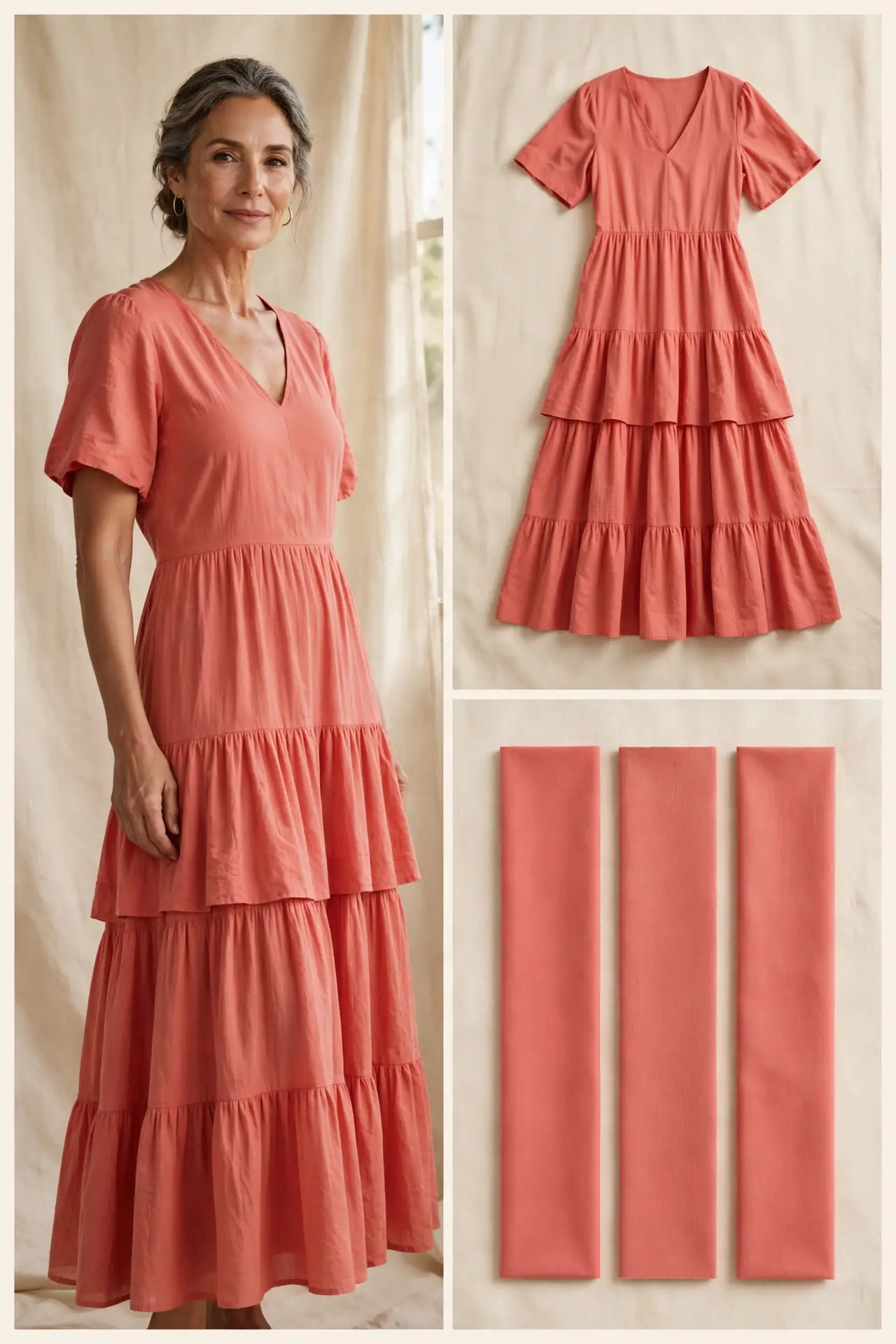
- The Maxi Dress With a Tiered Skirt
- Your Shoulders Are an Asset — Here’s How to Use Them
- Conclusion
Gail swam competitively until she was twenty-two, and she still swims a mile three mornings a week at 57. Her shoulders show it. For most of her adult life, buying a dress meant a familiar routine: find one that fit her hips, try to zip it over her back, and feel the fabric pull tight across her shoulders like a straitjacket. Blazers were worse. She’d given up on sleeveless dresses entirely, convinced they made her look “like a linebacker in a sundress.”
Then, while helping her granddaughter shop for prom, Gail picked up a halter-neck midi in deep teal just to hold it for her. On a whim, she tried it on herself. The neckline sliced diagonally across her shoulders, the full skirt swung out from her waist, and for the first time she saw her shoulders as strong rather than broad. Her granddaughter took one look and said, “Grandma, you have to buy that.”
If your shoulders are wider than your hips and you’re over 50, you’ve probably been told to “minimise” your upper body. This guide takes a different approach. These ten dress styles balance your proportions by adding shape and movement below the waist while showcasing the athletic, elegant upper body you already have.
Three Quick Questions to Identify an Inverted Triangle
An inverted triangle body shape has shoulders and/or bust that are noticeably wider than the hips, with a waist that’s moderately defined or fairly straight. Legs are often slim, and the overall frame can look strong and athletic.
Answer these three questions honestly:
When you buy a jacket, which part has to fit first? If you always size up to get it over your shoulders or back — and it then hangs loose around the hips — that’s a strong inverted triangle clue.
Do skirts and trousers often feel loose at the hips while tops feel tight across the shoulders? If your bottom half is consistently a size smaller than your top half, your proportions lean wider at the top.
When you look at a straight-on photo, does your silhouette narrow from shoulder to hip? If your body forms a gentle V shape from the shoulders down, you’re likely an inverted triangle.
Two or three “yes” answers usually mean you’re in this category. After 50, many inverted triangles notice that the bust becomes fuller while the hips stay slim, which can make the top-heavy effect more noticeable. The solution isn’t hiding your shoulders; it’s balancing them with volume, colour, and detail lower down, while choosing necklines that break up the width across your chest.
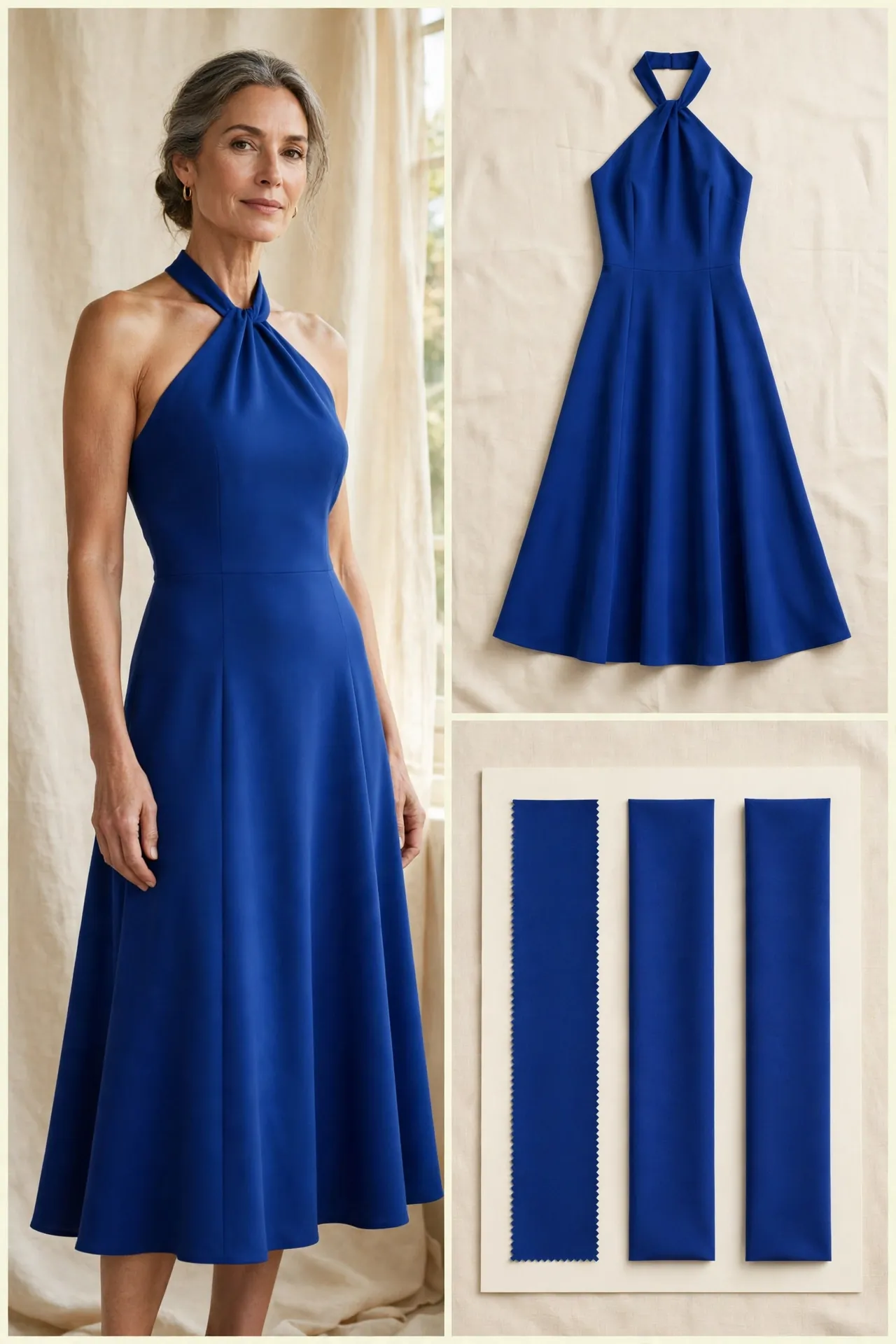
The Halter-Neck Midi
A halter neckline wraps around the back of the neck and cuts inward from the shoulders, leaving the outer shoulders and arms bare.
The inward diagonal lines draw the eye toward the centre of the body, visually narrowing the shoulders. Paired with a full or A-line skirt, it creates a balanced, elegant silhouette.
Choose a halter midi in a solid colour with a flared skirt. Keep jewellery to small earrings so the neckline does the work. Flat sandals or low heels keep it relaxed.
Quick win: if you prefer more arm coverage, wear a halter dress with a cropped bolero or lightweight shrug in a matching colour.
The Deep V-Neck Fit-and-Flare
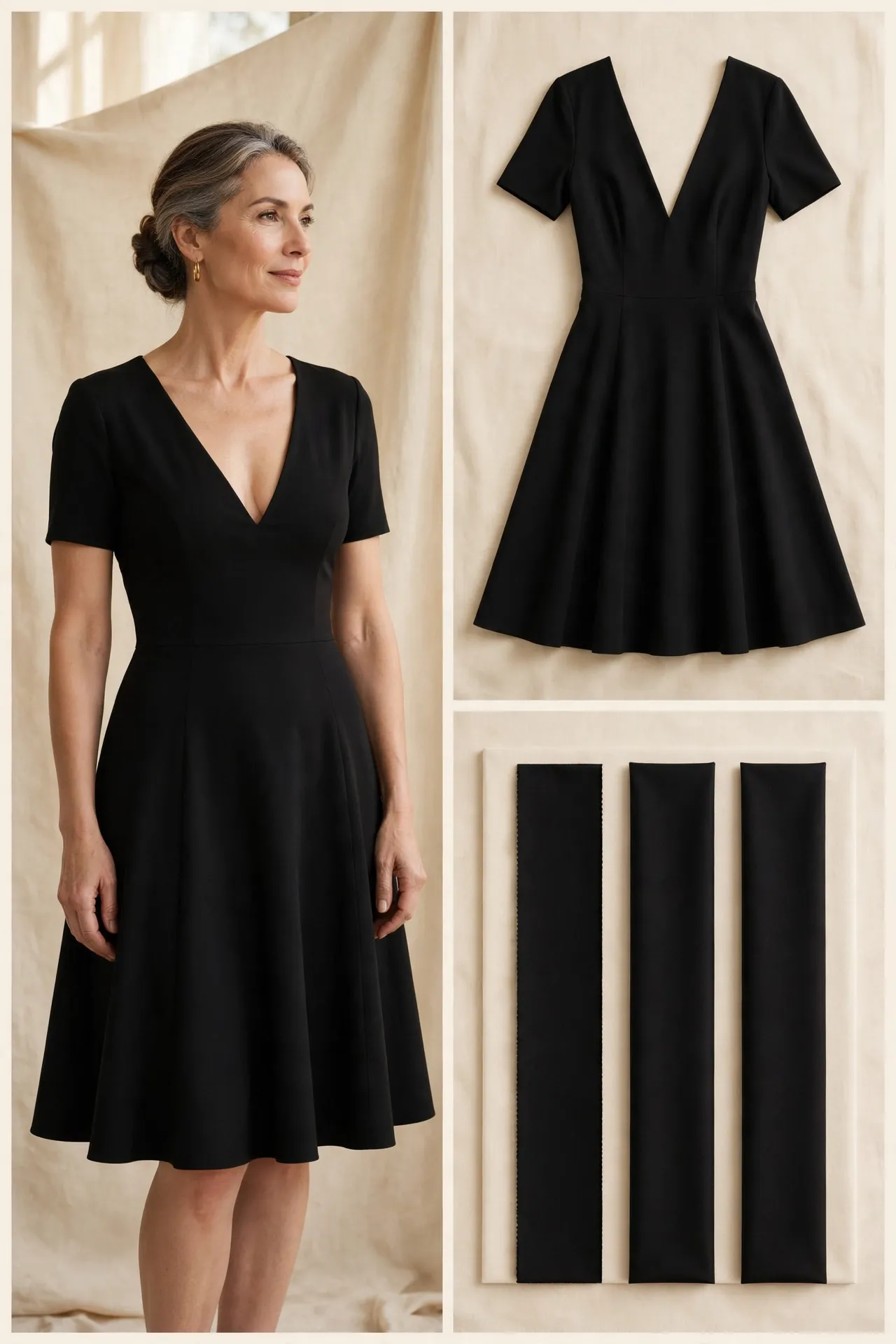
A fit-and-flare dress with a deep V-neck combines two of the most useful features for an inverted triangle.
The V-neck breaks up the width across the chest and shoulders, creating a vertical line that draws the eye down. The flared skirt adds volume to the hips, balancing the upper body.
Look for a V-neck that’s deep enough to create a strong vertical line but still comfortable for your coverage preferences. A camisole underneath can adjust the depth. Pair with block heels or ankle boots.
Fit tip: check the shoulder seams. They should sit right at your shoulder bone, not extend beyond it, which would make your shoulders look wider.
The Full-Skirted Dress
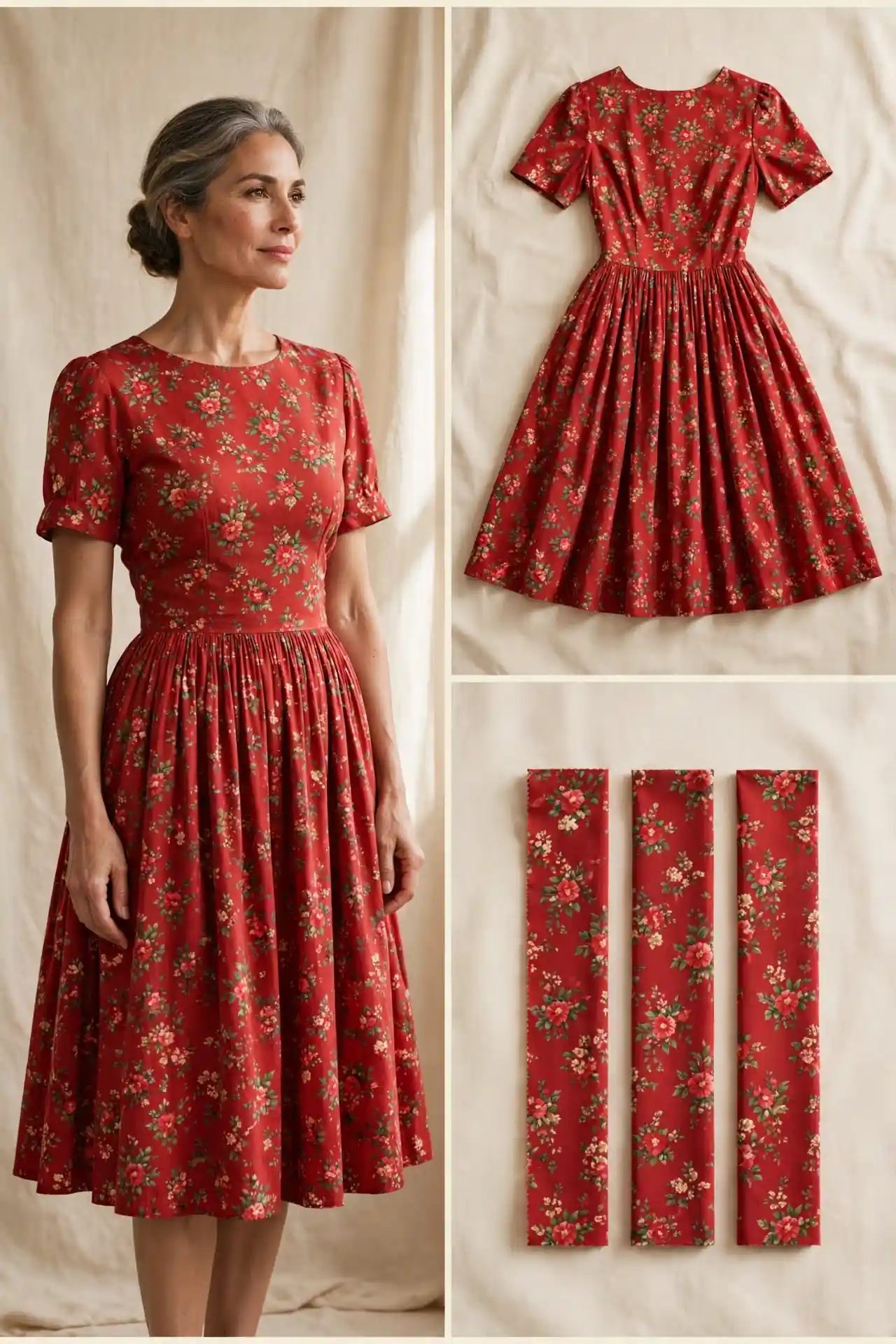
A dress with a gathered, pleated, or circle skirt adds significant volume below the waist.
For an inverted triangle, a full skirt is one of the most effective ways to balance the shoulders. The extra width at the hem matches the width at the top, creating a more hourglass-like silhouette.
Choose a dress with a fitted, simple bodice and a skirt that flares from the waist. Prints and colour on the skirt add extra emphasis to the lower half.
Best for: summer weddings, garden parties, and celebrations where you want a feminine, festive look.
The Wrap Dress With a Flared Skirt
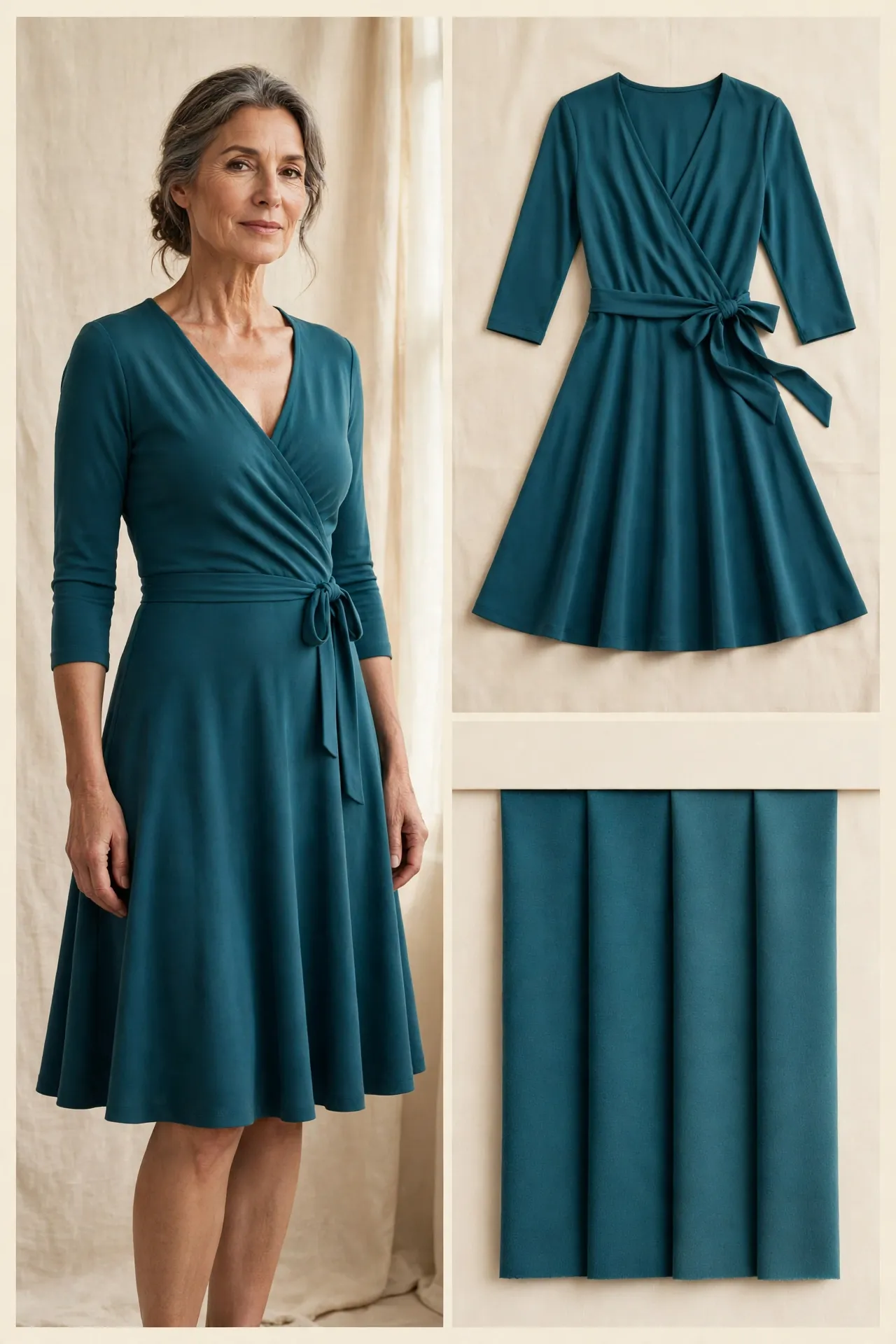
A wrap dress crosses over the bust and ties at the waist, creating a V-neck and a defined middle.
The V-neck breaks up the shoulder line, the tie defines the waist, and a flared skirt adds hip volume — all three working together. It’s one of the most versatile options for an inverted triangle.
Choose a wrap in matte jersey with a skirt cut in an A-line or flared shape, not a straight pencil. Pair it with heeled sandals in summer or knee boots in winter.
Before you buy: avoid wraps with heavy shoulder detail, ruffles, or puffed sleeves, which add width where you don’t need it.
The One-Shoulder or Asymmetric Dress
An asymmetric neckline runs diagonally from one shoulder to the opposite underarm.
The diagonal line cuts across the width of the shoulders, breaking up the horizontal line and creating movement. It’s especially striking for evening events.
Choose a one-shoulder dress with a fitted bodice and a draped or flared skirt. Keep accessories minimal — a single statement earring on the bare side looks elegant.
Comfort note: if you prefer more coverage, an asymmetric neckline with a cap sleeve on one side gives the same effect with more support.

The Drop-Waist Dress
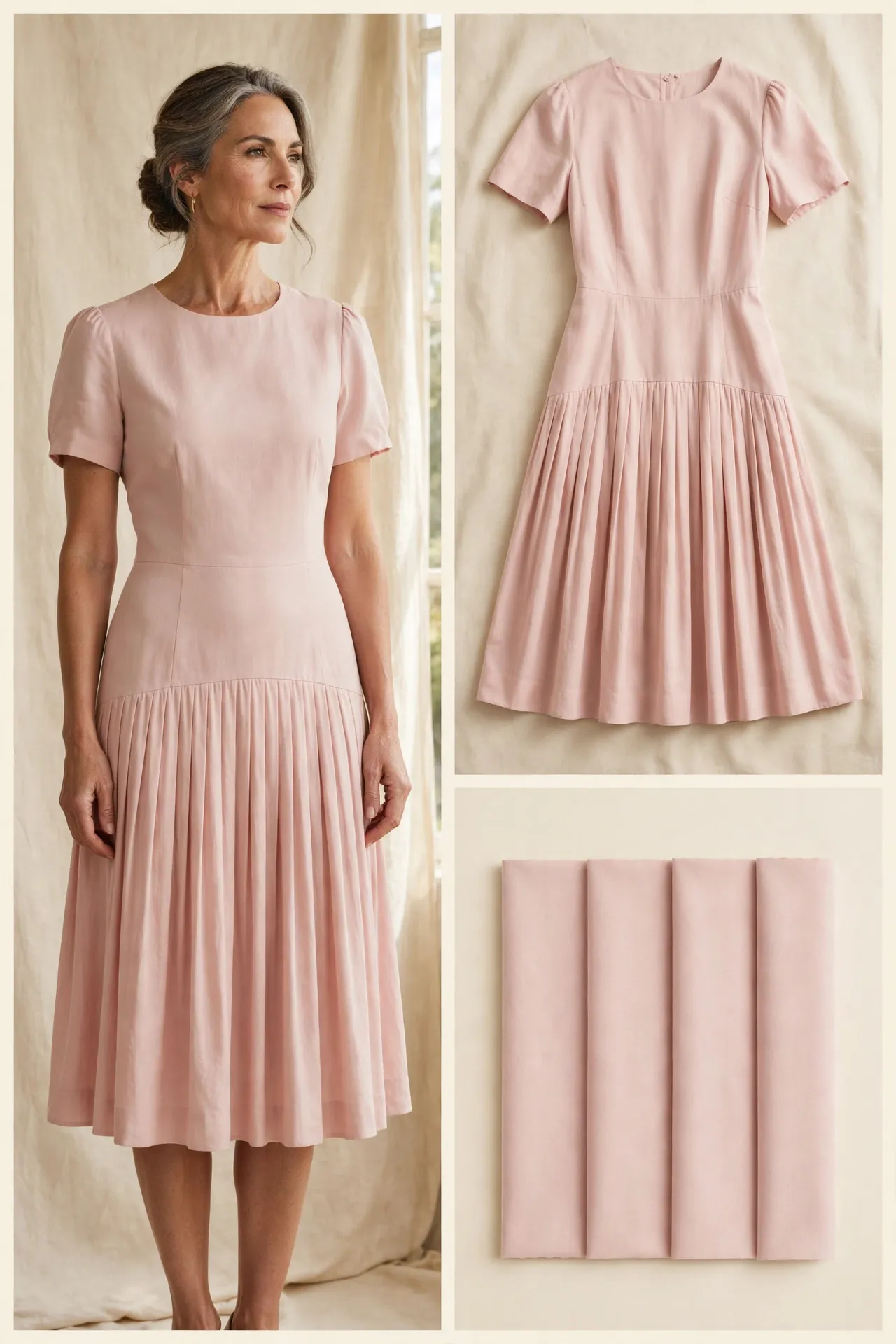
A drop-waist dress has its waist seam set at the hips rather than the natural waist, with a skirt that flares from there.
The low seam draws the eye downward and adds width at the hips, balancing broader shoulders. The flared skirt adds movement and volume to the lower half.
Choose a drop-waist dress in a soft fabric with a pleated or gathered skirt. A long pendant necklace adds extra vertical emphasis.
Styling idea: drop-waist dresses have a 1920s vintage feel. Pair one with T-bar shoes and a cloche-style hat for a fun, era-inspired look.
The Dress With Hip Detail
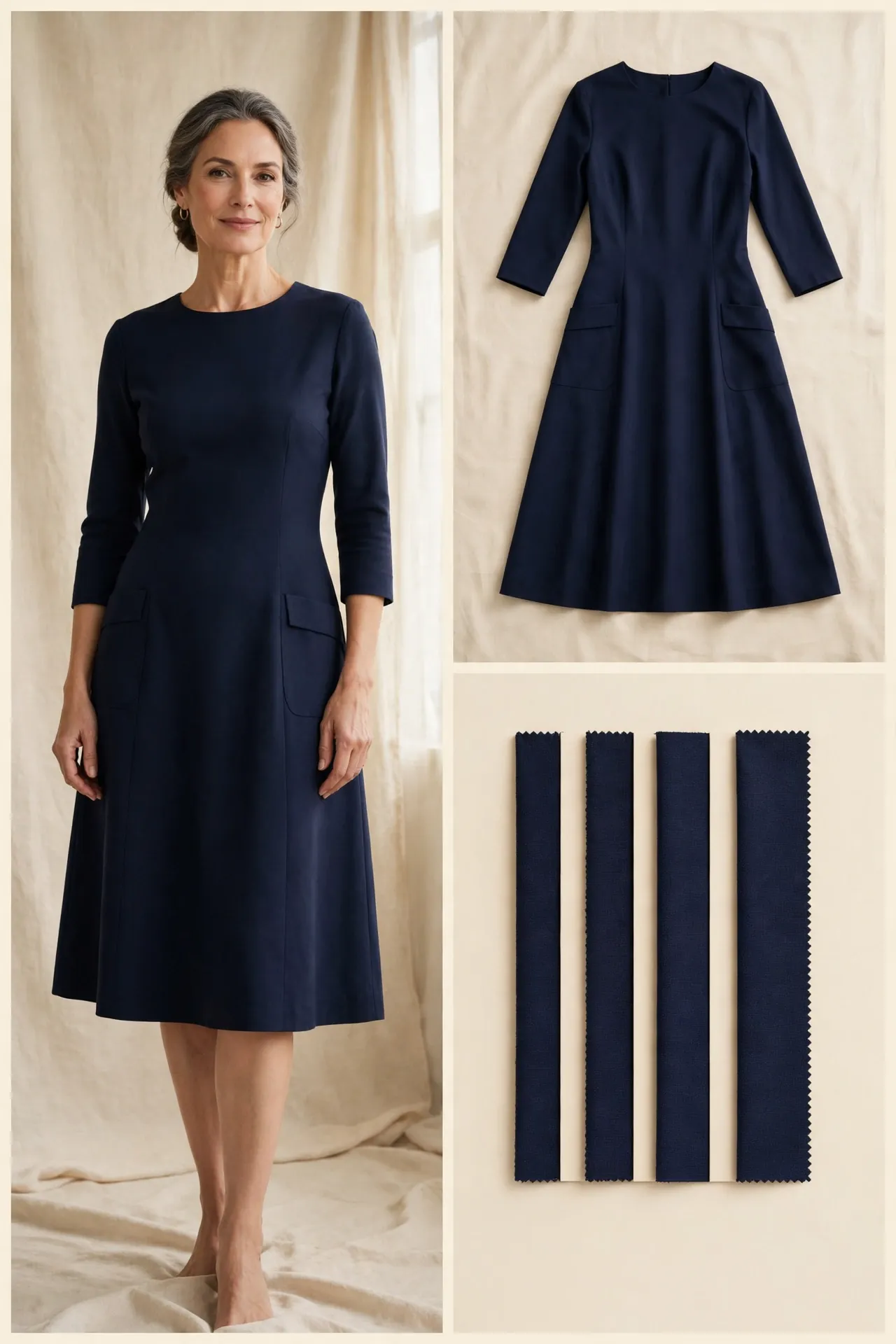
These dresses feature details at the hip, such as pockets, ruffles, bows, peplums, or embellishment.
Hip details draw attention to the lower half of the body, adding visual width that balances wider shoulders. Pockets in particular are practical and flattering.
Look for an A-line or fit-and-flare dress with patch pockets or a peplum at the hip. A plain, simple bodice keeps the focus on the lower half.
Wardrobe idea: a dress with deep side pockets is easy to wear for work, errands, and travel — and you’ll never need to carry a handbag for your phone again.
The Two-Tone Dress
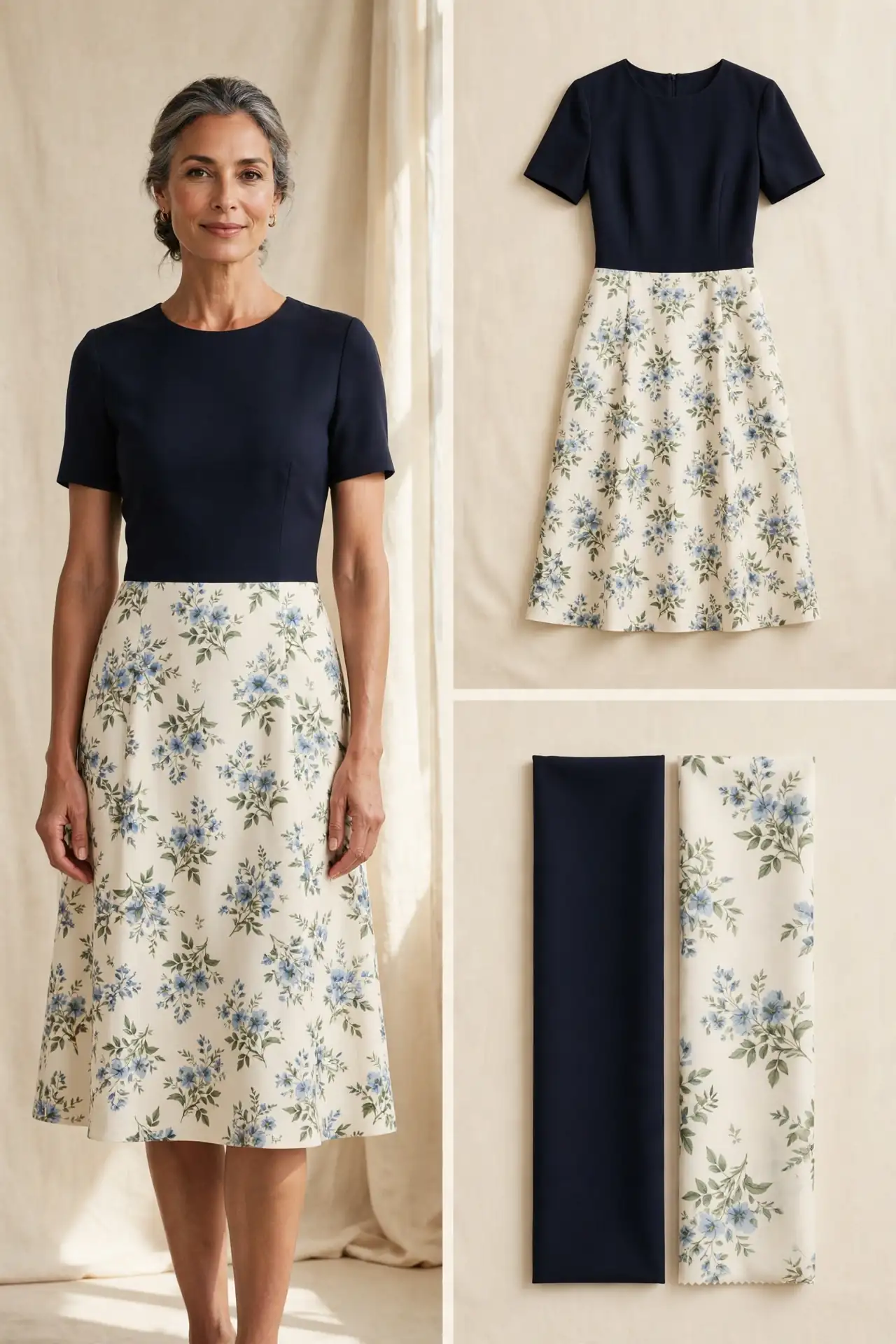
A two-tone dress has a darker top and a lighter or brighter skirt.
Dark colours recede and light colours advance, so a dark bodice visually narrows the shoulders while a lighter skirt adds emphasis to the hips. It’s a simple optical balance.
Choose a dress with a navy or black bodice and a pale, printed, or bright skirt. Keep shoes in the lighter colour to extend the effect.
Budget tip: you can recreate this with separates you already own — a dark fitted top tucked into a light A-line skirt gives the same result.
The Raglan-Sleeve Dress
Raglan sleeves run in one piece from the collar to the underarm, with a diagonal seam instead of a traditional shoulder seam.
Because there’s no horizontal seam at the shoulder, raglan sleeves soften and narrow the shoulder line. The diagonal seams also create movement.
Choose a raglan-sleeve dress in a soft knit or jersey, with a slightly flared skirt. It’s a comfortable everyday option for casual wear.
Season note: raglan-sleeve sweater dresses are ideal for autumn and winter. Pair with knee boots and opaque tights.
The Maxi Dress With a Tiered Skirt
A maxi dress with a tiered skirt adds layers of volume that increase toward the hem.
The tiers add width to the lower half of the body, balancing the shoulders, while the long length creates an elegant line. A simple V-neck or halter top keeps the upper body clean.
Choose a tiered maxi in cotton or chiffon, ideally with a V-neck or halter neckline. Flat sandals and a straw bag make it perfect for holidays.
Alternative: a midi-length tiered dress offers the same balancing effect with less fabric, if you prefer a shorter hem.
Your Shoulders Are an Asset — Here’s How to Use Them
Strong shoulders give structure to almost any outfit. Instead of covering them, choose necklines that frame them well, such as halters, V-necks, and asymmetric styles. Avoid heavy shoulder pads, puffed sleeves, and wide boat necks, which add width where you already have it. And remember that the right bra can make a significant difference in how a dress sits across the chest. For more smart-casual inspiration that suits strong shoulders, explore our smart casual guide for women.
Conclusion
An inverted triangle body shape is strong, elegant, and full of possibilities. With necklines that break up the shoulder line, skirts that add volume below the waist, and colours that balance your proportions, you can wear dresses that make you feel confident and beautifully balanced. Like Gail in her teal halter dress, you might discover that your shoulders aren’t something to hide — they’re one of your best features.