
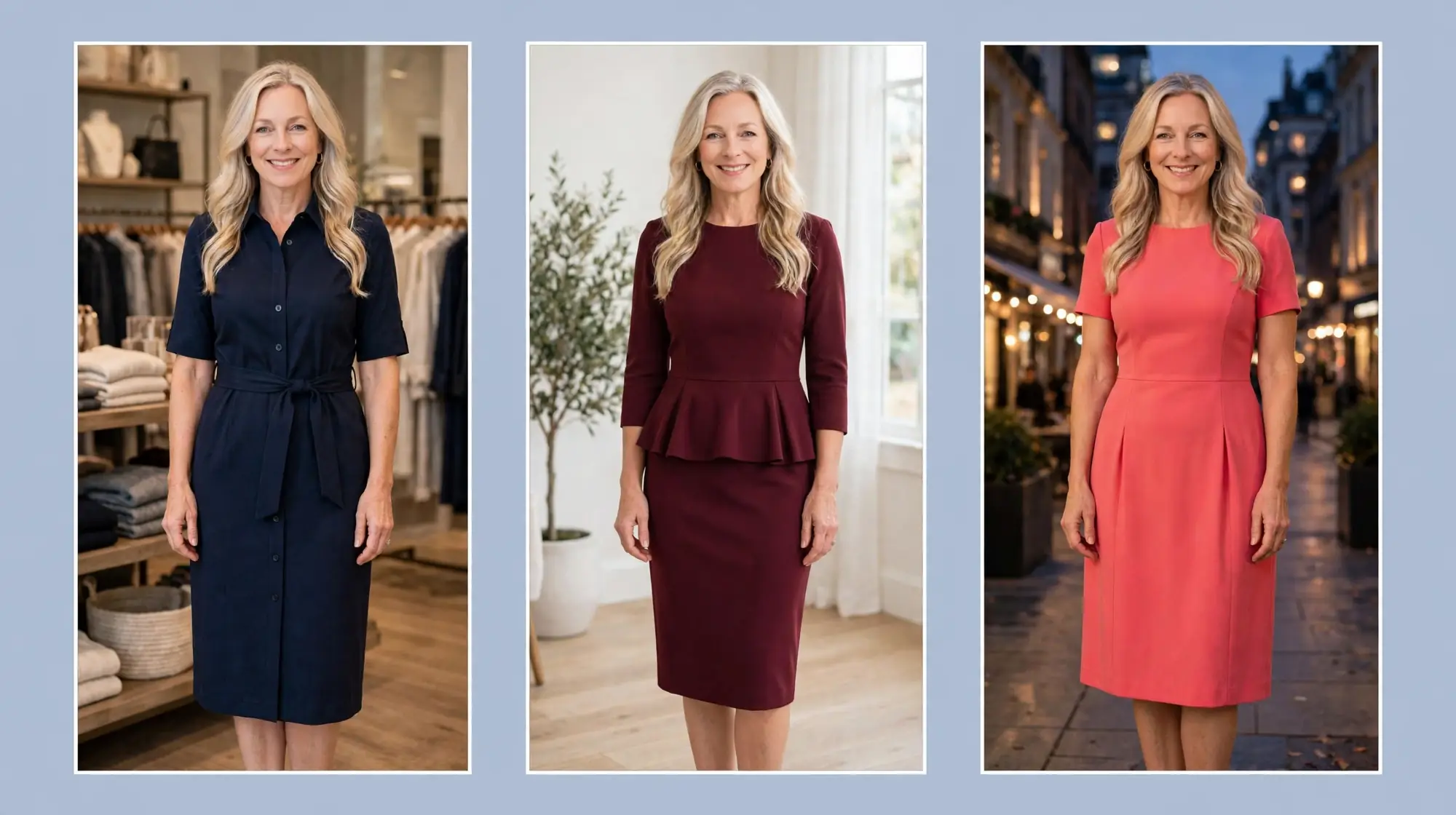
In this article
- The Phone Photo Test: Is Your Body a Rectangle?
- 1. The Belted Shirtdress — Instant Waist
- 2. The Wrap Dress — Built-In Curves
- 3. The Fit-and-Flare Dress — Volume Where You Want It
- 4. The Peplum Dress — An Hourglass Illusion
- 5. The Ruched or Draped Jersey Dress — Soft Shape Without Effort
- 6. The Tiered Maxi Dress — Movement and Flow
- 7. The Dress With Bust Detail — Adding Curve at the Top
- 8. The Colour-Block Dress With a Curved Seam
- 9. The Belted Sweater Dress — Cosy but Shaped
- 10. The Bias-Cut Slip Dress Layered With a Cardigan
- Creating Curves With Accessories
- Conclusion
Patricia’s son was graduating from medical school, and she’d bought a new dress for the occasion — a straight, sleeveless navy sheath that looked sleek on the mannequin. On her, it looked like a column of fabric. No waist, no curve, just navy from shoulder to knee. Her sister, who was tiny and curvy, told her she looked “very professional.” Patricia didn’t want to look professional. She wanted to look like a proud mother at a celebration.
On the morning of the ceremony, out of time and options, she grabbed a wide tan belt from her closet and fastened it around the dress. Then she swapped her plain pumps for strappy sandals and added a pair of bold gold earrings. The difference was startling — suddenly there was a waist, the eye had somewhere to land, and the dress looked intentional.
That small fix is the whole secret of dressing a rectangle shape: you’re not hiding anything, you’re adding shape and interest where the body is naturally straight. If your shoulders, waist, and hips run in a fairly straight line and you’re over 50, these ten dress styles will help you create curves, balance proportions, and look anything but plain.
The Phone Photo Test: Is Your Body a Rectangle?
A rectangle body shape (sometimes called straight, banana, or athletic) has shoulders, waist, and hips that are roughly the same width, with only a slight inward curve at the waist. Many rectangles have slim arms and legs and carry weight evenly across the body.
Here’s a quick way to check. Stand in front of a mirror or plain wall in fitted clothes — leggings and a close-fitting top work well — and ask someone to take a straight-on photo of you at chest height, or take it yourself with a timer. Open the photo and imagine drawing a straight vertical line down each side of your body, from the outer edge of each shoulder to the floor.
If your hips sit close to those lines and your waist only dips in slightly, you’re probably a rectangle. If your hips extend well past the lines, you’re closer to a pear; if your shoulders are clearly wider, you may be an inverted triangle. If there’s a noticeable dip at the waist with balanced shoulders and hips, you might be an hourglass instead.
After 50, rectangle shapes often notice the waist becoming even straighter, while the arms and legs stay slim. That’s why dresses that add definition — through belts, seams, wraps, or volume at the hips and bust — usually look more flattering than very straight, unstructured cuts. You’re adding shape, not correcting anything.
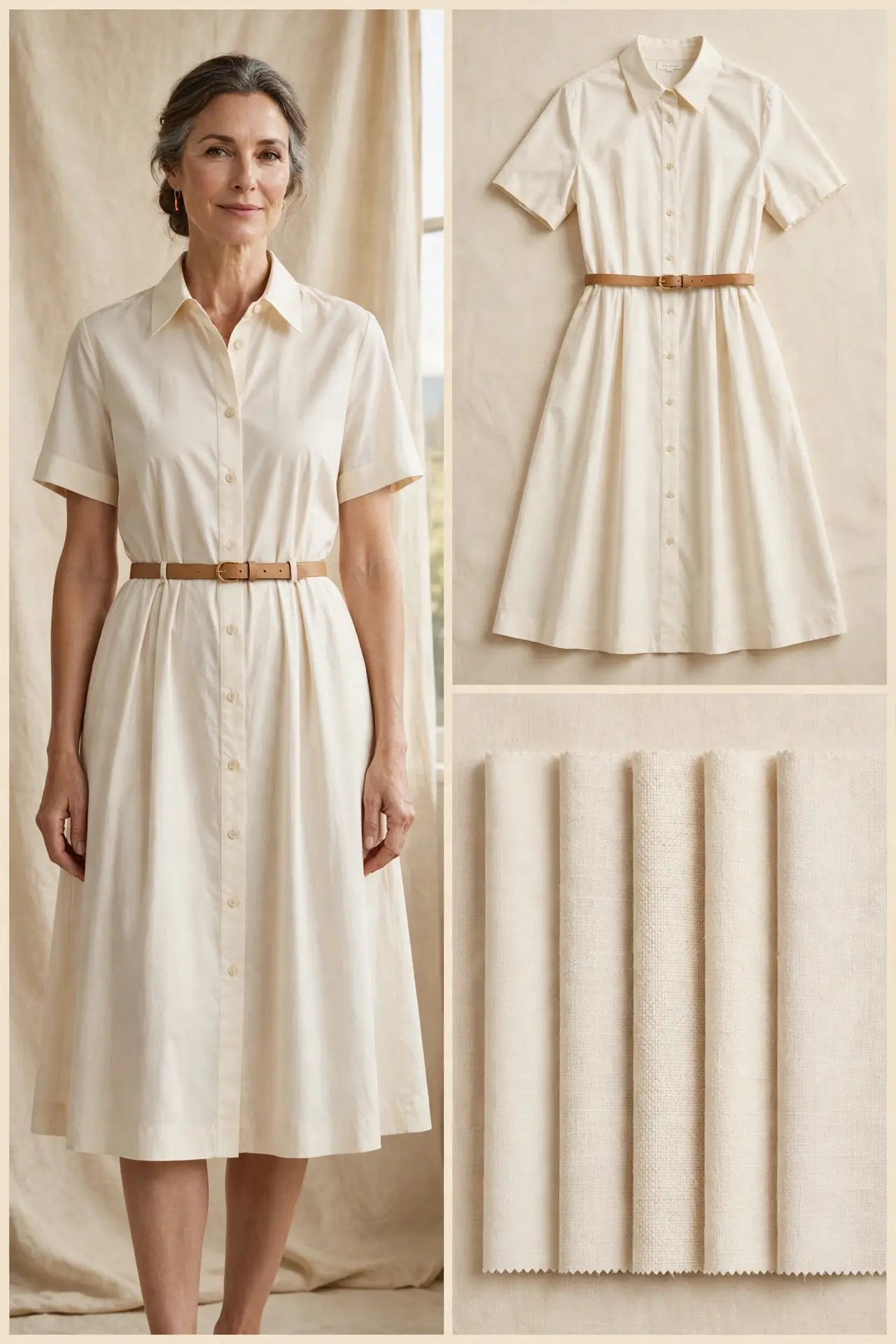
1. The Belted Shirtdress — Instant Waist
A shirtdress has a collar and button front borrowed from a classic shirt. With a belt at the waist, it becomes one of the easiest ways to create the illusion of curves.
The belt pulls in the fabric at the middle, while the collar and buttons add structure at the top and the skirt adds a little volume below. That combination gives a straight frame instant definition.
Choose a cotton or linen version with a slightly full skirt. A contrasting belt in leather or woven fabric works better than a self-tie in the same colour, because it creates a stronger waistline. Sneakers or espadrilles keep it casual; loafers make it office-friendly.
Try this: wear the belt about an inch higher than your natural waist. On a straighter torso, a slightly raised belt creates a more visible curve and lengthens the legs.
2. The Wrap Dress — Built-In Curves
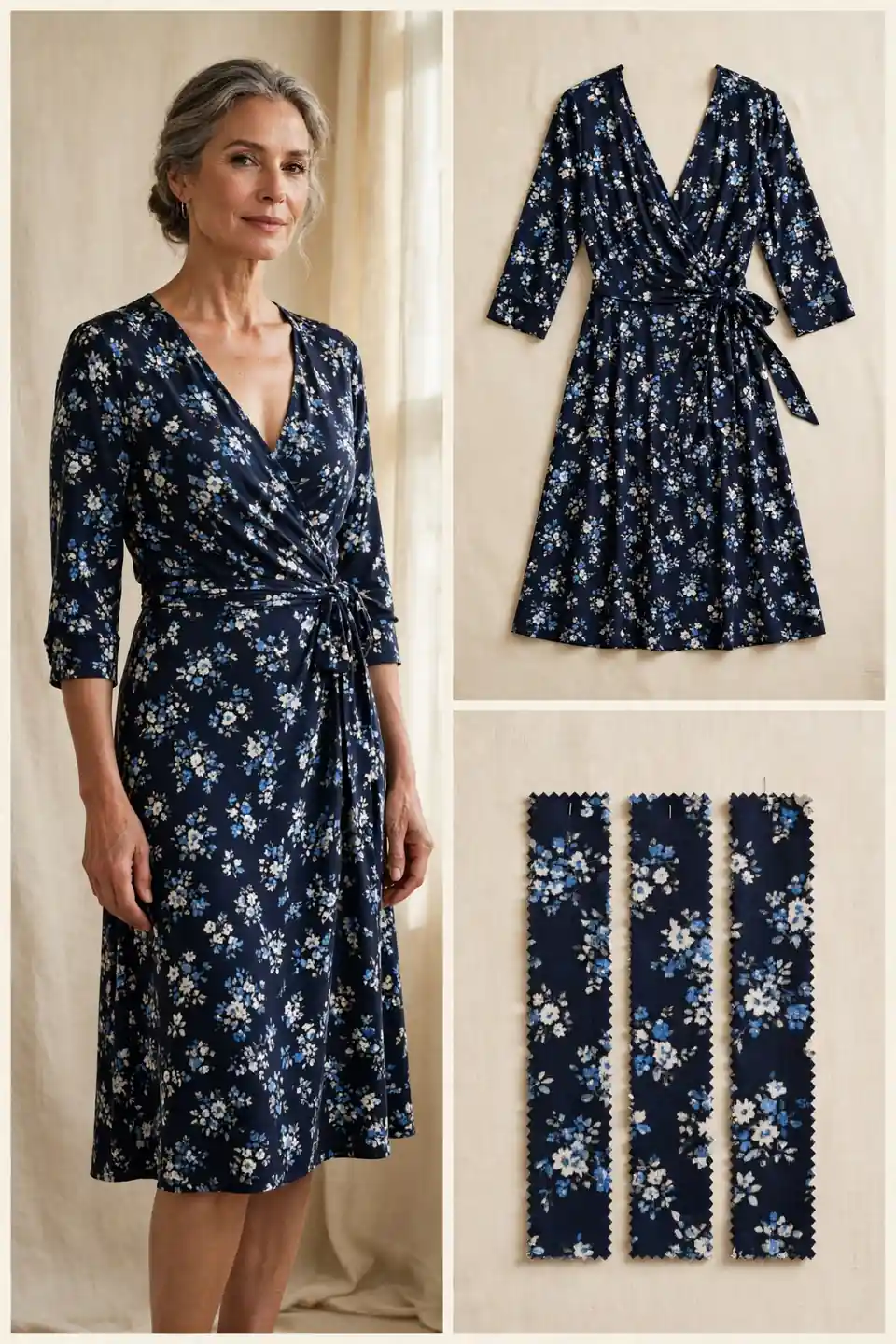
A wrap dress crosses over the body and ties at the waist, creating a V-neck and a defined middle.
The diagonal lines and tie create curves where a rectangle frame has fewer, and the adjustable waist means you can cinch it exactly where it looks best. Wraps also add a soft, feminine shape that balances a more angular frame.
Choose a jersey or crepe wrap with a slightly flared skirt. Delicate jewellery and block heels finish it.
Worth knowing: printed wrap dresses — especially florals or geometric prints — add even more visual curve than solid ones, since the pattern breaks up the straight line of the body.
3. The Fit-and-Flare Dress — Volume Where You Want It
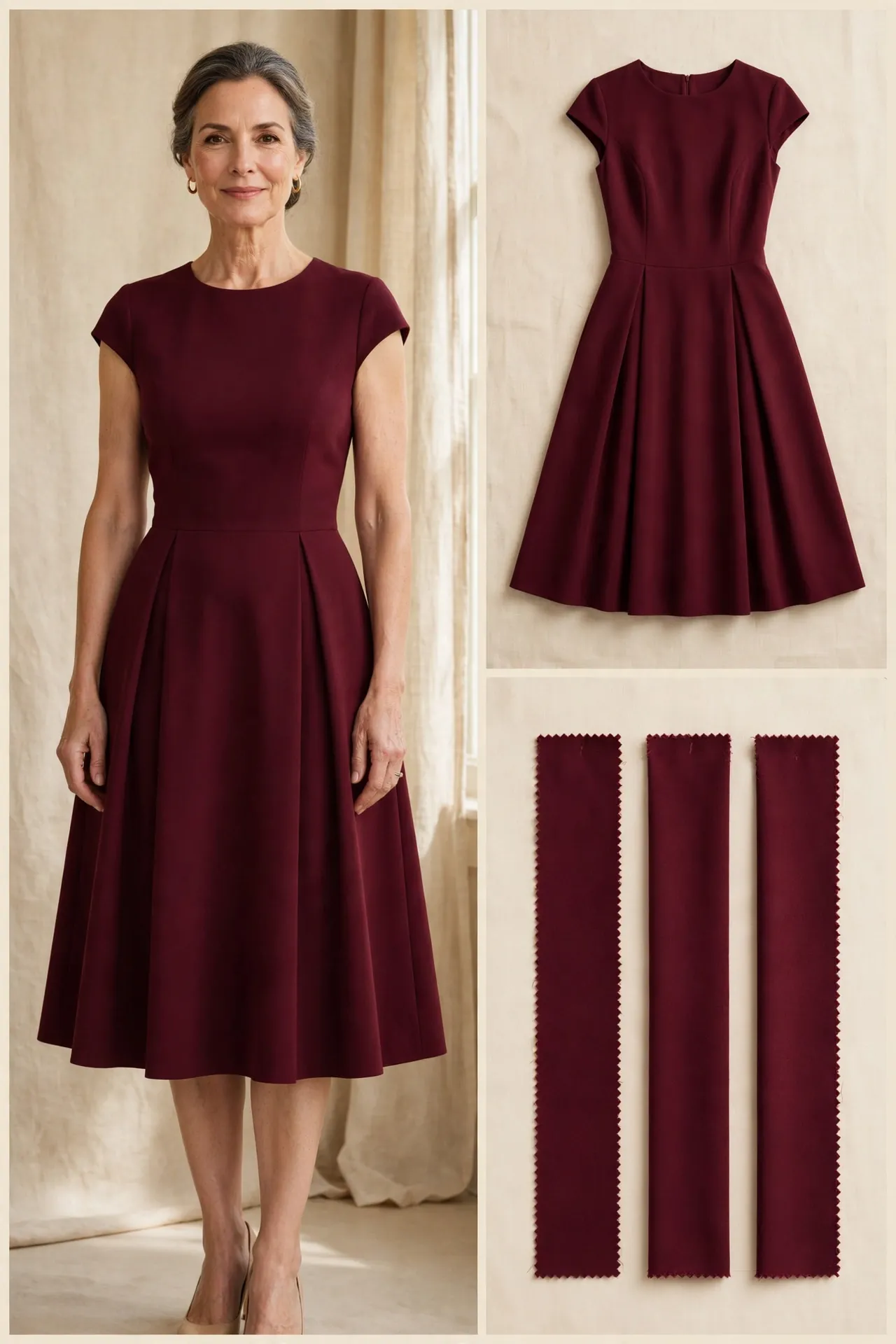
A fit-and-flare dress hugs the bodice and waist before opening into a fuller skirt.
For a rectangle, the flared skirt adds hip volume that the body doesn’t naturally have, while the fitted waist creates contrast. The result is a much more curved silhouette.
Look for skirts with pleats, gathers, or a circle cut for maximum flare. Ballet flats or Mary Janes add a playful touch; heeled sandals make it dressy.
Best occasions: garden parties, summer weddings, brunches, and any celebration where you want a feminine, festive shape.
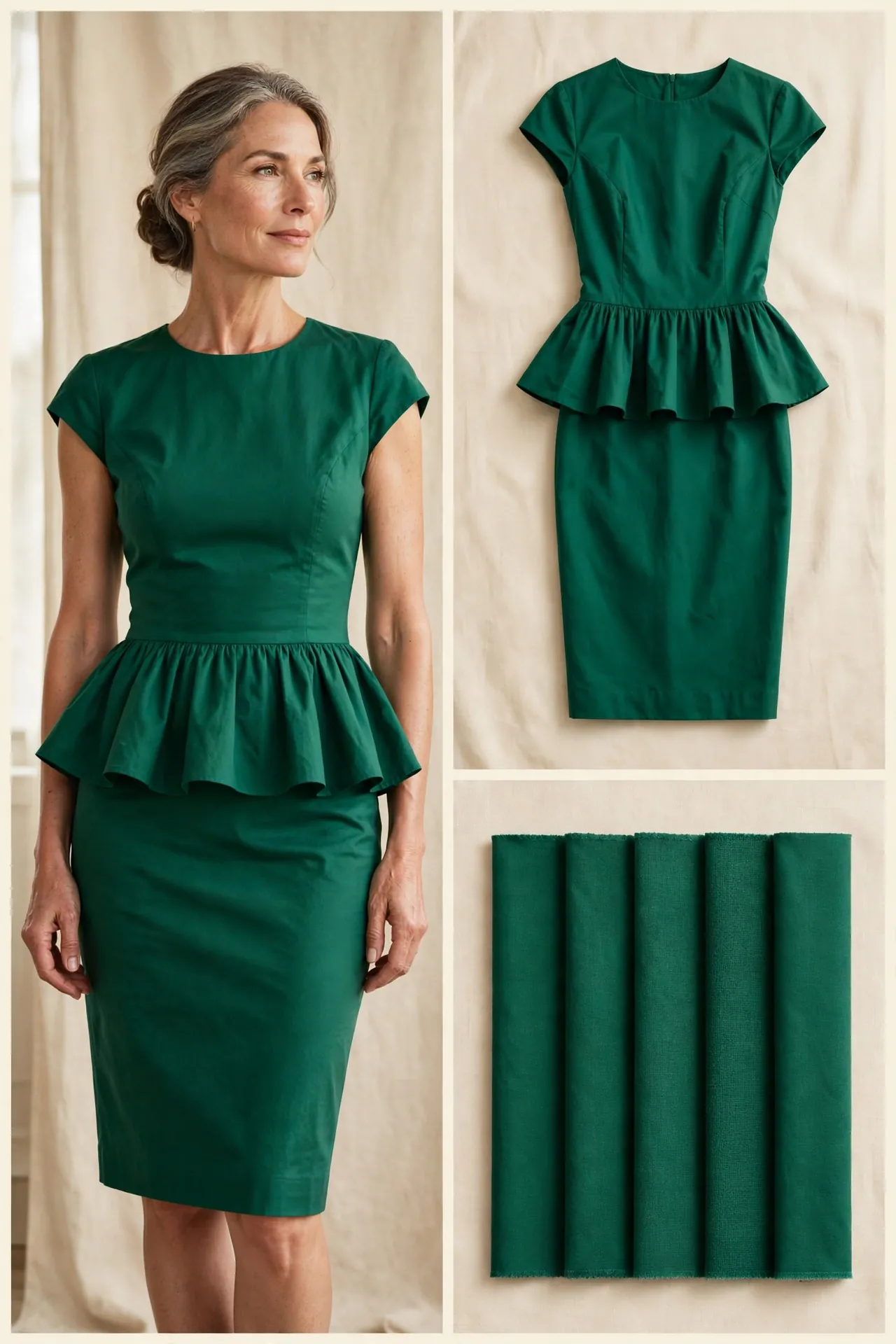
4. The Peplum Dress — An Hourglass Illusion
A peplum dress adds a short, flared panel at the waist, usually over a fitted skirt.
The peplum creates hips where a rectangle body is naturally straighter, making the waist look smaller by contrast. It’s one of the most effective illusions for this body shape.
Choose a peplum that starts at your natural waist and flares outward softly. A crisp cotton or structured crepe holds the shape best. Keep jewellery minimal so the silhouette does the work.
Shopping advice: peplums with a slightly longer, flared panel (rather than a short ruffle) look more modern and age-appropriate.
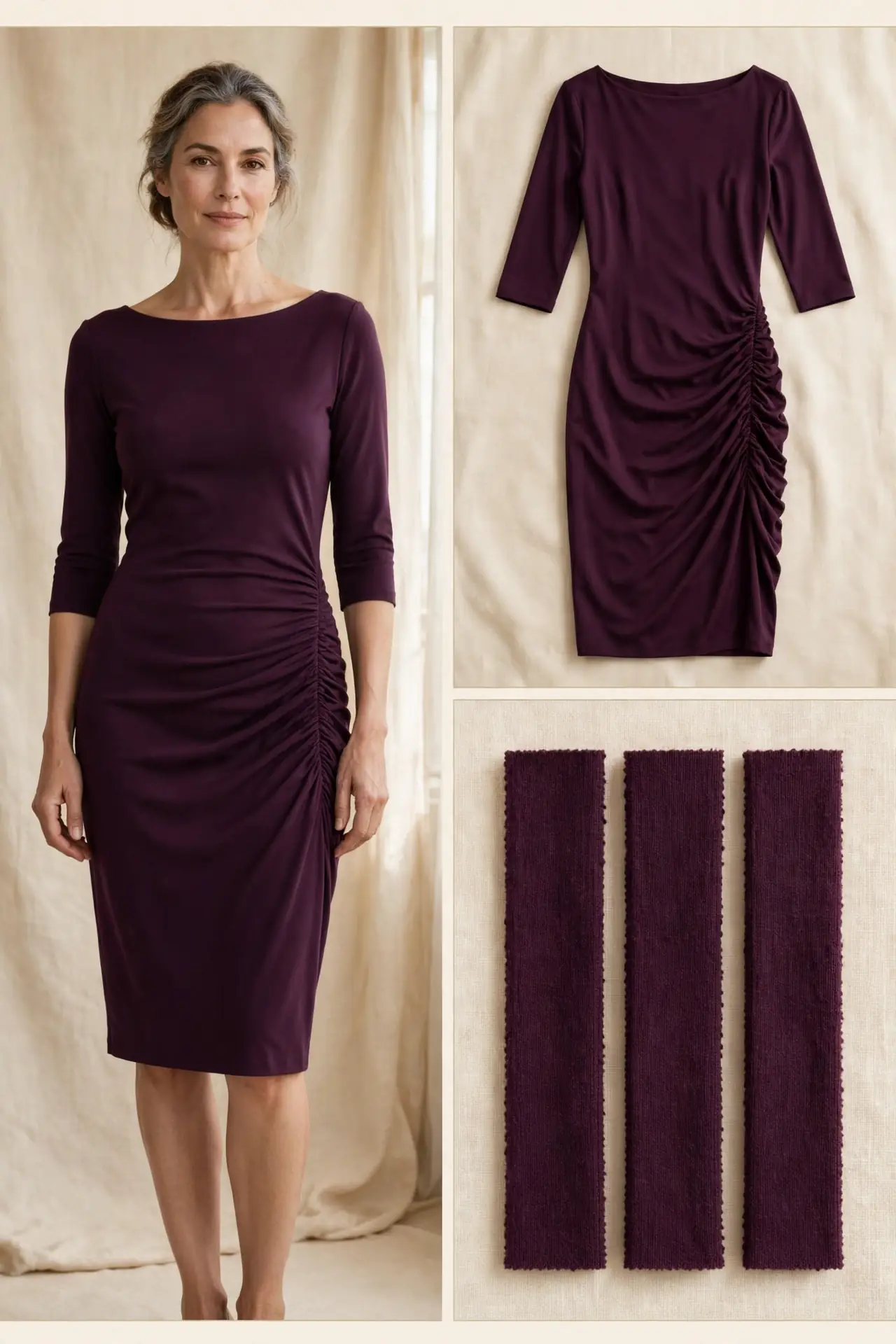
5. The Ruched or Draped Jersey Dress — Soft Shape Without Effort
Ruched or draped dresses use gathered fabric to add texture and folds across the body.
On a rectangle frame, these folds create a sense of dimension and curve. Asymmetric ruching in particular adds movement and makes a straight torso look more shaped.
Choose a jersey or crepe dress with gathers along the side or across the waist. A wrap jacket or shawl in cooler weather keeps it versatile.
Comfort bonus: stretchy ruched jersey is one of the most comfortable fabrics for long days, and it rarely creases — perfect for travel.
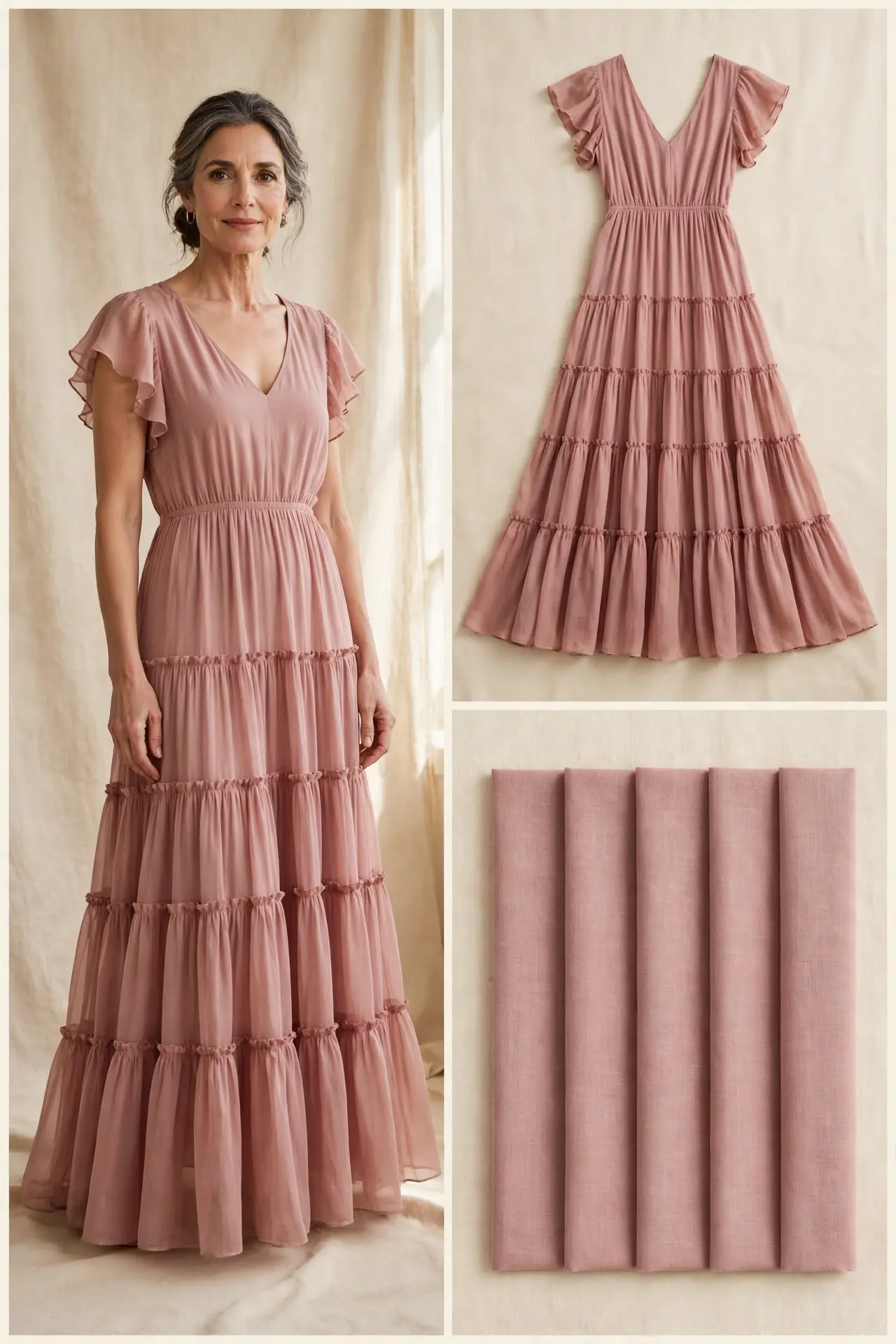
6. The Tiered Maxi Dress — Movement and Flow
A tiered maxi dress has a skirt made of layered horizontal sections that widen toward the hem.
The tiers add volume and movement to the lower half, creating a softer, more curved line. A defined waist — through smocking, elastic, or a belt — turns it into a flattering summer staple.
Choose a tiered maxi in cotton or chiffon with a V-neck and flutter sleeves. Flat sandals and a straw bag make it holiday-ready.
Season note: tiered maxis are ideal for hot weather, but in autumn you can layer one under a cropped denim jacket with ankle boots.
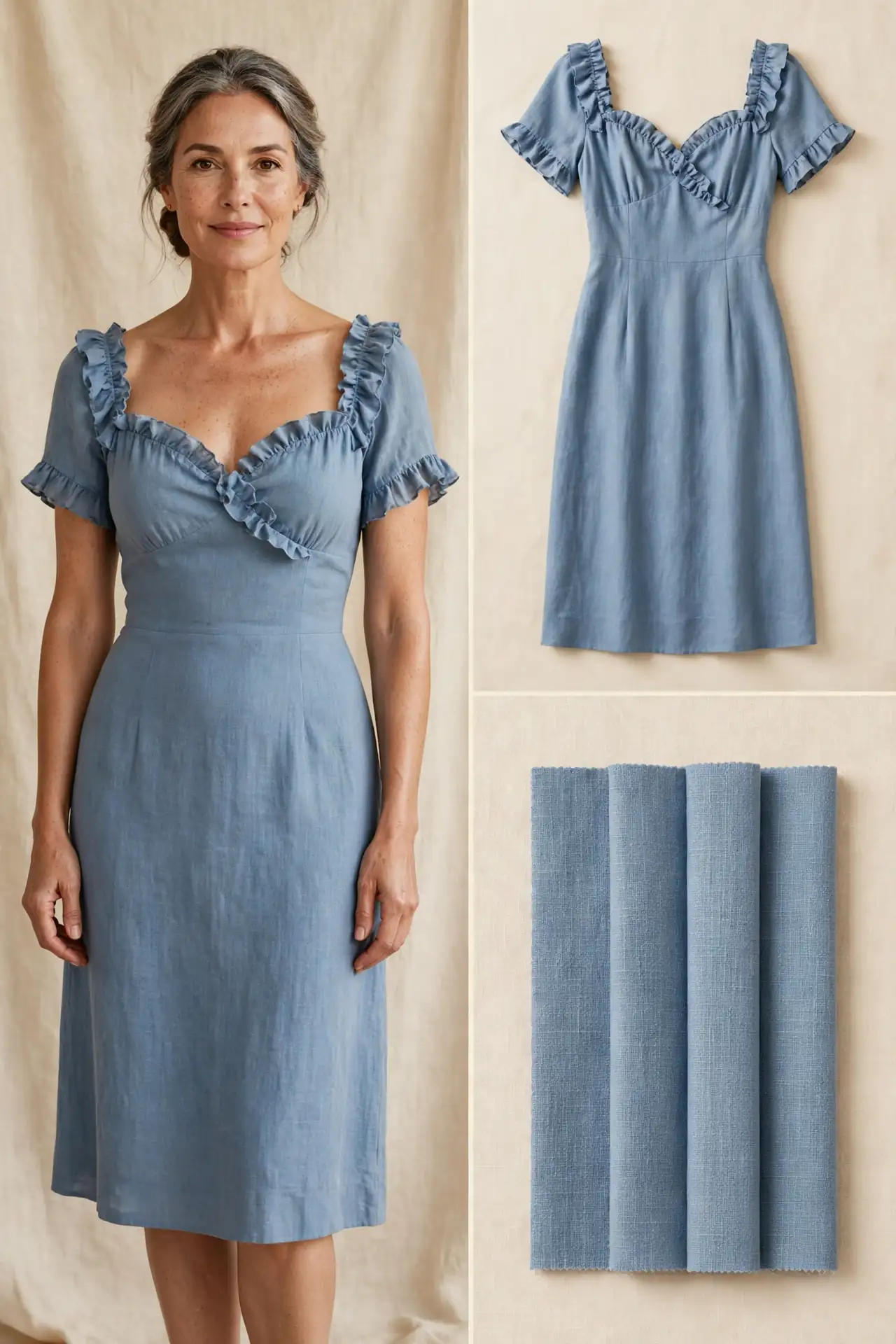
7. The Dress With Bust Detail — Adding Curve at the Top
These dresses feature ruffles, pleats, gathers, a sweetheart neckline, or embellishment around the bust.
Detail at the top adds volume and shape to the upper body, balancing the hips and making the waist look smaller in comparison. It’s especially useful for rectangle shapes with a smaller bust.
Look for subtle ruffles or pleats rather than large frills. A sweetheart or square neckline in a structured fabric adds instant shape.
Fit tip: check that the bust detail sits right at your bust line, not too high or too low. If it’s misplaced, the effect is lost.
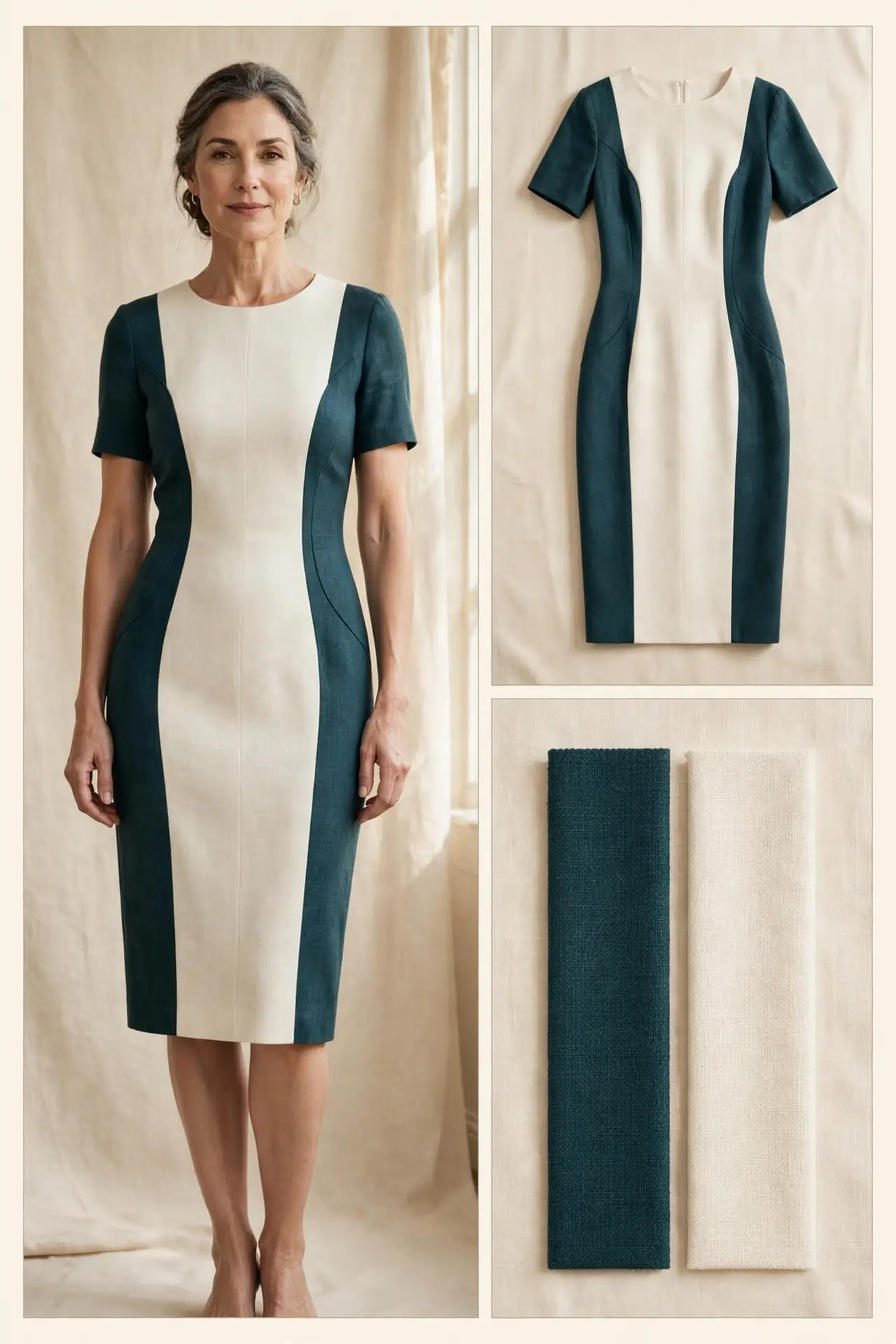
8. The Colour-Block Dress With a Curved Seam
Colour-block dresses use contrasting panels of colour. Some feature curved panels down the sides that mimic an hourglass outline.
The darker side panels visually “pull in” the waist, while the lighter centre panel draws focus to the middle of the body. This optical trick creates the illusion of curves on a straight frame.
Choose a sheath or slightly flared style with dark side panels and a lighter centre. Pair it with simple pumps and minimal jewellery.
Effort level: very low. The dress does all the shaping work for you — no belt or styling tricks needed.
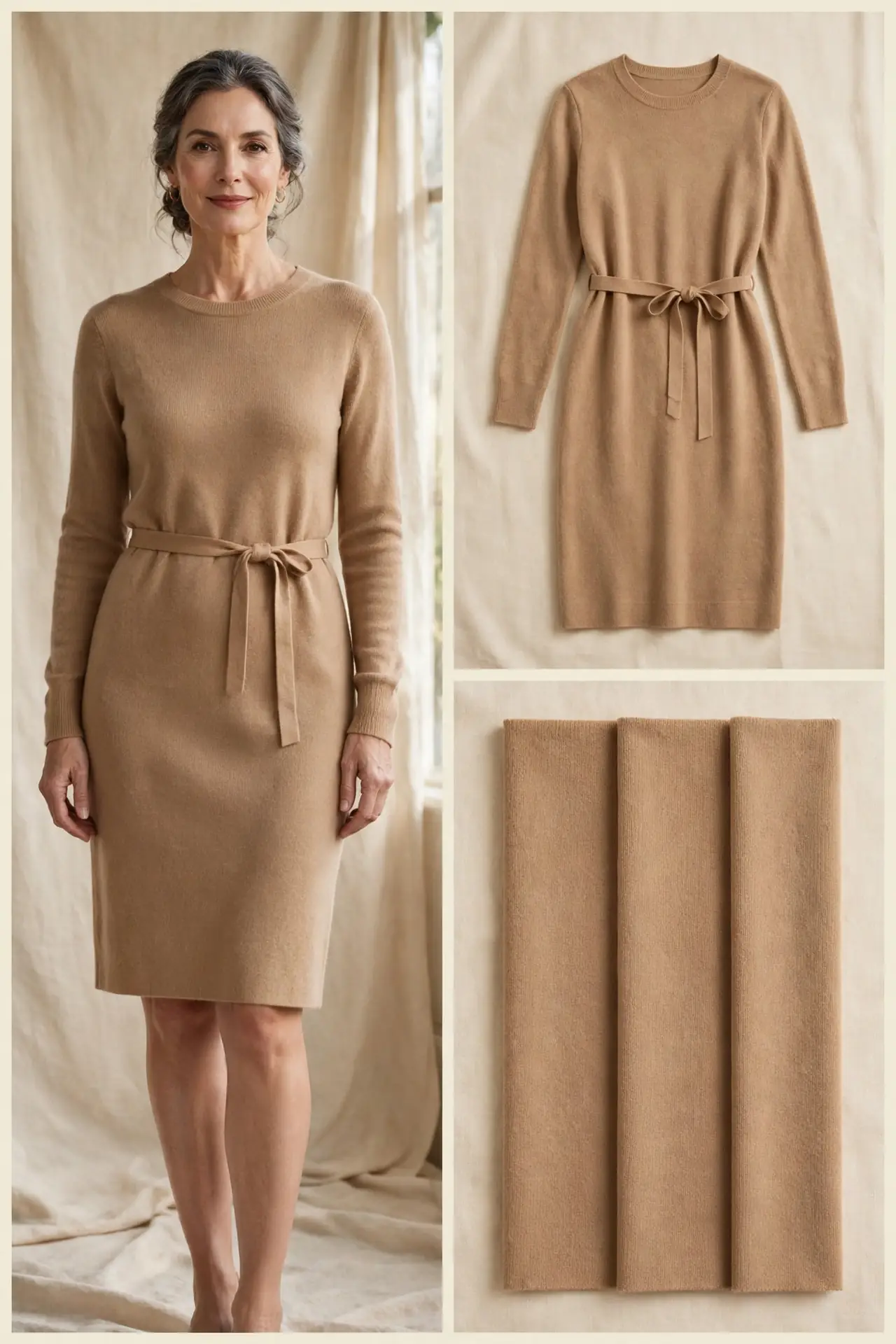
9. The Belted Sweater Dress — Cosy but Shaped
A sweater dress is made from knit fabric and usually has long sleeves. Belted at the waist, it becomes a flattering winter staple.
On a rectangle frame, a belt transforms a straight knit into a shaped silhouette. Fine knits, like merino or cotton blends, drape better than chunky ones.
Wear it with knee boots, opaque tights, and a long coat. A contrasting belt adds more definition than a matching one.
Wardrobe idea: a neutral sweater dress layers well under a blazer or long coat, making it easy to wear for work and weekends throughout the colder months.
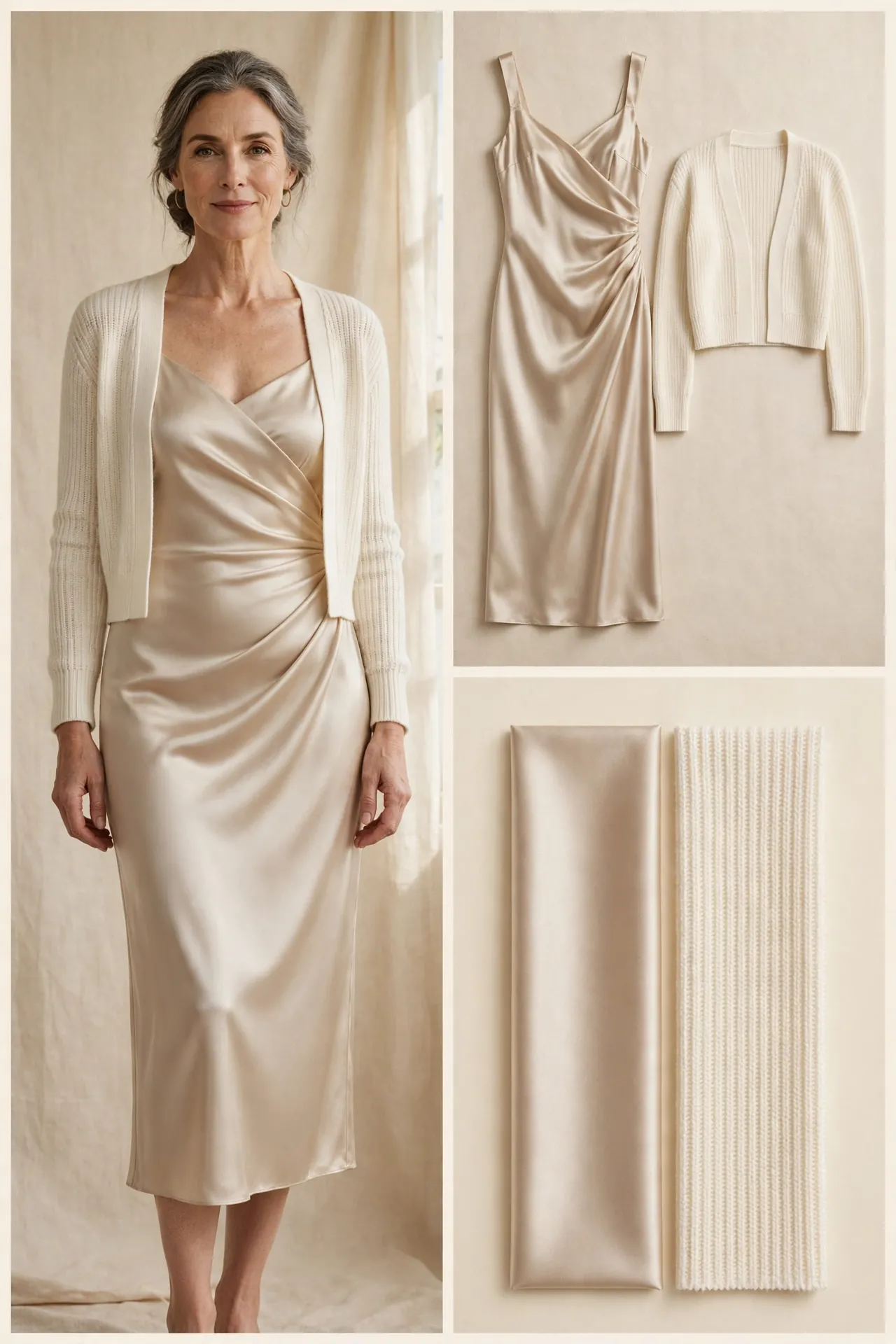
10. The Bias-Cut Slip Dress Layered With a Cardigan
A bias-cut slip dress is cut diagonally across the fabric grain, which makes it drape and move softly over the body.
The bias cut follows the body gently, adding subtle curve without clinging. Layered with a cropped cardigan or tailored jacket, it becomes a modern, flattering look for women over 50.
Choose a slip in satin or crepe with wider straps, and wear it with a fitted cardigan or blazer that ends at the waist. Kitten heels or flat sandals finish it.
Alternative: if a slip dress feels too revealing, wear a fine-knit turtleneck or fitted T-shirt underneath for a layered look that adds warmth and coverage.
Creating Curves With Accessories
A rectangle frame is one of the easiest to dress with accessories. Belts are your most powerful tool — wide, narrow, leather, woven, or chain. Statement necklaces and earrings draw the eye up, while structured handbags with curved shapes add softness. Shoes with a little detail, like ankle straps or bows, finish the look. If you want more ideas for building outfits around your proportions, our guide to types of dresses is a helpful starting point.
Conclusion
A rectangle shape is balanced, versatile, and easier to dress than many people realise. With a few well-chosen silhouettes — belted shirtdresses, wraps, fit-and-flare cuts — and smart accessories, you can create curves, add shape, and wear dresses that feel modern and confident. Start with the styles that suit your lifestyle, and remember Patricia’s belt: sometimes the smallest change makes the biggest difference.