

Standing in front of your closet on a 60-degree morning can feel like solving a puzzle you didn’t ask for. The air is crisp, maybe a little damp, but you know by noon the sun could turn everything warm. You grab a jacket, hesitate, put it back, and suddenly you’re running late. Knowing exactly what to wear in 60 degree weather — and understanding your personal style — makes this in-between weather far easier to dress for.
Sixty degrees Fahrenheit sits in a tricky middle zone. It’s not cold enough for a heavy coat, but a bare T-shirt will leave you shivering. The fix isn’t one magic item — it’s a small set of adaptable pieces you can layer, add, or remove as the day shifts.
Here, you’ll build a complete layering system that ends the morning guesswork. You’ll learn which fabrics keep you comfortable, which staples create endless outfits, and how to combine them for work, weekends, and travel.
What Does 60 Degree Weather Actually Feel Like?
Step outside on a 60-degree day, and you might immediately wonder if you underdressed or overdressed. Shade and breeze make it feel sharply cool, while direct sun can warm your skin within minutes. That swing is exactly why one heavy layer fails, and lightweight, adjustable pieces win.
Spring and fall bring this temperature most often, and both seasons are famous for mood swings. A 58-degree morning can climb past 70 by mid-afternoon, particularly in mild climates like San Francisco or London. Leave home in just a denim jacket over a non-breathable top, and that afternoon walk can turn sticky fast.
Humidity and wind matter too. A dry, sunny 60 degrees feels nothing like a damp, overcast one with a steady coastal breeze. Treat 60 degrees as a moving target, and your outfit choices start working with the weather instead of against it.
Why Is Layering the Most Important Rule for 60 Degrees?
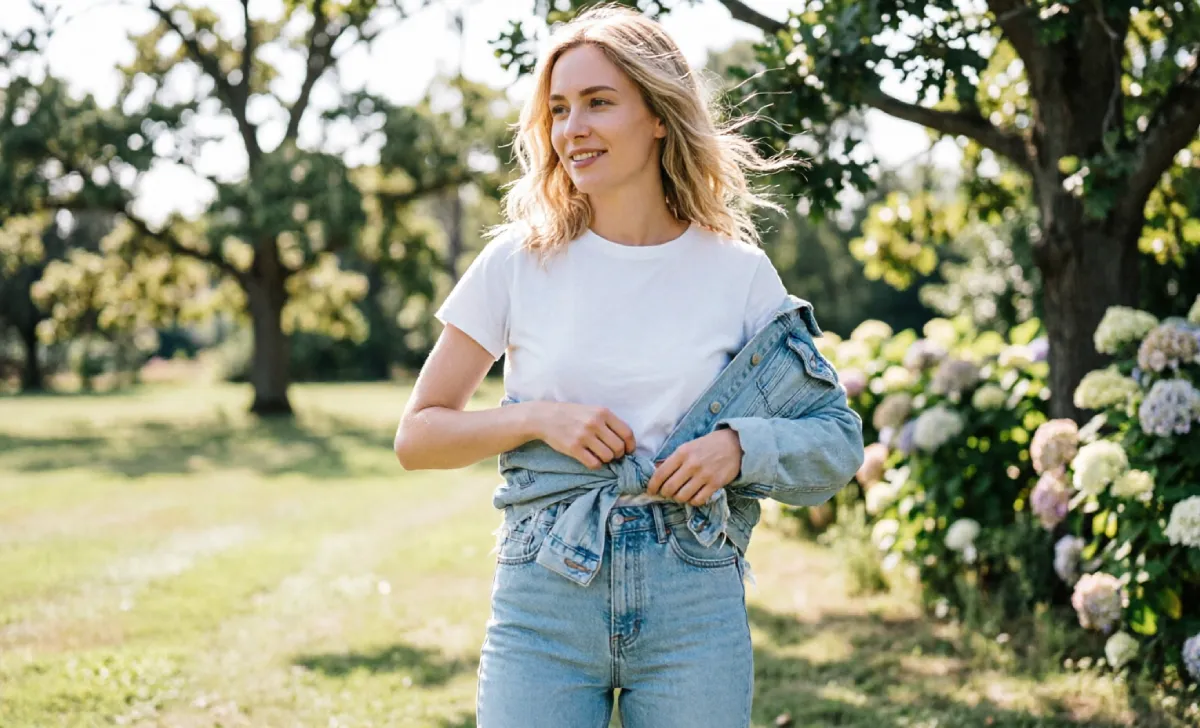
Layering is the single most useful skill for transitional weather. A layered outfit acts like a personal thermostat — peel off a piece as the sun intensifies, add it back when clouds roll in. That flexibility spares you the cycle of cold mornings, hot afternoons, and chilly evenings.
Think in terms of a base layer plus a removable topper. Your base should feel light against the skin: a cotton tee, thin linen shirt, or fine-knit sweater. The topper is a jacket, cardigan, or open shirt you can tie around your waist or stash in a bag.
Build outfits this way, and you stop checking the weather app obsessively. Your clothes can already absorb a ten-degree swing, and getting dressed becomes quicker, not harder.
What Are the Best Fabrics for 60 Degree Weather?
Fabric choice is where most people quietly sabotage their own comfort. The wrong material traps heat and moisture, leaving you damp or overheated no matter how mild the air feels.
Cotton is the reliable default — breathable, soft, and good at letting moisture evaporate. A cotton tee, lightweight cardigan, or chambray shirt handles the warmest stretch of a 60-degree afternoon with ease. Linen blends work similarly well, releasing heat quickly on sunny spring days.
For cooler mornings, fine merino wool offers warmth without bulk. Steer clear of thick synthetics; they trap heat and moisture, turning a pleasant stroll into a sticky one within minutes.
What Should Every 60-Degree Wardrobe Have? (The 5 Essential Pieces)
A few well-chosen items unlock more outfits than you’d expect, and picking them with a smart color coordination rule in mind makes mixing effortless.
Start with a well-fitted denim jacket — a medium-wash trucker style gives instant polish. Pair it with straight-leg jeans or neutral chinos, since both ground almost any top-and-topper combination.
Add a lightweight knit, like a fine-gauge cotton or cashmere-cotton crewneck, useful as a base or an extra layer under a trench coat. Round things out with white sneakers and a versatile midi dress or button-down you can dress up or down.
Women’s 60 Degree Outfit Formulas That Always Work
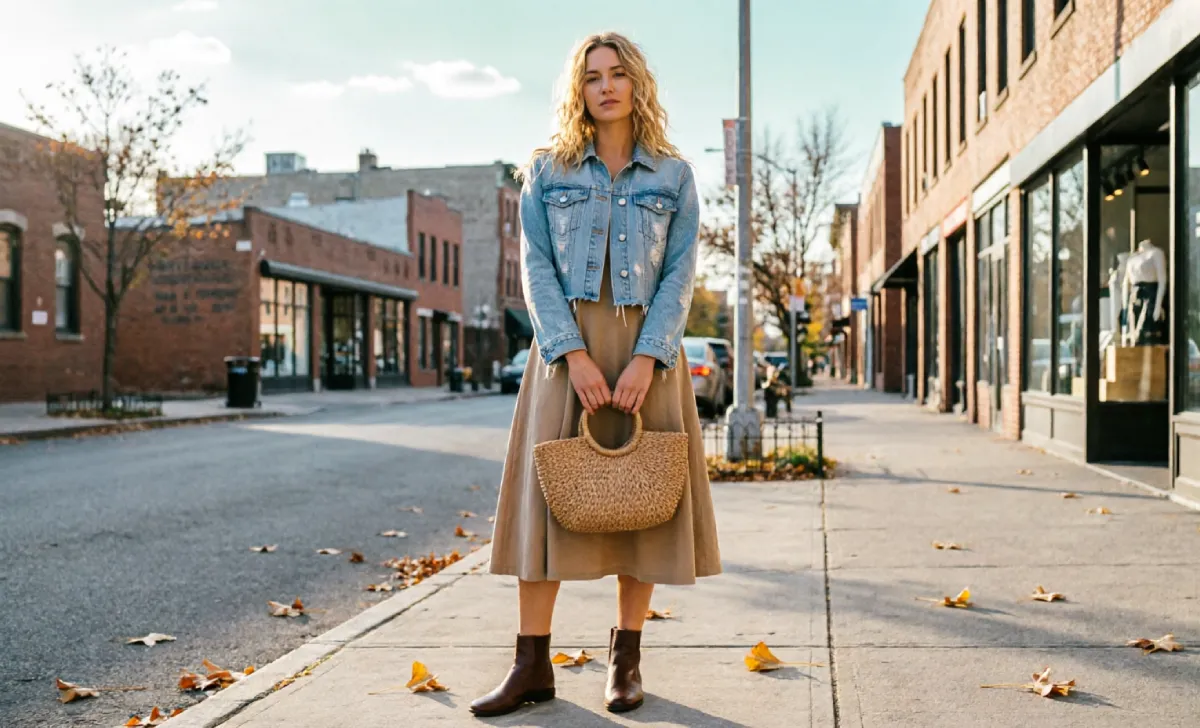
Sometimes you just want a formula, not a decision. Treat each combination below as a template, then swap in similar pieces from your own closet.
A cotton tee with straight-leg jeans and a trench coat, finished with white sneakers, works for errands or a relaxed office day. Layer a chambray shirt under a cashmere crewneck with dark jeans and loafers for something a touch more polished. Choosing the right shoe type here changes the entire feel of the outfit.
Prefer a dress? Pair a midi dress with a denim jacket and flat ankle boots for balance between softness and structure. For the office, tuck a linen-blend shirt into wide-leg trousers and top it with a thin cardigan.
Men’s 60 Degree Outfits: From Casual to Office-Ready
Men’s style guides often skip transitional weather, but the base-plus-topper formula works just as well here. Small swaps take you from weekend to workday.
For casual days, pair a cotton tee with olive chinos and a bomber jacket. Swap the tee for an Oxford button-down, and the bomber for an unstructured blazer, and the same outfit becomes smart-casual office wear.
A fine merino sweater with dark selvedge jeans and clean leather sneakers covers dinner plans or a creative workplace equally well. The goal throughout: avoid anything heavy or overly structured.
What Shoes Should You Wear in 60 Degree Weather?
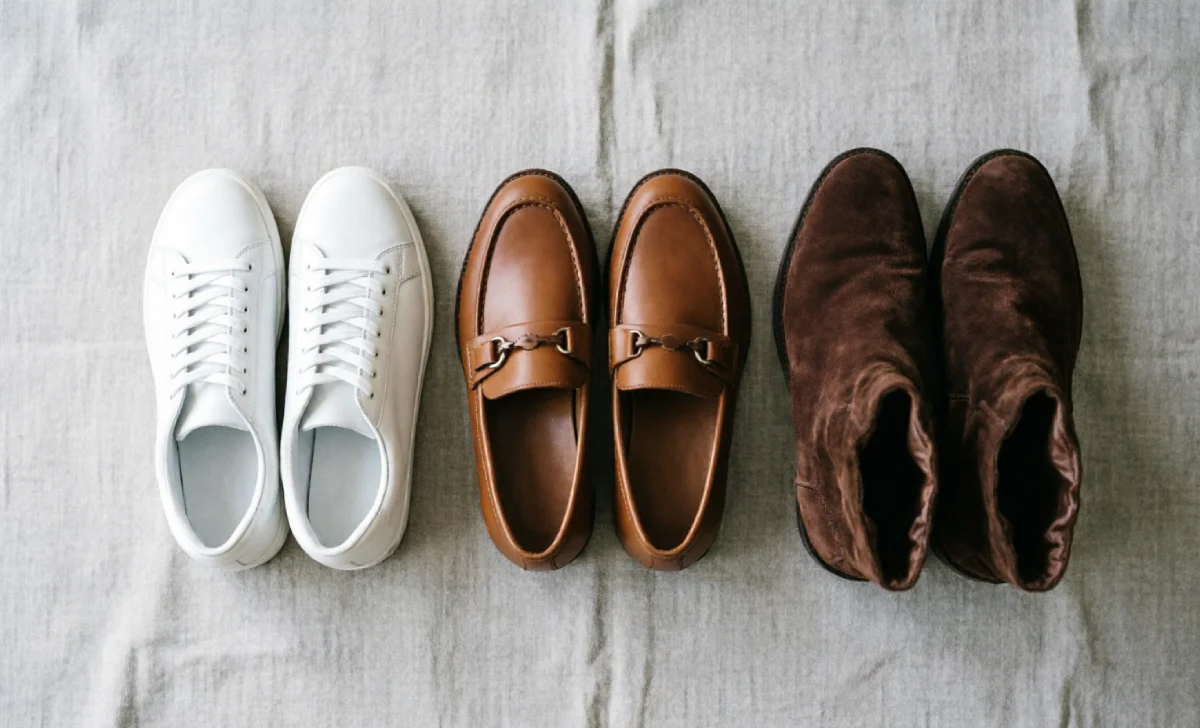
Footwear affects more than looks — it shapes how your whole body reads the temperature. The right shoe keeps feet comfortable without sweating or freezing.
White leather sneakers suit most casual 60-degree outfits, pairing easily with jeans, dresses, or chinos. Loafers or driving mocs raise the formality for smart-casual offices or dinner plans.
Soft suede ankle boots ground a midi dress nicely on cooler, cloudier days. Men can reach for a desert boot or minimalist leather sneaker for the same effect.
How Do You Dress for 60 Degrees in the Morning and 75 in the Afternoon?
Some 60-degree mornings turn into much warmer afternoons, leaving you peeling off layers by lunch. The fix is planning, not reacting mid-day.
Build your outfit around a very light base — a linen shirt or a tank-and-chino combo — and pick a topper that’s genuinely easy to carry, like a denim jacket you can knot around your waist. Skip structured blazers that demand to be worn or hung, not stuffed in a bag.
Let your base do the real work and treat the topper as your only substantial layer. Remove it, and you’re already dressed right for the warmer afternoon ahead.
How to Build a 60-Degree Travel Capsule Wardrobe
Packing for a 60-degree trip rewards minimalism. A handful of neutral pieces can produce far more outfits than a full suitcase.
Pack one pair of dark jeans, one pair of tailored trousers, two breathable bases, and one knit layer. Add a denim jacket or trench coat plus one pair of sneakers and one pair of loafers.
Mix and match these five to seven pieces across sightseeing days and dinner nights alike. Less packing means less decision fatigue once you land.
Common 60-Degree Outfit Mistakes (and How to Avoid Them)
A few small habits quietly ruin 60-degree comfort. Spotting them is most of the fix.
Reaching for a heavy coat at the first sign of “50s” or “low 60s” is the most common mistake — trust a light jacket instead, with a thin scarf as backup. Ignoring wind is another; even a celebrity style icon knows that a tighter-weave topper blocks breeze far better than a loose knit.
Heavy synthetics cause the same problem from a different angle, trapping moisture against your skin. Prioritize natural fibers, and your body will regulate itself the way it’s supposed to.
Frequently Asked Questions About Dressing for 60 Degree Weather
Can I wear a dress in 60-degree weather and still feel warm enough?
Yes — choose cotton, linen, or a light knit, then layer with a denim jacket and ankle boots for warmth and structure.
Is a leather jacket too heavy for mild 60-degree days?
Not if it’s unlined and lightweight. Wear it over a breathable base so you can unzip it once the sun warms things up.
What fabrics should I absolutely avoid when it’s 60 degrees outside?
Thick polyester, nylon, and acrylic knits trap heat and moisture. Stick with cotton, linen, and merino wool instead.
How do I make a 60-degree outfit look more polished for a dinner date?
Swap sneakers for loafers or ankle boots, choose a structured topper like a trench coat, and add one simple piece of jewelry.
Conclusion
Dressing for 60-degree weather isn’t about one perfect item — it’s about building outfits that flex with the day. A lightweight base, a removable topper, and breathable fabrics give you that freedom automatically. Master this simple system, and every 60-degree morning stops feeling like a guessing game.