
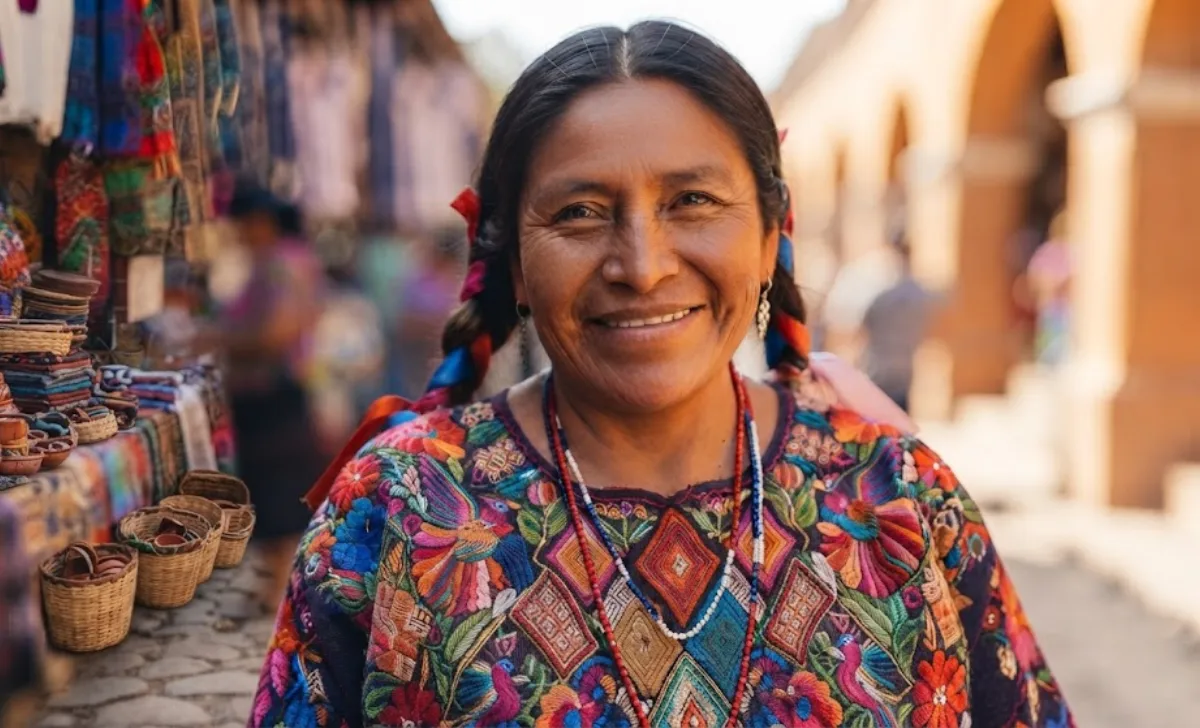
Stand before a display of brilliantly embroidered Mexican dresses, and your curiosity flares instantly. The colors pull you in, the stitching feels impossibly fine, and something inside you wants to know the story behind it. What you’re really looking at is centuries of history and identity stitched into every piece of traditional Mexican clothing.
This guide takes you from ancient looms to modern ethical choices. Along the way, you’ll meet the huipil, the rebozo, and the charro suit, learning to see each as an expression of place, memory, and pride.
What Is Traditional Mexican Clothing?
It’s tempting to think of it as festival costume, but that covers only a sliver of the truth. Traditional Mexican clothing is a diverse family of handcrafted garments reflecting regional identity, indigenous heritage, and centuries of cultural blending. Rather than one single outfit, it functions as a textile map of the country.
Many communities still wear these clothes daily. A woman’s huipil isn’t a performance piece; it carries symbols tied to her village and ancestors. A groom’s embroidered guayabera continues a family tradition passed down for generations.
The philosophy behind the clothing sets it apart. Each garment is less an object of fashion than a piece of wearable art, often built on a backstrap loom over months, holding the weaver’s thoughts within its patterns.
The Pre-Hispanic Origins of Mexican Dress
Mesoamerican peoples had already built sophisticated textile traditions long before Spanish ships reached their shores. Clothing marked ethnicity, status, and spiritual alignment in both the Maya and Aztec worlds. Cotton and coarse agave fibers formed the core materials, woven to suit climate and worldview alike.
Women wore a long, sleeveless tunic called a huipil, sometimes paired with a decorative skirt border. Men wrapped a loincloth known as a maxtlatl around their waist and added a simple cloak, or tilma, when needed. Those same forms survive today, layered now with five centuries of added history.
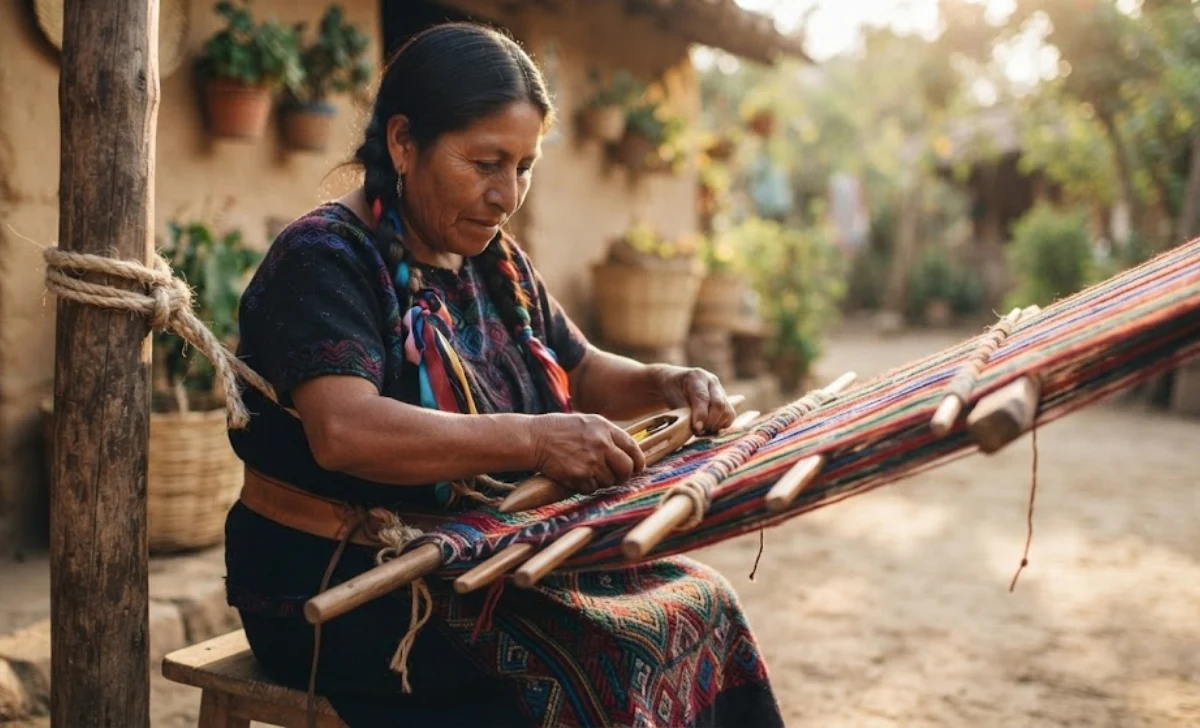
Behind it all sat the backstrap loom, a tool linking the weaver’s own body directly to the cloth. Homes across southern Mexico still use it, unchanged in method if not in pattern. Few objects connect past and present quite so directly.
How Did Spanish Colonization Transform Mexican Clothing?
Spanish arrival in the 1500s reshaped rather than erased indigenous clothing. Wool and silk entered the material palette for the first time, and the pedal loom sped up fabric production on a wider scale. European silhouettes gradually layered onto native forms.
Out of this fusion came a distinct mestizo identity, most visible in the china poblana dress. Legend credits an Indian princess brought to Puebla, though the garment historically reflects a heavily embroidered skirt and blouse that grew into a symbol of national pride. What matters isn’t the myth’s accuracy but what it reveals: Mexico reshaping colonial influence on its own terms.
Indigenous weavers didn’t simply adopt new materials wholesale. They folded wool and silk into existing designs, keeping ancestral symbols intact beneath the surface and building a visual language that balanced tradition against a changing world.
What Are the Key Women’s Garments in Traditional Mexican Clothing?
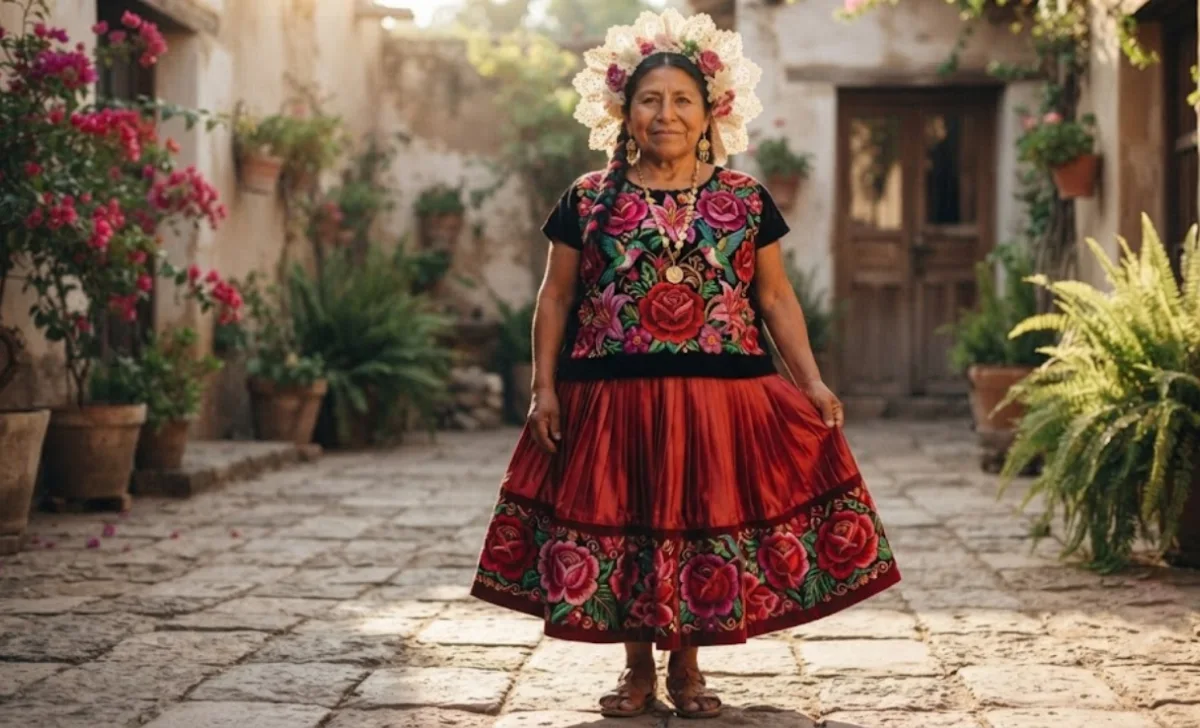
The huipil tends to be the piece people fall for first. This loose tunic ranks as the most iconic women’s garment, its embroidery often signaling a wearer’s village, marital status, or personal beliefs.
The rebozo, by contrast, is a long, versatile shawl often compared to a mother’s embrace — worn over the head, wrapped across the shoulders, or used to carry a child. Cotton, wool, and silk versions all remain staples of Mexican womanhood.
Older still is the quechquémitl, a poncho-like garment that drapes into a diamond shape and still appears at ceremonies in Puebla and Veracruz. From the Isthmus of Tehuantepec comes the majestic Tehuana dress, made famous by Frida Kahlo, pairing a heavily embroidered blouse with a full, stiffened skirt.
What Are the Key Men’s Garments in Traditional Mexican Clothing?
Men’s traditional wear gets less attention but carries equal depth. Born in the Saltillo region, the sarape is a vibrantly colored, blanket-like garment with a head slit — heavier and more tightly woven than a poncho, and usually worn draped rather than pulled on.
Ceremony defines the charro suit. Originating in Jalisco as formal attire for skilled horsemen, its fitted, silver-buttoned jacket represents a code of honor rather than costume.
Lighter options include the guayabera, a crisp four-pocket shirt popular in the Yucatán and Veracruz, and the broad-brimmed sombrero, a genuinely practical sun shield whose shape varies by region.
A Regional Guide to Mexican Traditional Attire
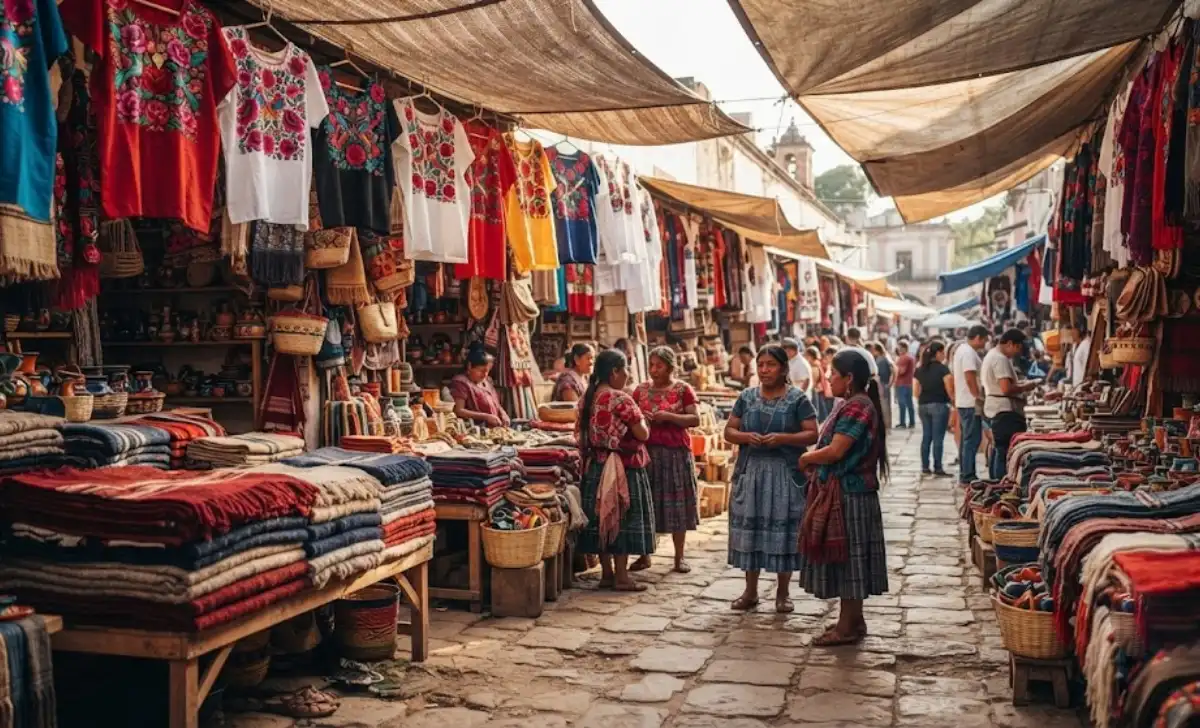
Picture Mexican clothing as a map shaped by terrain. Isolated mountain communities each poured their identity into local textiles, and Oaxaca shows this most vividly — flowers and animals stitched in bold cochineal red against deep indigo blue.
Chiapas shifts the mood toward something delicate; Mayan women in Zinacantán brocade tiny flowers onto bright white cotton. Jalisco, birthplace of the charro, leans bolder and more ranchero, while the Yucatán favors crisp white cotton with simple cross-stitch flowers along the neckline.
What Is the Meaning Behind the Embroidery Patterns?
A repeating diamond on a huipil isn’t random decoration — in many indigenous belief systems, it represents the universe and its four cardinal directions. Placed at the chest, it puts the wearer at the center of existence.
Animals carry meaning too: a bird often signals a messenger between earth and sky, a jaguar suggests strength. Cochineal red, drawn from tiny insects, typically signals life force and solar energy.
Read together, these symbols form something close to a personal poem. Someone from the region can often glance at a huipil and sense the wearer’s life stage or beliefs — a language most outsiders never learn to read.
How Is Traditional Mexican Clothing Made?
Everything begins with the earth rather than the thread. Cotton is still grown locally in many communities, and wool comes from regionally raised sheep, with a single elaborate garment sometimes taking months to finish.
Dyeing happens first, using near-alchemical natural methods: fermented leaves yield deep indigo, while cochineal insects living on cactus pads produce Mexico’s famous red — depths no synthetic dye fully matches.
Weaving comes last. A weaver ties one end of her backstrap loom to a post and the other around her waist, controlling tension with her own body. Each hand-placed thread makes the finished piece genuinely unrepeatable.
How Can You Wear and Respect Traditional Mexican Clothing Today?
Wanting to bring this beauty into your own wardrobe is a natural impulse, and a good one when guided by respect. Seek garments made by real artisans rather than mass-produced imitations, since buying directly from a cooperative supports a living tradition instead of diluting it.
Pairing a huipil with modern jeans or slacks can work beautifully, but context still matters — a ceremonial huipil isn’t a beach cover-up, and a charro suit worn as a Halloween costume crosses a clear line.
Once you learn a garment’s story, the way you wear it tends to shift. Care replaces casualness, and learning the names behind each piece turns you into a respectful participant in something larger than yourself.
Frequently Asked Questions About Traditional Mexican Clothing
What is the difference between a poncho and a serape?
A poncho is typically simpler and often rain-resistant, while a serape is heavier and more tightly woven, with roots specifically tied to the Saltillo region.
What is traditional Mexican clothing for Day of the Dead?
Many wear the elegant La Catrina look for celebrations, alongside genuine traditional pieces like embroidered blouses and rebozos, keeping the focus on honoring ancestors.
Can you wear traditional Mexican clothing if you’re not Mexican?
Yes, provided it’s worn with respect rather than as costume — choose authentic pieces, learn their meaning, and avoid items reserved for community ceremonies.
Where can you buy authentic traditional Mexican clothing?
Artisan markets in places like Oaxaca City, or verified fair-trade cooperatives online, offer the most ethical route. Skip mass-produced tourist items and look for genuine handwoven details.
Conclusion
Traditional Mexican clothing is far more than style — it’s a map of memory and a declaration of identity stitched by hand. The next huipil or rebozo you see will carry the ancient loom, the cochineal red, and generations of pride within its threads. Whether you’re admiring these pieces in a museum or choosing one to wear yourself, you now carry the context to meet them with real understanding.