
You notice a smooth, round bump on your scalp while brushing your hair. Your mind starts spinning with questions about pilar cyst vs sebaceous cyst and what it means for your health. That moment of discovery is unsettling, but you are not alone.
Millions find similar lumps yearly, and most are completely harmless. Taking time to optimize physical health starts with understanding your body. Skin cysts are incredibly common, and most never cause serious problems.
The confusion comes from different cysts looking surprisingly similar. Pilar cysts and sebaceous cysts share surface characteristics, but their origins and locations are distinct. Understanding these differences puts you back in control of your health decisions.
What Is a Pilar Cyst?
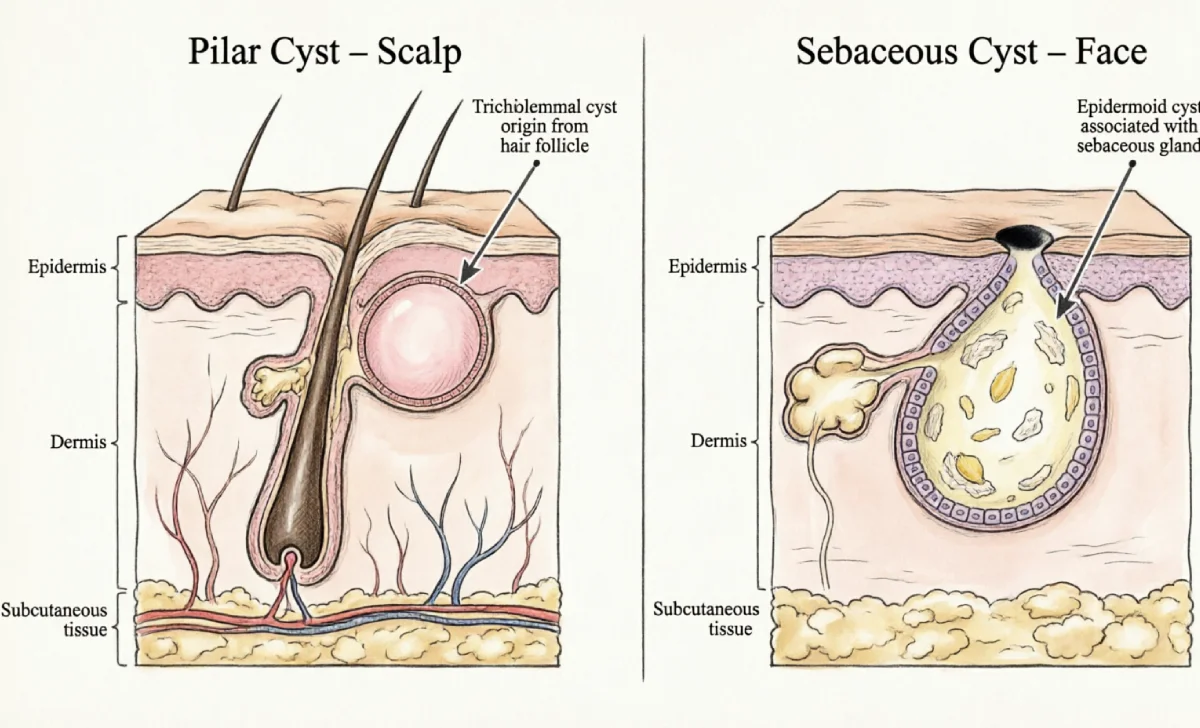
A pilar cyst is a benign growth forming from the outer root sheath of your hair follicle. Think of it as a small, round sac filling with keratin, the protein making up your hair and nails. Dermatologists also call it a trichilemmal cyst, which is simply the clinical name.
These develop when cells produce excess keratin and become trapped beneath your skin, creating a firm lump. This process is entirely natural, though it can feel quite alarming when you first discover it.
What Is a Sebaceous Cyst?
You will hear the phrase sebaceous cyst constantly, but most are actually epidermoid cysts. True sebaceous cysts are rare and originate from sebaceous glands, filling with sebum. What you likely have is an epidermoid cyst forming from the upper hair follicle portion, filling with keratin.
They often have a tiny visible opening called a punctum, looking like a small dark dot. This small detail is one of the easiest ways to identify them visually.
Where Do Pilar Cysts Typically Appear?
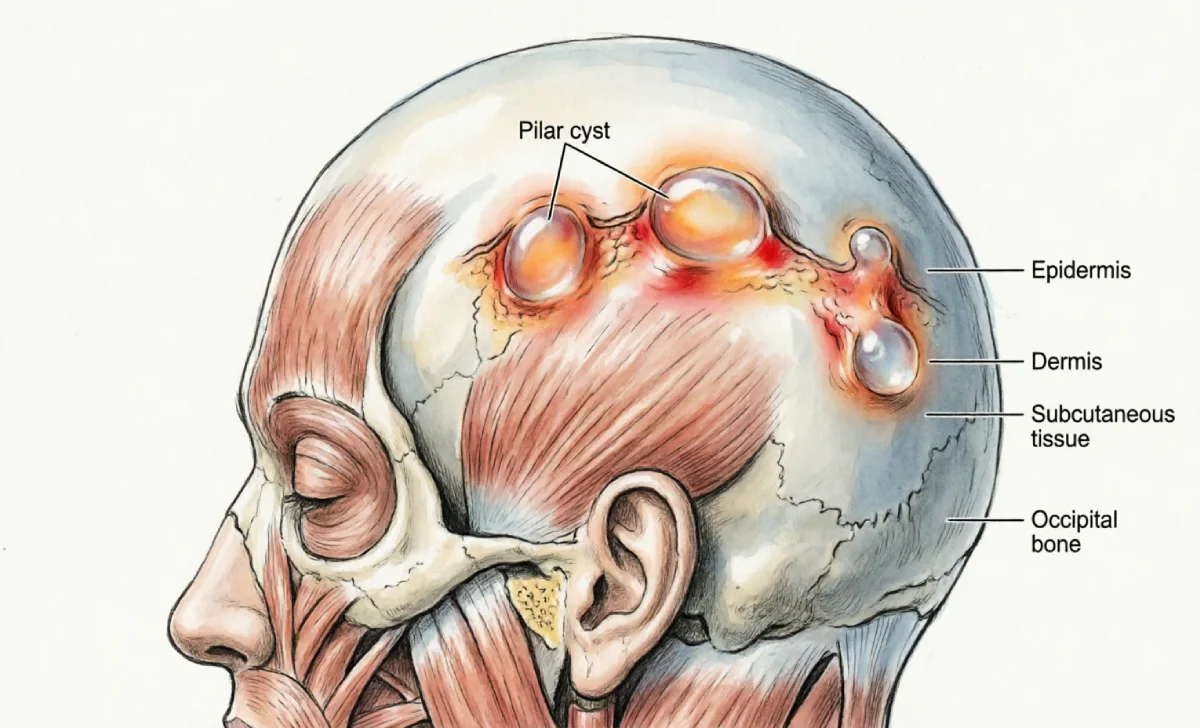
If you find a lump on your scalp, pay close attention. Pilar cysts show up on the scalp in roughly nine out of ten cases, making location your best clue. You might find one or several clustered together, especially with a family history.
Areas with dense hair growth simply provide more opportunities for these cysts to form. This is why they are so commonly noticed during daily hair care routines.
Where Are Sebaceous Cysts Usually Found?

Your face, neck, upper back, and chest tell a different story entirely. These are the favorite spots for sebaceous and epidermoid cysts to set up camp. If your lump is on your cheek or upper trunk, you are likely dealing with an epidermoid cyst.
This geographic distinction is one of the most reliable ways to narrow down possibilities quickly. It saves you a lot of guesswork before you even touch the bump.
The Texture and Feel of a Pilar Cyst
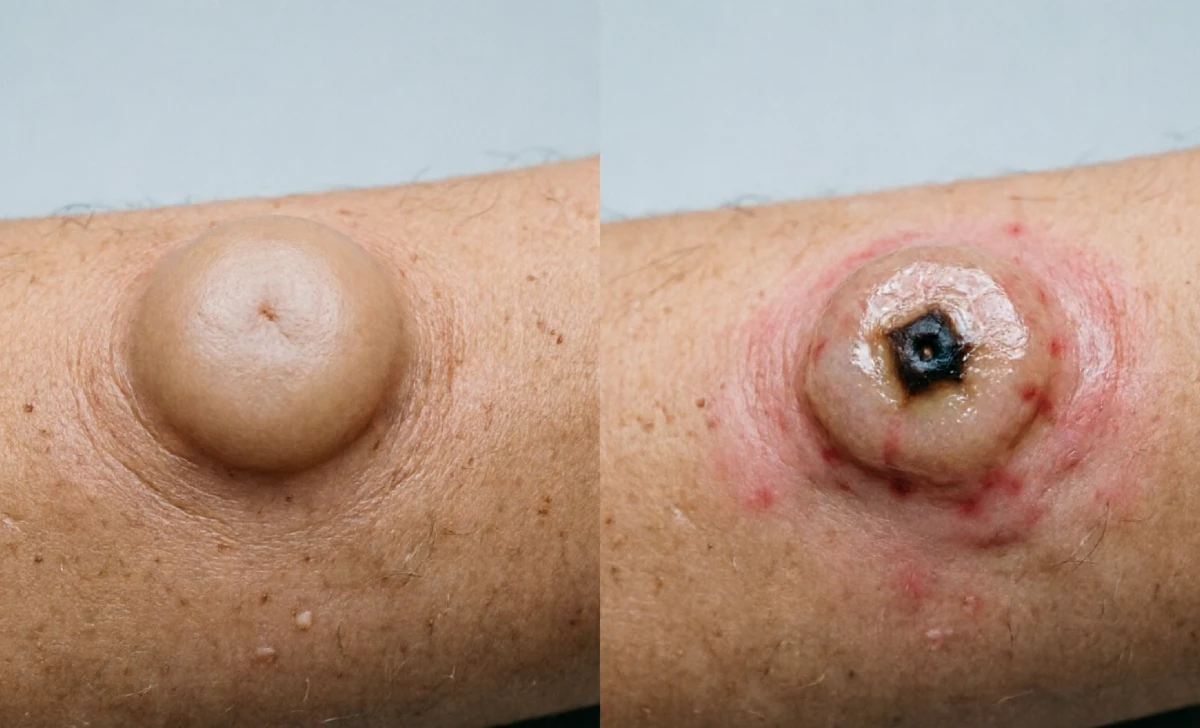
When you gently press a pilar cyst, it feels firm and smooth, like a small marble beneath your skin. The cyst moves easily when pushed, sliding around rather than feeling stuck to deeper tissues. You will not find a central pore or punctum on its surface.
The overlying skin looks completely normal, with no dark dot visible. This smooth appearance is a hallmark sign of a pilar cyst.
The Appearance of a Sebaceous Cyst
Look closely at your lump, and you might spot a small dark point in the center. This punctum is the hallmark of an epidermoid cyst and provides a clear visual clue. The cyst often looks like a dome-shaped bump ranging from skin-toned to slightly yellowish.
Sometimes they drain spontaneously, releasing a cheese-like odor as the keratin breaks down over time. While this can be unpleasant, it is a normal part of the cyst’s lifecycle.
Pilar Cyst vs Sebaceous Cyst Comparison
Putting them side by side makes the differences clear. A pilar cyst originates from the outer hair follicle root sheath and fills with dense keratin. An epidermoid cyst arises from the upper follicle portion and contains keratin and sebum.
Recognizing the health and wellness difference between these conditions is crucial for proper identification. Pilar cysts favor the scalp, while epidermoid cysts prefer the face, neck, and chest.
Why the Terminology Confusion?
The mix-up started decades ago when doctors used sebaceous cyst as a catch-all term for any oily lump. The name stuck in popular culture, even though clinical reality moved on. True sebaceous cysts are rare entities containing primarily sebum.
What you almost certainly have is an epidermoid cyst filled with keratin. Exploring the various dimensions of wellness includes understanding these physical body facts.
Can They Turn into Cancer?
This is the question that keeps you up at night, but I have a direct answer. Pilar and epidermoid cysts rarely turn into cancer. The risk is so low that dermatologists consider them benign, usually removing them only for comfort.
However, if your cyst grows rapidly, becomes fixed to deeper tissue, or ulcerates, see a doctor promptly. These signs do not automatically mean cancer, but they require professional evaluation to rule out rare conditions.
How Are They Diagnosed?
Walking into a dermatologist’s office can feel intimidating, but the process is remarkably straightforward. Your doctor will diagnose your cyst through a simple physical examination, feeling its texture and mobility. They might use a dermatoscope to magnify the skin surface for a clearer view.
In the vast majority of cases, no imaging or biopsy is needed at all, making the visit quick and painless. You can relax knowing the appointment will be brief and stress-free.
What Treatment Options Are Available?
The simplest approach is watchful waiting, leaving the cyst alone if it remains small and painless. Many people live with cysts for years without needing intervention. If it becomes inflamed, your doctor might perform incision and drainage to relieve pressure.
However, the only way to prevent recurrence is complete surgical excision, removing the entire cyst and its surrounding wall. Never attempt to squeeze it at home, as you risk pushing infected material deeper.
Why Do They Keep Coming Back?
If your cyst reappears after treatment, the explanation usually comes down to the cyst wall. When the surgeon removes only the contents but leaves the sac lining behind, it continues producing keratin. Over time, the cyst simply refills, and you find yourself right back where you started.
This is not a sign of something seriously wrong, just an incomplete structural removal. Ask your dermatologist directly about removing the entire cyst wall during surgery.
What if a Cyst Becomes Infected?
You might wake up to find your previously quiet cyst is now red, warm, and tender. This requires a different approach than a calm, asymptomatic lump. Your first instinct might be to squeeze it, but you must resist that urge completely.
Instead, apply a warm compress several times a day to encourage natural drainage. Make an appointment with your dermatologist, who may prescribe antibiotics or perform controlled drainage if needed.
When to See a Doctor
You do not need to panic over every lump, but you need a reliable framework for evaluation. See a doctor if your lump grows rapidly, changes color, becomes painful, or fixes itself to deeper structures. Any lump that bleeds or ulcerates deserves prompt medical attention.
Even when a cyst is benign, you might want it removed for comfort or peace of mind. This is a completely legitimate reason to visit a dermatologist for care.
Frequently Asked Questions
How much does removal cost?
The cost varies based on your location, cyst size, and whether insurance considers it medically necessary. If the cyst is infected or painful, your insurance may cover the procedure. Without insurance, a simple excision typically costs between two hundred and eight hundred dollars.
Can I prevent these cysts?
Unfortunately, there is no guaranteed way to prevent pilar cysts, especially due to their strong genetic component. For epidermoid cysts, keeping your skin clean and avoiding repetitive friction may reduce your risk somewhat. If cysts run in your family, focus on early identification rather than prevention.
Will removal leave a noticeable scar?
Your dermatologist will use techniques designed to minimize scarring, and scalp incisions often heal beautifully. Facial cysts require delicate handling, but experienced providers place incisions along natural skin lines. Any scar that forms typically fades significantly over time, making a routine wellness check highly beneficial today.
Conclusion
Understanding these details helps you make better choices for your skin, ensuring that you maintain optimal health and confidence every single day of your life without any unnecessary worry or stress about your current skin condition today. You arrived here with a lump and worries, but you are leaving with clarity and a plan. The location on your scalp versus the face gives an immediate clue, and the feel under your fingers tells you more.
Pilar cysts are firm and mobile on the scalp, while epidermoid cysts show a punctum elsewhere. Neither is usually dangerous, but you now know which changes warrant a doctor’s attention. Scheduling a routine wellness check ensures you stay on top of your skin health.
Take this knowledge with you, and walk into your next appointment feeling confident and completely prepared. You are now fully equipped to handle this situation with ease.