

In this article
I remember hearing the word folklore countless times, but I never paused to ask why is it called folklore until now. You might even wonder about the folklore art style when looking at old paintings. In this article, you will discover exactly the folklore art style, meet the man who coined it, and understand the beautiful logic hidden inside those two small syllables.
What Does Folklore Mean?
It refers to the traditional stories, customs, and beliefs shared by ordinary people. It is the unofficial culture passed down through generations without being formally written down. This includes everything from local legends to family recipes and old superstitions.
If you strip the word down to its simplest core, it is the body of traditions and expressions that communities share. It lives in conversation, in daily practice, and in memory rather than in official textbooks. It belongs entirely to the people.
You can think of it as the unofficial culture of everyday life. A lullaby a parent sings, a spooky tale told around a fire, or a local myth are all pieces of this rich tradition. They connect us to our shared past.
Who First Used the Word Folklore?
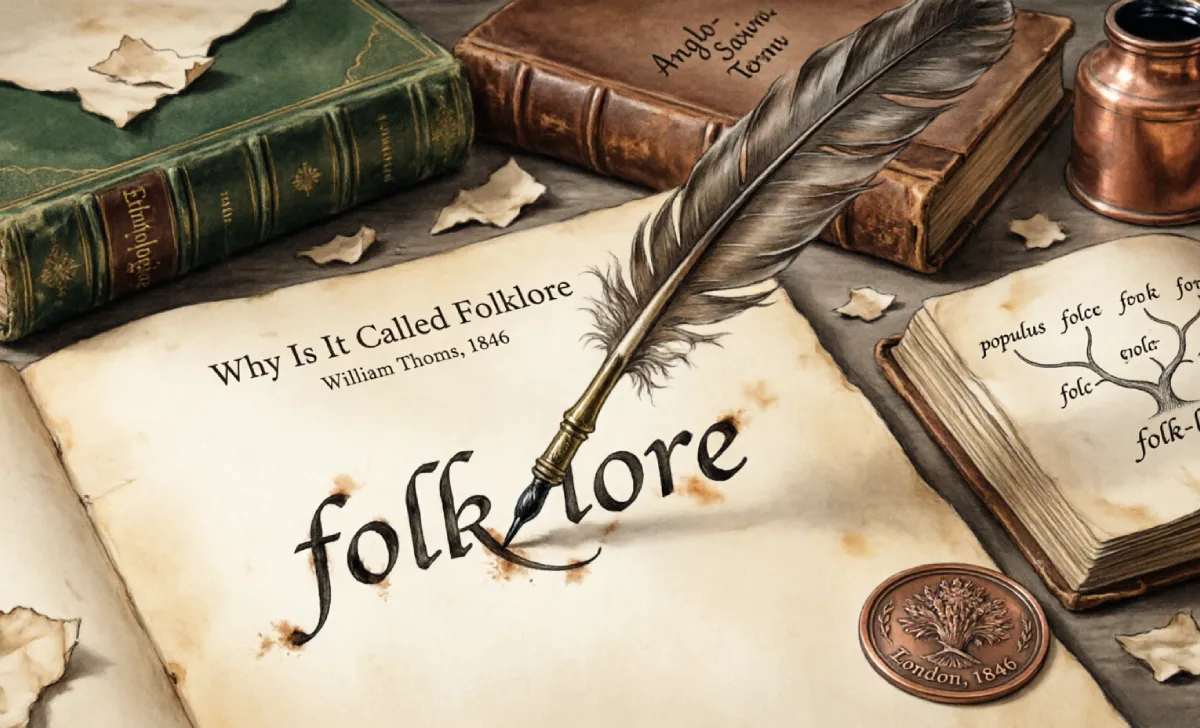
Here is something most people do not realize about this common word. It did not slowly grow out of the language over many centuries. It was invented deliberately and carefully by an English writer named William John Thoms.
This happened in the summer of 1846, during a time of great change. Thoms was not a linguist by training, but rather an enthusiastic antiquarian who loved old ballads and curious customs. He noticed a problem no one else had fixed.
Scholars at the time used the term popular antiquities to describe these traditions. To Thoms, that phrase felt dusty, academic, and completely missing the heart of what he loved. It focused on objects instead of living people.
He wanted a word that placed ordinary folks at the very center. So one day, he sat down and wrote a letter to a prominent journal. In that letter, he proposed something entirely brand new to the world.
The 1846 Letter That Gave Folklore Its Name
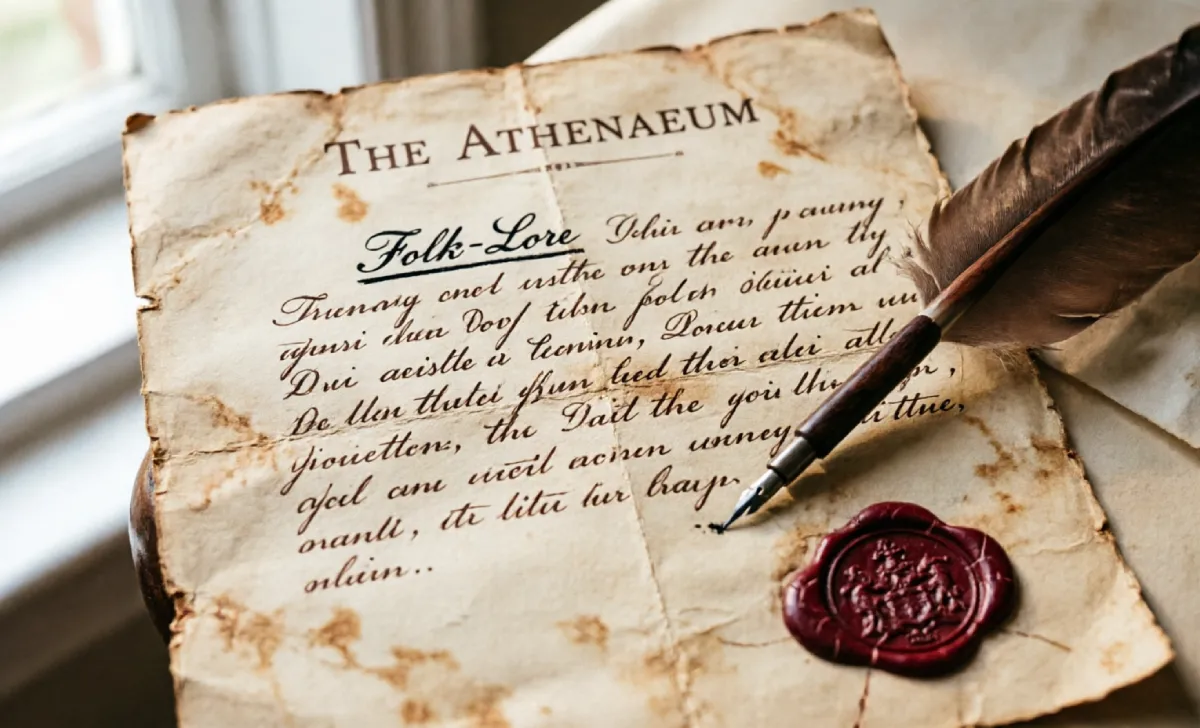
The letter appeared in The Athenaeum, a respected literary magazine of the era. Thoms signed it with the pseudonym Ambrose Merton to make his case with warmth. He suggested adopting a compound word that already had a natural feel.
He wrote that the English language would be aptly served by a good Saxon compound. He proposed the term folklore, which literally translates to the lore of the people. That moment was the true birth of the term.
Thoms did not draw on Latin or French like so much academic language did. He reached back into the Germanic roots of English to find something authentic. The hyphen showed that the two pieces belonged together perfectly.
What is striking is how modest his original proposal actually was. It was just a suggestion in a letter, but it caught on almost immediately. It simply felt right in the mouths and minds of the people.
Why Did William Thoms Choose “Folk”?
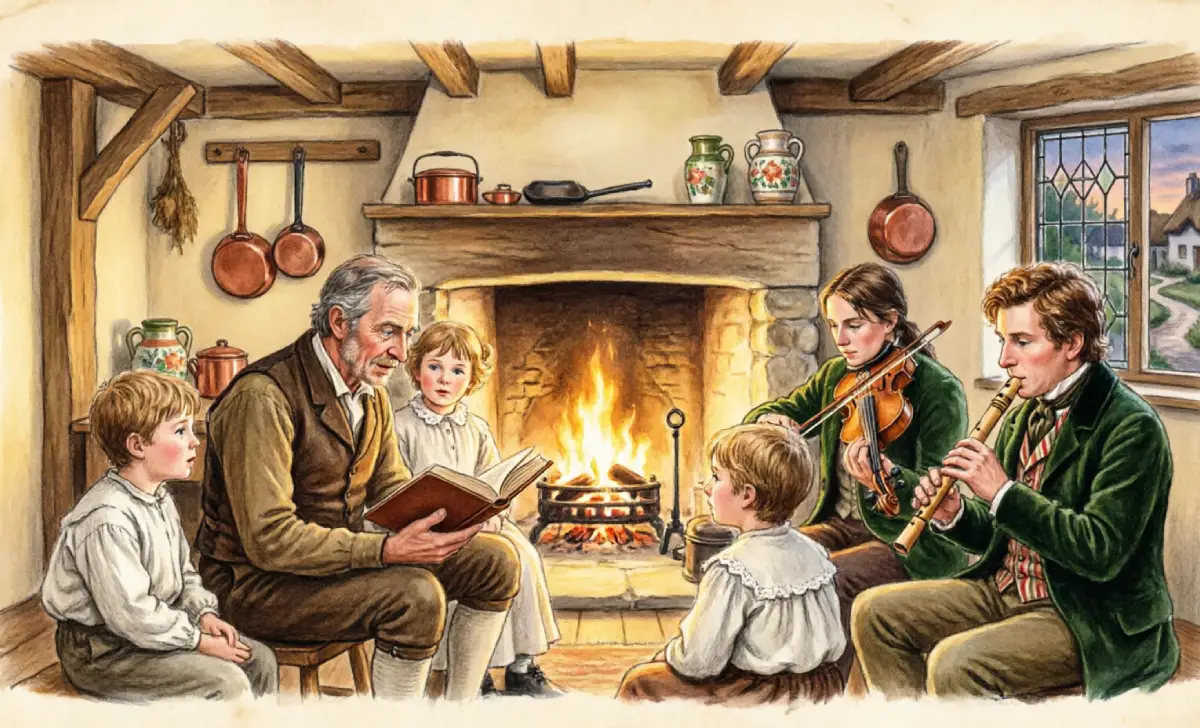
If you are going to name something after ordinary people, you need a dignified word. Thoms chose folk, and that choice was far from random or accidental. The word comes from the Old English term folc.
This ancient root meant a people, a nation, or a collective group. It did not mean the poor or the uneducated; it meant the whole body of a community. By selecting it, he made a quiet argument.
He argued that the traditions of everyday life mattered just as much as royal histories. You can hear the warmth in it even now when you say folk music or folk art. These phrases carry a sense of shared belonging.
Thoms could have picked words like people or common, but those lacked resonance. Folk felt like a word that belonged to everyone. If you look at a folklore visual guide, you see how it places the source of tradition right where he believed it truly lived.
Why Did He Add “Lore”?
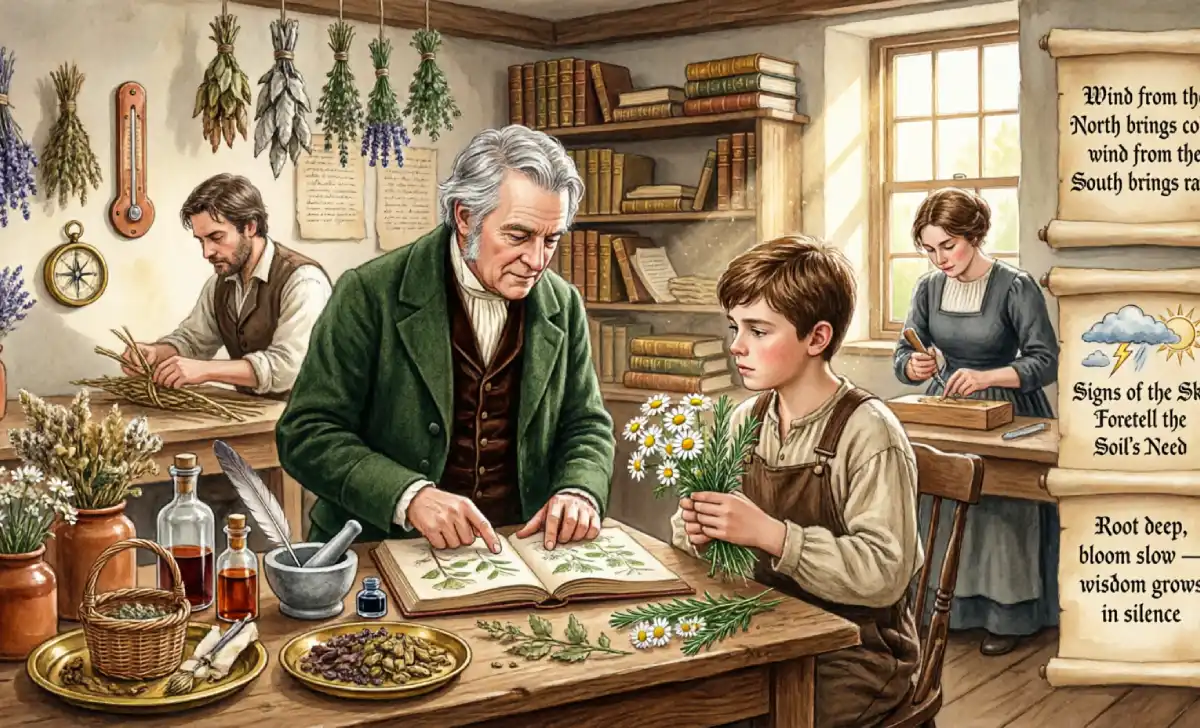
The second half of the coinage often gets less attention, but it holds real depth. Lore comes from the Old English word lār, which meant teaching, learning, or doctrine. It connects directly to the verb to learn.
When Thoms attached it to folk, he was not talking about random quaint stories. He meant a body of knowledge, a community of values. Think about what you already call lore, like weather lore or plant lore.
In each case, you are pointing to practical understanding handed down because it works. That is the intellectual force Thoms wanted to capture. The stories are part of it, but so are the proverbs that guide behavior.
Lore is the vessel of memory and instruction. Together, the two words create a perfect balance of community and shared wisdom. It elevates the concept from mere myths to vital cultural knowledge.
The Term Used Before 1846
You might be wondering what was actually wrong with the older term. Popular antiquities had been the standard phrase among educated collectors since the eighteenth century. It did its job in a very formal, academic sense.
But the words themselves set up a strange distance between the scholar and the subject. Popular meant belonging to the populace, while antiquities suggested old relics dug up from the past. It treated traditions as dead artifacts.
Thoms saw that the phrase did not match the reality he encountered daily. The customs he loved were warm and active, not dusty relics. The old language pushed the conversation into a purely scholarly frame.
By coining his new term, he permitted everyone to talk about these traditions humanely. The new word spread through Europe and across the Atlantic within mere decades. The older phrase quietly faded into history books.
How Has the Meaning of Folklore Changed Over Time?
You might think a word this carefully designed would stay locked in one meaning. But the beauty of this concept is how much it has expanded while keeping its core. In his day, it pointed to rural customs.
Today, the scope is far wider and includes things you interact with daily. Scholars now study urban legends, internet memes, and office rituals. Even the storytelling that happens inside families through text messages counts.
What stays constant is the idea of unofficial, community-held culture. The campfire story became the modern digital myth, and the village proverb turned into social media wisdom. The word remains elastic enough to contain it all.
That flexibility is exactly why the name works so incredibly well today. It does not belong to any one era or specific group of people. It is always about the living transmission of knowledge from person to person.
The Lasting Beauty of the Name Folklore
When you step back and look at what William Thoms actually did, it is hard not to admire the quiet elegance. He took two old, sturdy words and fused them into something entirely new.
He named a field of study while also sounding like it had always existed. The name does not just describe a category; it makes a statement about where value really lies in human culture.
Thom did not just define a concept; he performed an act of it himself. He passed on this new word that communities then adopted and made their own. The term now has its own tradition of use.
The next time you say it, you are participating in a small piece of linguistic history. Someone thought it up on an ordinary day in 1846, hoping the world would catch on. The world certainly did.
FAQs
Is folklore the same as mythology?
Mythology usually deals with sacred stories about gods and creation tied to a formal belief system. Folklore is much broader and covers everyday things like jokes, sayings, and local customs. You can easily think of mythology as just one room inside the much larger house of folklore.
Does the word folklore come from Old English?
The individual pieces of the word have Old English roots, but the combined term was deliberately coined in modern English. It is a constructed phrase that draws on very old materials rather than evolving naturally over a thousand years. This unique blend of ancient and modern is exactly what gives it so much charm today.
Why wasn’t it just called folk knowledge?
The word lore carries a specific emotional weight that the word knowledge simply does not match on its own. Knowledge can feel very static and impersonal, while lore implies something actively passed along within a community. William Thoms wanted a word with real texture and warmth, and lore gave him exactly that.
Is Taylor Swift’s album connected to the term’s origin?
Her famous album draws heavily on the mood of personal and collective storytelling, but it is not directly about the 1846 origin. Still, using the term in such a modern context shows how the word continues to evolve and remain deeply relevant. It proves that the name still perfectly captures the feeling of shared stories today.
Conclusion
You came here wondering why folklore is called folklore, and now you know it is not an accident of language but a human creation with a name, a date, and a purpose. William John Thoms gave you folk for the people and lore for the wisdom they carry, stitching them together in a letter that would quietly change the way we talk about tradition forever.
The next time you hear a ghost story, learn a family recipe, or share a superstition, you are touching a current that flows all the way back to that moment. That awareness is itself a little piece of lore you now carry forward, and that is exactly how the whole beautiful cycle is supposed to work.