
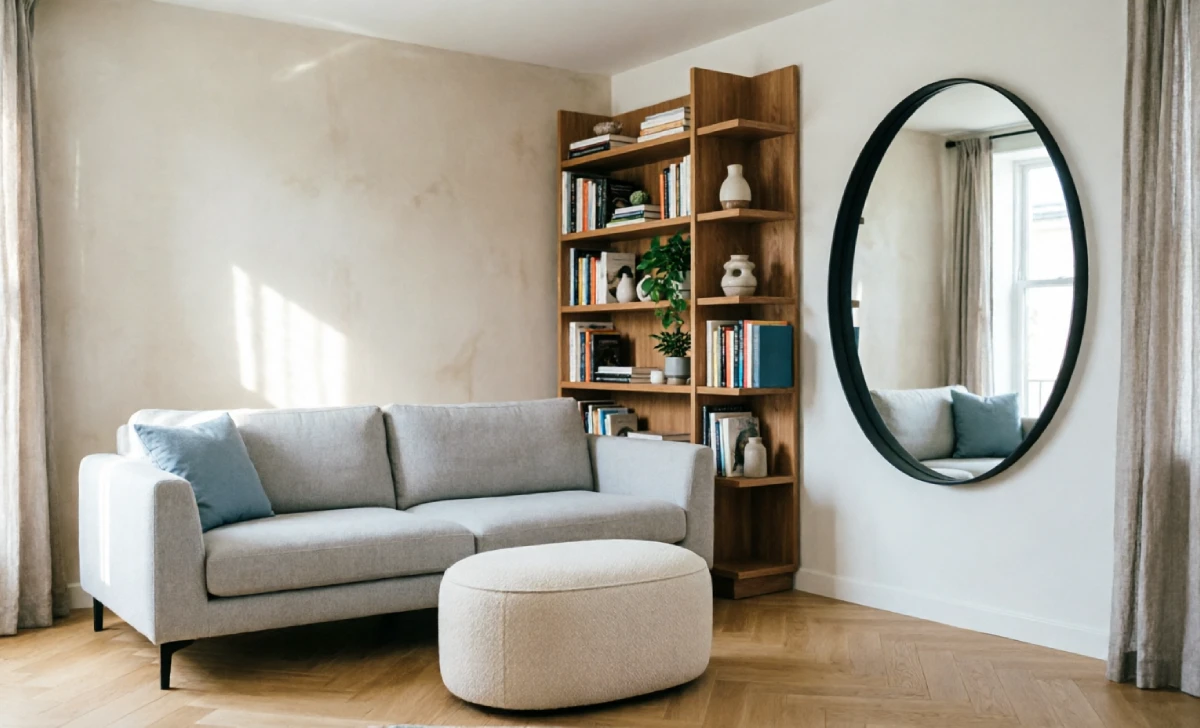
You follow all the tidying advice, yet your home still feels tight and chaotic. The frustration builds every time you bump into furniture or search for something you know exists somewhere. The truth is, organizing alone rarely helps you maximize small home space — you need a smarter approach from the very start.
Most people blame themselves when a room feels cramped, but the real issue is usually invisible. It lives in blocked walking paths, dark corners that swallow light, and empty walls, while floor space disappears. Your home is not broken — you simply need a different way of seeing the square footage you already have.
In the next few minutes, you will discover creative, room-by-room strategies to open up your home, choose the right furniture, and keep it feeling spacious forever. Every idea works for renters and owners alike, with no renovation required.
Why Does Your Small Home Feel Cluttered Even After You Tidy Up?
If you have ever spent a weekend cleaning only to feel like nothing really changed, you are not alone. The culprit is rarely the stuff you can see. It is the visual weight of your space pressing in from all sides.
Think about how your eye moves across a room. Dark, blocky furniture stops your gaze abruptly, while leggy pieces let it travel through. A floor crowded with side tables and stray baskets creates what designers call visual static — a low-grade chaos your brain registers as clutter even when everything is neatly arranged.
Traffic flow matters just as much as what you own. When you zigzag around a coffee table or squeeze past a bookshelf, your body sends constant signals that the room is too small. Understanding texture in interior design also helps — rough textures add visual weight, while smooth surfaces keep a small room feeling open and light.
The Decluttering Foundation That Makes Every Square Foot Count
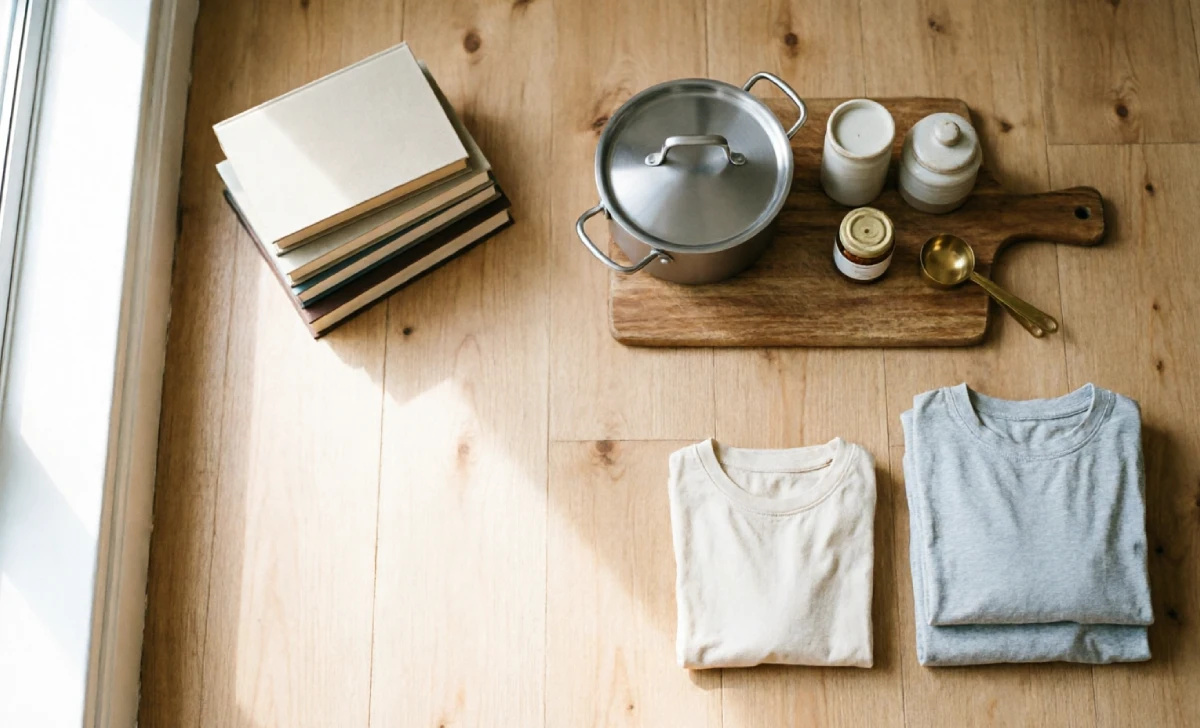
No storage product will fix a home that holds more than it should. The real fix starts before you buy anything. Professional organizers agree: decluttering must come first, not as punishment but as a release of everything that no longer serves your life right now.
Tackle one category at a time rather than one room. Gather every book, every kitchen gadget, or every pair of shoes into a single pile. Seeing the full volume of what you own in one place short-circuits your habit of overlooking excess and makes the next decision obvious.
Marie Kondo built an entire philosophy around keeping only what sparks joy, and even if that language does not resonate with you, the principle holds. When you hold something and feel only obligation, you have found something ready to leave. Letting it go frees more square footage than any shelving unit ever could.
How Can You Use Vertical Space Without Damaging Your Walls?
You might look at a blank wall and see a dead end. A space-savvy eye sees the most underused real estate in the entire home. You do not need a drill, a landlord’s permission slip, or any handyman skills to claim it.
Tension rods work far beyond shower curtains. Wedge one between two walls in a narrow kitchen nook, and suddenly you have hanging storage for spray bottles or utensils on S-hooks. Over-the-door racks slide into place in seconds and hold everything from pantry goods to bathroom toiletries without leaving a mark.
Tall, freestanding shelving units that reach nearly to the ceiling pull the eye upward and make any room feel taller. Think in layers — every wall between floor and ceiling can work harder than a bulky cabinet ever could.
What Are the Best Multi-Functional Furniture Pieces for Small Living Rooms?
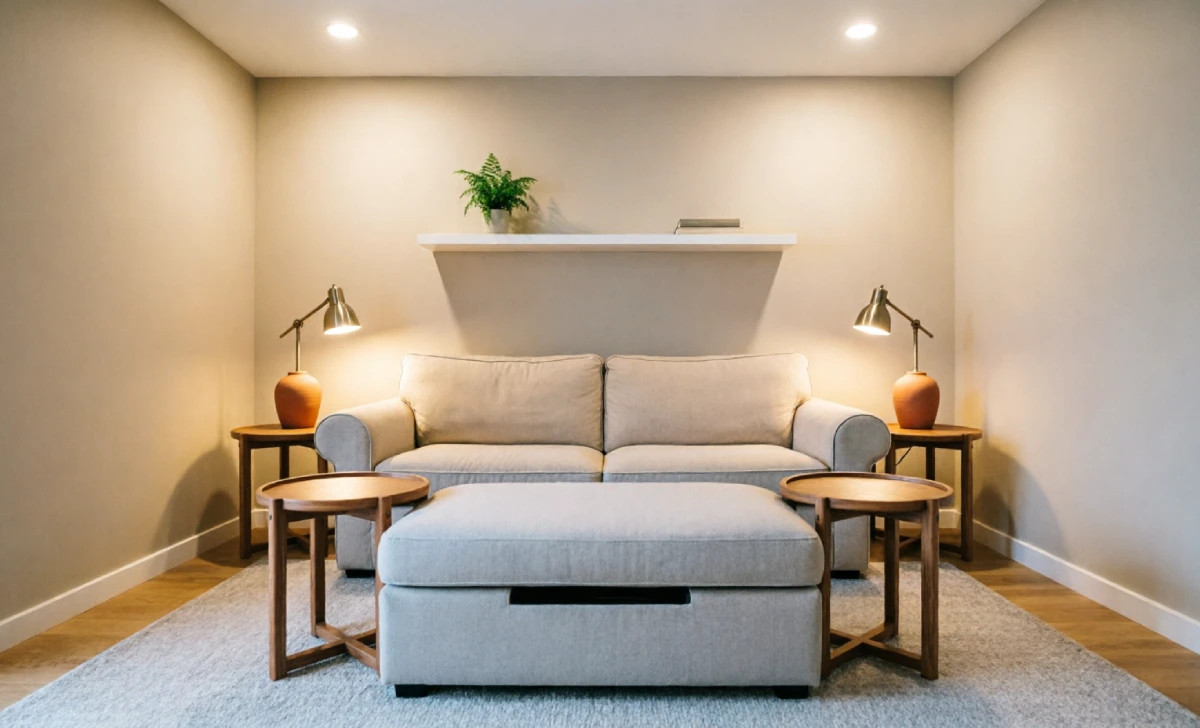
In a small home, every item needs to earn its place by solving more than one problem. The living room is where this rule matters most because it is where you relax, entertain, work, and often eat.
A storage ottoman sits as a footrest during movie night, then opens to swallow blankets, board games, or remote controls that otherwise colonize your coffee table. Nesting tables spread out when guests arrive, then tuck back into a single footprint when the evening ends.
When you shop with multi-functionality as your filter, you stop asking whether something fits and start asking how many ways it can serve you. Following sustainable interior design principles here also pays off — choosing fewer, better-made pieces reduces clutter and lasts longer.
How Do You Maximize Storage in a Tiny Bedroom Without Sacrificing Style?
A bedroom should feel like a retreat, not a storage unit with a bed squeezed in. When square footage is tight, the dresser, nightstand, and wardrobe compete for territory until the room becomes a maze. The solution is to get smarter about where storage hides.
Low-profile bins on wheels under the bed hold out-of-season clothing or extra linens without becoming a dust trap. A slim headboard with built-in shelves replaces a bulky nightstand and gives you a spot for a book and your phone without claiming floor space.
A light color palette on bedding and walls blurs the room’s boundaries and makes it feel larger than its measurements. You do not need a bigger bedroom — you need one where every choice serves both rest and function.
Clever Kitchen Storage Hacks That Transform a Compact Cooking Space
The kitchen is where small-space frustration often peaks because you cannot simply decide to own fewer pots. A few strategic shifts can turn even a galley kitchen into a space you enjoy moving through.
Magnetic knife strips mounted on the backsplash free up a drawer and keep blades within reach. Shelf risers inside cabinets double your plate and mug capacity instantly. Pegboard, painted in soft neutrals, holds pots, strainers, and small herb planters for very little money.
The space above your cabinets should not sit empty. Baskets or slim bins up there can store seasonal items like holiday baking pans. Every inch you reclaim from counter clutter gives you back the breathing room that makes cooking feel like pleasure.
What Are the Secret Storage Spots in a Small Bathroom?
The area above the toilet is the most obvious and most wasted spot in any small bathroom. A simple over-the-toilet shelving unit, no drilling required, creates three or four levels of storage for towels, toiletries, and extra toilet paper.
The back of the bathroom door holds possibilities that are easy to miss. An over-the-door organizer with clear pockets stores hair tools, brushes, and skincare bottles — it swings shut and disappears. Slim rolling carts fit into gaps as narrow as six inches and turn dead space into a mobile organization station.
The Optical Illusions That Instantly Open Up Any Small Room
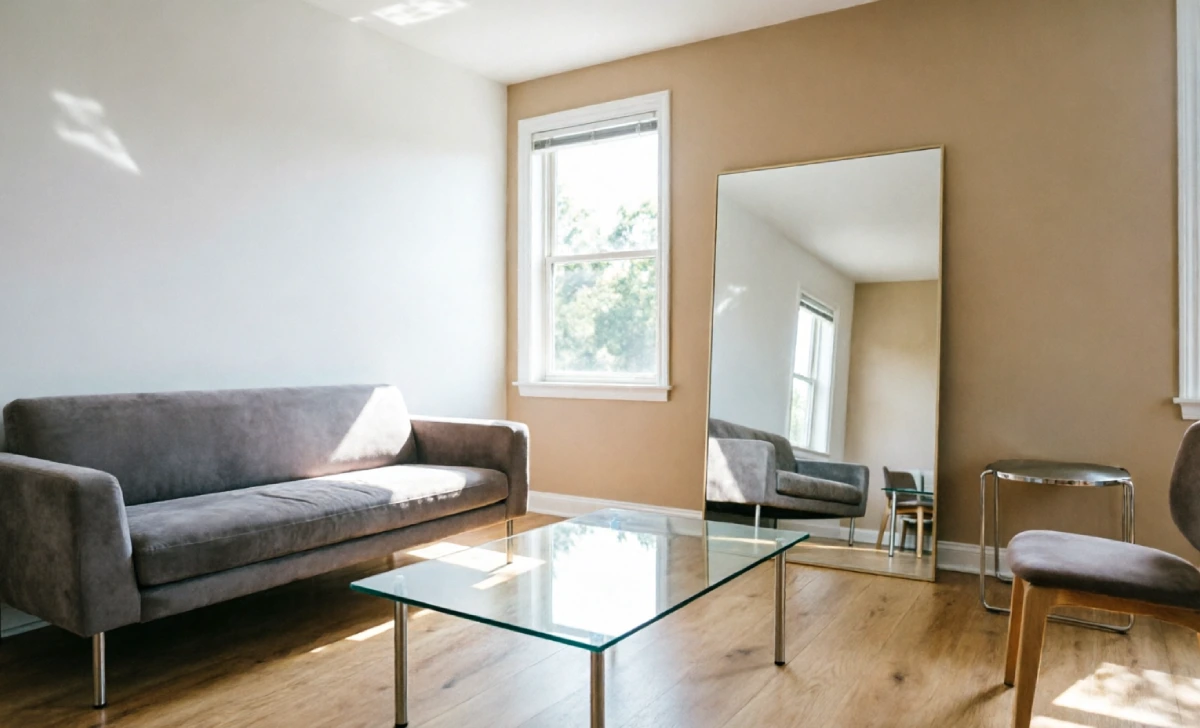
A large mirror placed opposite a window reflects natural light into the room and creates the illusion of depth, essentially doubling the visual square footage without adding an inch. Clear furniture — a glass coffee table or acrylic chairs — lets light pass through so your eye reads the area as open rather than occupied.
Consistent color across walls, trim, and larger furniture pieces erases the visual breaks that chop a room into smaller sections. If you are wondering whether accent walls are out of style, the short answer for small rooms is usually yes — a single bold wall adds contrast that shrinks the space rather than expanding it.
How Do You Maximize Space on a Tight Budget Using DIY and Thrifted Finds?
Wooden crates found at craft stores or flea markets can be sanded, painted, and mounted on walls as open shelving. They hold books, plants, or folded towels with a charm that reads as intentional design rather than improvisation.
Thrift stores and online marketplaces overflow with small-space gems that other people have outgrown. Drawing from farmhouse interior design ideas gives you a framework for mixing old and new pieces without overspending — warm wood, simple lines, and collected objects work beautifully together.
The Daily Habits That Keep Your Small Home Clutter-Free Forever
The one-in-one-out rule is simple and powerful. For every new item that enters your home, one item must leave. This single practice caps your total belongings at a steady level and forces honest evaluation with every purchase.
The five-minute evening reset works in a similar rhythm. Before you go to bed, spend five minutes returning items to their spots and clearing flat surfaces. Seasonal editing every few months keeps the system honest — items that felt essential in winter may feel unnecessary by summer. Maintaining a spacious home takes far less energy than reclaiming one that has been buried.
FAQs
How often should I declutter to maintain a truly spacious feeling?
A light pass every season is enough. Scanning one category or one closet with a critical eye usually stops clutter from building back up without requiring a full weekend purge.
Is open shelving or closed storage better for tiny rooms?
Closed storage generally works better in high-traffic areas — it creates a calmer look. Open shelving feels airier but requires careful curation to avoid visual clutter.
What is the single most impactful purchase for a first-time small-space dweller?
A storage ottoman or bench with hidden interior space. It functions as seating, a footrest, and storage all at once, making it the most versatile entry point into multi-functional furniture.
Conclusion
You now hold a complete toolkit for transforming your small home into a space that feels open, calm, and entirely yours. No bigger floor plan is required — only fresh eyes and one small action today.
Start with a single drawer, one bare wall, or the pair of shoes you have not worn in two years. That tiny step creates momentum, and momentum builds the kind of home you look forward to walking into every single day.