
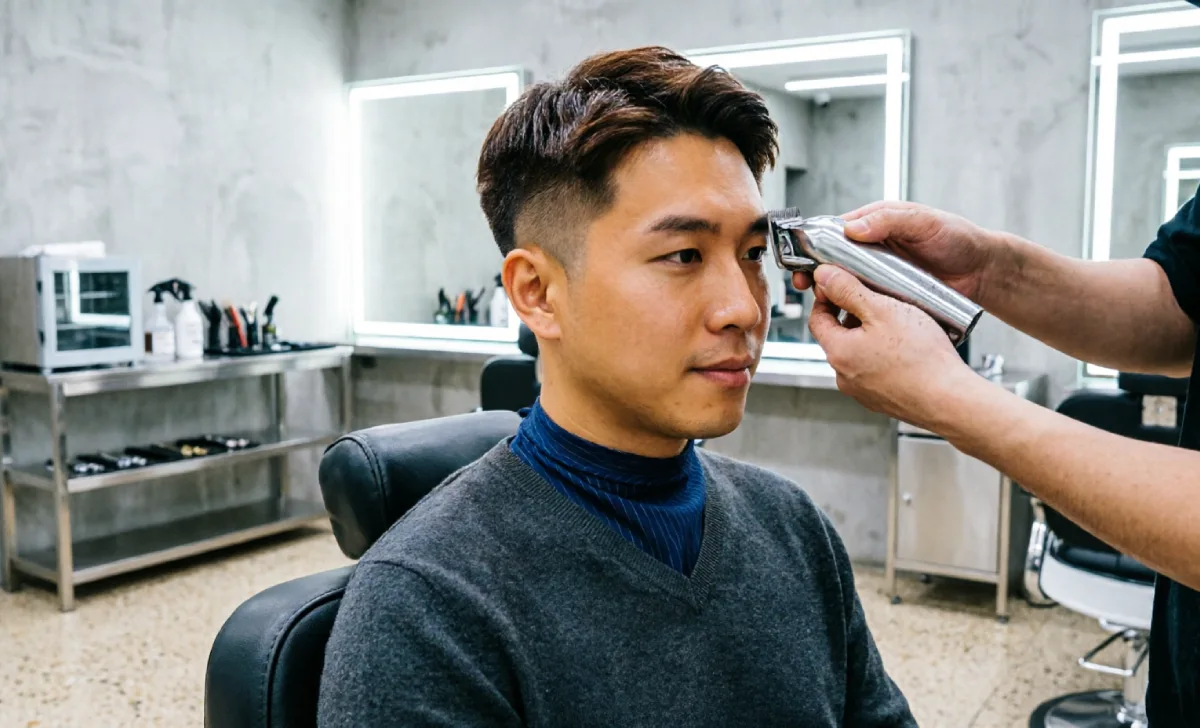
You’ve sat in that chair before. The cape goes around your neck, your barber asks what you want, and your mind goes blank. You mumble something about a fade and hope for the best.
The truth is, there are many types of fades for men, and each one has a different look and purpose. Once you know the names, you stop guessing and start choosing.
In this guide, you’ll learn twelve fade types, how to match one to your face shape, and exactly what to say in the barber’s chair.
What Exactly Is a Fade Haircut?
A fade is a haircut where the hair gradually shortens from the top of your head down toward your neckline. There’s no harsh line or sudden drop. Instead, the barber creates a smooth, clean gradient that looks almost painted on.
Think of it like a gentle slope, not a cliff. The clipper guards change as your barber moves downward, each one slightly shorter than the last. The result is a tight, deliberate look that gives shape and sharpness to your whole head.
This blending skill separates a fade from a buzz cut or undercut. An undercut leaves a hard disconnect between the top and sides. A fade melts them together seamlessly, and that’s what makes it feel modern and polished.
What’s the Difference Between a Fade and a Taper?
You’ve probably heard both words used like they mean the same thing. They don’t, and knowing the difference saves you from walking out with the wrong cut.
A taper is the quieter, more conservative option. It shortens the hair just around your neckline and sideburns, leaving more length on the sides overall. When you ask for a taper, you’re asking for a neat finish without dramatic contrast.
A fade goes further. The transition climbs higher up the sides and often ends with skin fully exposed. Every fade technically contains a taper at the bottom, but a taper never becomes a full fade. Keep that in mind, and you’ll never mix them up again.
The 12 Types of Fades Every Man Should Know
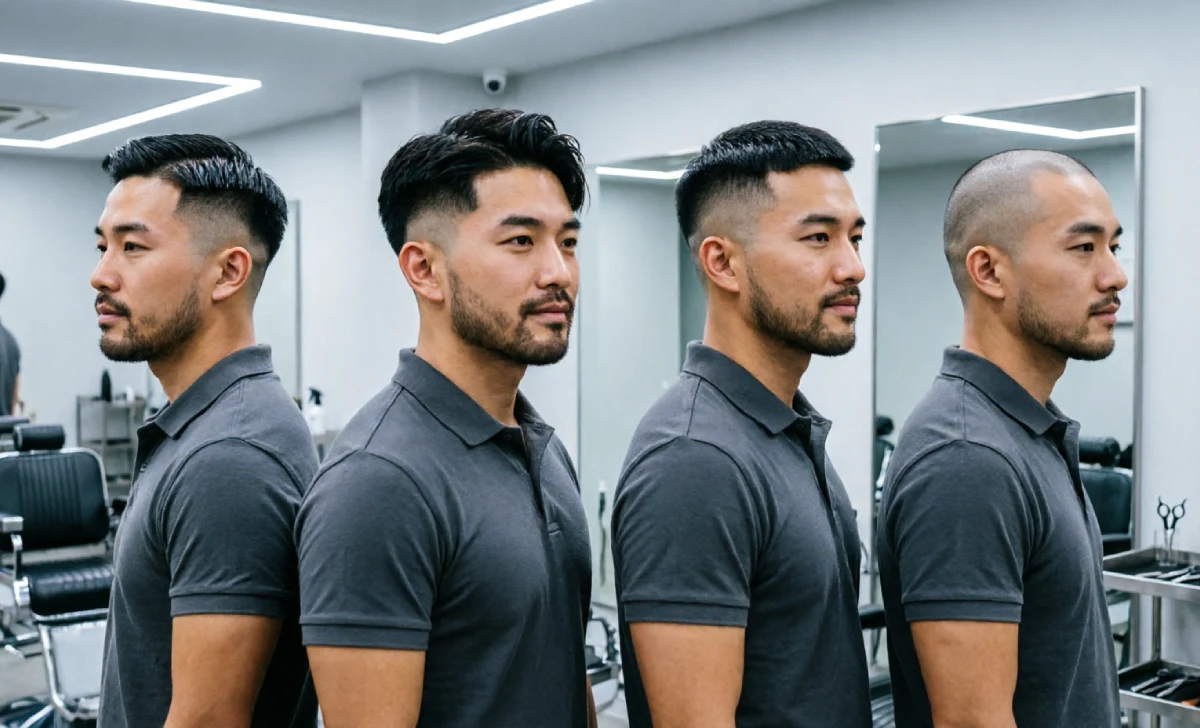
Walk into any good barbershop, and the style names can blur together fast. Here are all twelve explained so you can mentally try each one before you even book an appointment.
A low fade starts just above the ear and keeps the blend tight to that lower zone. It’s clean and professional without looking aggressive. Men in office environments often lean toward this one for exactly that reason.
The mid fade sits between the ear and the temple. It gives you noticeable contrast without going to an extreme. For most first-timers, the mid fade is the safest entry point because it works with almost any style on top.
The high fade climbs up near the temple and leaves only a small section of longer hair on top. The sides are dramatically short, often taken down to skin. This is the cut you see on athletes and style-forward men who want their haircut to make a statement.
A skin fade, sometimes called a bald fade, takes the hair all the way down to smooth skin. There’s no stubble, no shadow, just a clean canvas. The grow-out is faster, so you’ll need more frequent visits, but it’s the sharpest look a barber can deliver.
The drop fade curves downward behind the ear, following the natural arc of your head. This creates a three-dimensional effect that flat horizontal fades can’t match. If you want a cut that looks great from the back as well as the front, the drop fade delivers.
A burst fade radiates outward from behind the ear in a semicircular shape. It’s popular with mohawks, faux hawks, and styles where the hair runs down the center of the head. The burst shape frames the ear and draws the eye upward along the curve.
The temple fade, also known as the Brooklyn fade, focuses on blending right around the temple and hairline only. The barber doesn’t fade the entire side, just that defined corner at the forehead. You’ll often see this in wave culture and among men who keep their hair very close on top.
A taper fade acts like a taper at the very bottom. The skin shows only at the lowest edge, and the blend stays tight to the hairline. It’s the most natural-looking fade and grows out more gracefully than a full skin fade.
The shadow fades, leaving the faintest dusting of stubble at the bottom without fully exposing skin. The effect is soft and lived-in. It’s forgiving on different skin tones because the shadow creates a midpoint between hair and scalp.
An undercut fade combines the disconnected weight of an undercut with a smooth fade on the sides. You get the dramatic separation of an undercut with the polished finish of a fade. It photographs well from every angle.
The scissor fade is done entirely with scissors instead of clippers. The result is softer and more textured. It suits men with finer hair who want the shape without the severity.
Finally, the comb-over fade pairs a deep side part with a graduated fade on the opposite side. It draws attention to the volume and movement of the comb-over. If you like a gentlemanly style with a fresh edge, this one hits the sweet spot every time.
How Do You Identify Your Face Shape for the Perfect Fade?
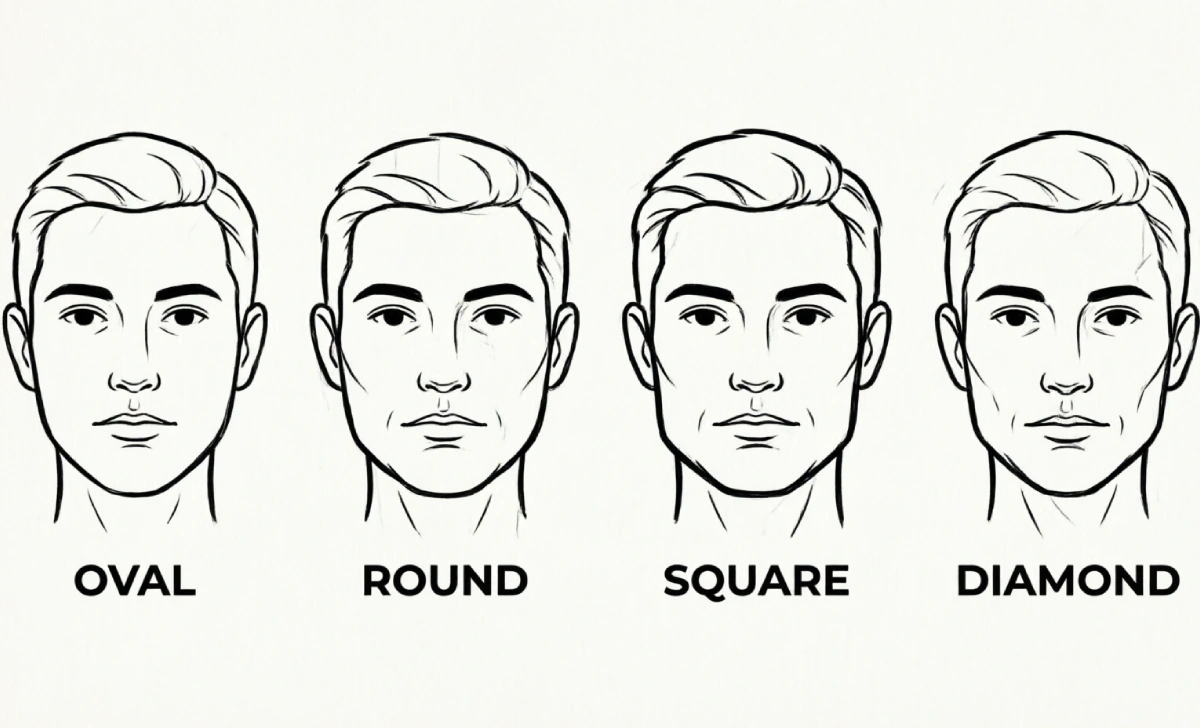
Not every fade suits every face. Knowing your own shape is the quickest way to narrow down your choices. This face shape guide can help you understand why certain cuts add balance while others work against you.
Pull your hair back and trace the outline of your face in the mirror. Focus on your forehead width, cheekbones, and jaw angle. A longer face with a rounded jaw is usually oval. If the width and length are similar with a soft jaw, that’s a round face. A broad forehead and sharp jaw mean square, while a face that peaks at the cheekbones is diamond.
Round faces benefit from high fades that add height and remove width from the sides. Square faces do well with a low or mid fade that softens strong angles. Oval faces are the most flexible, and almost every fade works. Diamond faces suit a mid fade with texture on top to balance the proportions.
Tell your barber which shape you think you have. That one detail makes the whole conversation more productive right away.
How Do You Ask Your Barber for Each Type of Fade?
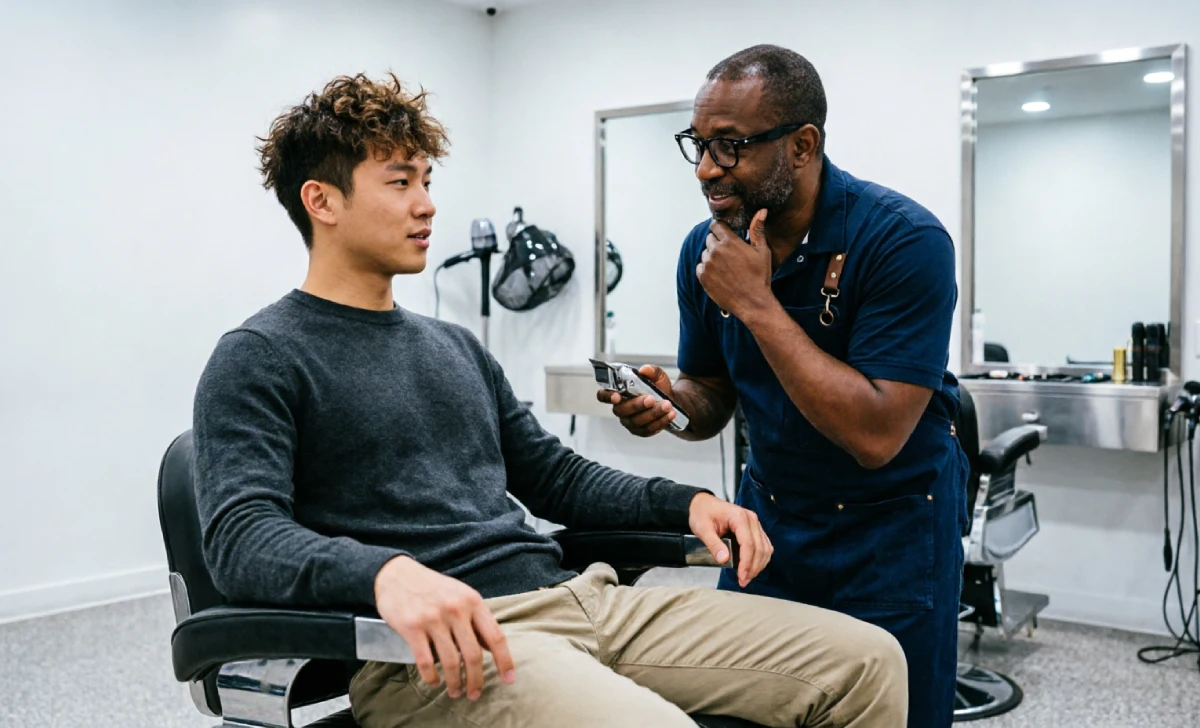
Knowing the style is one thing. Saying it out loud without stumbling is another. Barbers don’t expect you to know every technical detail, but a few clear words make all the difference.
For a low fade, say: “I’d like a low fade starting above the ear, number one at the bottom, blended up to a two.” For a skin fade, say: “Give me a bald fade on the sides, zero at the bottom, and leave about two inches on top.” The word “bald” tells your barber to use a shaver.
For a mid fade, say: “Start the fade between my ear and temple, half guard at the lowest point.” For a high fade: “Start the fade near my temple and take it down to skin.” Drop fades need a bit more: “Give me a drop fade that curves down behind my ear, starting at a one.”
Barbers genuinely appreciate clear instructions. It makes their job easier and your result better. Practice the phrase once before you sit down, and it’ll feel natural by the time the clippers start.
Maintaining Your Fade: How to Keep Your Cut Looking Sharp
A fresh fade looks incredible walking out of the shop. But after about two weeks, the crisp blend starts to soften as your hair grows. Knowing how to maintain it extends the life of your cut.
Most fades need a touch-up every two to three weeks. A simple trimmer with a zero-gapped blade lets you clean up your neckline between visits. Just follow the line your barber already set, and you’ll add another week of sharpness without touching the blend above.
A lightweight pomade or matte clay keeps the top styled without making the fade look greasy. If your scalp feels dry after a close shave, a fragrance-free moisturiser keeps the skin calm. Treat your fade like an investment, and it’ll keep paying off.
The Best Hairstyles to Pair with Your Fade
A fade is the frame, not the whole picture. The style on top is what completes the look. When both parts work together, the result feels sharp and considered.
High fades pair naturally with bold styles like the pompadour, quiff, or tall faux hawk. The bare sides push all the volume upward and make the top feel even bigger. Use a matte product to lift the roots and hold the shape without shine.
Low and mid fades give you flexibility for relaxed, textured styles. A messy crop above a low fade looks effortless and modern. Slicked-back styles work beautifully above a drop fade, where the downward curve echoes the backward sweep of the hair.
What Should You Know About Fades and Different Hair Types?
Your hair type isn’t a problem. It’s just information that helps you pick the right fade. The same cut that looks sharp on straight hair can behave completely differently on curls.
Curly hair holds volume and creates a soft, full effect above a fade. A low or mid fade keeps the shape balanced. Straight hair shows every detail of the blend, making it perfect for showcasing a barber’s precision work. Thick hair gives the barber plenty to work with, while fine hair benefits from a shadow or scissor fade that keeps some softness.
If you’re dealing with a receding hairline, a lower fade with texture on top draws the eye forward. Always mention your hair texture to your barber so the fade is built around what your hair actually does.
If you’re also exploring modern hairstyle trends beyond fades, understanding your face shape and hair texture first will help you make a smarter choice at your next appointment.
FAQs
What is the difference between a number zero and a skin fade?
A number zero uses clippers with no guard, leaving a thin shadow of stubble. A skin fade goes further using a foil shaver to remove all hair down to completely smooth skin.
How long does a fade last before looking grown out?
Most fades stay sharp for about two weeks. A skin fade may show noticeable regrowth in as little as four to five days.
Can you get a fade with a receding hairline?
Yes. A low to mid fade with some texture on top shifts focus forward and softens the transition at the temples very effectively.
What products help a fade stay fresh between cuts?
A lightweight pomade or clay keeps the top styled. A small trimmer helps clean up the neckline, and a gentle moisturiser prevents dryness on closely shaved areas.
Conclusion
Now you know the full language of fades, from the subtle low taper to the bold skin fade. You understand how your face shape and hair texture shape the decision, and you know how to keep your cut sharp long after you leave the chair.
The next time your barber asks what you want, you won’t hesitate. You’ll describe your perfect fade with confidence and walk out with exactly the cut you had in mind.