
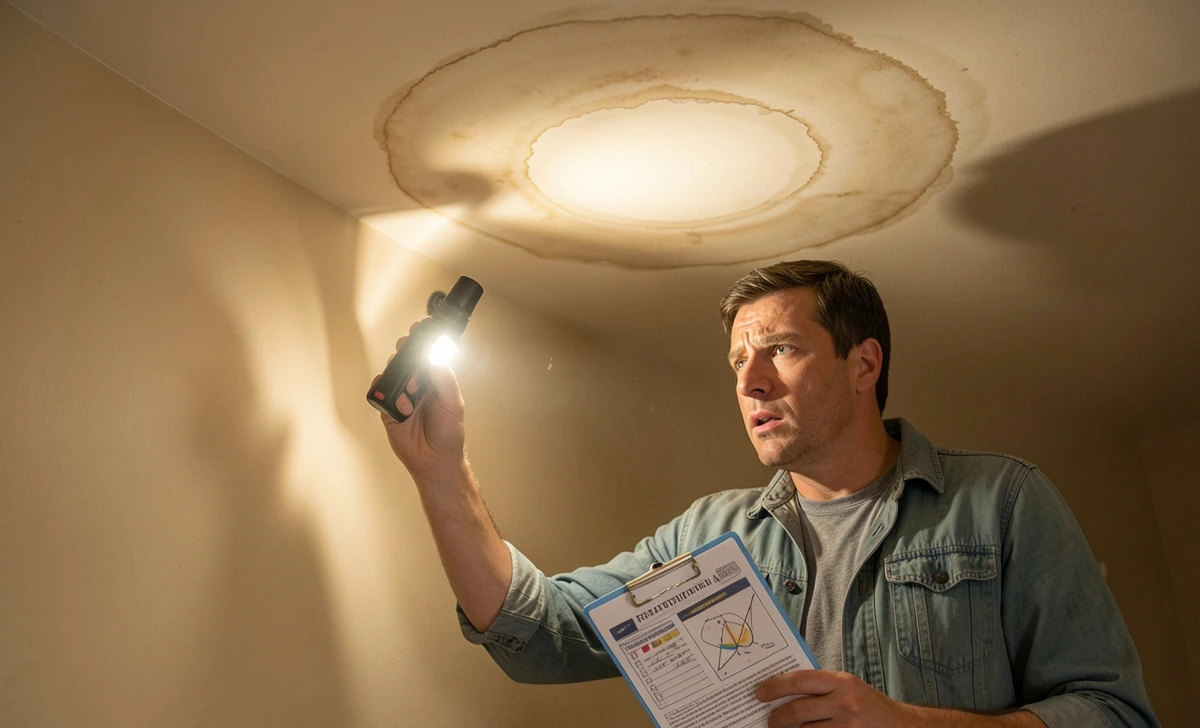
You’re standing in what could be your future living room. The hardwood floors gleam, the natural light is perfect, and you’re already mentally arranging furniture. But what if that beautiful ceiling corner has a secret?
Why Water Damage Red Flags Matter When Buying a Home
Water doesn’t just warp wood or stain drywall. Left unchecked, it breeds mold, weakens structural beams, and can turn a dream home into a money pit. The EPA estimates that nearly 40% of homes have some form of water intrusion issue.
But here’s the good news: most serious problems leave traces. A discoloration here, a soft spot there, a faint odor you can’t quite place. Learn to read those signals, and you’ll walk into negotiations with confidence—or walk away before it’s too late.
Top Visual Signs to Spot During Your Walkthrough
What Ceiling and Wall Stains Really Mean
That yellowish-brown ring on the ceiling? Could be an old, fixed leak. Could be an active one waiting to drip on your head tomorrow.
Here’s how to tell the difference:
- Fresh stains feel damp or slightly raised to the touch
- Older, resolved stains are usually flat, dry, and uniformly colored
- Multiple rings or “halos” often mean the leak has happened more than once
Ever found yourself trying to decode what those ceiling stains mean when viewing a house, actually signal? Don’t just glance and move on. Grab your phone flashlight, shine it at an angle across the surface, and look for texture changes. If you see bubbling paint or warped drywall, that’s a medium-to-high severity red flag.
Quick Severity Guide
Low: Surface discoloration, dry to the touch, no soft spots
Medium: Warping, repeated stain rings, faint musty odor
High: Active moisture, structural softness, widespread mold smell
Checking Around Windows, Doors, and Fixtures
Water loves to sneak in where materials meet. Run your hand along window sills, door frames, and baseboards. Feel for soft, spongy wood—these foundation inspection tips could save you from costly surprises later:
- Paint that flakes or peels unexpectedly
- Caulking that’s cracked, missing, or discolored
A quick trick: press gently on the trim with your thumb. If it gives even slightly, moisture has likely compromised the wood underneath.
Water Damage Under Sink Inspection Tips
This one’s easy to skip, but don’t. Open every cabinet under sinks—kitchen, bathroom, laundry. Shine a light inside and check for:
- Dark stains or watermarks on the cabinet floor or back panel
- A musty, damp smell (more on that in a sec)
- Corrosion on pipes or fittings
- Soft spots in the particleboard
Pro move: bring a small mirror on an extendable handle (or just use your phone camera) to peek behind the P-trap where leaks love to hide. Keep these water damage under sink inspection tips in mind while you look: if you spot dark stains or soft particleboard, flag it for the seller.
Sensory Clues: Smell, Touch, and Sound Checks
Musty Smell in Basement Before Buying: What It Signals
You walk downstairs and catch that faint, earthy odor. Some agents will call it “just old house smell.” Don’t buy it.
A musty smell in the basement before buying is often the first—and sometimes only—warning of hidden mold or chronic moisture. Mold doesn’t always show up visually right away, but your nose can detect it long before it’s obvious.
If you notice the smell:
- Ask when the basement was last waterproofed
- Check for efflorescence (white, chalky residue) on foundation walls
- Look for dehumidifiers running constantly—they might be masking a bigger issue
Soft Spots, Warping, and Unusual Noises
Walk the floors slowly. Do any boards feel springy or uneven? That could signal subfloor water damage.
Listen closely too. A faint dripping sound behind a wall, or a hollow “thud” when you tap drywall, can point to hidden moisture. These aren’t definitive proof, but they’re cues to dig deeper. Ever walked into a house and just felt… off? Sometimes that gut feeling is your brain picking up on subtle cues your eyes missed.
Investigating History: Signs of Past Flooding in the Listing
Questions to Ask the Seller and Agent
Don’t be shy—this is your future investment. Try these:
- “Has the property ever experienced flooding or water intrusion?”
- “Were any repairs done related to water damage? Can I see receipts?”
- “Is the sump pump on a backup battery? When was it last serviced?”
If answers feel vague or defensive, that’s a signal in itself.
Reviewing Disclosure Documents and Inspection Reports
Most states require sellers to disclose known water issues. But disclosures only cover what the seller knows. That’s why looking for signs of past flooding in a house listing goes beyond paperwork.
Cross-reference the disclosure with:
- Previous inspection reports (ask for them)
- Permit records for repairs (check with your local building department)
- Flood map data for the address (FEMA’s Flood Map Service Center is free)
Your Pre-Offer Water Damage Detective Kit
Save this as your go-to field checklist. It covers every blind spot most buyers miss during a casual walkthrough. For a more comprehensive home inspection checklist, keep these essentials handy:
Smell every room, especially basements and closets
Run faucets and flush toilets to check water pressure and drainage
Look at ceilings and walls for stains, bubbles, or texture changes
Open all cabinets under sinks and appliances
Check around windows and doors for soft wood or cracked seals
Test the sump pump (if present) by pouring water into the pit
Note any recent paint jobs that might be covering stains
When to Call a Professional Inspector
If you spot even one medium-or high-severity red flag (see the Quick Severity Guide above), bring in a pro. A licensed home inspector with moisture-detection tools (like thermal imaging or moisture meters) can find what the eye misses.
And if the property is older, in a flood-prone zone, or has a history of leaks? Consider a specialized water damage or mold inspector. Yes, it’s an extra cost upfront—but it’s pennies compared to repairing structural rot later.
Next Steps: Using Findings in Your Offer Negotiation
Found something? Don’t panic. Use it strategically.
- Minor issues: Ask for a repair credit or price reduction
- Major concerns: Make your offer contingent on a professional inspection and repair plan
- Severe/red-flag issues: It’s okay to walk away. Seriously.
Remember, the goal isn’t to nitpick every tiny flaw. It’s to ensure you’re not inheriting a problem that could cost you ten times the purchase price down the line—and knowing how to negotiate a home price after finding issues gives you real leverage.
FAQs
Can a home inspector miss water damage?
Absolutely. Standard inspections are visual and non-invasive. Inspectors can’t cut into walls or move heavy furniture. That’s why your own walkthrough—using the tips above—adds a critical layer of protection.
Should I walk away if I find water damage?
Not automatically. It depends on severity, cost to repair, and whether the seller is willing to address it. Get a repair estimate first, then decide.
How do I check for water damage in a newly built home?
Even new construction can have issues. Focus on proper grading around the foundation, functioning gutters, and ask for the builder’s warranty details on water intrusion.
Is a musty smell always mold?
Usually, but not always. Sometimes it’s just poor ventilation. Still, treat it as a warning sign until proven otherwise. Better safe than sorry.
The Bottom Line
Buying a home is exciting. But excitement shouldn’t override caution. Taking an extra hour to hunt for water damage red flags when buying a home could protect you from headaches—and huge bills—later.
Print this guide. Bring a flashlight. Trust your senses. And if something feels off, get a second opinion. Your future self will thank you.