
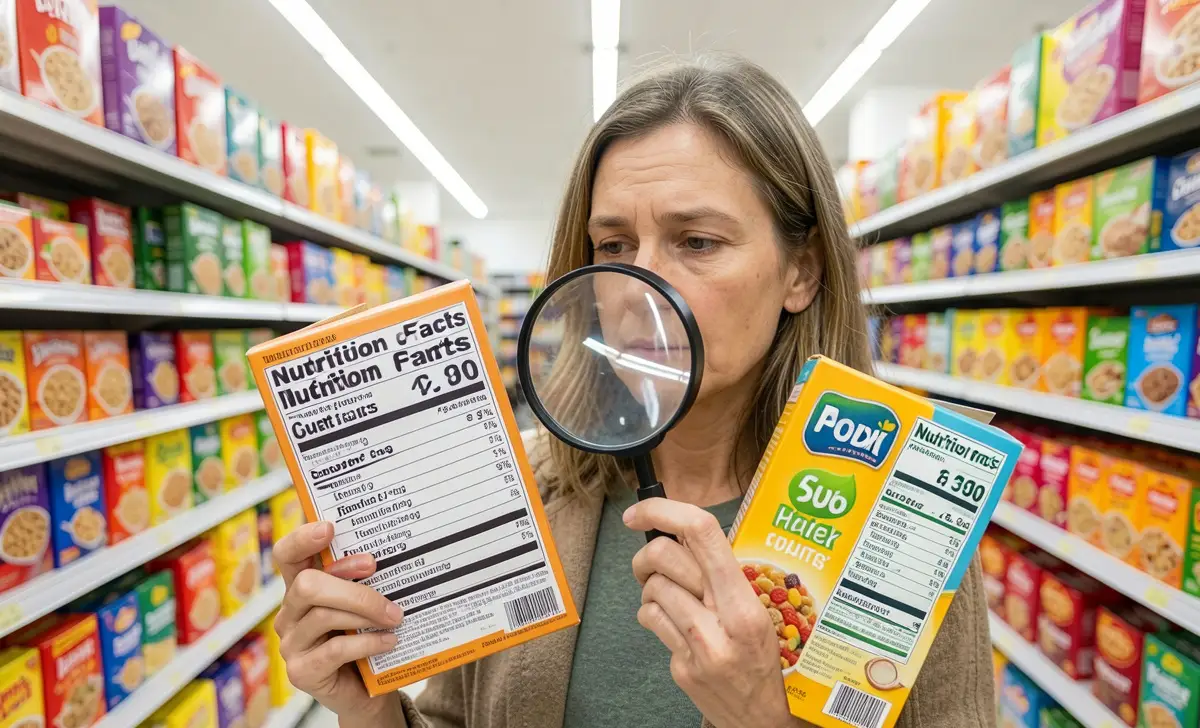
You’re standing in the cereal aisle. One box shouts “Clinically Proven to Boost Energy!” Another promises “Supports Heart Health!” Your cart’s getting full, but your brain’s buzzing: Is any of this actually real?
Truth is, food marketing is a masterclass in persuasion. And learning how to spot misleading nutrition claims isn’t about becoming a scientist—it’s about picking up a few simple habits that save you from buying hope in a box.
Here’s the thing: you don’t need a PhD to separate fact from fluff. You just need a clear checklist and a little skepticism. Let’s walk through exactly what to look for, where brands get slippery, and how to verify a claim in under two minutes.
What Counts as a “Science-Backed” Nutrition Claim?
Not all claims are created equal. And that phrase “science-backed”? It gets thrown around like confetti.
When a brand says a product is “clinically proven,” it implies that a human trial was conducted. But what does clinically proven mean on food labels, really? Sometimes it’s one small study, funded by the brand, on 20 people, measuring a tiny biomarker—not actual health outcomes. (For example, bold hydration claims often skip the real risks of too much water.)
Authorized vs. Qualified Health Claims: Know the Legal Difference
Regulators such as the FDA (U.S.) or EFSA (Europe) approve certain health claims only after reviewing substantial evidence. For example: “Diets low in saturated fat may reduce the risk of heart disease” is an authorized claim. But “This cookie boosts immunity!”? That’s likely a structure/function claim, which doesn’t need pre-approval and can’t mention disease treatment.
Confused about the difference between structure/function claims and authorized health claims?
So when you see a bold promise, ask: Is this an authorized health claim with regulatory backing, or a looser statement that just sounds scientific?
7 Red Flags That Signal a Misleading Food Claim
You’ve probably noticed some phrases pop up everywhere. That’s not a coincidence. Here are the red flags in food marketing claims that should make you pause:
- “May help,” “supports,” or “promotes”: These weasel words let brands imply benefits without proving them. If it’s not definitive, why not?
- No citation or vague reference: “Based on clinical research” with no study name, journal, or link? That’s a pass.
- “Doctor recommended” without context: Which doctors? How many? Was it paid?
- Before/after photos or dramatic testimonials: Real science doesn’t rely on anecdotes.
- Claims that sound too specific: “Lose 10 pounds in 3 days!” or “Erase brain fog instantly!”—if it feels like magic, it’s marketing.
- Fine print disclaimers: Tiny text saying “These statements have not been evaluated by the FDA” is a giant neon sign.
- Emotional language over evidence: Words like “miracle,” “secret,” or “breakthrough” are persuasion tactics, not proof.
Spotting these isn’t about cynicism. It’s about protecting your time, your money, and your health.
Your 5-Step Checklist to Verify Any Nutrition Claim
Okay, so you see a claim that piques your interest. Now what? Here’s how to check if a health claim is scientific—without getting overwhelmed.
Step 1: Look for regulatory seals or required disclaimers
Check the package for an FDA, EFSA, or Health Canada logo next to the claim. If it’s missing, read the fine print. A disclaimer isn’t always a dealbreaker, but it tells you the claim isn’t fully vetted.
Step 2: Search for the original study (and who funded it)
Grab your phone. Type the product name + “study” or “clinical trial” into PubMed. See who funded the research. Industry-funded studies aren’t automatically wrong, but they do have higher rates of favorable outcomes. Just something to weigh.
Step 3: Check sample size, study design, and peer review
A study on 12 people isn’t the same as one on 1,200. Look for words like “randomized,” “placebo-controlled,” and “peer-reviewed.” If the brand only mentions “preliminary research” or “in vitro” results, that’s not the same as human evidence. A claim about protein before bed boosting recovery needs human trials—not just lab data.
Step 4: Cross-reference with reputable health organizations
Does the claim align with guidance from the Academy of Nutrition and Dietetics, WHO, or NIH? If a product promises to fix early burnout signs with one ingredient, that’s a gap worth noting.
Step 5: Use free tools to validate evidence
Bookmark these: ClinicalTrials.gov for ongoing research, Cochrane Library for systematic reviews, and the NIH Office of Dietary Supplements for fact sheets. They’re free, unbiased, and way more reliable than a package front.
Where to Find Reliable, Unbiased Nutrition Science
This is where most guides stop. But if you actually want to know what studies back up food health claims, you have to look past the front of the box.
Start with PubMed. It’s not pretty, but it’s the gold standard for biomedical literature. Use simple searches: “oats cholesterol randomized trial.” Filter for “free full text” if you don’t have journal access.
For deeper dives, Cochrane Reviews summarize hundreds of studies into plain-language conclusions. And the NIH’s Office of Dietary Supplements breaks down evidence for vitamins, minerals, and botanicals without the sales pitch.
One pro tip: If the only source a brand cites is their own website or a press release, that’s not independent science. Real evidence lives in public databases, not marketing decks.
FAQs
Are all nutrition claims on food packaging regulated?
Not exactly. In the U.S., the FDA oversees health claims and nutrient content claims (“low fat,” “high fiber”), but structure/function claims (“supports digestion”) don’t need pre-approval. Brands must have substantiation, but enforcement often happens after the fact.
Can I trust “clinically proven” on a cereal box?
Maybe—but dig deeper. “Clinically proven” only means some clinical research exists. It doesn’t guarantee the study was large, independent, or relevant to you. Always check the details.
How do I find the actual study behind a food claim?
Search PubMed or Google Scholar using the product name + key ingredient. Look for a DOI (digital object identifier) or journal name. If the brand won’t share it, that’s a red flag.
What if a claim sounds too good to be true?
It probably is. Real nutrition science is nuanced. If a package promises dramatic, fast results from one product, pause. Whole diets and lifestyles drive health—not single items.
The bottom line
Learning how to spot misleading nutrition claims isn’t about becoming a label detective every time you shop. It’s about building a few quick habits that help you feel confident, not confused.
Next time you’re in the aisle, try this: pick one product with a bold claim—like one that promises to block blue light damage—and run it through the 5-step checklist. It takes less time than scrolling social media—and it pays off in smarter choices.