
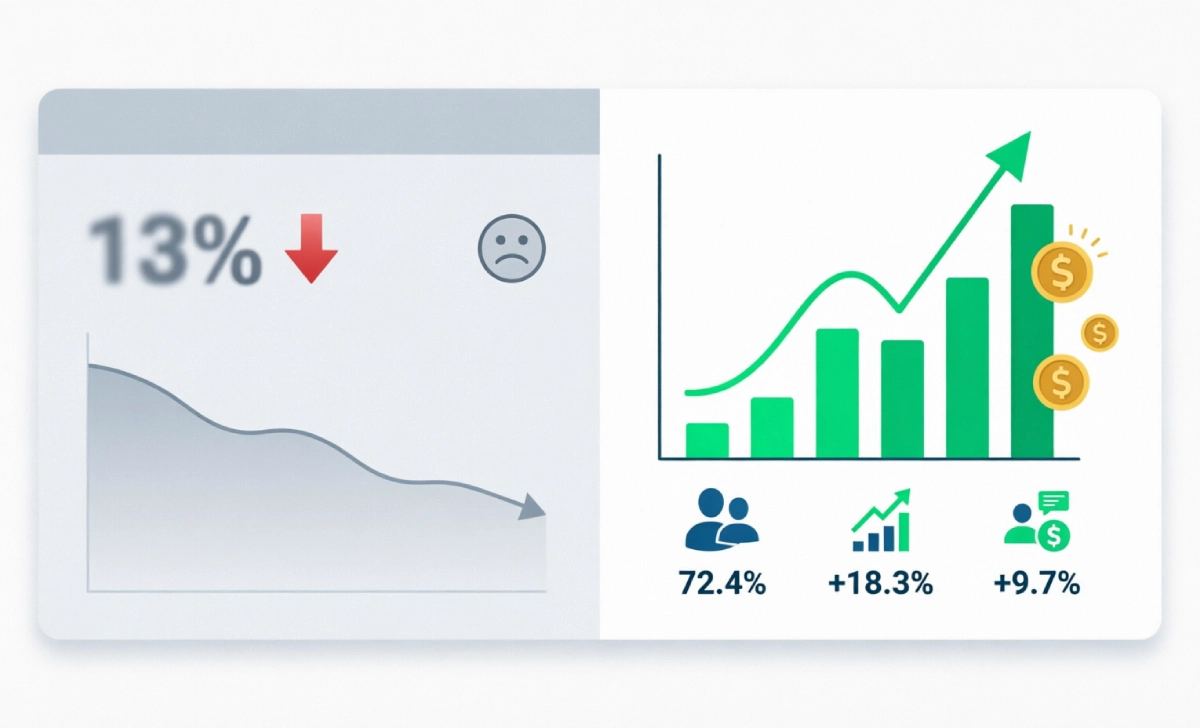
You finally hit 5,000 followers. You celebrate. Then you check your dashboard and realize you haven’t made a single new sale since Tuesday. Sound familiar? If the numbers keep climbing but the cash register stays quiet, what are you actually tracking?
Chasing likes and subscriber counts rarely pays the bills. What actually moves revenue are the real social media sales metrics. Let’s fix the disconnect between your audience size and your sales page. I’ll show you exactly what to track, where most founders go wrong, and how to build a simple system that turns casual scrollers into paying customers.
The follower count trap: why vanity numbers mislead
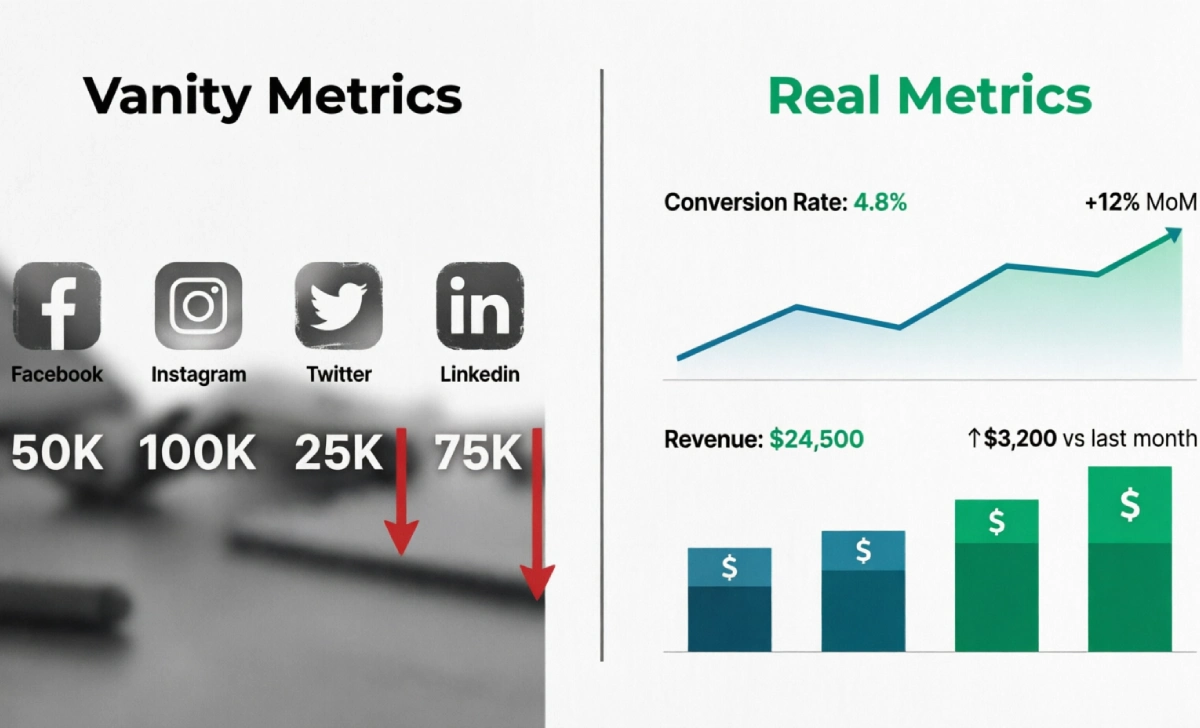
We’ve been sold a lie for years. Platforms feed you vanity numbers to keep you posting. But social apps aren’t storefronts. They’re discovery tools.
Here’s the thing about organic reach right now: most accounts only reach 8–10% of their followers naturally. If you have 2,000 followers, that’s roughly 200 people seeing your post. Maybe 40 engage. And only a handful actually click through.
One of the most common small business social media sales mistakes is treating a high follower count like proof of demand. It’s not. You could have ten thousand people following your meme-style page, but if you sell boutique accounting software, those numbers are useless. Followers are just a crowd. Buyers are a community. If you want to map buyer journey stages, start by asking: what does my ideal customer need before they’re ready to buy?
The math behind low organic reach
Algorithms prioritize retention, not broadcast. If your post doesn’t keep people watching, reading, or replying within the first three seconds, the platform buries it. That’s why posting more often rarely fixes a sales drought. Quality and relevance always beat volume.
When followers ≠ are qualified leads
A follower clicked because you made them smile, taught them something quick, or fit their aesthetic. A buyer clicks because you solved a painful problem they were actively trying to fix. Are you creating content for an audience, or just for the algorithm? The gap between those two intents is where your strategy needs to live.
Real metrics that drive social media sales in 2026
If you want to know what’s working, stop looking at likes. Start tracking actions that tie directly to your revenue.
Conversion rate vs. engagement rate
Engagement tells you people enjoyed your content. Conversion tells you they trusted you enough to act. A post with 500 likes but zero clicks to your shop is entertainment. A post with 30 likes and 12 purchases is a sales engine. Prioritize the second one.
The 3 metrics top performers actually track
- Click-Through Rate (CTR): How many people moved from social to your landing page. Aim for 2–4% on organic posts. If it’s lower, your hook or offer needs tweaking.
- Cost Per Lead (CPL): Even if you’re posting organically, track the time it takes to get a lead. If you spend 5 hours crafting posts that bring in one email subscriber, your CPL is your time. Adjust your content mix accordingly.
- Customer Lifetime Value (CLV): How much a single social-sourced customer spends over months, not just once. This tells you how aggressive you can be with follow-ups and retargeting.
How to calculate your true social media ROI
You don’t need a spreadsheet degree for this. Just use this formula: (Revenue from social traffic − Time/Cost invested) ÷ Cost invested × 100
Keep it simple. If your ROI is negative for two months straight, stop posting more content. Start fixing your offer or your funnel. When you’re ready to measure campaign ROI with more precision, layer in UTM parameters and conversion goals.
→ Do This Today: Pick one metric from the list above. Track it daily for 14 days. Drop everything else until you see a pattern. That’s how bootstrap marketers find signal in the noise.
Why Your Instagram Followers Aren’t Buying (And How to Fix It)
I hear this question constantly. The answer usually isn’t the algorithm. It’s the messaging.
The content-audience mismatch
Picture this: you post stunning travel reels to grow fast, but you’re actually selling local home organization services. The algorithm delivers your content to wanderers, not buyers. Fix the mismatch by aligning every post with a specific stage of the buyer’s journey. Awareness, consideration, decision. If a post doesn’t push them to the next step, it’s just noise.
Missing CTAs, weak offers, and funnel leaks
You’d be shocked at how many accounts post value-packed carousels and end with a vague “link in bio.” That’s a leak. Tell people exactly what to do next. “Grab the free checklist,” “Book a 15-minute consult,” or “Reply ‘PRICING’ for the guide.” Make the next step frictionless.
How to Turn Social Engagement Into a Working Sales Strategy
Engagement is fuel. Sales is the destination. Here’s how to connect the two without burning out.
Step 1: Audit your top-converting content
Pull up your insights from the last 90 days. Ignore the posts with the most likes. Find the ones that sent actual traffic to your site or generated DMs about your product. Replicate the structure, not the topic. What format worked? Short video? Text carousel? A raw screenshot? Do more of that.
Step 2: Build a micro-funnel for social traffic
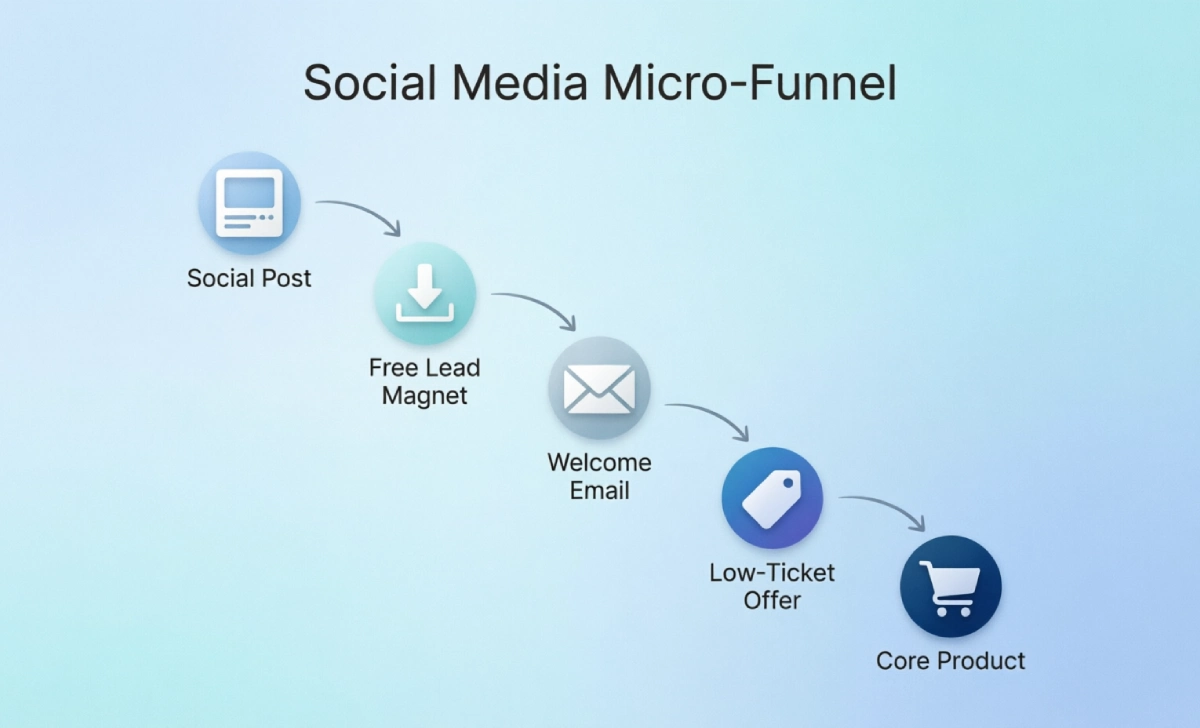
Don’t send everyone straight to a high-ticket checkout page. Build a bridge. Post → Free lead magnet → Welcome email sequence → Low-ticket offer → Core product. That sequence warms people up. It permits you to follow up without feeling pushy.
Step 3: Use retargeting to capture warm leads
You don’t need a massive ad budget. Start with a small daily retargeting campaign aimed at people who watched 50% of your videos or visited your pricing page. Show them a testimonial or a limited-time bonus. Social platforms remember who visited your site. Remind them why they stopped. If you want to attribute sales correctly, tag each step of your funnel so you know which touchpoint actually closed the deal.
How to measure social media sales conversion without paid ads
You don’t need a fancy CRM to see what’s working. You just need a consistent tracking system.
Free tools: UTM parameters, Google Analytics 4, platform insights
UTM links are your best friend. They tag every link you share, so you know exactly which post, story, or platform brought the sale. Set them up in two minutes using free builders. Then check your analytics dashboard to see which UTM source actually converted.
Platform insights give you the top-level view. Analytics shows you what happens after the click. UTM parameters bridge the two. Run this setup for 30 days, and you’ll see exactly where your revenue comes from. If you need to attribute sales correctly, consistent tagging is your best friend.
Tracking offline conversions from social campaigns
Not every sale happens online. If you run a coaching practice, local service, or B2B shop, track it manually. Add a simple field to your intake form: “How did you hear about us?” If they say a specific platform, log it in a spreadsheet. Tag it with the post date. Over time, patterns emerge. You’ll know which content actually books calls.
FAQs
What’s a good conversion rate for social media?
Organic usually sits between 1–3% for e-commerce and 2–5% for lead generation. If you’re consistently above 3%, you’ve got a winning funnel. Focus on scaling traffic, not tweaking the page.
Do I need to post daily to see sales?
No. Consistency beats frequency. Three high-intent posts a week with clear next steps will outperform daily noise every time. Protect your time. Post with purpose.
Can I track sales without a website?
Yes. Use direct messages, email replies, or a simple checkout link. Just keep a running tally. If you don’t measure it, you’re guessing. And guessing doesn’t scale.
Conclusion
Pick one metric from the list above and track it for the next 14 days. Stop refreshing your follower count. Start watching clicks, replies, and conversions. You’ll spot leaks faster, fix your messaging, and finally connect your content to your cash flow. If you’re unsure how to calculate customer acquisition costs, start with your time investment—that’s often the biggest expense for solo founders.
If you want a ready-made template to map out your next funnel, I put together a simple worksheet that walks you through each step.