
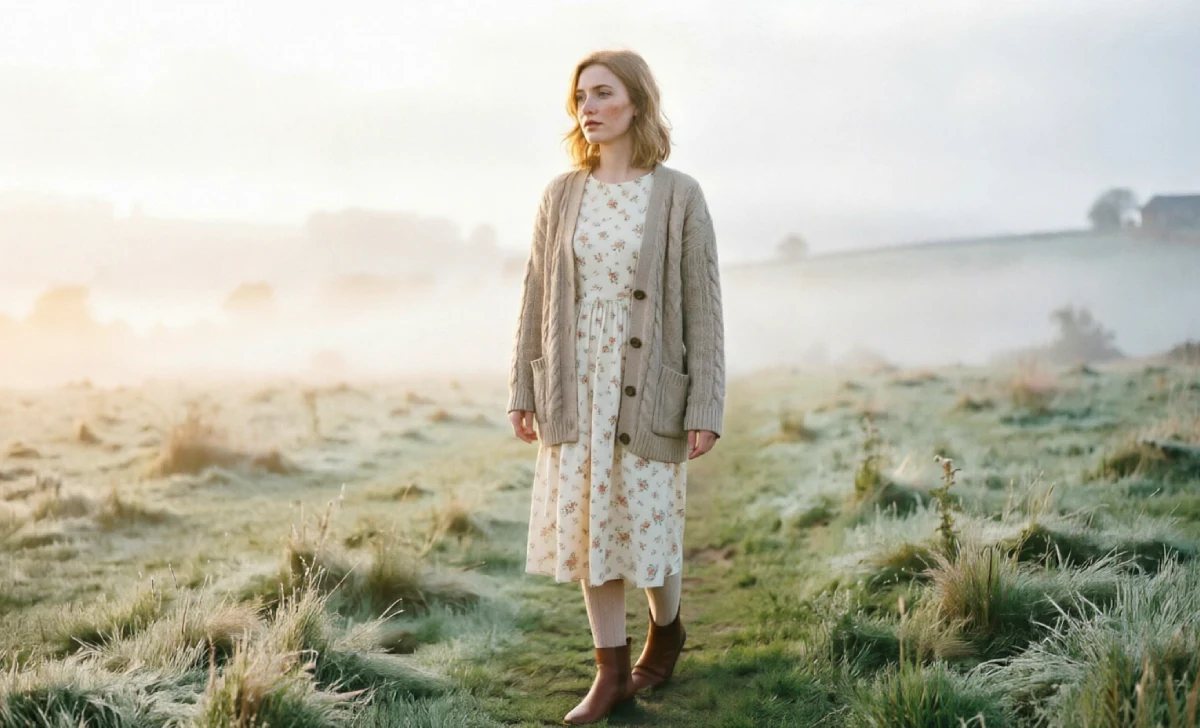
You scroll past another photo of someone wrapped in an oatmeal knit, standing in a misty field, and feel that pull again — the quiet, nostalgic longing for folklore’s soft fabrics and slower pace. That pull is exactly what folklore style outfits are built on. Before chasing any single trend, it helps to find your style first, then work out which pieces are truly you versus which ones just look good on a feed.
The folklore era wasn’t built on glitter or logos. Taylor Swift traded stadium brightness for candlelit cabins, and that mood poured straight into fashion: earthy tones, chunky knits, and unhurried silhouettes replacing anything flashy.
This guide covers what to wear, where to buy it, and how to style it without looking costume-like. Folklore sits closer to cottagecore than to dark academia outfits, though all three share a love of vintage texture. By the end, folklore won’t feel like an abstract mood — it’ll be something you can wear tomorrow.
What Is the Folklore Aesthetic?
If clothes have ever felt like a hug, you already understand folklore. It’s a visual language built on softness, nostalgia, and a connection to nature — the album’s stripped-back, woodland mood shaped everything from the color story to the fabric choices.
The palette leans into foggy landscapes: cream, oatmeal, moss green, dusty rose, faded rust. Fabrics stay tactile and natural — brushed cotton, linen, fine wool — while silhouettes stay generous without going shapeless, using puff sleeves and gentle ruching that moves with you.
People often ask whether folklore is just cottagecore under a new name. Cottagecore leans whimsical and literal, with storybook prairie details front and center. Folklore is more introspective: less baking bread in a meadow, more walking alone in the mist.
The Essential Wardrobe Capsule
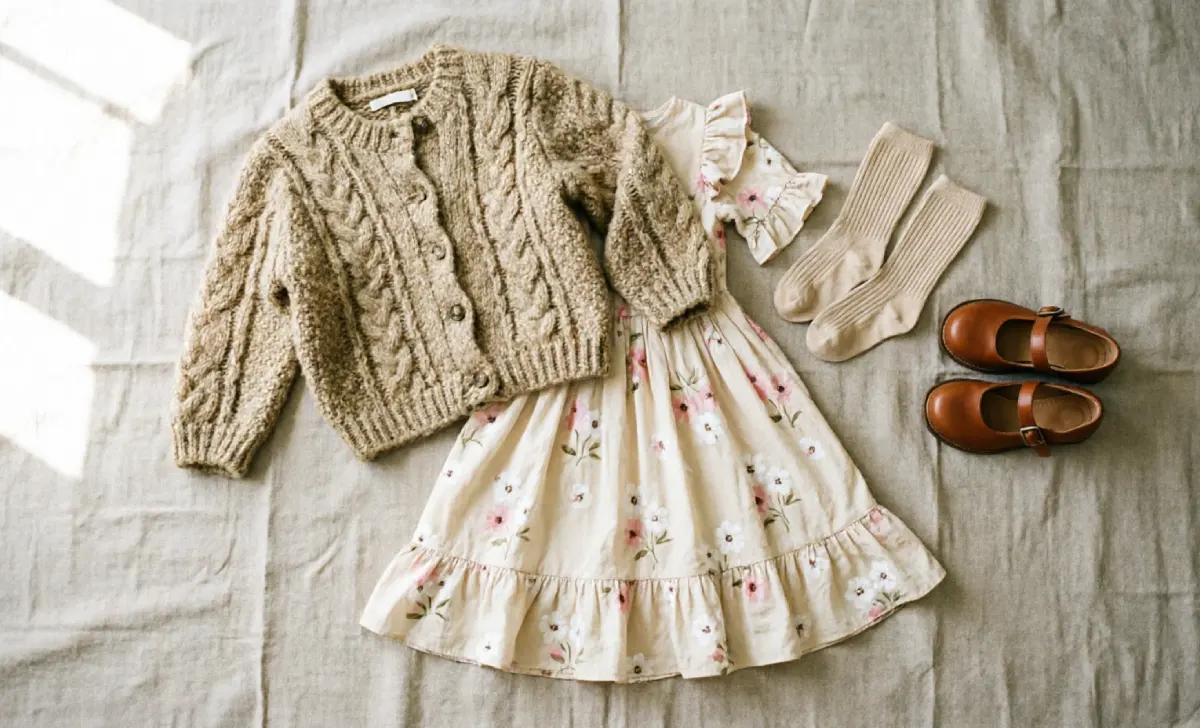
You don’t need a closet overhaul. The aesthetic thrives on a small, tightly edited capsule where every piece works with the others, so outfits practically build themselves.
Start with a chunky cable knit cardigan in oatmeal, forest green, or dusty blue — substantial enough to wrap around yourself like a blanket. Add a prairie-inspired midi dress with subtle florals or delicate embroidery that skims rather than clings. Round it out with a puff sleeve blouse, soft wide-leg trousers, and ribbed tights for cooler days. Oxford shoes or leather Mary Janes finish the look with a charm sneakers can’t replicate.
Styling the Cardigan for Everyday Wear
The folklore cardigan earned its reputation because it softens whatever it’s paired with. Wearing it only one way misses most of what it can do.
The easiest formula: a flowing midi dress in a matching tone, cardigan left open so the print stays visible, then ribbed tights and ankle boots for coffee dates or casual office days. For something more relaxed, button it halfway and tuck the front hem into high-waisted jeans — chunky knit against structured denim, finished with a slim belt and lace-up boots.
For a more polished result, belt the cardigan over a slip skirt or linen dress. A thin leather belt turns oversized knit into a near-jacket; simple jewelry, like a thin chain or signet ring, lets the texture carry the rest.
Dresses That Capture the Look
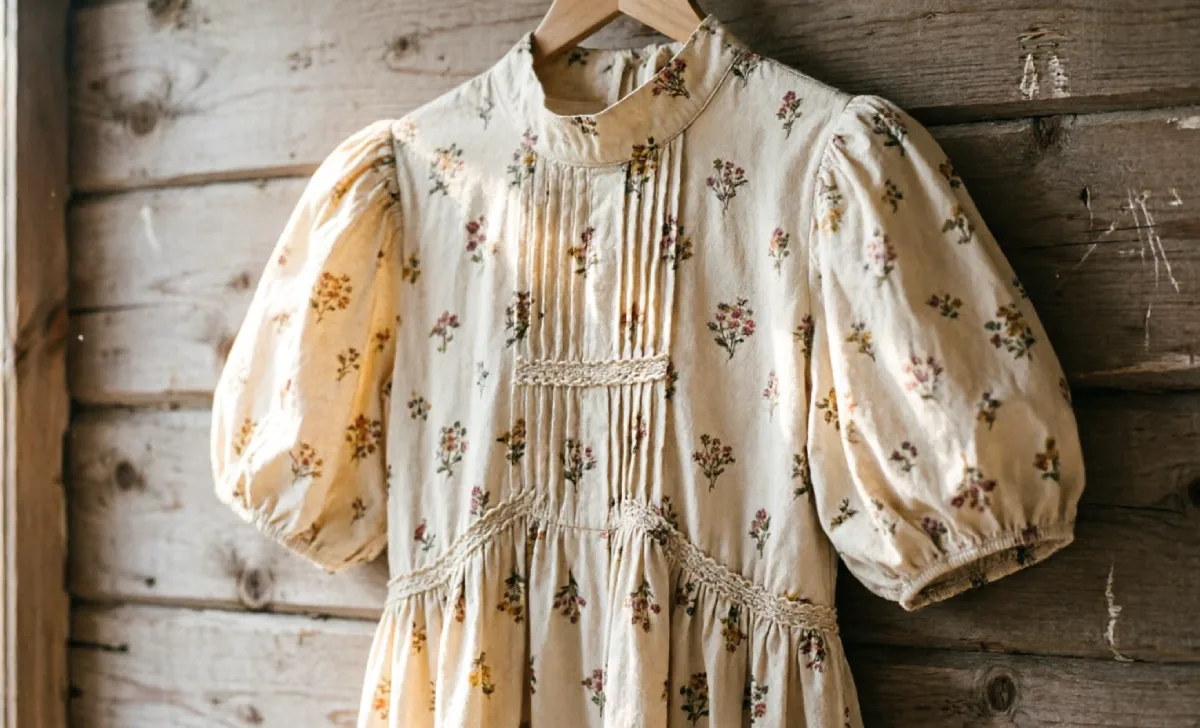
A good folklore dress doesn’t demand attention — it quietly holds space. Skip anything bodycon or shiny.
The prairie dress is the obvious muse: high neckline, gently full sleeves, tiered skirt that moves, plus pin-tucking, small floral prints, mother-of-pearl buttons, and a smocked bodice that stretches without a zipper. A midi-length slip dress in muted satin also works well layered under a cropped cardigan, and even a shirt dress in rust or muted plaid leans into the mood with the right accessories.
Outfit Ideas for Every Season
Folklore isn’t only an autumn look — a few swaps carry the mood through the year.
In warm weather, reach for the lightest versions of your favorite shapes: a linen puff sleeve top with a flowy floral midi skirt, an open-stitch cotton cardigan instead of anything chunky. As leaves turn, layer a wool turtleneck under a prairie dress with opaque tights and lace-up boots, or pair oversized knits with corduroy flares for chilly mornings. Spring brings back floral midis and bare ankles, along with lace trims and coquette-style ruffles that sneak in before summer arrives.
Where to Buy Folklore Clothing for Any Budget
Knowing what to look for is one thing; finding it in your size and budget is another. Fortunately, this aesthetic now spans enough retailers to cover nearly every body and price point.
For investment pieces, Christy Dawn and Doen make vintage-inspired dresses from sustainable materials, often in extended sizing. Free People and Anthropologie are reliable mid-range sources for puff sleeve blouses and cozy knits, while Target and ASOS cover the same mood at lower prices. Etsy is a treasure chest for handmade or vintage finds, from custom cable knits to one-of-a-kind florals. Thrifting is arguably the most folklore-aligned way to shop, both financially and philosophically — some of the most-loved pieces, like a perfectly worn-in cardigan, turn up secondhand.
Accessories That Complete the Look
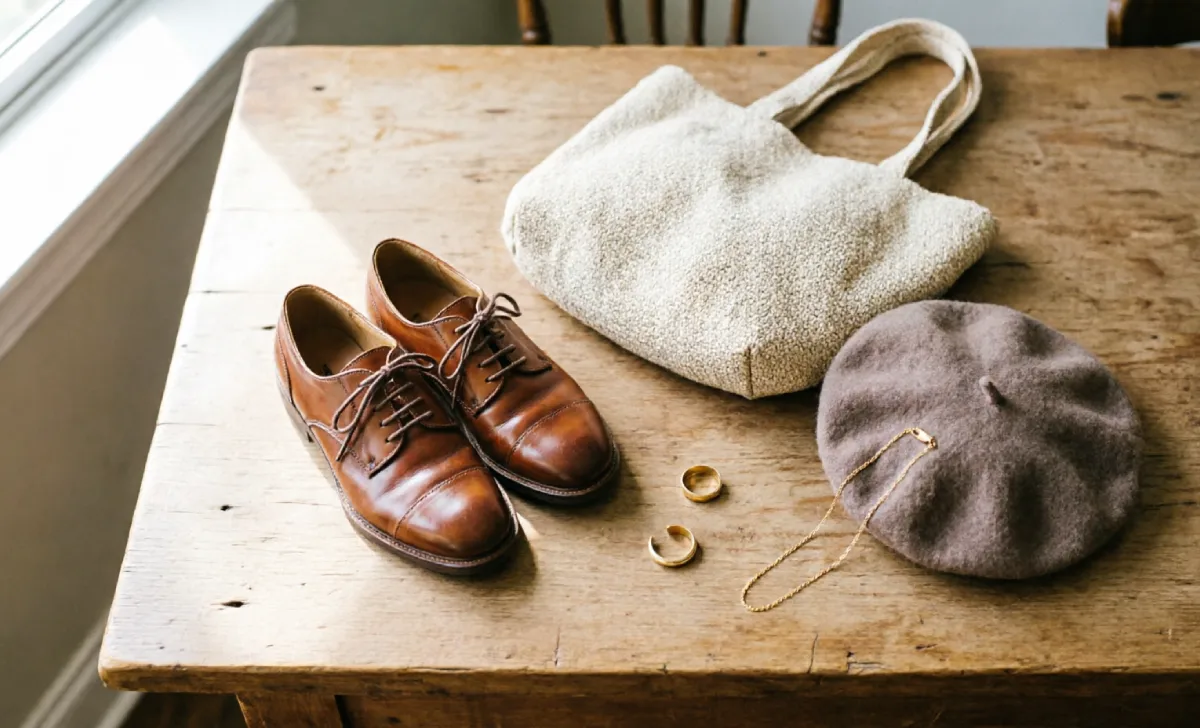
Accessories here work like quiet punctuation: they never shout, but they finish the sentence.
Footwear sets the tone first — Oxford shoes, Mary Janes, and low leather ankle boots offer vintage character without sacrificing comfort. A woven tote or simple canvas crossbody replaces anything structured or logo-heavy. On your head, a wool beret or knitted beanie adds instant countryside charm. Keep jewelry small and meaningful: thin gold hoops, a locket, a stack of slim rings.
Folklore-Inspired Hair and Makeup
Folklore beauty follows the same rules as the clothes: soft, unfussy, comfortably undone. The goal is a gentle polish, not perfection — as though you’ve just come in from a walk outside.
For hair, aim for loose, organic texture: soft waves from sleeping in braids, low messy buns, or simple three-strand braids pulled apart for volume. A velvet headband works well on shorter hair. Makeup stays just as natural — tinted moisturizer, cream blush, curled lashes with brown mascara, and a dusting of translucent powder to keep things fresh without hiding your skin.
Common Styling Mistakes to Avoid
Most missteps come from adding too much at once or mixing in pieces that fight the aesthetic’s softness.
Over-accessorizing is the biggest trap — when every lace-trimmed, ribbon-tied piece competes for attention, the eye has nowhere to rest. Choose one or two quiet statement pieces and let the clothing’s texture carry the rest. Proportion matters too: balance an oversized cardigan with something more fitted underneath, and avoid pairing floaty fabrics with anything structured or sporty, since that mix breaks the mood instantly.
Frequently Asked Questions
Can I wear folklore style if I don’t usually dress feminine?
Yes — many pieces translate across a wide range of gender expressions. Lean on relaxed corduroy trousers, chunky cardigans, and Oxford shoes, then build softness through fabric and color rather than lace or ruffles.
What’s the difference between folklore and evermore fashion?
Folklore favors cream, oatmeal, and faded florals; evermore leans into richer plaids, velvets, and burnt orange for a heavier, late-autumn mood. The two blend easily, but folklore always reads a little airier.
Is it possible to thrift an entire folklore wardrobe?
Absolutely — thrifting matches the aesthetic’s values of story and sustainability. Search resale apps and local shops using terms like “vintage floral midi” or “chunky knit cardigan” to surface strong finds.
How do I make folklore outfits work for an office or school setting?
Lean into the more structured pieces while dialing back whimsical details: a puff sleeve blouse tucked into tailored trousers, a fine-gauge cardigan, classic loafers, and darker neutrals like navy or olive.
Final Thought
Folklore is an invitation to dress with tenderness — soft textures, quiet colors, silhouettes that never rush, with room for the occasional coquette-style ruffles when the mood calls for it. Once you understand the mood and own a small capsule you genuinely love, getting dressed becomes a gentle ritual rather than a daily puzzle. Build it around your body and your real life, not a music video screenshot.
Trust your instincts, mix old pieces with new, and let your outfits carry the calm energy that drew you to folklore in the first place. The best thing you can wear is the confidence of dressing like yourself — just a little softer, and far more comfortable.