
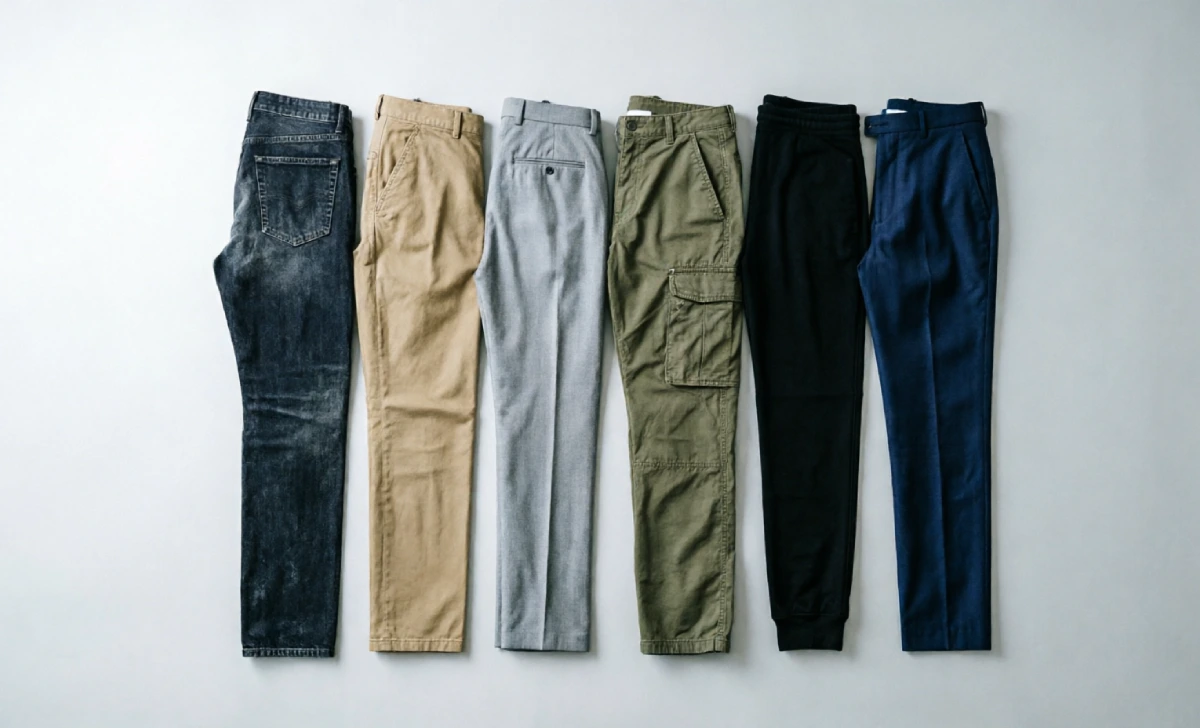
Staring at a wall of trousers can feel like a guessing game. Labels like slim, straight, chino, and jogger start to blur together, and that’s not your fault — men’s pants have multiplied into dozens of styles, each with its own name and purpose. Understanding the types of pants for men doesn’t require a fashion degree, just a clear guide to make sense of it all. Even simple choices like brown pants style get skipped over because nobody explains the basics first. This guide fixes that: you’ll learn which styles flatter your build, how they should fit, and when to wear each one.
What Are the Most Common Types of Pants for Men?
Start with the categories that cover almost every situation in your closet.
Jeans anchor casual wear, built from denim that ages well. Chinos sit between casual and smart, using lightweight cotton twill for a neat, relaxed look. Dress trousers handle blazer-and-leather-shoes occasions.
Cargo pants add utility through side pockets, while joggers offer a tapered, sport-meets-street silhouette. Suit trousers stay strictly formal, and sweatpants exist purely for comfort. Most men only need four or five of these styles in real rotation — not all seven.
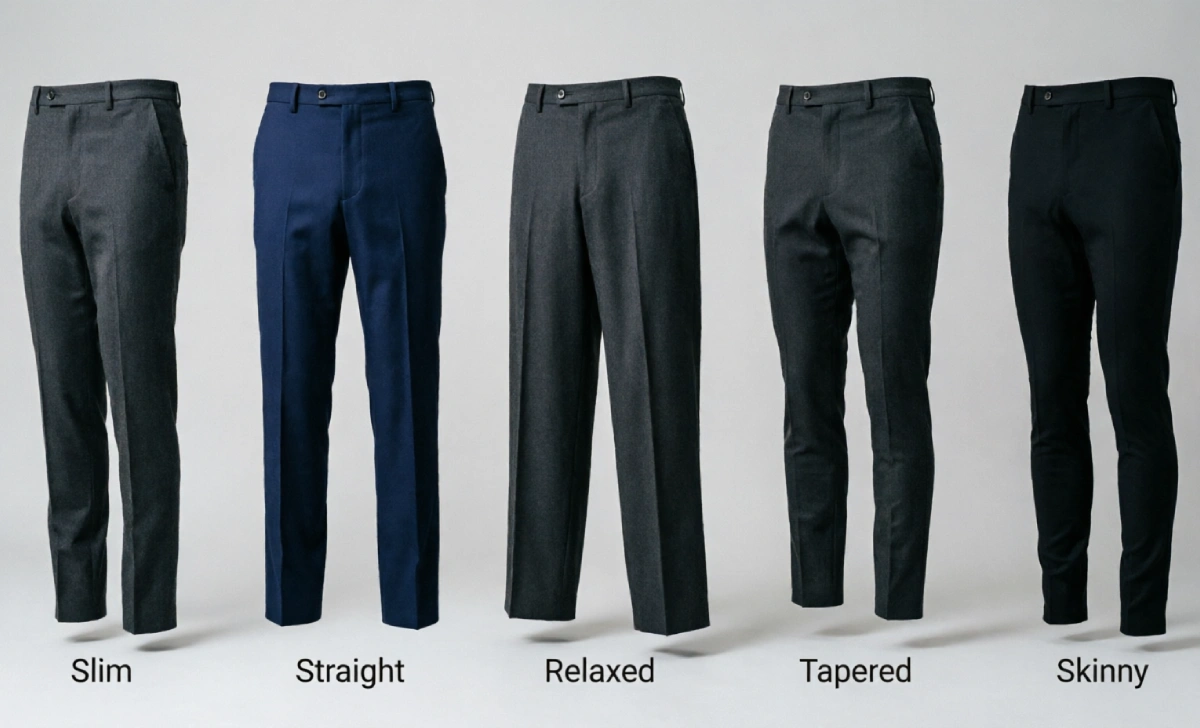
How Should Men’s Pants Fit? Slim, Straight, Relaxed, and More
An uncomfortable pair is easy to feel but hard to explain. Good fit depends less on size and more on how fabric moves with your legs.
Slim fit hugs the thigh and tapers toward the ankle for a sharp, modern shape. Straight fit runs evenly from hip to hem, working across body types without dating quickly. Relaxed fit adds room through the seat and thigh while still looking deliberate.
Tapered fit stays roomy up top and narrows below the knee, which suits athletic thighs well. Skinny fit clings the whole way down and flatters slimmer builds — though if you’re peeling them off by evening, the cut is fighting your shape. Pants that fit right disappear on you; you stop noticing them.
What Is Rise and Why Does It Matter for Your Pants?
Rise is the tag detail most men skip, yet it shapes where the waistband sits and how the whole outfit reads.
Low-rise sits below the natural waist, lengthening the torso for a modern look. Mid-rise lands near the belly button and suits most builds, balancing coverage with movement. High-rise climbs above the waist, lengthening the leg line — a favorite among shorter guys.
A shirt that won’t stay tucked usually signals you need a higher rise. This single, easy-to-miss detail separates a sharp outfit from one that just looks slightly wrong.
Pleated vs Flat-Front Pants: Which One Should You Wear?
Pleats get avoided out of habit, not logic. Flat-front pants stay smooth for a minimalist look that dominates modern wardrobes, while pleated pants fold small pleats beneath the waistband that open as you move, adding room and a touch of old-school polish.
Slim builds usually suit flat-front’s clean line. A thicker middle or fuller thighs often drape better with a single pleat, since it prevents pulling across the front. Tailored menswear is bringing pleats back — they’re no longer just a dated throwback.
How to Master the Pant Break and Get the Perfect Length
Puddled hems and ankle-baring trousers both come from ignoring the “break” — how fabric folds where it meets your shoe.
No break barely touches the shoe, creating a crisp line best suited to dress trousers. Half break adds a subtle fold across the shoe and works safely for both business and casual settings. Full break drapes deeper, suiting wider-leg trousers and taller men who can carry extra fabric.
Nail the hem, and the whole outfit looks more expensive than it actually cost.
Which Pants Are Best for Your Body Type?
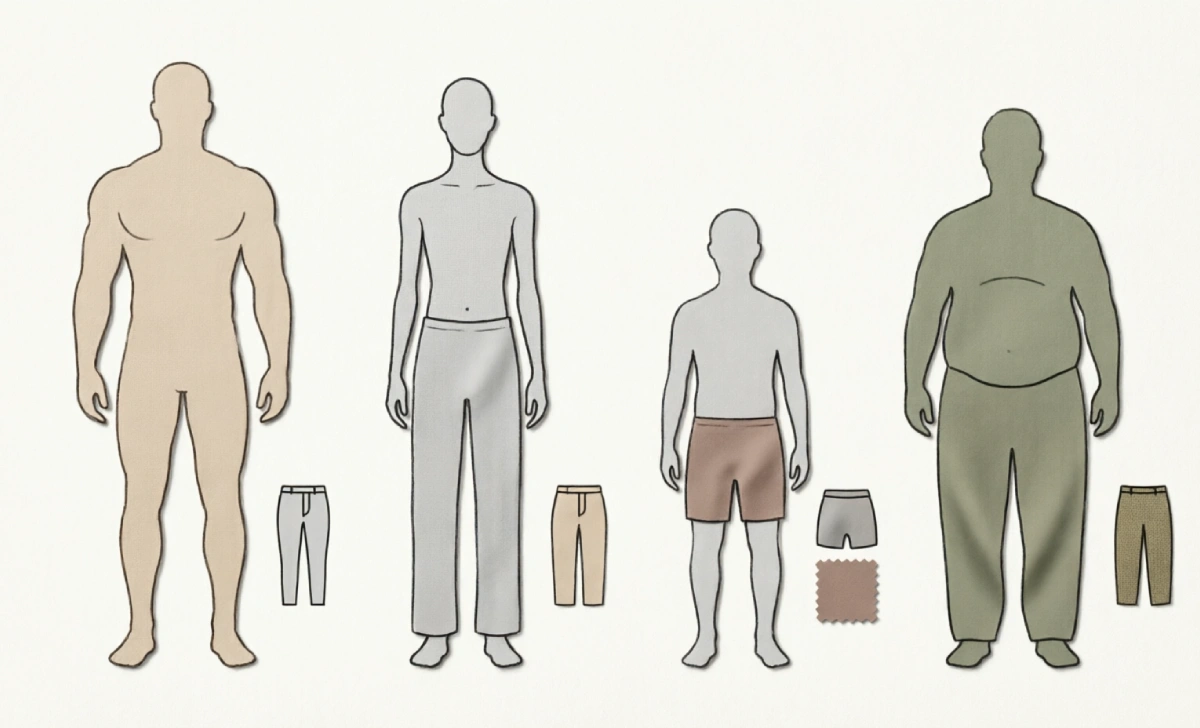
Pants cut for a mannequin rarely fit a real body without adjustment. The goal is choosing cuts that work with your proportions, not against them.
Athletic builds with bigger quads do well in tapered or relaxed-taper cuts, roomy above and narrow below. Slimmer men benefit from slim or straight fits that add visual weight rather than a stick-figure look. Shorter guys should try mid-rise with a slight taper and minimal break to stretch the leg line.
Tall men can wear nearly anything but should watch skinny cuts, which can exaggerate length. Carrying weight around the middle calls for a higher rise with a straight leg, keeping proportions smooth. None of this is about hiding your shape — it’s about dressing the body you have now.
A Fabric Guide for Men’s Pants: What to Wear in Every Season
Fabric decides comfort more than cut does. Cotton twill powers most chinos — breathable enough for warm days, sturdy enough for the office. Linen wins summer with its open weave that releases heat for a relaxed, slightly rumpled finish.
Lightweight worsted wool remains the standard for dress trousers thanks to its drape and wrinkle resistance. Denim spans light summer jeans to heavy raw denim for winter. Corduroy adds texture and warmth once temperatures drop.
How to Build a Versatile Pant Wardrobe With Just 7 Pairs
A small, intentional collection beats a closet full of impulse buys.
Dark slim or straight jeans anchor weekends and pass for smart casual with the right boots. Khaki chinos cover brunches and casual offices. Grey wool dress trousers handle meetings and formal events.
Navy suit trousers double as sharp separates without the jacket. Olive green pants in a relaxed fit add comfort without looking sloppy. A well-cut jogger bridges errands and lazy Sundays, and lightweight linen trousers make summer events effortless.
How to Style Different Pants: Shoes, Tops, and Occasion Pairings
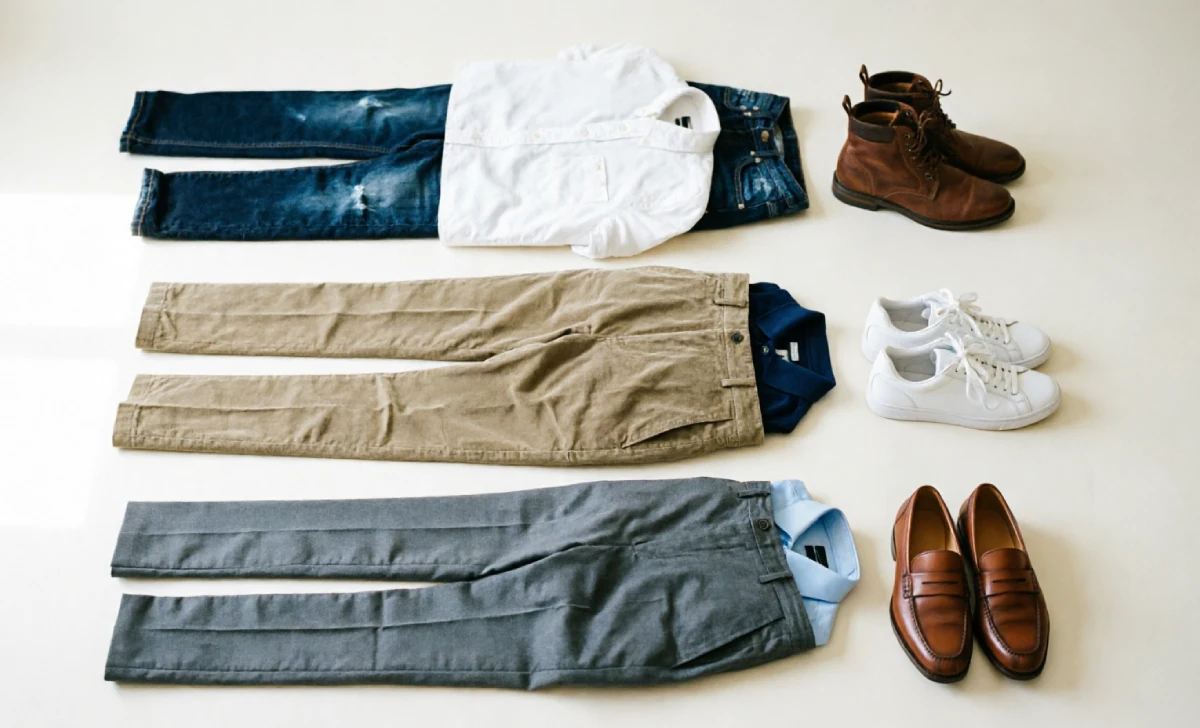
Knowing pant types is only half the job — pairing them well is what builds real confidence. Learning to accessorize your outfit with the right shoes makes the difference.
Dark jeans pair with a white Oxford shirt and brown chukka boots for an easy date-night look. Navy or stone chinos work with a polo and white sneakers for polished off-duty style. Grey dress trousers call for a pressed shirt, dark loafers, and an unstructured blazer for instant business-casual polish.
Joggers stay intentional paired with a fitted tee and minimalist trainers — skip anything baggy on top. Cargo pants balance out with a plain crewneck or denim jacket. Let the pants set the formality level, then match shoes and tops to it.
What Are the Biggest Men’s Pants Mistakes and How to Avoid Them?
A few small errors trip up even style-conscious guys, but each one has an easy fix.
Overly long hems bunch fabric around the ankle — a quick tailor visit solves this cheaply. Forcing a skinny fit onto the wrong frame causes discomfort and an unbalanced look; match the cut to your build instead. Wearing heavy wool to a summer event ignores fabric weight entirely.
Getting the right pant length matters as much as the cut itself, so check the hem before you leave the store.
Quick Answers to Common Men’s Pants Questions
Can I wear joggers to a casual office?
Tailored joggers in structured cotton-twill work with a clean tee and cardigan in relaxed workplaces. Skip gym sweatpants and keep the rest of the outfit sharp.
What’s the difference between chinos and khakis really?
Khakis are a type of chino, traditionally heavier cotton twill in tan shades. Chinos as a category span more colors and a lighter, dressier feel.
How do I know if my pants need tailoring?
A hem pooling at the ankle or sitting too high signals it’s time. A gapping waist or baggy seat are two more easy, affordable fixes.
Are pleated pants coming back into style for younger guys?
Single-pleat designs in tailored, relaxed-fit trousers are trending again. Paired with a higher rise and slim leg, they read as fresh, not dated.
Conclusion
Dressing well isn’t a test once you know the map. You now understand the styles, fits, and small details — like rise and break — that separate an average outfit from a sharp one. Keep this guide handy, and next time you shop, you’ll know exactly what to look for.