
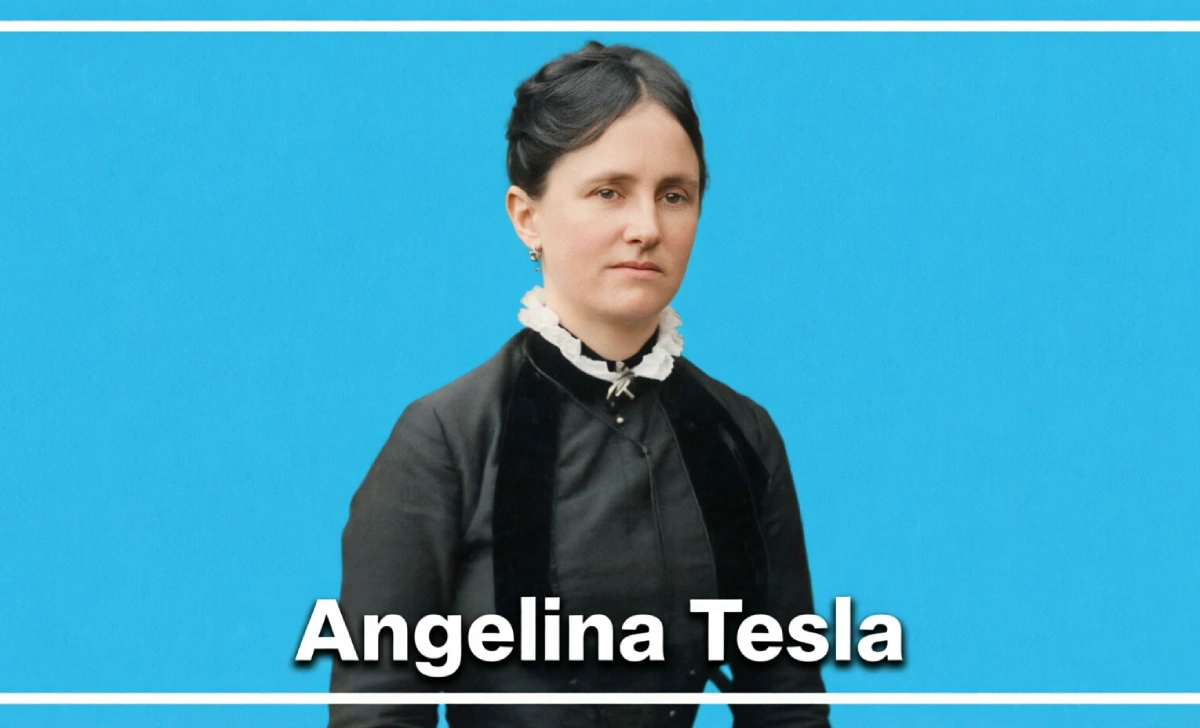
Few names in history carry as much weight as Tesla. Most people think of Nikola — the genius who lit up the world. But behind that brilliant mind stood a woman of equal determination. Angelina Tesla, the eldest daughter of the Tesla family, lived a life shaped by sacrifice, compassion, and quiet strength. She never sought the spotlight. Yet her story deserves to be told.
From a Small Croatian Village to a Life of Purpose
Angelina Tesla was born on July 30, 1862, in the village of Tomingaj, Croatia. She was the firstborn of five siblings, with her father, Milutin Tesla, serving as a Serbian Orthodox priest. The Tesla household was one of deep faith, intellectual curiosity, and high expectation.
Growing up in rural 19th-century Croatia was no easy task — especially for a girl. Education was limited. Opportunities were rare. Society expected women to marry young, raise children, and stay quiet. Angelina did not let that define her entirely.
Much like her brother Nikola, she displayed exceptional intelligence and an insatiable curiosity from a young age. However, societal norms of the time often limited women’s access to education and scientific pursuits.
That limitation shaped her path. Instead of pursuing formal academics, she turned her energy inward — toward family, community, and the brother who would one day change the world.
The Woman Who Kept Nikola Tesla Grounded
Nikola Tesla is celebrated as one of the greatest inventors in human history. What is rarely discussed is how much of his personal stability rested on the shoulders of his eldest sister.
As Nikola’s fame and recognition grew, Angelina Tesla found herself in his shadow, but she never let it discourage her. Instead, she supported her brother’s endeavors and became an indispensable confidante and adviser to him. Angelina played a pivotal role in managing Nikola’s personal affairs and finances, allowing him to focus on his revolutionary scientific work.
Think about what that means. Nikola Tesla was consumed by ideas — alternating current, wireless energy, electromagnetic fields. Someone had to manage the day-to-day. Someone had to write the letters, handle the household, and keep him anchored to the real world. That someone was Angelina.
She was not a passive bystander. She was a quiet pillar of support in a world that gave women no formal title for that role.
A Mind Drawn to Science, Without a Laboratory
Here is something few people realize about Angelina Tesla. She was genuinely interested in science — not just as her brother’s work, but as a subject that fascinated her personally.
While Angelina didn’t receive formal scientific training, her proximity to Nikola exposed her to his experiments and ideas. She demonstrated a profound interest in science and frequently engaged in discussions with her brother on various subjects.
Imagine sitting across the table from Nikola Tesla as he sketched out theories of electrical resonance or described the concept of wireless power transmission. Most people would have nodded politely. Angelina asked questions. She pushed back. She understood.
That intellectual engagement made her more than a caretaker. She was a sounding board. An early reviewer. A trusted voice when the world was skeptical, and the critics were loud.
A Life Defined by Giving Back
Outside her relationship with Nikola, Angelina carved her own identity through humanitarian work. Her compassion was not performative — it was woven into who she was.
Angelina Tesla’s benevolent nature and concern for the welfare of others were evident throughout her life. She was deeply involved in various philanthropic activities, striving to improve the lives of those less fortunate. Her charitable endeavors included support for orphanages, shelters for the homeless, and funding for education initiatives.
In 19th-century Croatia, these were not small gestures. There were no government welfare programs, no NGOs, no digital fundraising campaigns. Helping the poor required direct, personal involvement. Angelina gave that involvement freely.
Her focus on education was particularly significant. She understood that knowledge was power — perhaps because she had been denied so much of it herself. Funding schools and literacy programs was her quiet act of rebellion against a system that had limited her own potential.
Marriage, Family, and a Legacy Passed Down
Angelina Tesla married John Trbojevich and had five children. Life as a wife and mother in rural Croatia demanded everything — physical labor, emotional strength, and endless patience. She gave all of it.
Born about 1853, Angelina married Jovo Trbojevic and had five children. Her grandson William Terbo was an accomplished engineer, author, and lecturer who lived in the US and was dedicated to preserving his granduncle’s legacy until his recent death in August 2018.
That detail about William Terbo is striking. Angelina’s bloodline carried forward not just genetic material, but a sense of mission. Her grandson spent decades preserving Nikola Tesla’s memory. That dedication did not come from nowhere. It came from the values Angelina embedded in her family — a respect for knowledge, a reverence for legacy, and a belief that some stories must never be forgotten.
She passed away on 16 Aug 1931 in Kistanje, Croatia. She lived nearly eight decades, witnessing the rise of electricity, the spread of radio, and the global recognition of the brother she had helped protect and support for so long.
Why Angelina Tesla Matters Today
History has a habit of erasing women. It celebrates the inventors, the generals, the politicians — and quietly forgets the sisters, the mothers, and the women who made those achievements possible.
Angelina Tesla is one of those women.
She did not hold a patent. She did not give a famous speech. She did not build a laboratory. But she helped build the man who did all of those things. She managed his life when he could not. She engaged his ideas when no one else would. She gave to her community when she had little to give.
That is a form of genius that history rarely names.
Today, as conversations about women in science and hidden historical contributions gain momentum, Angelina Tesla’s story feels freshly relevant. She is proof that brilliance does not always announce itself. Sometimes it works quietly, behind the scenes, holding everything together.
Final Thoughts: A Legacy Finally Coming Into the Light
Angelina Tesla lived in one of history’s longest shadows. Her brother’s name became synonymous with electrical innovation, futuristic thinking, and scientific revolution. Her own name was nearly lost to time.
But the story of the Tesla family is incomplete without her. She was the eldest. She was the steady one. She was the woman who supported a genius, served her community, and raised a family that carried her values across generations.
History is slowly correcting its oversight. As researchers dig deeper into the lives of women who shaped the modern world from behind the curtain, Angelina’s name is finally beginning to surface. And it belongs in the conversation — not as a footnote, but as a chapter in her own right.
Some legacies are built in laboratories. Others are built in kitchens, in letters, in quiet conversations that history never recorded but could not have happened without.
Angelina Tesla built the second kind. And that matters just as much.
FAQs
Who was Angelina Tesla?
Angelina Tesla was the eldest sister of inventor Nikola Tesla, born around 1850–1862 in Croatia. She played a key role in managing her brother’s personal affairs and was known for her philanthropic work and community service.
Where was Angelina Tesla born?
She was born in Croatia, in the region of Lika, during the era of the Austrian Empire. Her father, Milutin Tesla, was a Serbian Orthodox priest.
Did Angelina Tesla contribute to science?
While she had no formal scientific training, she engaged deeply in scientific discussions with Nikola and helped manage his life so he could focus on his groundbreaking research.
How many children did Angelina Tesla have?
Angelina married Jovo Trbojevich and had five children. Her grandson, William Terbo, later became an engineer and devoted advocate for preserving Nikola Tesla’s legacy.
When did Angelina Tesla die?
Angelina Tesla passed away on August 16, 1931, in Kistanje, Croatia, at approximately 80 years of age.