

In this article
Few names carry as much weight in artificial intelligence boardrooms as Mustafa Suleyman. He co-founded a lab that changed how the world thinks about machine learning, then walked into one of the most powerful jobs at Microsoft. Along the way, people started asking a simple question: What is Mustafa Suleyman’s net worth?
Suleyman is a British AI entrepreneur, executive, and author. He built his name at DeepMind, shaped policy at Google, launched Inflection AI, and now leads Microsoft AI. Each step added a new layer to his financial story.
This article breaks down his net worth, income sources, and career milestones using verified public information available through 2026.
Mustafa Suleyman Net Worth
His net worth is estimated between $100 million and $250 million. No regulatory filing or personal disclosure has confirmed an exact figure, so this range reflects public estimates rather than a verified number. You will see much higher totals online — some sites claim $800 million or even billions — but none of them tie those figures to a disclosed stake or transaction, and several get basic details of his career wrong.
The estimate is built largely on his founder stake in DeepMind’s sale to Google, plus years of senior executive compensation that followed. There is no single document that lays out his full balance sheet, which is common for tech executives who aren’t required to disclose personal wealth.
His net worth climbed sharply after 2014, when Google acquired DeepMind. It kept growing through senior roles at Google, his work at Inflection AI, and the 2024 deal that brought him to Microsoft.
Main Income Sources
Suleyman’s wealth comes from several distinct income streams rather than one big payout.
DeepMind equity proceeds. When Google acquired DeepMind in 2014, Suleyman held founder equity alongside co-founders Demis Hassabis and Shane Legg. After years of venture funding, each founder’s percentage had been diluted, but that sale is still widely seen as the foundation of his fortune.
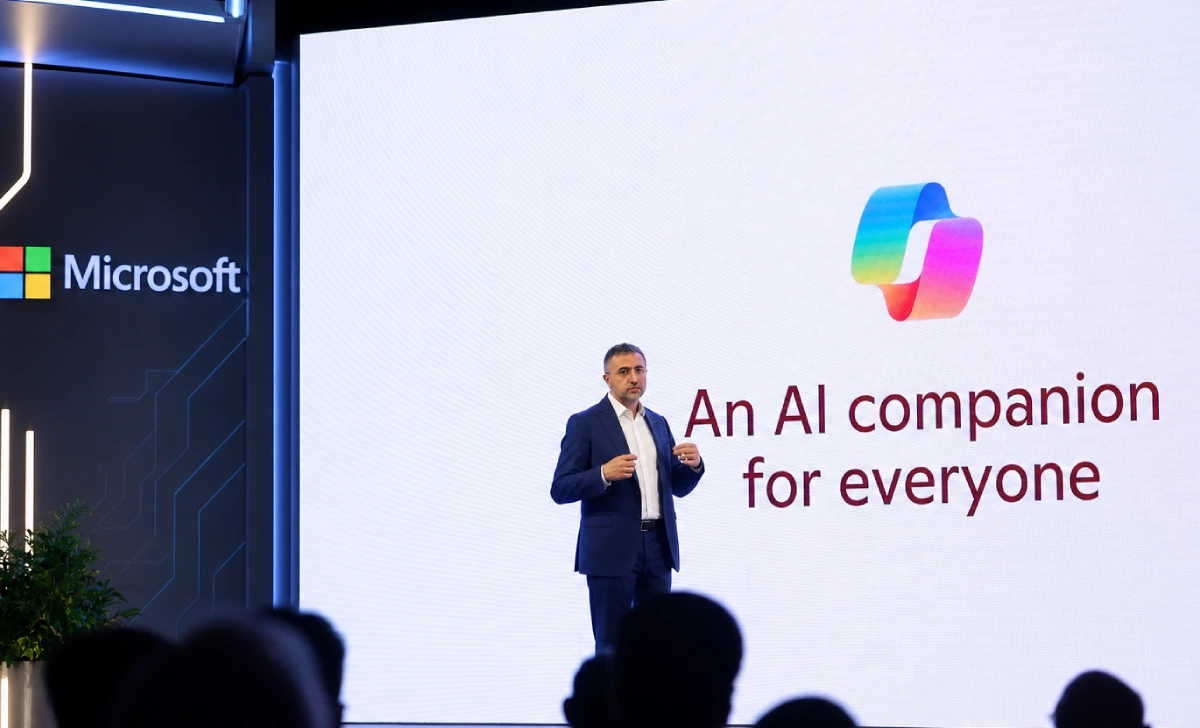
Executive compensation. He earned salary and stock awards as Google’s VP of AI product management and policy, and now as Executive Vice President and CEO of Microsoft AI. Pay at the EVP level of a company Microsoft’s size typically leans heavily on multi-year equity grants rather than cash, though his specific package has not been disclosed.
Inflection AI equity. As co-founder of Inflection AI, Suleyman held equity in a company valued at $4 billion in 2023. When Microsoft struck its 2024 deal for Inflection’s technology and staff, it paid about $650 million — roughly $620 million to license Inflection’s models and $30 million to waive legal claims tied to the mass hiring. Much of that money went to repaying investors such as Greylock and Dragoneer, who were reported to receive about 1.5 times what they had invested. His personal share has not been disclosed, and the investor-first structure suggests it was smaller than the headline number implies.
Venture capital returns. In January 2022 he joined Greylock Partners as a venture partner, giving him exposure to early-stage AI investments shortly before he launched Inflection with Greylock’s Reid Hoffman.
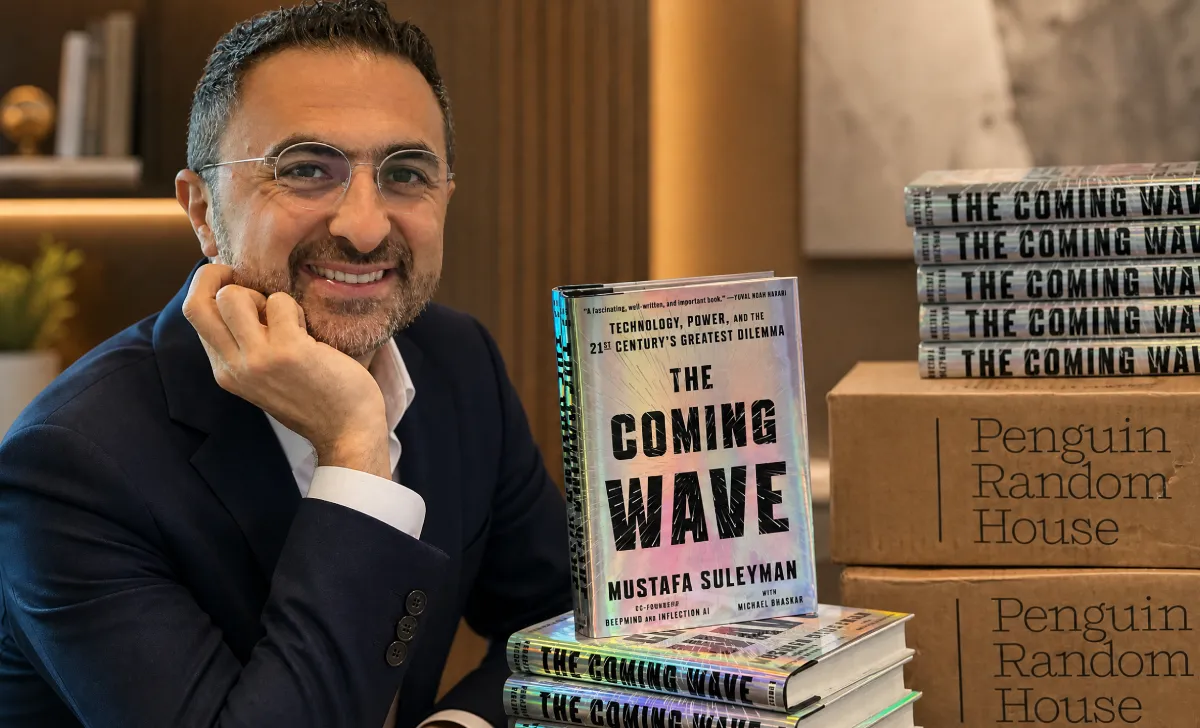
Book royalties. His book, The Coming Wave: Technology, Power and the 21st Century’s Greatest Dilemma, co-written with Michael Bhaskar and published in September 2023, was shortlisted for the Financial Times Business Book of the Year award. Advances and royalties add a smaller but steady income stream.
Speaking and advisory income. Suleyman is a frequent voice on AI policy and safety, although specific fees for his appearances are not public.
Career Highlights
Suleyman’s career reads like a timeline of AI’s rise from research curiosity to global industry, but it started far from tech. Born in London in August 1984, he grew up in Islington, studied philosophy and theology at Oxford, and dropped out at 19. In 2001, still a teenager, he helped set up the Muslim Youth Helpline, a telephone counselling service. He later worked as a human rights policy officer for London mayor Ken Livingstone and co-founded Reos Partners, a consultancy focused on large-scale social problems.
In 2010, he co-founded DeepMind Technologies with Hassabis and Legg, serving as chief product officer. The company focused on deep reinforcement learning years before AI became mainstream news. Google acquired DeepMind in 2014 for a reported £400 million, at the time its largest acquisition in Europe.
Under Google’s ownership, Suleyman became Head of Applied AI at DeepMind, launching DeepMind Health in 2016 and leading a project that cut the energy used to cool Google’s data centers by up to 40%. He was appointed CBE in the 2019 New Year Honours. Later that year he was placed on leave from DeepMind following complaints about his management style, then moved to Google as a vice president overseeing AI product management and policy.
He left Google in January 2022 for Greylock, and in March 2022 co-founded Inflection AI with Reid Hoffman and former DeepMind researcher Karén Simonyan. Inflection raised $225 million in its first round, launched the Pi chatbot in 2023, and in June 2023 raised $1.3 billion at a $4 billion valuation from backers including Microsoft, Nvidia, Bill Gates, and Eric Schmidt.
The biggest turn came in March 2024, when Microsoft appointed him Executive Vice President and CEO of a newly created consumer unit, Microsoft AI, and hired most of Inflection’s roughly 70-person team, including Simonyan. The UK’s Competition and Markets Authority reviewed the arrangement as a “merger situation” but cleared it. This kind of license-and-hire structure has since become common in the AI sector.
Since then, his remit has shifted from products toward models. In November 2025, he launched the MAI Superintelligence Team, built around what he calls “humanist superintelligence” — AI designed to stay controllable and in service of people, with early focus areas in medical diagnostics, AI companions, and clean energy. The move followed Microsoft’s renegotiated agreement with OpenAI, which removed limits on Microsoft building its own frontier models. In March 2026, Microsoft reorganized its Copilot business under former Snap executive Jacob Andreou so that Suleyman, who still reports to CEO Satya Nadella, could devote his time to model development. At Microsoft Build in June 2026, his team presented seven in-house MAI models, including the reasoning model MAI-Thinking-1.
He was named to TIME’s list of the 100 most influential people in AI in both 2023 and 2024.
Financial Growth
Suleyman’s wealth didn’t arrive all at once. It was built in stages, tied directly to major career moves.
The first major jump came in 2014 with the DeepMind acquisition. That sale converted years of research work into a substantial equity payout, setting the base for everything that followed.
Between 2014 and 2022, his wealth grew more gradually through Google salary and stock awards. Senior executives at Google typically receive multi-year equity grants that vest over time, which builds wealth steadily rather than in a single spike.
Inflection AI added a new equity stake to his portfolio, and its 2023 valuation of $4 billion briefly made that stake look very large on paper. The 2024 Microsoft deal turned out to be structured mainly to make investors whole, so its main financial benefit to him was likely the senior Microsoft role that came with it rather than a large cash-out.
Through 2025 and into 2026, his position as CEO of Microsoft AI keeps generating ongoing executive compensation. His shift to leading Microsoft’s superintelligence and model effort places him at the center of one of the company’s biggest strategic bets, which tends to come with significant long-term equity awards.
Wealth built through founding and scaling companies follows a similar pattern in other parts of tech. Karl Wellner’s fortune also grew in stages across more than one venture, and Paul Mishkin’s path shows how a technical founder can build lasting value outside the spotlight.
Conclusion
Mustafa Suleyman’s net worth, estimated between $100 million and $250 million, reflects a career built on founding, scaling, and selling AI companies at exactly the right moments. From DeepMind’s sale to Google through Inflection AI and his current role as CEO of Microsoft AI, each chapter added new income streams, from equity and salary to book royalties.
While no exact figure has been confirmed publicly, the pattern is clear: his wealth has grown steadily alongside the AI industry itself. With Microsoft now relying on his team to deliver its own frontier models, his net worth is likely to keep climbing through 2026 and beyond.
You may also find it interesting to explore other technology founders’ financial journeys, including Justin Siegel’s net worth.
Disclaimer: The net worth figures mentioned are based on publicly available information, industry reports, and reliable estimates. In some cases, additional insights or updates may be considered where available. Although we aim to keep the data as accurate and current as possible, these figures should still be viewed as estimates rather than exact financial records. We always appreciate corrections or updated information from reliable sources.